Homework Answers
Solution:
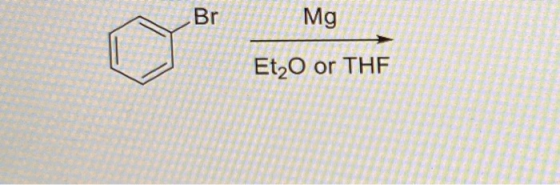
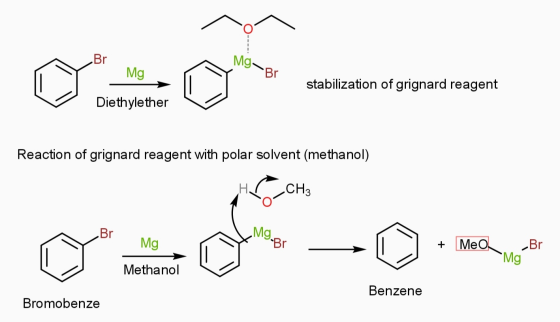
Grignard carbon (which is attached to the magnesium ) that will reacts with the proton of polar solvent thus formed the alkane.
On the other hand diethylether or THF (ethers) do not have acidic proton that will reacts with the grignard reagent. Thus, ethers are non reactive with the grignard reagent, thus grignard reagent is stable in ether solvent
Add Answer to:
Justify the chemcial phenomena. explain the role that an ether
complain stabilizing the product of the...
Justify the chemcial phenomena. Im this recation, only 1 stereoisomer is observed. Draw the predicted product...
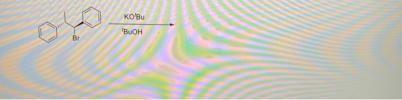 Justify the chemcial phenomena. Im this recation, only 1
stereoisomer is observed. Draw the predicted product in the
explaination.
KO'Bu 'BuOH Br
Justify the chemcial phenomena. Im this recation, only 1
stereoisomer is observed. Draw the predicted product in the
explaination.
KO'Bu 'BuOH Br
Explain why dissolving boron trifluoride together with hydrogen fluoride in anhydrous diethyl ether should produce a...
Explain why dissolving boron trifluoride together with hydrogen fluoride in anhydrous diethyl ether should produce a strong acid. Draw the structure of the product (complete with any charges on the atoms).
please explain mechanism 42. Provide the product for the following reaction HOCH,CH,OH Mg/ether Н,0° Br H2SO4...
 please explain mechanism
42. Provide the product for the following reaction HOCH,CH,OH Mg/ether Н,0° Br H2SO4 2. Но хото го он ПІ А) 1 B) II C) III
please explain mechanism
42. Provide the product for the following reaction HOCH,CH,OH Mg/ether Н,0° Br H2SO4 2. Но хото го он ПІ А) 1 B) II C) III
This procedure was conducted for diethyl n-butylmalonate. The question is: What is the purpose of the...
 This procedure was conducted for diethyl n-butylmalonate. The
question is: What is the purpose of the tricaprylmethylammonium
chloride and why is it used in a nomstoichiometric?
Chapter 42 Malonic Ester of a Barbiturate 541 Into a 5-mL long-necked, round-bottomed flask, weigh 40 mg of tricaprylmethylammonium chloride, 400 mg of diethyl malonate, 350 mg of 1-bromobutane, and 415 mg of anhydrous potassium carbonate. Attach the empty distillation column as an air condenser and reflux the mixture for 1.5 hours (Fig. 42.1)....
This procedure was conducted for diethyl n-butylmalonate. The
question is: What is the purpose of the tricaprylmethylammonium
chloride and why is it used in a nomstoichiometric?
Chapter 42 Malonic Ester of a Barbiturate 541 Into a 5-mL long-necked, round-bottomed flask, weigh 40 mg of tricaprylmethylammonium chloride, 400 mg of diethyl malonate, 350 mg of 1-bromobutane, and 415 mg of anhydrous potassium carbonate. Attach the empty distillation column as an air condenser and reflux the mixture for 1.5 hours (Fig. 42.1)....
S RROwn as nucleophilic addition. The C-O bond is highly polarized, making carbonyl compounds ele...
 S RROwn as nucleophilic addition. The C-O bond is highly polarized, making carbonyl compounds electrophilic at carbon. If the Grignard reagent reacts with an aldehyde, ketone or ester, the ultimate product is an alcohol. Overall Reaction 0 Br Me PartA Part B Pre-lab questions (15 points) Show the mechanism of the reaction of bromobenzene with magnesium metal in anhydrous diethyl ether There are many inert solvents that could be used but diethyl ether was chosen because it can assist the...
Please answer 2 through 5 2) Fill in the reaction table below. Make sure you correctly...
 Please answer 2 through 5
2) Fill in the reaction table below. Make sure you correctly calculate the molar amounts (mol.-eq.) of your reactive materials name ormulamol.-eq mo ensi romobenzend C6H5Br | magnesium Mg C13H10 70 0.15 g 1.09 g HCI (6M) HC -6.0 m product H 3) Calculate the theoretical yield of your product, i.e. the mass you would expect to recover (assuming 100% conversion to product). Show your work. 4)Grignard reactions are particularly sensitive to water, and are...
Please answer 2 through 5
2) Fill in the reaction table below. Make sure you correctly calculate the molar amounts (mol.-eq.) of your reactive materials name ormulamol.-eq mo ensi romobenzend C6H5Br | magnesium Mg C13H10 70 0.15 g 1.09 g HCI (6M) HC -6.0 m product H 3) Calculate the theoretical yield of your product, i.e. the mass you would expect to recover (assuming 100% conversion to product). Show your work. 4)Grignard reactions are particularly sensitive to water, and are...
Draw the major product of this reaction & a complete curved arrow mechanism and explain why...
 Draw the major product of this reaction & a complete curved
arrow mechanism and explain why the observed product is formed.
H-Br
Draw the major product of this reaction & a complete curved
arrow mechanism and explain why the observed product is formed.
H-Br
Problem 9: In the reaction below circle the major product. Clearly explain your an Hint: Draw...
 Problem 9: In the reaction below circle the major product. Clearly explain your an Hint: Draw mechanisms that explain the formation of the products. CY=OY.AL 'yun. Chemistry Organic Chemistry Problems SNT Problem 10: What is the mechanism of the following reaction? Problem 12: Draw a mechanism for the following reaction. Explain why a chiral reactant will provide racemic products. tel, CH, он Yoy + ethanol heat : Br: Problem 11: For the following reaction: 1) 1) iii) Assign Ror Sto...
CHEM 301 Problem Set #5 2. Draw/predict the major elimination product(s) of the following proposed reaction....
 CHEM 301 Problem Set #5 2. Draw/predict the major elimination product(s) of the following proposed reaction. Be sure to indicate correct stereochemistry when appropriate in the product. (b) Provide a mechanism that describes the formation of your drawn product. Show how (Newman Projection) any stereochemistry within the mechanism/product results. CH e Br NaOCH **CH2CH, 3. Explain briefly, why neither an SNI nor SN2 reaction between diethyl ether and sodium iodide is favored but an Sw2 reaction between diethyl ether and...
My teacher is that A is not the major product. please explain why and what would...
 My teacher is that A is not the major product. please explain
why and what would be the major
22) (9 points) For the following reaction: a. (5 points) Draw a complete and detailed mechanism for the process shown below to form compounds A and B. mention whether it is initiation, propagation or termination. b/ (2 points) Explain why this reaction gives a mixture of compounds A and B and does not give compound C c. (2 points) Which product...
My teacher is that A is not the major product. please explain
why and what would be the major
22) (9 points) For the following reaction: a. (5 points) Draw a complete and detailed mechanism for the process shown below to form compounds A and B. mention whether it is initiation, propagation or termination. b/ (2 points) Explain why this reaction gives a mixture of compounds A and B and does not give compound C c. (2 points) Which product...
 Justify the chemcial phenomena. Im this recation, only 1
stereoisomer is observed. Draw the predicted product in the
explaination.
KO'Bu 'BuOH Br
Justify the chemcial phenomena. Im this recation, only 1
stereoisomer is observed. Draw the predicted product in the
explaination.
KO'Bu 'BuOH Br
 please explain mechanism
42. Provide the product for the following reaction HOCH,CH,OH Mg/ether Н,0° Br H2SO4 2. Но хото го он ПІ А) 1 B) II C) III
please explain mechanism
42. Provide the product for the following reaction HOCH,CH,OH Mg/ether Н,0° Br H2SO4 2. Но хото го он ПІ А) 1 B) II C) III
 This procedure was conducted for diethyl n-butylmalonate. The
question is: What is the purpose of the tricaprylmethylammonium
chloride and why is it used in a nomstoichiometric?
Chapter 42 Malonic Ester of a Barbiturate 541 Into a 5-mL long-necked, round-bottomed flask, weigh 40 mg of tricaprylmethylammonium chloride, 400 mg of diethyl malonate, 350 mg of 1-bromobutane, and 415 mg of anhydrous potassium carbonate. Attach the empty distillation column as an air condenser and reflux the mixture for 1.5 hours (Fig. 42.1)....
This procedure was conducted for diethyl n-butylmalonate. The
question is: What is the purpose of the tricaprylmethylammonium
chloride and why is it used in a nomstoichiometric?
Chapter 42 Malonic Ester of a Barbiturate 541 Into a 5-mL long-necked, round-bottomed flask, weigh 40 mg of tricaprylmethylammonium chloride, 400 mg of diethyl malonate, 350 mg of 1-bromobutane, and 415 mg of anhydrous potassium carbonate. Attach the empty distillation column as an air condenser and reflux the mixture for 1.5 hours (Fig. 42.1)....
 S RROwn as nucleophilic addition. The C-O bond is highly polarized, making carbonyl compounds electrophilic at carbon. If the Grignard reagent reacts with an aldehyde, ketone or ester, the ultimate product is an alcohol. Overall Reaction 0 Br Me PartA Part B Pre-lab questions (15 points) Show the mechanism of the reaction of bromobenzene with magnesium metal in anhydrous diethyl ether There are many inert solvents that could be used but diethyl ether was chosen because it can assist the...
 Please answer 2 through 5
2) Fill in the reaction table below. Make sure you correctly calculate the molar amounts (mol.-eq.) of your reactive materials name ormulamol.-eq mo ensi romobenzend C6H5Br | magnesium Mg C13H10 70 0.15 g 1.09 g HCI (6M) HC -6.0 m product H 3) Calculate the theoretical yield of your product, i.e. the mass you would expect to recover (assuming 100% conversion to product). Show your work. 4)Grignard reactions are particularly sensitive to water, and are...
Please answer 2 through 5
2) Fill in the reaction table below. Make sure you correctly calculate the molar amounts (mol.-eq.) of your reactive materials name ormulamol.-eq mo ensi romobenzend C6H5Br | magnesium Mg C13H10 70 0.15 g 1.09 g HCI (6M) HC -6.0 m product H 3) Calculate the theoretical yield of your product, i.e. the mass you would expect to recover (assuming 100% conversion to product). Show your work. 4)Grignard reactions are particularly sensitive to water, and are...
 Draw the major product of this reaction & a complete curved
arrow mechanism and explain why the observed product is formed.
H-Br
Draw the major product of this reaction & a complete curved
arrow mechanism and explain why the observed product is formed.
H-Br
 Problem 9: In the reaction below circle the major product. Clearly explain your an Hint: Draw mechanisms that explain the formation of the products. CY=OY.AL 'yun. Chemistry Organic Chemistry Problems SNT Problem 10: What is the mechanism of the following reaction? Problem 12: Draw a mechanism for the following reaction. Explain why a chiral reactant will provide racemic products. tel, CH, он Yoy + ethanol heat : Br: Problem 11: For the following reaction: 1) 1) iii) Assign Ror Sto...
 CHEM 301 Problem Set #5 2. Draw/predict the major elimination product(s) of the following proposed reaction. Be sure to indicate correct stereochemistry when appropriate in the product. (b) Provide a mechanism that describes the formation of your drawn product. Show how (Newman Projection) any stereochemistry within the mechanism/product results. CH e Br NaOCH **CH2CH, 3. Explain briefly, why neither an SNI nor SN2 reaction between diethyl ether and sodium iodide is favored but an Sw2 reaction between diethyl ether and...
 My teacher is that A is not the major product. please explain
why and what would be the major
22) (9 points) For the following reaction: a. (5 points) Draw a complete and detailed mechanism for the process shown below to form compounds A and B. mention whether it is initiation, propagation or termination. b/ (2 points) Explain why this reaction gives a mixture of compounds A and B and does not give compound C c. (2 points) Which product...
My teacher is that A is not the major product. please explain
why and what would be the major
22) (9 points) For the following reaction: a. (5 points) Draw a complete and detailed mechanism for the process shown below to form compounds A and B. mention whether it is initiation, propagation or termination. b/ (2 points) Explain why this reaction gives a mixture of compounds A and B and does not give compound C c. (2 points) Which product...
Most questions answered within 3 hours.
-
Where is the error in this code sequence?
String s1 = "Hello";
String s2 = "ello";...
asked 10 months ago -
Financial data for Joel de Paris, Inc., for last year
follow:
Joel de Paris, Inc.
Balance...
asked 10 months ago -
Consider this reaction:
Al2(SO4)3 (aq)+ BaCl3
(aq) Al2Cl6 (aq)- +
3BaSO4(s) . What is the...
asked 10 months ago -
Suppose that Savneet is considering increasing her
recent random sample from 20 car rentals to 40...
asked 10 months ago -
Trucks arrive at an unloading terminal at an average rate of 120
per hour.
Trucks arrive...
asked 10 months ago -
Why are methanol and ethanol completely soluble in water while
octanol is not very little soluble....
asked 10 months ago -
A facilities manager at a university reads in a research report
that the mean amount of...
asked 10 months ago -
When the CuSO4 is rehydrated by adding water to the anhydrous
compound, is this an endothermic...
asked 10 months ago -
A ray of sunlight is passing from diamond into crown glass; the
angle of incidence is...
asked 10 months ago -
A block of mass 0.249 kg is placed on top of a light, vertical
spring of...
asked 10 months ago -
how do the kidneys compensate in the presences of acidosis
a) trigger hyperventilate
b) reserve acid...
asked 10 months ago -
Question 501 pts
The rental rate of capital to the firm increases. Which of the
following...
asked 10 months ago