
Homework Answers
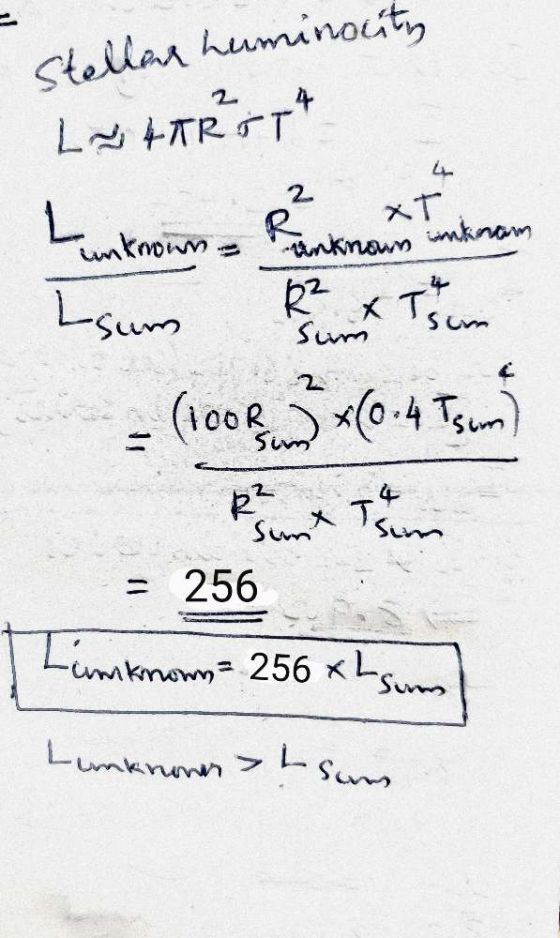
 Stephan boltzmann constant.
Neutron stars are something that is part or quantity that is left after the greater part has been used, removed, or destroyed, of giant stars that died in a fiery explosion known as a supernova. When the core of the star has completely burned to iron, energy production stops and the core rapidly collapses, squeezing electrons and protons together to form neutrons and neutrinos. The neutrinos easily escape the contracting core but the neutrons pack closer together until their density is equivalent to that of an atomic nucleus. At this point, the neutrons occupy the smallest space possible and, if the core is less than about 3 solar masses, they exert a pressure which is capable of supporting a star. For masses larger than this, even the pressure of neutrons cannot support the star against gravity and it collapses into a stellar black hole. A star supported by neutron degeneracy pressure is known as a ‘neutron star’.
Add Answer to:
C. i. As a star runs out of hydrogen to fuel nuclear fusion in its core,...
Suppose that a 15 star finally runs out of nuclear fuel in its core and undergoes...
 Suppose that a 15
star finally runs out of nuclear fuel in its core and undergoes a
Type II supernova explosion. You are going to analyse the energy
budget, calculating all the quantities in Joules.
a) Estimate the amount of gravitational energy that would be
liberated by the collapse of the core (say) 1.4 M
to the size of neutron star.
b) How much of this energy would be required to disintegrate the
iron nuclei in the core?
c) How...
Suppose that a 15
star finally runs out of nuclear fuel in its core and undergoes a
Type II supernova explosion. You are going to analyse the energy
budget, calculating all the quantities in Joules.
a) Estimate the amount of gravitational energy that would be
liberated by the collapse of the core (say) 1.4 M
to the size of neutron star.
b) How much of this energy would be required to disintegrate the
iron nuclei in the core?
c) How...
choose A B C D QUESTION 1 Star formation in giant gas clouds is a result...
choose A B C D QUESTION 1 Star formation in giant gas clouds is a result of competition between which forces? Light and rotation Light and dark Rotation and gas pressure Gravity and gas pressure 10 points QUESTION 2 What effect sets the largest size a star can have? The forming star is shining so strongly that it blows the collapsing gas cloud apart. If the star was any larger it would instantly form a Black Hole. If the...
5) A star (no matter what its mass) spends most of its life Select one: a....
5) A star (no matter what its mass) spends most of its life Select one: a. as a protostar. b. as a main-sequence star. c. as a planetary nebula. d. as a red giant or supergiant. 6) What is the ultimate fate of an isolated white dwarf? Select one: a. It will cool down and become a cold black dwarf. b. As gravity overwhelms the electron degeneracy pressure, it will explode as a nova. c. As gravity overwhelms the electron...
Before leaving Alpha Centauri, you change from the shuttle to a light speed interstellar cruiser and head out deep into the galaxy to visit another binary star system - but this one is composed...
 Before leaving Alpha Centauri, you change from the shuttle to a light speed interstellar cruiser and head out deep into the galaxy to visit another binary star system - but this one is composed of dead stars! To occupy your waking travel time by reading about this star system in the "Outer Space Tourbook": Stars spend most of their lifetimes undergoing nuclear fusion in their cores, which is why they give off so much light. However, when the material necessary...
when a star runs out of protons in its core, why does it becomes more luminous?...
when a star runs out of protons in its core, why does it becomes more luminous? why does the surface temperature of the star cool down?
ity of the 20 Mo star Sirius predicted by the mass-luminosity equation (Unit 58). Its observed...
 ity of the 20 Mo star Sirius predicted by the mass-luminosity equation (Unit 58). Its observed luminosity is about 20 LO How can you explain the difference? The mass-luminosity relationship predicts that Sirius is about Sirius's higher luminosity is a result of its higher Sun's. Themassluninosit reSisis a times more luminous than the Sun. surface temperature and lrger surface area compared to the
#2 please ! Ro le Astronomy 1F03 Problem Set 3 Thursday, Nov 10th, 2019 Write your...
 #2 please !
Ro le Astronomy 1F03 Problem Set 3 Thursday, Nov 10th, 2019 Write your answers on a separate sheet and show your work 1. The protesproton chain effectively c erta hyre en into hem according to 4 He. A Helium wus weighs 6.64518 x 10 IT kg and Hydrogen mucha proton) welches 1.67262 x 10 Workout the change in a when I kg of Hydrogen is converted completely into Helium 4. Convert the change in mass Per burning...
#2 please !
Ro le Astronomy 1F03 Problem Set 3 Thursday, Nov 10th, 2019 Write your answers on a separate sheet and show your work 1. The protesproton chain effectively c erta hyre en into hem according to 4 He. A Helium wus weighs 6.64518 x 10 IT kg and Hydrogen mucha proton) welches 1.67262 x 10 Workout the change in a when I kg of Hydrogen is converted completely into Helium 4. Convert the change in mass Per burning...
What is the reason for two stars to have the same brightness but one being 100...
What is the reason for two stars to have the same brightness but one being 100 times more luminous than the other? One of them is 100 times more distant One of them is 10 times more distant One of them is 1000 times more distant One of them is 4π times more distant The Brightness scale like the inverse of the square of the distance (1/R2) T F What is parallax? The distance of a star A method to...
choose correct answer. no explanation needed QUESTION 10 How do astrophysicists account for neutrino emission from...
 choose correct answer. no explanation needed
QUESTION 10 How do astrophysicists account for neutrino emission from the Sun? Solar flares create neutrinos with very energetic magnetic fields. Convection releases neutrinos, which random walk through the radiation zone. Fission in the Sun's core creates neutrinos when protons turn into neutrons. The annihilation of positrons and electrons in the core produces neutrinos. Fusion in the Sun's core creates neutrinos when protons turn into neutrons, QUESTION 11 How does the interstellar medium impact...
choose correct answer. no explanation needed
QUESTION 10 How do astrophysicists account for neutrino emission from the Sun? Solar flares create neutrinos with very energetic magnetic fields. Convection releases neutrinos, which random walk through the radiation zone. Fission in the Sun's core creates neutrinos when protons turn into neutrons. The annihilation of positrons and electrons in the core produces neutrinos. Fusion in the Sun's core creates neutrinos when protons turn into neutrons, QUESTION 11 How does the interstellar medium impact...
 Suppose that a 15
star finally runs out of nuclear fuel in its core and undergoes a
Type II supernova explosion. You are going to analyse the energy
budget, calculating all the quantities in Joules.
a) Estimate the amount of gravitational energy that would be
liberated by the collapse of the core (say) 1.4 M
to the size of neutron star.
b) How much of this energy would be required to disintegrate the
iron nuclei in the core?
c) How...
Suppose that a 15
star finally runs out of nuclear fuel in its core and undergoes a
Type II supernova explosion. You are going to analyse the energy
budget, calculating all the quantities in Joules.
a) Estimate the amount of gravitational energy that would be
liberated by the collapse of the core (say) 1.4 M
to the size of neutron star.
b) How much of this energy would be required to disintegrate the
iron nuclei in the core?
c) How...
 Before leaving Alpha Centauri, you change from the shuttle to a light speed interstellar cruiser and head out deep into the galaxy to visit another binary star system - but this one is composed of dead stars! To occupy your waking travel time by reading about this star system in the "Outer Space Tourbook": Stars spend most of their lifetimes undergoing nuclear fusion in their cores, which is why they give off so much light. However, when the material necessary...
 ity of the 20 Mo star Sirius predicted by the mass-luminosity equation (Unit 58). Its observed luminosity is about 20 LO How can you explain the difference? The mass-luminosity relationship predicts that Sirius is about Sirius's higher luminosity is a result of its higher Sun's. Themassluninosit reSisis a times more luminous than the Sun. surface temperature and lrger surface area compared to the
 #2 please !
Ro le Astronomy 1F03 Problem Set 3 Thursday, Nov 10th, 2019 Write your answers on a separate sheet and show your work 1. The protesproton chain effectively c erta hyre en into hem according to 4 He. A Helium wus weighs 6.64518 x 10 IT kg and Hydrogen mucha proton) welches 1.67262 x 10 Workout the change in a when I kg of Hydrogen is converted completely into Helium 4. Convert the change in mass Per burning...
#2 please !
Ro le Astronomy 1F03 Problem Set 3 Thursday, Nov 10th, 2019 Write your answers on a separate sheet and show your work 1. The protesproton chain effectively c erta hyre en into hem according to 4 He. A Helium wus weighs 6.64518 x 10 IT kg and Hydrogen mucha proton) welches 1.67262 x 10 Workout the change in a when I kg of Hydrogen is converted completely into Helium 4. Convert the change in mass Per burning...
 choose correct answer. no explanation needed
QUESTION 10 How do astrophysicists account for neutrino emission from the Sun? Solar flares create neutrinos with very energetic magnetic fields. Convection releases neutrinos, which random walk through the radiation zone. Fission in the Sun's core creates neutrinos when protons turn into neutrons. The annihilation of positrons and electrons in the core produces neutrinos. Fusion in the Sun's core creates neutrinos when protons turn into neutrons, QUESTION 11 How does the interstellar medium impact...
choose correct answer. no explanation needed
QUESTION 10 How do astrophysicists account for neutrino emission from the Sun? Solar flares create neutrinos with very energetic magnetic fields. Convection releases neutrinos, which random walk through the radiation zone. Fission in the Sun's core creates neutrinos when protons turn into neutrons. The annihilation of positrons and electrons in the core produces neutrinos. Fusion in the Sun's core creates neutrinos when protons turn into neutrons, QUESTION 11 How does the interstellar medium impact...
Most questions answered within 3 hours.
-
Where is the error in this code sequence?
String s1 = "Hello";
String s2 = "ello";...
asked 11 months ago -
Financial data for Joel de Paris, Inc., for last year
follow:
Joel de Paris, Inc.
Balance...
asked 11 months ago -
Consider this reaction:
Al2(SO4)3 (aq)+ BaCl3
(aq) Al2Cl6 (aq)- +
3BaSO4(s) . What is the...
asked 11 months ago -
Suppose that Savneet is considering increasing her
recent random sample from 20 car rentals to 40...
asked 11 months ago -
Trucks arrive at an unloading terminal at an average rate of 120
per hour.
Trucks arrive...
asked 11 months ago -
Why are methanol and ethanol completely soluble in water while
octanol is not very little soluble....
asked 11 months ago -
A facilities manager at a university reads in a research report
that the mean amount of...
asked 11 months ago -
When the CuSO4 is rehydrated by adding water to the anhydrous
compound, is this an endothermic...
asked 11 months ago -
A ray of sunlight is passing from diamond into crown glass; the
angle of incidence is...
asked 11 months ago -
A block of mass 0.249 kg is placed on top of a light, vertical
spring of...
asked 11 months ago -
how do the kidneys compensate in the presences of acidosis
a) trigger hyperventilate
b) reserve acid...
asked 11 months ago -
Question 501 pts
The rental rate of capital to the firm increases. Which of the
following...
asked 11 months ago