Indicate which of the amino acid residues in the following peptide sequence contains a group that...
Indicate which of the amino acid residues in the following peptide sequence contains a group that has a negative charge for its most likely charge state at pH 10.
Glu-Cys-Tyr-Lys-Asp-Ile-Leu-His-Trp
Homework Answers
In this Glutamic acid( Glu) and Aspartic acid contain carboxylic side chain that having pKa around 4-5. At this pH these carboxylic acid will lose their proton and present at their carboxylate form hence, here glu and aps will contain negative charge. If you have to choose one amino acid than Asp is more correct because glu also contain amino group and that loose the proton slightly above or near to 10 hence this amino acid is having both charges positive and negative and it may make salt bridge.
Add Answer to:
Indicate which of the amino acid residues in the following
peptide sequence contains a group that...
Indicate which of the amino acid residues in the following peptide sequence contains a group that...
Indicate which of the amino acid residues in the following peptide sequence contains a group that has a negative charge for its most likely charge state at pH 10. Phe-Val-Pro-His-Trp-Asn-Cys-Thr-Asp Please explain in detail how you got the answer. thank you!
I 79) The sequence of a nonapeptide was determined from the following evidence: a. A peptide...
 I 79) The sequence of a nonapeptide was determined from the following evidence: a. A peptide is acyclic compound containing a disulfide bridge between two cysteine residues. b. When the disulfide bridge is reduced, peptide has the constitution Asn, Cys2, Gin, Gly, Ile, Leu, Pro, Tyr. Partial hydrolysis of reduced peptide yields seven fragments: Asp-Cys, Ile-Glu, Cys-Tyr, Leu-Gly, Tyr-Ile-Glu, Glu-Asp-Cys, and Cys-Pro-Leu. d. Gly is the C-terminal group. C W What is the amino acid sequence of reduced peptide? What...
How many amino acids are there in the disease causing variant of the Amyloid-beta (Ab) peptide?...
 How many amino acids are there in the disease causing variant of
the Amyloid-beta (Ab) peptide?
Determine which of these four peptides is most likely to become a beta sheet. Lys-Thr-Val-Ile-Trp-Pro-Phe-Tyr-Ile-Gln-Ile-Gly Arg-Ser-Tyr-Glu-Gly-Leu-Lys-Arg-Ile-Ala-Glu-Ser Ala-Glu-Met-Leu-Gln-Lys-Arg-Gly-Cys-Gly-Asp-Glu Met-Leu-Lys-Ala-Ser-Ala-Leu-Glu-Lys-Leu-Ser-Glu
How many amino acids are there in the disease causing variant of
the Amyloid-beta (Ab) peptide?
Determine which of these four peptides is most likely to become a beta sheet. Lys-Thr-Val-Ile-Trp-Pro-Phe-Tyr-Ile-Gln-Ile-Gly Arg-Ser-Tyr-Glu-Gly-Leu-Lys-Arg-Ile-Ala-Glu-Ser Ala-Glu-Met-Leu-Gln-Lys-Arg-Gly-Cys-Gly-Asp-Glu Met-Leu-Lys-Ala-Ser-Ala-Leu-Glu-Lys-Leu-Ser-Glu
3. (2 Points) Give the one-letter equivalents for all amino acids in the following sequence and...
 3. (2 Points) Give the one-letter equivalents for all amino acids in the following sequence and circle the residues most likely to bind to a hard transition-metal ion: Ile-Pro-Arg-Glu-Phe-Glu-Arg-Cys-Ala-Asp-Ile-Ser-Leu-Ile-Lys-Glu-His-Gly
1. For the peptide, endothelin-3 calculate its molar extinction coefficient at 280nm (in an aqueous solution)....
1. For the peptide, endothelin-3 calculate its molar extinction coefficient at 280nm (in an aqueous solution). Endothelin-3 Cys Thr Cys Phe Thr Tyr Lys Asp Lys Glu Cys Val Tyr Tyr Cys His Leu Asp Ile Ile Trp path length is 1cm (Disulfide bridge: 1-15; 3-11) What is peptide concentration, if the solution has an Abs280nm =0.275?
A small generic section of the primary structure of an α helix is given by −amino...
A small generic section of the primary structure of an α helix is given by −amino acid1−amino acid2−amino acid3−amino acid4−amino acid5−amino acid6−amino acid7− Which amino acid residue's backbone forms a hydrogen bond with the backbone of the third (3rd) residue? Which peptide segment is most likely to be part of a stable α helix at physiological pH ? −Glu−Leu−Ala−Lys−Phe− −Gly−Arg−Lys−His−Gly− −Gly−Gly−Gly−Ala−Gly− −Pro−Leu−Thr−Pro−Trp− −Lys−Lys−Ala−Arg−Ser− −Glu−Glu−Glu−Glu−Glu− −Tyr−Trp−Phe−Val−Ile−
Be sure to answer all parts. Give the amino acid sequence of an octapeptide that contains the ami...
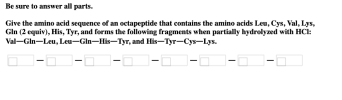 Be sure to answer all parts. Give the amino acid sequence of an octapeptide that contains the amino acids Leu, Cys, Val, Lys, Gln (2 equiv), His, Tyr, and forms the following fragments when partially hydrolyzed with HCl: Val-Gln-Leu, Leu-Gln-His-Tyr, and His-Tyr-Cys-Lys.
Be sure to answer all parts. Give the amino acid sequence of an octapeptide that contains the amino acids Leu, Cys, Val, Lys, Gln (2 equiv), His, Tyr, and forms the following fragments when partially hydrolyzed with HCl:...
Be sure to answer all parts. Give the amino acid sequence of an octapeptide that contains the amino acids Leu, Cys, Val, Lys, Gln (2 equiv), His, Tyr, and forms the following fragments when partially hydrolyzed with HCl: Val-Gln-Leu, Leu-Gln-His-Tyr, and His-Tyr-Cys-Lys.
Be sure to answer all parts. Give the amino acid sequence of an octapeptide that contains the amino acids Leu, Cys, Val, Lys, Gln (2 equiv), His, Tyr, and forms the following fragments when partially hydrolyzed with HCl:...
PLEASE HELP OCHEM QUESTION 1. In the following protein, identify the type of bonding or interaction...
 PLEASE HELP OCHEM QUESTION
1. In the following protein, identify the type of bonding or interaction that is responsible for holding the two peptide chains together at each amino acid pair, above (A) and below (B). Gly - Ala - Ser - Cys - Val - Asp - Leu - Thr - His - Ile-Tyr-Glu - Phe - Lys - Cys - Met - Asn Val - Leu -Gin-Cys - Pro-Lys - Met - Tyr - Asp -Phe-Asn-Lys - Ile...
PLEASE HELP OCHEM QUESTION
1. In the following protein, identify the type of bonding or interaction that is responsible for holding the two peptide chains together at each amino acid pair, above (A) and below (B). Gly - Ala - Ser - Cys - Val - Asp - Leu - Thr - His - Ile-Tyr-Glu - Phe - Lys - Cys - Met - Asn Val - Leu -Gin-Cys - Pro-Lys - Met - Tyr - Asp -Phe-Asn-Lys - Ile...
The isoelectric point (pI) of a peptide is the pH at which the peptide does not...
 The isoelectric point (pI) of a peptide is the pH at which the
peptide does not migrate in an electric field. Since the peptide is
zwitterionic, there are the same number of positive charges as
negative charges on the peptide population. The pI can be estimated
fairly accurately (within 0.1 or 0.2 pH units) from the pK values
of all the proton dissociable groups in the peptide. Using pK
values from the table at the right, estimate the pI value...
The isoelectric point (pI) of a peptide is the pH at which the
peptide does not migrate in an electric field. Since the peptide is
zwitterionic, there are the same number of positive charges as
negative charges on the peptide population. The pI can be estimated
fairly accurately (within 0.1 or 0.2 pH units) from the pK values
of all the proton dissociable groups in the peptide. Using pK
values from the table at the right, estimate the pI value...
On your internship, you visit the Mass Spectrometry Lab. Mass spectrometry can identify short peptide fragments...
On your internship, you visit the Mass Spectrometry Lab. Mass spectrometry can identify short peptide fragments based on their molecular weights. Your fellow intern Jerry has neglected to label his tubes of amyloid beta peptide 42 after digesting them with some proteases that we learned about in Module 6: pepsin, trypsin, and chymotrypsin. Help him figure out what protease is in each tube. Jerry’s supervisor has the fragments listed in the same order as the original peptide primary sequence, which...
 I 79) The sequence of a nonapeptide was determined from the following evidence: a. A peptide is acyclic compound containing a disulfide bridge between two cysteine residues. b. When the disulfide bridge is reduced, peptide has the constitution Asn, Cys2, Gin, Gly, Ile, Leu, Pro, Tyr. Partial hydrolysis of reduced peptide yields seven fragments: Asp-Cys, Ile-Glu, Cys-Tyr, Leu-Gly, Tyr-Ile-Glu, Glu-Asp-Cys, and Cys-Pro-Leu. d. Gly is the C-terminal group. C W What is the amino acid sequence of reduced peptide? What...
 How many amino acids are there in the disease causing variant of
the Amyloid-beta (Ab) peptide?
Determine which of these four peptides is most likely to become a beta sheet. Lys-Thr-Val-Ile-Trp-Pro-Phe-Tyr-Ile-Gln-Ile-Gly Arg-Ser-Tyr-Glu-Gly-Leu-Lys-Arg-Ile-Ala-Glu-Ser Ala-Glu-Met-Leu-Gln-Lys-Arg-Gly-Cys-Gly-Asp-Glu Met-Leu-Lys-Ala-Ser-Ala-Leu-Glu-Lys-Leu-Ser-Glu
How many amino acids are there in the disease causing variant of
the Amyloid-beta (Ab) peptide?
Determine which of these four peptides is most likely to become a beta sheet. Lys-Thr-Val-Ile-Trp-Pro-Phe-Tyr-Ile-Gln-Ile-Gly Arg-Ser-Tyr-Glu-Gly-Leu-Lys-Arg-Ile-Ala-Glu-Ser Ala-Glu-Met-Leu-Gln-Lys-Arg-Gly-Cys-Gly-Asp-Glu Met-Leu-Lys-Ala-Ser-Ala-Leu-Glu-Lys-Leu-Ser-Glu
 3. (2 Points) Give the one-letter equivalents for all amino acids in the following sequence and circle the residues most likely to bind to a hard transition-metal ion: Ile-Pro-Arg-Glu-Phe-Glu-Arg-Cys-Ala-Asp-Ile-Ser-Leu-Ile-Lys-Glu-His-Gly
 Be sure to answer all parts. Give the amino acid sequence of an octapeptide that contains the amino acids Leu, Cys, Val, Lys, Gln (2 equiv), His, Tyr, and forms the following fragments when partially hydrolyzed with HCl: Val-Gln-Leu, Leu-Gln-His-Tyr, and His-Tyr-Cys-Lys.
Be sure to answer all parts. Give the amino acid sequence of an octapeptide that contains the amino acids Leu, Cys, Val, Lys, Gln (2 equiv), His, Tyr, and forms the following fragments when partially hydrolyzed with HCl:...
Be sure to answer all parts. Give the amino acid sequence of an octapeptide that contains the amino acids Leu, Cys, Val, Lys, Gln (2 equiv), His, Tyr, and forms the following fragments when partially hydrolyzed with HCl: Val-Gln-Leu, Leu-Gln-His-Tyr, and His-Tyr-Cys-Lys.
Be sure to answer all parts. Give the amino acid sequence of an octapeptide that contains the amino acids Leu, Cys, Val, Lys, Gln (2 equiv), His, Tyr, and forms the following fragments when partially hydrolyzed with HCl:...
 PLEASE HELP OCHEM QUESTION
1. In the following protein, identify the type of bonding or interaction that is responsible for holding the two peptide chains together at each amino acid pair, above (A) and below (B). Gly - Ala - Ser - Cys - Val - Asp - Leu - Thr - His - Ile-Tyr-Glu - Phe - Lys - Cys - Met - Asn Val - Leu -Gin-Cys - Pro-Lys - Met - Tyr - Asp -Phe-Asn-Lys - Ile...
PLEASE HELP OCHEM QUESTION
1. In the following protein, identify the type of bonding or interaction that is responsible for holding the two peptide chains together at each amino acid pair, above (A) and below (B). Gly - Ala - Ser - Cys - Val - Asp - Leu - Thr - His - Ile-Tyr-Glu - Phe - Lys - Cys - Met - Asn Val - Leu -Gin-Cys - Pro-Lys - Met - Tyr - Asp -Phe-Asn-Lys - Ile...
 The isoelectric point (pI) of a peptide is the pH at which the
peptide does not migrate in an electric field. Since the peptide is
zwitterionic, there are the same number of positive charges as
negative charges on the peptide population. The pI can be estimated
fairly accurately (within 0.1 or 0.2 pH units) from the pK values
of all the proton dissociable groups in the peptide. Using pK
values from the table at the right, estimate the pI value...
The isoelectric point (pI) of a peptide is the pH at which the
peptide does not migrate in an electric field. Since the peptide is
zwitterionic, there are the same number of positive charges as
negative charges on the peptide population. The pI can be estimated
fairly accurately (within 0.1 or 0.2 pH units) from the pK values
of all the proton dissociable groups in the peptide. Using pK
values from the table at the right, estimate the pI value...
Most questions answered within 3 hours.
-
Where is the error in this code sequence?
String s1 = "Hello";
String s2 = "ello";...
asked 11 months ago -
Financial data for Joel de Paris, Inc., for last year
follow:
Joel de Paris, Inc.
Balance...
asked 11 months ago -
Consider this reaction:
Al2(SO4)3 (aq)+ BaCl3
(aq) Al2Cl6 (aq)- +
3BaSO4(s) . What is the...
asked 11 months ago -
Suppose that Savneet is considering increasing her
recent random sample from 20 car rentals to 40...
asked 11 months ago -
Trucks arrive at an unloading terminal at an average rate of 120
per hour.
Trucks arrive...
asked 11 months ago -
Why are methanol and ethanol completely soluble in water while
octanol is not very little soluble....
asked 11 months ago -
A facilities manager at a university reads in a research report
that the mean amount of...
asked 11 months ago -
When the CuSO4 is rehydrated by adding water to the anhydrous
compound, is this an endothermic...
asked 11 months ago -
A ray of sunlight is passing from diamond into crown glass; the
angle of incidence is...
asked 11 months ago -
A block of mass 0.249 kg is placed on top of a light, vertical
spring of...
asked 11 months ago -
how do the kidneys compensate in the presences of acidosis
a) trigger hyperventilate
b) reserve acid...
asked 11 months ago -
Question 501 pts
The rental rate of capital to the firm increases. Which of the
following...
asked 11 months ago