Design H -SHAPE microstrip array antenna in HFSS software and MATLAB CODE FOR IT. I NEED...
Design H -SHAPE microstrip array antenna in HFSS software and MATLAB CODE FOR IT.
I NEED ALL THE OUTPUT FOR THIS CODE
IF YOU KNOW THEN ONLY DO OR ELSE LEAVE FOR OTHER
ANTENNA ,ELECTRICAL ENGINEERING
Homework Answers
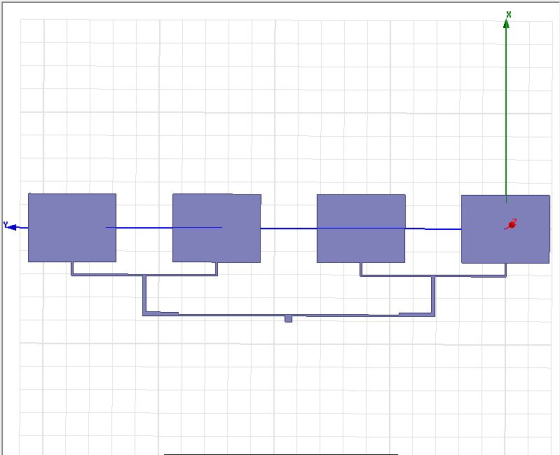
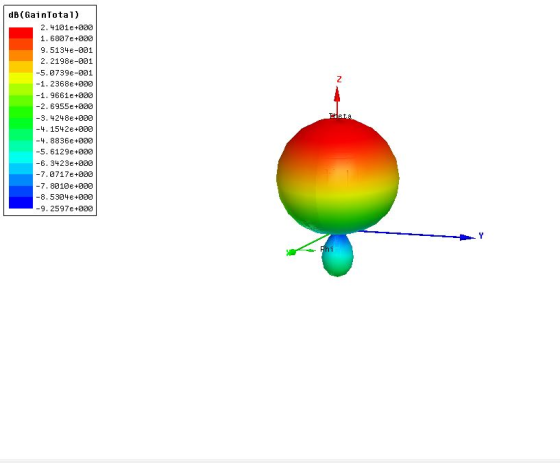
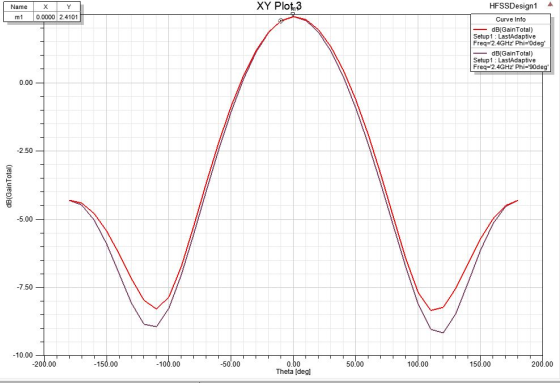
%*******************************************************************
% MICROSTRIP
%*******************************************************************
% THIS PROGRAM IS A MATLAB PROGRAM THAT DESIGNS AND THEN COMPUTES
THE
% ANTENNA RADIATION CHARACTERISTICS OF:
%
% I. RECTANGULAR
% II. CIRCULAR
%
% MICROSTRIP PATCH ANTENNAS BASED ON THE CAVITY MODEL AND
DOMINANT
% MODE OPERATION FOR EACH. THAT IS:
%
% A. TM(010) MODE FOR THE RECTANGULAR
PATCH
% B. TM(011) MODE FOR THE CIRCULAR
PATCH
%
% ** INPUT PARAMETERS
% 1. FREQ = RESONANT FREQUENCY
(in GHz)
% 2. EPSR = DIELECTRIC CONSTANT
OF THE SUBSTRATE
% 3. HEIGHT = HEIGHT OF THE SUBSTRATE (in
cm)
% 4. Y0 = POSITION
OF THE RECESSED FEED POINT (in cm)
%
RELATIVE TO LEADING RADIATING EDGE OF RECTANGULAR
%
PATCH. NOT NECESSARY FOR CIRCULAR PATCH.
%
% ** OUTPUT PARAMETERS
% A. RECTANGULAR PATCH:
%
% 1. PHYSICAL WIDTH
OF THE PATCH W (in cm)
% 2. EFFECTIVE
LENGTH OF PATCH Le (in cm)
% 3. PHYSICAL
LENGTH OF PATCH L (in cm)
% 4. NORMALIZED
E-PLANE AMPLITUDE PATTERN (in dB)
% 5. NORMALIZED
H-PLANE AMPLITUDE PATTERN (in dB)
% 6. E-PLANE
HALF-POWER BEAMWIDTH (in degrees)
% 7. H-PLANE
HALF-POWER BEAMWIDTH (in degrees)
% 8. DIRECTIVITY
(dimensionless and in dB)
% 9. RESONANT INPUT
RESISTANCE (in ohms)
%
a. AT LEADING RADIATING EDGE (y = 0)
%
b. AT RECESSED FEED POINT FROM LEADING RADIATING EDGE
%
(y = yo)
%
% B. CIRCULAR PATCH:
%
% 1. PHYSICAL
RADIUS OF THE PATCH a (in cm)
% 2. EFFECTIVE
RADIUS OF THE PATCH ae (in cm)
% 3. NORMALIZED
E-PLANE AMPLITUDE (in dB)
% 4. NORMALIZED
H-PLANE AMPLITUDE (in dB)
% 5. E-PLANE
HALF-POWER BEAMWIDTH (in degrees)
% 6. H-PLANE
HALF-POWER BEAMWIDTH (in degrees)
% 7. DIRECTIVITY
(dimensionless and in dB)
%
%*******************************************************************
% Programmed by : Sung-Woo Lee , Arizona
State University
% Modified by : Zhiyong Huang,
Arizona State University
% Nov. 23, 2004
%*******************************************************************
function []=MICROSTP;
clear all;
close all;
warning off;
option=[];
while isempty(option)|(option~=1&option~=2),
option=input(['SELECT OUTPUT METHOD\n','
OPTION (1): SCREEN\n',' OPTION (2): OUTPUT FILE\n',
...
'SELECT OPTION: ']);
end;
filename=[];
if option==2,
while isempty(filename),
filename=input('INPUT THE DESIRED
OUTPUT FILENAME <in single quotes> = ','s');
end;
end;
addpath(pwd);
if exist(filename,'file')&isa(filename,'char'),
delete(filename);
end;
rmpath(pwd);
patchm=[];
while isempty(patchm)|((patchm~=1)&(patchm~=2)),
patchm=input(['PATCH GEOMETRY OPTION\n','
OPTION (1) : RECTANGULAR PATCH\n', ...
' OPTION (2) : CIRCULAR PATCH\n','SELECT OPTION NUMBER:
']);
end;
if (patchm==1),
% Rectangular
rect(option,filename);
else % Circular
circ(option,filename);
end;
warning on;
%%%%%%%%%%%%%%%%%%%
function rect=rect(option_a,filename);
%%%%%%%%%%%%%%%%%%%
% Input Parameters (freq, epsr, height, Yo)
freq=[];
while isempty(freq),
freq=input('INPUT THE RESONANT FREQUENCY (in GHz) =
');
end;
er=[];
while isempty(er),
er=input('INPUT THE DIELECTRIC CONSTANT OF THE
SUBSTRATE = ');
end;
h=[];
while isempty(h),
h=input('INPUT THE HEIGHT OF THE SUBSTRATE (in cm) =
');
end;
option1=[];
while isempty(option1)|(option1~=1&option1~=2),
option1=input(['OPTIONS \n',' OPTION (1):
FIND INPUT IMPEDANCE Zin AT FEED-POINT Yo \n', ...
' OPTION (2): DETERMINE Yo FOR A GIVEN DESIRED Zin \n',
...
'SELE1CT OPTION NUMBER: ']);
end;
if option1==1
Yo=[];
while isempty(Yo),
Yo=input(['\nINPUT THE
POSITION OF THE RECESSED FEED POINT ' ...
'RELATIVE TO THE LEADING RADIATING EDGE\n' 'OF THE RECTANGULAR
PATCH (in cm) = ']);
end
else
Zin=[];
while isempty(Zin),
Zin=input(['INPUT THE
DESIRED INPUT IMPEDANCE Zin (in ohms) = ']);
end
end
% Compute W, ereff, Leff, L (in cm)
W=30.0/(2.0*freq)*sqrt(2.0/(er+1.0));
ereff=(er+1.0)/2.0+(er-1)/(2.0*sqrt(1.0+12.0*h/W));
dl=0.412*h*((ereff+0.3)*(W/h+0.264))/((ereff-0.258)*(W/h+0.8));
lambda_o=30.0/freq;
lambda=30.0/(freq*sqrt(ereff));
Leff=30.0/(2.0*freq*sqrt(ereff));
L=Leff-2.0*dl;
ko=2.0*pi/lambda_o;
Emax=sinc(h*ko/2.0/pi);
% Normalized radiated field
% E-plane pattern :
0 < phi < 90 ; 270 <
phi < 360
% H-plane pattern :
0 < th < 180
phi=0:360; phir=phi.*pi./180; [Ethval,Eth]=E_th(phir,h,ko,Leff,Emax);
th=0:360; thr=th.*pi/180.0;
[Ephval,Eph1]=E_ph(thr,h,ko,W,Emax);
Eph(1:91)=Eph1(91:181); Eph(91:270)=Eph1(181);
Eph(271:361)=Eph1(1:91);
% Output files
fid_e=fopen('Epl-Micr_m.dat','wt');
fid_h=fopen('Hpl-Micr_m.dat','wt');
fprintf(fid_e,'# E-PLANE RADIATION PATTERN\n');
fprintf(fid_e,'# -------------------------\n#\n');
fprintf(fid_h,'# H-PLANE RADIATION PATTERN\n');
fprintf(fid_h,'# NOTE: THIS PATTERN IS ROTATED CCW BY 90
DEGREES\n');
fprintf(fid_h,'# -------------------------\n#\n');
Epl=[phi;Eth];
fprintf(fid_e,' %7.4f\t%7.4f\n',Epl);
fclose(fid_e);
Hpl=[[0:90 270:360];[Eph(1:91) Eph(271:361)]];
fprintf(fid_h,' %7.4f\t%7.4f\n',Hpl);
fclose(fid_h);
% Plots of Radiation Patterns
% Figure 1
% ********
Etheta=[Eth(271:361),Eth(2:91)];
xs=[0 20 40 60 80 90 100 120 140 160 180];
xsl=[270 290 310 330 350 0 10 30 50 70 90];
hli1=plot(Etheta,'b-');
set(gca,'Xtick',xs);
set(gca,'Xticklabel',xsl);
set(gca,'position',[0.13 0.11 0.775 0.8]);
h1=gca; h2=copyobj(h1,gcf);
xlim([0 180]);ylim([-60 0]);
set(h1,'xcolor',[0 0 1]); set(hli1,'erasemode','xor');
hx=xlabel('\phi (degrees)','fontsize',12);
axes(h2); hli2=plot(Eph1,'r:'); axis([0 180 -60 0]);
set(h2,'xaxislocation','top','xcolor',[1 0 0]);
legend([hli1 hli2],{'E_{\phi} (E-plane)','E_{\phi}
(H-plane)'},4);
xlabel('\theta (degrees)','fontsize',12);
set([hli1 hli2],'linewidth',2); set(hx,'erasemode','xor');
ylabel('Radiation patterns (in dB)','fontsize',12);
% title('E- and H-plane Patterns of Rectangular Microstrip
Antenna','fontsize',[12]);
% Figure 2
% ********
figure(2);
hp1=semipolar_micror(phir,Eth,-60,0,4,'-','b'); hold on;
hp2=semipolar_micror(phi*pi/180,Eph,-60,0,4,':','r');
title('E- and H-plane Patterns of Rectangular Microstrip
Antenna','fontsize',[12]);
hle=legend([hp1 hp2],{'E_{\phi} (E-plane)','E_{\phi}
(H-plane)'},0);
% E-plane HPBW and H-plane HPBW
% ******************************
an=phi(Eth>-3);
an(an>90)=[];
EHPBW=2*abs(max(an));
HHPBW=2*abs(90-min(th(Eph1>-3)));
% Directivity
[D,DdB]=dir_rect(W,h,Leff,L,ko);
% Input Impedance at Y=0 and Y=Yo
[G1,G12]=sintegr(W,L,ko);
Rin0P=(2.*(G1+G12))^-1;
Rin0M=(2.*(G1-G12))^-1;
if option1==1
RinYoP=Rin0P*cos(pi*Yo/L)^2;
RinYoM=Rin0M*cos(pi*Yo/L)^2;
else
YP=acos(sqrt(Zin/Rin0P))*L/pi;
YM=acos(sqrt(Zin/Rin0M))*L/pi;
end
% Display (rectangular)
clc;
if(option_a==2)
diary(filename);
end
disp(strvcat('INPUT PARAMETERS','================'));
disp(sprintf('\nRESONANT FREQUENCY (in GHz) = %4.4f',freq));
disp(sprintf('DIELECTRIC CONSTANT OF THE SUBSTRATE =
%4.4f',er));
disp(sprintf('HEIGHT OF THE SUBSTRATE (in cm) = %4.4f',h));
if option1==1
disp(sprintf('POSITION OF THE RECESSED FEED
POINT (in cm) = %4.4f\n',Yo));
else
fprintf('DESIRED RESONANT INPUT INPEDANCE (in
ohms) = %4.4f\n', Zin);
end
disp(strvcat('OUTPUT PARAMETERS','================='));
disp(sprintf('\nPHYSICAL WIDTH OF PATCH (in cm) = %4.4f',W));
disp(sprintf('EFFECTIVE LENGH OF PATCH (in cm) =
%4.4f',Leff));
disp(sprintf('PHYSICAL LENGH OF PATCH (in cm) = %4.4f',L));
disp(sprintf('E-PLANE HPBW (in degrees) = %4.4f',EHPBW));
disp(sprintf('H-PLANE HPBW (in degrees) = %4.4f',HHPBW));
disp(sprintf('DIRECTIVITY OF RECTANGULAR PATCH (dimensionless) =
%4.4f',D));
disp(sprintf('DIRECTIVITY OF RECTANGULAR PATCH (in dB) =
%4.4f\n',DdB));
disp(sprintf('G1 (Using (14-12)) = %4.8f', G1));
disp(sprintf('G12 (Using (14-18a)) = %4.8f\n', G12));
disp(sprintf('RESONANT INPUT RESISTANCE AT LEADING RADIATING
EDGE (y=0) Rin0P (Using + sign in (14-17)) = %4.4f
ohms',Rin0P));
disp(sprintf('RESONANT INPUT RESISTANCE AT LEADING RADIATING EDGE
(y=0) Rin0M (Using - sign in (14-17)) = %4.4f ohms\n',Rin0M));
if option1==1
fprintf('RESONANT INPUT RESISTANCE AT RECESSED
FEED POINT (y=%4.4f cm) RinYoP (Using + sign in (14-17)) = %4.4f
ohms\n',Yo, RinYoP);
fprintf('RESONANT INPUT RESISTANCE AT RECESSED
FEED POINT (y=%4.4f cm) RinYoM (Using - sign in (14-17)) = %4.4f
ohms\n\n',Yo, RinYoM);
else
fprintf('FOR DESIRED IMPENDANCE %4.4f ohms, THE
FEED POINT POSITION YoP (Using + sign in (14-17)) = %4.4f
cm\n',Zin, YP);
fprintf('FOR DESIRED IMPENDANCE %4.4f ohms, THE
FEED POINT POSITION YoM (Using - sign in (14-17)) = %4.4f
cm\n\n',Zin, YM);
end
disp(strvcat('*** NOTE:',...
' THE E-PLANE AMPLITUDE PATTERN IS
STORED IN Epl-Micr_m.dat',...
' THE H-PLANE AMPLITUDE PATTERN IS
STORED IN Hpl-Micr_m.dat',...
'
========================================================='));
diary off;
% Subfunctions
% ************
function [Ethval,Eth]=E_th(phir,h,ko,Leff,Emax)
ARG=cos(phir).*h.*ko./2;
Ethval=(sinc(ARG./pi).*cos(sin(phir).*ko*Leff./2))./Emax;
Eth=20*log10(abs(Ethval));
Eth(phir>pi/2&phir<3*pi/2)=-60;
Eth(Eth<=-60)=-60;
function [Ephval,Eph1]=E_ph(thr,h,ko,W,Emax)
ARG1=sin(thr).*h.*ko./2;
ARG2=cos(thr).*W.*ko./2;
Ephval=sin(thr).*sinc(ARG1./pi).*sinc(ARG2./pi)./Emax;
Eph1=20.0*log10(abs(Ephval));
Eph1(Eph1<=-60)=-60;
function [D,DdB]=dir_rect(W,h,Leff,L,ko)
th=0:180; phi=[0:90 270:360];
[t,p]=meshgrid(th.*pi/180,phi.*pi/180);
X=ko*h/2*sin(t).*cos(p);
Z=ko*W/2*cos(t);
Et=sin(t).*sinc(X/pi).*sinc(Z/pi).*cos(ko*Leff/2*sin(t).*sin(p));
U=Et.^2;
dt=(th(2)-th(1))*pi/180;
dp=(phi(2)-phi(1))*pi/180;
Prad=sum(sum(U.*sin(t)))*dt*dp;
D=4.*pi.*max(max(U))./Prad;
DdB=10.*log10(D);
function [G1,G12]=sintegr(W,L,ko)
th=0:1:180; t=th.*pi/180;
ARG=cos(t).*(ko*W/2);
res1=sum(sinc(ARG./pi).^2.*sin(t).^2.*sin(t).*((pi/180)*(ko*W/2)^2));
res12=sum(sinc(ARG./pi).^2.*sin(t).^2.*besselj(0,sin(t).*(ko*L)).*sin(t).*((pi/180)*(ko*W/2)^2));
G1=res1./(120*pi^2); G12=res12./(120*pi^2);
%%%%%%%%%%%%%%%%%%%
function circ=circ(option_a,filename);
%%%%%%%%%%%%%%%%%%%
% Input Parameters (freq, epsr, height)
freq=[];
while isempty(freq),
freq=input('INPUT THE RESONANT FREQUENCY (in GHz) =
');
end;
er=[];
while isempty(er),
er=input('INPUT THE DIELECTRIC CONSTANT OF THE
SUBSTRATE = ');
end;
h=[];
while isempty(h),
h=input('INPUT THE HEIGHT OF THE SUBSTRATE (in cm) =
');
end;
con=input('PLEASE INPUT THE CONDUCTIVITY (DEFAULT VALUE IS
10^7):');
if isempty(con)
con=10^7;
end
lt=input('PLEASE INPUT THE LOST TANGENT (DEFAULT VALUE OF
DOMNINANT MODE TM110 IS 0.0018):');
if isempty(lt)
lt=0.0018;
end
%input of the rho0 or zin
option1=[];
while isempty(option1)|(option1~=1&option1~=2),
option1=input(['OPTIONS \n',' OPTION (1):
FIND INPUT IMPEDANCE Zin AT FEED-POINT RHOo \n', ...
' OPTION (2): DETERMINE RHOo FOR A GIVEN DESIRED Zin
\n', ...
'SELE1CT OPTION NUMBER: ']);
end;
if option1==1
RHOo=[];
while isempty(RHOo),
RHOo=input(['\nINPUT THE
POSITION OF THE RECESSED FEED POINT ' ...
'RELATIVE TO THE CENTER OF THE CIRCULAR PATCH (in cm) = ']);
end
else
Zin=[];
while isempty(Zin),
Zin=input(['INPUT THE
DESIRED INPUT IMPEDANCE Zin (in ohms) = ']);
end
end
% Compute the Physical Radius a (in cm) and Effective Radius ae
(in cm)
lambda_o=30.0/freq;
ko=2.0*pi/lambda_o;
F=8.791/(freq*sqrt(er));
a=F/sqrt(1+2*h/(pi*er*F)*(log(pi*F/(2*h))+1.7726));
ae=a*sqrt(1+2*h/(pi*er*a)*(log(pi*a/(2*h))+1.7726));
% Normalized radiated field
% E-plane and
H-plane patterns : 0 < th < 90
th=0:90; thr=th.*pi./180;
x=sin(thr).*ko.*ae;
J0=besselj(0,x);
J2=besselj(2,x);
Eth1=J0-J2;
Eph1=(J0+J2).*cos(thr);
Eth2=20.*log10(Eth1./max(Eth1));
Eph2=20.*log10(Eph1./max(Eph1));
Eth2(Eth2<=-60)=-60;
Eph2(Eph2<=-60)=-60;
Eth(1:91)=Eth2(1:91); Eth(91:270)=Eth2(91);
Eth(271:361)=Eth2(91:-1:1);
Eph(1:91)=Eph2(1:91); Eph(91:270)=Eph2(91);
Eph(271:361)=Eph2(91:-1:1);
% Output files
fid_e=fopen('Epl-Micr_m.dat','wt');
fid_h=fopen('Hpl-Micr_m.dat','wt');
fprintf(fid_e,'# E-PLANE RADIATION PATTERN\n');
fprintf(fid_e,'# -------------------------\n#\n');
fprintf(fid_h,'# H-PLANE RADIATION PATTERN\n');
fprintf(fid_h,'# -------------------------\n#\n');
Epl=[[0:90 270:360];[Eth(1:91) Eth(271:361)]];
fprintf(fid_e,' %7.4f\t%7.4f\n',Epl);
fclose(fid_e);
Hpl=[[0:90 270:360];[Eph(1:91) Eph(271:361)]];
fprintf(fid_h,' %7.4f\t%7.4f\n',Hpl);
fclose(fid_h);
% Plots of Radiation Patterns
phi=0:360;
% Figure 1
% ********
hli1=plot(-90:90,[fliplr(Eth2) Eth2(2:end)],'b-');
set(gca,'position',[0.13 0.11 0.775 0.8]);
h1=gca; h2=copyobj(h1,gcf); axis([-90 90 -60 0]);
set(h1,'xcolor',[0 0 1]); set(hli1,'erasemode','xor');
hx=xlabel('\theta (degrees)','fontsize',12);
axes(h2); hli2=plot(-90:90,[fliplr(Eph2) Eph2(2:end)],'r:');
axis([-90 90 -60 0]);
set(h2,'xaxislocation','top','xcolor',[1 0 0]);
set([hli1 hli2],'linewidth',2);
legend([hli1 hli2],{'E_{\theta} (E-plane)','E_{\phi}
(H-plane)'},4);
xlabel('\theta (degrees)','fontsize',12);
% Figure 2
% ********
figure(2);
thr=(-90:90)*pi/180;
hp1=semipolar_microc(thr,[fliplr(Eth2)
Eth2(2:end)],-60,0,4,'-','b'); hold on;
hp2=semipolar_microc(thr,[fliplr(Eph2)
Eph2(2:end)],-60,0,4,':','r');
hle=legend([hp1 hp2],{'E_{\theta} (E-plane)','E_{\phi}
(H-plane)'},0);
title('E- and H-plane Patterns of Circular Microstrip
Antenna','fontsize',[12]);
% E-plane and H-plane HPBW
an=th(Eth2>-3);
bn=th(Eph2>-3);
EHPBW=2*abs(max(an));
HHPBW=2*abs(max(bn));
%resonant input resistance
t=[0:0.001:pi/2];
x=ko*ae*sin(t);
j0=besselj(0,x);
j2=besselj(2,x);
j02p=j0-j2;
j02=j0+j2;
grad=(ko*ae)^2/480*sum((j02p.^2+(cos(t)).^2.*j02.^2).*sin(t).*0.001);
emo=1;
m=1;
mu0=4*pi*10^(-7);
k=ko*sqrt(er);
gc=emo*pi*(pi*mu0*freq*10^9)^(-3/2)*((k*ae)^2-m^2)/(4*(h/100)^2*sqrt(con));
gd=emo*lt*((k*ae)^2-m^2)/(4*mu0*h/100*freq*10^9);
gt=grad+gc+gd;
Rin0=1/gt;
if option1==1
Rin=Rin0*besselj(1,k*RHOo)^2/besselj(1,k*ae)^2;
else
temp1=Zin/Rin0*besselj(1,k*ae)^2;
maxrho=ae;
minrho=0;
tempk=1;
while tempk>0.00001
nk=0;
rhox=linspace(minrho,maxrho,100);
temp=besselj(1,k.*rhox).^2;
for kk=1:99
if temp(kk)-temp1<=0
if temp(kk+1)-temp1>0
nk=nk+1;
minrho=rhox(kk);
maxrho=rhox(kk+1);
end
else
if temp(kk+1)-temp1<=0
nk=nk+1;
maxrho=rhox(kk);
minrho=rhox(kk+1);
end
end
end
if nk>1
display('*****Warning, there are more than one solutions for RHOo
and this program only provides you one exact
solution!*****/n');
end
[tempk,kk]=min(abs(temp-temp1));
RHOo=rhox(kk);
end
end
% Directivity
[D,DdB]=dir_cir(a,ae,ko);
% Display (circular)
clc;
if (option_a==2),
diary(filename);
end
disp(strvcat('INPUT PARAMETERS','================'));
disp(sprintf('\nRESONANT FREQUENCY (in GHz) = %4.4f',freq));
disp(sprintf('DIELECTRIC CONSTANT OF THE SUBSTRATE =
%4.4f',er));
disp(sprintf('HEIGHT OF THE SUBSTRATE (in cm) = %4.4f\n',h));
disp(strvcat('OUTPUT PARAMETERS','================='));
disp(sprintf('\nPHYSICAL RADIUS OF THE PATCH (in cm) =
%4.4f',a));
disp(sprintf('EFFECTIVE RADIUS OF THE PATCH (in cm) =
%4.4f',ae));
disp(sprintf('E-PLANE HPBW (in degrees) = %4.4f',EHPBW));
disp(sprintf('H-PLANE HPBW (in degrees) = %4.4f',HHPBW));
disp(sprintf('DIRECTIVITY OF CIRCULAR PATCH (dimensionless) =
%4.4f',D));
disp(sprintf('DIRECTIVITY OF CIRCULAR PATCH (in dB) =
%4.4f\n',DdB));
fprintf('*** TM110 MODE ***\n');
fprintf('RESONANT INPUT RESISTANCE AT RHO=ae : Rin0= %4.4f
ohms\n',Rin0);
if option1==1
fprintf('RESONANT INPUT RESISTANCE AT RECESSED
FEED POINT (RHO=%4.4f cm) RIN= %4.4f ohms\n',RHOo, Rin);
else
fprintf('FOR DESIRED IMPENDANCE %4.4f ohms, THE
FEED POINT POSITION RHOo=%4.4f cm\n\n',Zin, RHOo);
end
disp(strvcat('*** NOTE:',...
' THE E-PLANE AMPLITUDE PATTERN IS
STORED IN Epl-Micr_m.dat',...
' THE H-PLANE AMPLITUDE PATTERN IS
STORED IN Hpl-Micr_m.dat',...
'
========================================================='));
diary off;
% Subfunction
function [D,DdB]=dir_cir(a,ae,ko)
th=0:90; phi=0:360;
[t,p]=meshgrid(th.*pi/180,phi.*pi/180);
x=sin(t).*ko.*ae;
J0=besselj(0,x); J2=besselj(2,x);
J02P=J0-J2; J02=J0+J2;
Ucirc=(J02P.*cos(p)).^2 + (J02.*cos(t).*sin(p)).^2;
Umax=max(max(Ucirc));
Ua=Ucirc.*sin(t).*(pi./180).^2;
Prad=sum(sum(Ua));
D=4.*pi.*Umax./Prad;
DdB=10.*log10(D);
Add Answer to:
Design H -SHAPE microstrip array antenna in
HFSS software and MATLAB CODE FOR IT.
I NEED...
Question 2: In an antenna design problem, the main lobe of an antenna array is required...
 Question 2: In an antenna design problem, the main lobe of an antenna array is required to point in degree. Design a 4 isotropic antenna array and find: -120 A. The antenna pattern (over the upper half-plane only) B. Why do we need array antennas? What are the disadvantages of array antennas?
I need a matlab code to answer the questions below ICE09B Make an Array Develop a...
 I need a matlab code to answer the questions below
ICE09B Make an Array Develop a MATLAB code which will produce an array that looks like the following: 4 10 1. You must start with a blank array and build the array with a DNFL. You can NOT just load the array with an assignment statement. Hint: Use "addition" for your variables Square all values in the array 2. Blackboard will ask you for a screenshot of your properly working...
I need a matlab code to answer the questions below
ICE09B Make an Array Develop a MATLAB code which will produce an array that looks like the following: 4 10 1. You must start with a blank array and build the array with a DNFL. You can NOT just load the array with an assignment statement. Hint: Use "addition" for your variables Square all values in the array 2. Blackboard will ask you for a screenshot of your properly working...
I need a working MATLAB CODE for GAUSS SEIDEL ITERATIVE SCHEME the matlab code must compare...
I need a working MATLAB CODE for GAUSS SEIDEL ITERATIVE SCHEME the matlab code must compare with actual value and break if this condition is not met i will dislike think before answering a correct working matlab code must be given or else i will dislike badly
Hi I need some help with this I just need the code and the collection name...
Hi I need some help with this I just need the code and the collection name is research only the code I dont need any screenshots of the output. it should be for companies.json using the research collection as like this db.research.aggregate({}) but I don't know how to do the rest. This is the database but it is hard to paste it all so I will paste some and it should be create. Please I need this to be done...
-I need help with C++. I'm working with an array of words. The array size is...
-I need help with C++. I'm working with an array of words. The array size is 1000 but not all 1000 slots will be filled. I run an insertion sort algorithm and then output the array but the sorted array output includes the unused empty slots so there is a lot of blank spaces before the sorted words appear. -The sorting algorithm seems to be reading in the empty array slots as well. Is there a way to read an...
I need the code written in Matlab software to send a number of bits using the...
I need the code written in Matlab software to send a number of bits using the Pulse Shape Modulation, and demodulate the signal using the correlation coefficient. The part that i need to modified is the part that is in Bold. The two functions are : function [outSignals,time] = modulation(inBits) and function [outBits] = demodulation(inSignals). %% Main Function function runComm_code() clear;clc; SNRdB = 0:0.5:26; nBits = 1e6; SNRdBLength = length(SNRdB); Pe = ones(1,SNRdBLength); clc; disp('Simulation...
The problem below is a MATLAB question, please do it only Matlab, if you are not...
The problem below is a MATLAB question, please do it only Matlab, if you are not familiar with Matlab or not equipped with the program itself on your computer kindly leave it to someone who is. Please show me the Matlab codes for these two parts of the problem, I need to put them in same (m.file) so please consider that. Either you type the code or "preferably" you take a snip of your screen and post to teach me...
I have a 2D character array like this: [ [1 D E F G H] [2...
I have a 2D character array like this: [ [1 D E F G H] [2 C E] [3 A C] [4 H I J] [5 A B D]] How do you make a character array consisting of distinct alphabets? That is the output should be [A B C D E F G H I J]. I need a C++ code for the same.
MATLAB I need the input code and the output. Thanks. 7. Modify the Euler's method MATLAB...
 MATLAB
I need the input code and the output. Thanks.
7. Modify the Euler's method MATLAB code presented in the Learning activity video called Using Euler's Method on Matlab (located in the Blackboard Modue#10:: Nomerical Solution to ODE: part 1) to plot and compare the approximate solution using the modified Euler method, for a step size of 0.1 and 0.01
MATLAB
I need the input code and the output. Thanks.
7. Modify the Euler's method MATLAB code presented in the Learning activity video called Using Euler's Method on Matlab (located in the Blackboard Modue#10:: Nomerical Solution to ODE: part 1) to plot and compare the approximate solution using the modified Euler method, for a step size of 0.1 and 0.01
I need to write a matlab code that uses linear interpolation to find the time a...
I need to write a matlab code that uses linear interpolation to find the time a plane reaches a 2000 meters altitude whilst descending. The time is in the following format mm:ss.S (datetime) Time ......................Altitude 11.03.5 ......................2123 11:23.5 ......................1965 I will leave feedback that reflects the quality of your response. Thank you
 Question 2: In an antenna design problem, the main lobe of an antenna array is required to point in degree. Design a 4 isotropic antenna array and find: -120 A. The antenna pattern (over the upper half-plane only) B. Why do we need array antennas? What are the disadvantages of array antennas?
 I need a matlab code to answer the questions below
ICE09B Make an Array Develop a MATLAB code which will produce an array that looks like the following: 4 10 1. You must start with a blank array and build the array with a DNFL. You can NOT just load the array with an assignment statement. Hint: Use "addition" for your variables Square all values in the array 2. Blackboard will ask you for a screenshot of your properly working...
I need a matlab code to answer the questions below
ICE09B Make an Array Develop a MATLAB code which will produce an array that looks like the following: 4 10 1. You must start with a blank array and build the array with a DNFL. You can NOT just load the array with an assignment statement. Hint: Use "addition" for your variables Square all values in the array 2. Blackboard will ask you for a screenshot of your properly working...
 MATLAB
I need the input code and the output. Thanks.
7. Modify the Euler's method MATLAB code presented in the Learning activity video called Using Euler's Method on Matlab (located in the Blackboard Modue#10:: Nomerical Solution to ODE: part 1) to plot and compare the approximate solution using the modified Euler method, for a step size of 0.1 and 0.01
MATLAB
I need the input code and the output. Thanks.
7. Modify the Euler's method MATLAB code presented in the Learning activity video called Using Euler's Method on Matlab (located in the Blackboard Modue#10:: Nomerical Solution to ODE: part 1) to plot and compare the approximate solution using the modified Euler method, for a step size of 0.1 and 0.01
Most questions answered within 3 hours.
-
Where is the error in this code sequence?
String s1 = "Hello";
String s2 = "ello";...
asked 10 months ago -
Financial data for Joel de Paris, Inc., for last year
follow:
Joel de Paris, Inc.
Balance...
asked 10 months ago -
Consider this reaction:
Al2(SO4)3 (aq)+ BaCl3
(aq) Al2Cl6 (aq)- +
3BaSO4(s) . What is the...
asked 10 months ago -
Suppose that Savneet is considering increasing her
recent random sample from 20 car rentals to 40...
asked 10 months ago -
Trucks arrive at an unloading terminal at an average rate of 120
per hour.
Trucks arrive...
asked 10 months ago -
Why are methanol and ethanol completely soluble in water while
octanol is not very little soluble....
asked 10 months ago -
A facilities manager at a university reads in a research report
that the mean amount of...
asked 10 months ago -
When the CuSO4 is rehydrated by adding water to the anhydrous
compound, is this an endothermic...
asked 10 months ago -
A ray of sunlight is passing from diamond into crown glass; the
angle of incidence is...
asked 10 months ago -
A block of mass 0.249 kg is placed on top of a light, vertical
spring of...
asked 10 months ago -
how do the kidneys compensate in the presences of acidosis
a) trigger hyperventilate
b) reserve acid...
asked 10 months ago -
Question 501 pts
The rental rate of capital to the firm increases. Which of the
following...
asked 10 months ago