1) In experiment 1, post-lab question, what are the black dots surrounding the large neuronal cell (labeled B)?
|
microtubules |
||
|
glial cells |
||
|
bacteria |
||
|
extracellular matrix |

2)
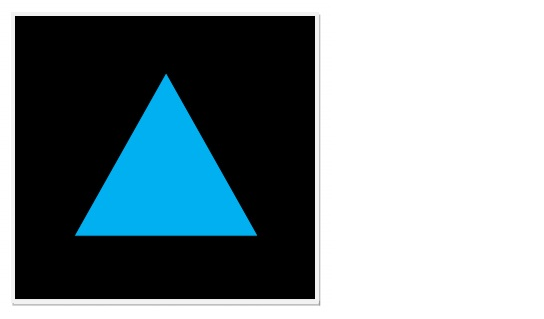
In experiment 2, you stared at a blue triangle for 30 seconds and then looked at a white piece of paper. What happened and why?
|
you saw a blue triangle because your brain can't register color changes that quickly |
||
|
you saw a different colored triange, because your brain can't register color changes that quickly |
||
|
you saw a different colored triangle, because your cone cells have become fatigued after repeated stimulation |
||
|
you saw a blue triangle because your brain was still focused on the original blue triangle |
3)
In experiment 3, why did the room temperature water feel warm when your finger was cold and then it felt cold when your finger was warm?
|
thermoreceptors can only detect slight temperature differences |
||
|
thermoreceptors do not register temperature, merely heat flow |
||
|
the thermoreceptors in your finger are not very accurate, as they are not critical to the function of the body |
||
|
thermoreceptors are only good at detecting painful (or potentially harmful) temperatures and therefore are not accurate for room temperature |

4)
Which of the following is not categorized as connective tissue?
|
blood |
||
|
bone |
||
|
adipose |
||
|
skeletal muscle |
||
|
all of the above are examples of connective tissue |
Homework Answers
1.)
Glial cells
2.)
you saw a different colored triangle, because your cone
cells have become fatigued after repeated
stimulation
If you stare at a red object and forthwith look into a white space
afterwards, you may see Associate in Nursing aftersensation that's
a similar size and form, however it's blue-green, or cyan, in
color. this is often as a result of your eyes use the red,
inexperienced and blue cone cells to understand white light-weight,
however as a result of the red cone cells worn out, you are doing
not experience. you're briefly left seeing with solely your
inexperienced and blue cone cells.
Add Answer to:
1) In experiment 1, post-lab question, what are the black dots
surrounding the large neuronal cell...
I need help calculating theoretical yield for my Diels-Alder lab experiment. This reaction was between 1,3-butadiene...
 I need help calculating theoretical yield for my
Diels-Alder lab experiment. This reaction was between 1,3-butadiene
and maleic anhydride, forming cis 1,2,3,6-tetrahydrophthalic
anhydride. In this experiment 1.0g of maleic anhydride was combined
with 1.8g 3-sulfolene and 2 mL dry xylene and refluxed for 30 mins.
6 mL of xylene was added to dissolve solids and then decanted, then
warm pet. ether was added to form crystalline product after
cooling. some of this info may be irrelevant in what is needed...
I need help calculating theoretical yield for my
Diels-Alder lab experiment. This reaction was between 1,3-butadiene
and maleic anhydride, forming cis 1,2,3,6-tetrahydrophthalic
anhydride. In this experiment 1.0g of maleic anhydride was combined
with 1.8g 3-sulfolene and 2 mL dry xylene and refluxed for 30 mins.
6 mL of xylene was added to dissolve solids and then decanted, then
warm pet. ether was added to form crystalline product after
cooling. some of this info may be irrelevant in what is needed...
for this experiment i got a yield of 0.93g how do you and what is the...
 for this experiment i got a yield of 0.93g
how do you and what is the theoretical and percentage
yield?
The Diels-Alder Reaction of Anthracene with Maleic Ankudride The Disco Alder reaction is a member of a class of reactions called cycladditions. The reacties wolves three x bonds, two from the diene and one from the dicnophile in a concerted reaction to Come six-memberedning Smce the reaction involves four electroes in the dienendo slectrons from the dicasphile, it is sometimes...
for this experiment i got a yield of 0.93g
how do you and what is the theoretical and percentage
yield?
The Diels-Alder Reaction of Anthracene with Maleic Ankudride The Disco Alder reaction is a member of a class of reactions called cycladditions. The reacties wolves three x bonds, two from the diene and one from the dicnophile in a concerted reaction to Come six-memberedning Smce the reaction involves four electroes in the dienendo slectrons from the dicasphile, it is sometimes...
Attached is the lab experiment. Here are the questions I need help with: 1. What is...
 Attached is the lab experiment. Here are the questions I need
help with:
1. What is the purpose of each of the following steps in this
experiment?
a. Adding solid NaCl to the reaction mixture
b. Repeated washings with water, sat'd NAHCO3, and brine
c. the pipet column chromatography
2. Which compound, cyclohexanol or cyclohexanone will have a
higher Rf on a TLC plate?
3. What is the advantage of using sodium hypochlorite as an
oxidant over CrO3 or Na2Cr2O7...
Attached is the lab experiment. Here are the questions I need
help with:
1. What is the purpose of each of the following steps in this
experiment?
a. Adding solid NaCl to the reaction mixture
b. Repeated washings with water, sat'd NAHCO3, and brine
c. the pipet column chromatography
2. Which compound, cyclohexanol or cyclohexanone will have a
higher Rf on a TLC plate?
3. What is the advantage of using sodium hypochlorite as an
oxidant over CrO3 or Na2Cr2O7...
(4 pts) (4 pts) (4 pts) (1 pts) 5. Calculations 6. Conclusions 7. Post lab Questions...
 (4 pts) (4 pts) (4 pts) (1 pts) 5. Calculations 6. Conclusions 7. Post lab Questions 8. TA signature POST LAB QUESTIONS: 1. Why do we add methanol to the reaction if we see a purple ring? 2. What reaction is occurring with the methanol (show reaction)? Does this reactior affect your product? 3. Why do you get a precipitate when adding the HCl to make the solution acidic? Exp 8-5 Experiment 8: Preparation of Adipic Acid from Cyclohexene Oxidation...
Bio 121 I need to make (yeast fermentation) lab report. This is the lab experiment and...
 Bio 121
I need to make (yeast fermentation) lab
report.
This is the lab experiment and results:
This is a guide to making the lab report:
General Biology BIO121 Yeast Fermentation Lab Introduction Organisms stay alive by the utilization of energy through metabolism. The energy acquiring pathways in photosynthesis convert radiant energy from the sun into the chemical bond energy of carbohydrates. This photosynthetic process is limited to the producers or autotrophs, which include plants, photosynthetic bacteria and some protists....
Bio 121
I need to make (yeast fermentation) lab
report.
This is the lab experiment and results:
This is a guide to making the lab report:
General Biology BIO121 Yeast Fermentation Lab Introduction Organisms stay alive by the utilization of energy through metabolism. The energy acquiring pathways in photosynthesis convert radiant energy from the sun into the chemical bond energy of carbohydrates. This photosynthetic process is limited to the producers or autotrophs, which include plants, photosynthetic bacteria and some protists....
Would the methylene chloride layer be above or below the experiment? Justify your answer. 1. aqueous layer in today...
 Would the methylene chloride layer be above or below the experiment? Justify your answer. 1. aqueous layer in today's ium carbonate used in the isolation of caffeine? Be specific as to the 2. Why is potass chemical species the carbonate may act on. Why was sodium sulfate used? 3. 4. After introducing 1.0 g of potassium carbonate into the centri hot water extract, it was capped, shaken, and then cooled to room temperature. Following this, roug minute. Why wasn't the...
While reading the story, consider the culture (or sub culture) and related communication styles the story...
 While reading the story, consider the culture (or sub culture)
and related communication styles the story reveals.
Consider too, possibly, the values, behavioral norms, social
practices, social artifacts, etc.
After reading the story through the lens of this idea, please
compose a full academic length (evidence-based 7 to 11 sentence
long) paragraph which addresses the following prompt:
What does the story reveal about the culture it portrays
and/OR the communication styles the culture shares?
In other words, what does the...
While reading the story, consider the culture (or sub culture)
and related communication styles the story reveals.
Consider too, possibly, the values, behavioral norms, social
practices, social artifacts, etc.
After reading the story through the lens of this idea, please
compose a full academic length (evidence-based 7 to 11 sentence
long) paragraph which addresses the following prompt:
What does the story reveal about the culture it portrays
and/OR the communication styles the culture shares?
In other words, what does the...
 I need help calculating theoretical yield for my
Diels-Alder lab experiment. This reaction was between 1,3-butadiene
and maleic anhydride, forming cis 1,2,3,6-tetrahydrophthalic
anhydride. In this experiment 1.0g of maleic anhydride was combined
with 1.8g 3-sulfolene and 2 mL dry xylene and refluxed for 30 mins.
6 mL of xylene was added to dissolve solids and then decanted, then
warm pet. ether was added to form crystalline product after
cooling. some of this info may be irrelevant in what is needed...
I need help calculating theoretical yield for my
Diels-Alder lab experiment. This reaction was between 1,3-butadiene
and maleic anhydride, forming cis 1,2,3,6-tetrahydrophthalic
anhydride. In this experiment 1.0g of maleic anhydride was combined
with 1.8g 3-sulfolene and 2 mL dry xylene and refluxed for 30 mins.
6 mL of xylene was added to dissolve solids and then decanted, then
warm pet. ether was added to form crystalline product after
cooling. some of this info may be irrelevant in what is needed...
 for this experiment i got a yield of 0.93g
how do you and what is the theoretical and percentage
yield?
The Diels-Alder Reaction of Anthracene with Maleic Ankudride The Disco Alder reaction is a member of a class of reactions called cycladditions. The reacties wolves three x bonds, two from the diene and one from the dicnophile in a concerted reaction to Come six-memberedning Smce the reaction involves four electroes in the dienendo slectrons from the dicasphile, it is sometimes...
for this experiment i got a yield of 0.93g
how do you and what is the theoretical and percentage
yield?
The Diels-Alder Reaction of Anthracene with Maleic Ankudride The Disco Alder reaction is a member of a class of reactions called cycladditions. The reacties wolves three x bonds, two from the diene and one from the dicnophile in a concerted reaction to Come six-memberedning Smce the reaction involves four electroes in the dienendo slectrons from the dicasphile, it is sometimes...
 Attached is the lab experiment. Here are the questions I need
help with:
1. What is the purpose of each of the following steps in this
experiment?
a. Adding solid NaCl to the reaction mixture
b. Repeated washings with water, sat'd NAHCO3, and brine
c. the pipet column chromatography
2. Which compound, cyclohexanol or cyclohexanone will have a
higher Rf on a TLC plate?
3. What is the advantage of using sodium hypochlorite as an
oxidant over CrO3 or Na2Cr2O7...
Attached is the lab experiment. Here are the questions I need
help with:
1. What is the purpose of each of the following steps in this
experiment?
a. Adding solid NaCl to the reaction mixture
b. Repeated washings with water, sat'd NAHCO3, and brine
c. the pipet column chromatography
2. Which compound, cyclohexanol or cyclohexanone will have a
higher Rf on a TLC plate?
3. What is the advantage of using sodium hypochlorite as an
oxidant over CrO3 or Na2Cr2O7...
 (4 pts) (4 pts) (4 pts) (1 pts) 5. Calculations 6. Conclusions 7. Post lab Questions 8. TA signature POST LAB QUESTIONS: 1. Why do we add methanol to the reaction if we see a purple ring? 2. What reaction is occurring with the methanol (show reaction)? Does this reactior affect your product? 3. Why do you get a precipitate when adding the HCl to make the solution acidic? Exp 8-5 Experiment 8: Preparation of Adipic Acid from Cyclohexene Oxidation...
 Bio 121
I need to make (yeast fermentation) lab
report.
This is the lab experiment and results:
This is a guide to making the lab report:
General Biology BIO121 Yeast Fermentation Lab Introduction Organisms stay alive by the utilization of energy through metabolism. The energy acquiring pathways in photosynthesis convert radiant energy from the sun into the chemical bond energy of carbohydrates. This photosynthetic process is limited to the producers or autotrophs, which include plants, photosynthetic bacteria and some protists....
Bio 121
I need to make (yeast fermentation) lab
report.
This is the lab experiment and results:
This is a guide to making the lab report:
General Biology BIO121 Yeast Fermentation Lab Introduction Organisms stay alive by the utilization of energy through metabolism. The energy acquiring pathways in photosynthesis convert radiant energy from the sun into the chemical bond energy of carbohydrates. This photosynthetic process is limited to the producers or autotrophs, which include plants, photosynthetic bacteria and some protists....
 Would the methylene chloride layer be above or below the experiment? Justify your answer. 1. aqueous layer in today's ium carbonate used in the isolation of caffeine? Be specific as to the 2. Why is potass chemical species the carbonate may act on. Why was sodium sulfate used? 3. 4. After introducing 1.0 g of potassium carbonate into the centri hot water extract, it was capped, shaken, and then cooled to room temperature. Following this, roug minute. Why wasn't the...
 While reading the story, consider the culture (or sub culture)
and related communication styles the story reveals.
Consider too, possibly, the values, behavioral norms, social
practices, social artifacts, etc.
After reading the story through the lens of this idea, please
compose a full academic length (evidence-based 7 to 11 sentence
long) paragraph which addresses the following prompt:
What does the story reveal about the culture it portrays
and/OR the communication styles the culture shares?
In other words, what does the...
While reading the story, consider the culture (or sub culture)
and related communication styles the story reveals.
Consider too, possibly, the values, behavioral norms, social
practices, social artifacts, etc.
After reading the story through the lens of this idea, please
compose a full academic length (evidence-based 7 to 11 sentence
long) paragraph which addresses the following prompt:
What does the story reveal about the culture it portrays
and/OR the communication styles the culture shares?
In other words, what does the...
Most questions answered within 3 hours.
-
Where is the error in this code sequence?
String s1 = "Hello";
String s2 = "ello";...
asked 10 months ago -
Financial data for Joel de Paris, Inc., for last year
follow:
Joel de Paris, Inc.
Balance...
asked 10 months ago -
Consider this reaction:
Al2(SO4)3 (aq)+ BaCl3
(aq) Al2Cl6 (aq)- +
3BaSO4(s) . What is the...
asked 10 months ago -
Suppose that Savneet is considering increasing her
recent random sample from 20 car rentals to 40...
asked 10 months ago -
Trucks arrive at an unloading terminal at an average rate of 120
per hour.
Trucks arrive...
asked 10 months ago -
Why are methanol and ethanol completely soluble in water while
octanol is not very little soluble....
asked 10 months ago -
A facilities manager at a university reads in a research report
that the mean amount of...
asked 10 months ago -
When the CuSO4 is rehydrated by adding water to the anhydrous
compound, is this an endothermic...
asked 10 months ago -
A ray of sunlight is passing from diamond into crown glass; the
angle of incidence is...
asked 10 months ago -
A block of mass 0.249 kg is placed on top of a light, vertical
spring of...
asked 10 months ago -
how do the kidneys compensate in the presences of acidosis
a) trigger hyperventilate
b) reserve acid...
asked 10 months ago -
Question 501 pts
The rental rate of capital to the firm increases. Which of the
following...
asked 10 months ago