Draw a 2s orbital and sketch the radial distribution of electrons inside it. Label and define...
Draw a 2s orbital and sketch the radial distribution of electrons inside it. Label and define the node within it. How does an s orbital compare to a p and d orbital? How are they the same? How are they different?
Homework Answers
 s,
p and d- orbitals-
s,
p and d- orbitals-
- Similarity:- All of them can accomodate electrons.
- Difference- s,p,d can accommodate maximum2,6,10 electons respectively. They have difference in energy in following order- s< p < d.
The geometry are-
s= spherical, p= dumb-bell shape , d= double dumb-bell shape.
Please rate the answer.
Add Answer to:
Draw a 2s orbital and sketch the radial distribution of
electrons inside it. Label and define...
are electron dot density diagrams for two different orbitals. Answer the following questions. woad t 254...
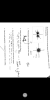 are electron dot density diagrams for two different orbitals. Answer the following questions. woad t 254 b. Define node. Label any nodes on the diagram ance c. How would a ls orbital be different than the 2s orbital shown? Explain. d. Draw the radial probability vs. r (distance from nucleus) for the 2s orbital.
Part B What is the label for the orbital shown here that indicates the type of...
 Part B What is the label for the orbital shown here that indicates the type of orbital and its orientation in space? Express your answer using appropriate letters (e.g., P.). Do not include the energy level n. View Available Hint's | ΑΣΦ ? b VxVx IXI X.10 x Submit Previous Answers Request Answer Part Compare the orbital shown in Parts A and B to the orbital shown here in size, shape, and orientation. у X Which quantum number(s) would be...
An orbital-filling diagram shows the number of electrons m each orbital, which are shown in order...
 An orbital-filling diagram shows the number of electrons m each orbital, which are shown in order of energy. The placement of electrons in orbitals follows a certain set of rules. Lower energy subshells fill before higher energy subshells. The order of filling is 1s, 2s, 2p, 3s, 3p, 4s, 3d, 4p, 5s, 4d, 5p, 6s, 4f, 5d, 6p, 7s, 5f, 6d, 7p. The periodic table can be used to help you remember this order. An orbital can hold up to...
Q1. a) Draw a molecular orbital energy level diagram for the NH3 molecule. b) Sketch the...
Q1. a) Draw a molecular orbital energy level diagram for the NH3 molecule. b) Sketch the form of the bonding and non-bonding molecular orbitals. c) On the basis of your MO diagram, predict whether NH3 will act as a Lewis acid or a Lewis base. d) How does this bonding model compare with a valence bond description of NH3?
The diagram below shows the radial distribution functions of 3 orbitals all with angular momentum uantum number f =...
 The diagram below shows the radial distribution functions of 3 orbitals all with angular momentum uantum number f = 0. Which of the follow options is correct regarding the diagram below? 0.12- 0.12 0.08- 1 0.06 0.04 V 0.02 10 r/a 15 20 a) All of the lines represent s orbitals and the line labeled C has the greatest principle quantum number. b) All of the lines represent s orbitals and the line labeled A has the greatest principle quantum...
4. On the basis of molecular orbitals and molecular orbital diagrams, predict which molecule in each...
 4. On the basis of molecular orbitals and molecular orbital diagrams, predict which molecule in each series will have the longest bond. Be sure to provide a brief explanation a. B2, B2 b. 02*, 0,- c. HHe", Hz 5. Consider the hydroxide ion, OH and do the following: a. Prepare a molecular orbital diagram and fill with electrons given the following atomic orbital potential energies: O(2s) = -32.3 eV, O(2p) = -15.8 eV, H(s) -13.6 eV. Be sure to label...
Consider the diatomic molecule NF. (a) Draw the shape of the 2 pz orbital on N....
 Consider the diatomic molecule NF. (a) Draw the shape of the 2 pz orbital on N. How many nodes does this orbital have? Show the nodes in your diagram. (b) Construct a molecular orbital energy diagram for NF. For this drawing consider both the s and p valence orbitals on each atom, but do not include orbital mixing. Show how the electrons are placed in the MO's. (c) How would orbital mixing alter the MO energy diagram you just constructed?...
a-c 32. Consider the complex ion [CoF (OH)2]3 (4 pts) What is the oxidation state of cobalt in this compound? How many d electrons does the cobalt ion have? a. (4 pts) Draw a d orbital splitting d...
 a-c
32. Consider the complex ion [CoF (OH)2]3 (4 pts) What is the oxidation state of cobalt in this compound? How many d electrons does the cobalt ion have? a. (4 pts) Draw a d orbital splitting diagram for this ion. How many unpaired electrons are in the complex ion? b. (2 pts) Can this ion exhibit isomerization? If so, what type? c. 10 of 14
32. Consider the complex ion [CoF (OH)2]3 (4 pts) What is the oxidation state...
a-c
32. Consider the complex ion [CoF (OH)2]3 (4 pts) What is the oxidation state of cobalt in this compound? How many d electrons does the cobalt ion have? a. (4 pts) Draw a d orbital splitting diagram for this ion. How many unpaired electrons are in the complex ion? b. (2 pts) Can this ion exhibit isomerization? If so, what type? c. 10 of 14
32. Consider the complex ion [CoF (OH)2]3 (4 pts) What is the oxidation state...
b) Is CO paramagnetic or diamagnetic? What is the bond order of CO? c) Draw a Lewis structure...
Draw an energy-level diagram for the valence molecular orbitals of CO. Include the relevant atomic orbitals in your diagram. Clearly label each molecular orbital (e.gs2s, p2p, etc.) and fill in the appropriate number of electrons. Use the same energy order as the neutral O2 molecule.b) Is CO paramagnetic or diamagnetic? What is the bond order of CO? c) Draw a Lewis structure for CO. Does this match the predicted bond order? d) CO can react withOH– to form the formate...
Please help!! Questions 1. Why does the trans conformation of a diene, in reaction with a...
 Please help!!
Questions 1. Why does the trans conformation of a diene, in reaction with a dienophile, not lead to a Diels-Alder reaction product? 2. Complete the following Diels-Alder reactions. Provide the major endo-product(s). Diene Dienophile Product(s) Domov - 0.0- 3. How many a electrons are there in a molecule of 1.3-butadiene? 106 4. What is the maximum number of electrons that can reside in a molecular orbital? (Hint: It is the same maximum number that can fit into an...
Please help!!
Questions 1. Why does the trans conformation of a diene, in reaction with a dienophile, not lead to a Diels-Alder reaction product? 2. Complete the following Diels-Alder reactions. Provide the major endo-product(s). Diene Dienophile Product(s) Domov - 0.0- 3. How many a electrons are there in a molecule of 1.3-butadiene? 106 4. What is the maximum number of electrons that can reside in a molecular orbital? (Hint: It is the same maximum number that can fit into an...
 are electron dot density diagrams for two different orbitals. Answer the following questions. woad t 254 b. Define node. Label any nodes on the diagram ance c. How would a ls orbital be different than the 2s orbital shown? Explain. d. Draw the radial probability vs. r (distance from nucleus) for the 2s orbital.
 Part B What is the label for the orbital shown here that indicates the type of orbital and its orientation in space? Express your answer using appropriate letters (e.g., P.). Do not include the energy level n. View Available Hint's | ΑΣΦ ? b VxVx IXI X.10 x Submit Previous Answers Request Answer Part Compare the orbital shown in Parts A and B to the orbital shown here in size, shape, and orientation. у X Which quantum number(s) would be...
 An orbital-filling diagram shows the number of electrons m each orbital, which are shown in order of energy. The placement of electrons in orbitals follows a certain set of rules. Lower energy subshells fill before higher energy subshells. The order of filling is 1s, 2s, 2p, 3s, 3p, 4s, 3d, 4p, 5s, 4d, 5p, 6s, 4f, 5d, 6p, 7s, 5f, 6d, 7p. The periodic table can be used to help you remember this order. An orbital can hold up to...
 The diagram below shows the radial distribution functions of 3 orbitals all with angular momentum uantum number f = 0. Which of the follow options is correct regarding the diagram below? 0.12- 0.12 0.08- 1 0.06 0.04 V 0.02 10 r/a 15 20 a) All of the lines represent s orbitals and the line labeled C has the greatest principle quantum number. b) All of the lines represent s orbitals and the line labeled A has the greatest principle quantum...
 4. On the basis of molecular orbitals and molecular orbital diagrams, predict which molecule in each series will have the longest bond. Be sure to provide a brief explanation a. B2, B2 b. 02*, 0,- c. HHe", Hz 5. Consider the hydroxide ion, OH and do the following: a. Prepare a molecular orbital diagram and fill with electrons given the following atomic orbital potential energies: O(2s) = -32.3 eV, O(2p) = -15.8 eV, H(s) -13.6 eV. Be sure to label...
 Consider the diatomic molecule NF. (a) Draw the shape of the 2 pz orbital on N. How many nodes does this orbital have? Show the nodes in your diagram. (b) Construct a molecular orbital energy diagram for NF. For this drawing consider both the s and p valence orbitals on each atom, but do not include orbital mixing. Show how the electrons are placed in the MO's. (c) How would orbital mixing alter the MO energy diagram you just constructed?...
 a-c
32. Consider the complex ion [CoF (OH)2]3 (4 pts) What is the oxidation state of cobalt in this compound? How many d electrons does the cobalt ion have? a. (4 pts) Draw a d orbital splitting diagram for this ion. How many unpaired electrons are in the complex ion? b. (2 pts) Can this ion exhibit isomerization? If so, what type? c. 10 of 14
32. Consider the complex ion [CoF (OH)2]3 (4 pts) What is the oxidation state...
a-c
32. Consider the complex ion [CoF (OH)2]3 (4 pts) What is the oxidation state of cobalt in this compound? How many d electrons does the cobalt ion have? a. (4 pts) Draw a d orbital splitting diagram for this ion. How many unpaired electrons are in the complex ion? b. (2 pts) Can this ion exhibit isomerization? If so, what type? c. 10 of 14
32. Consider the complex ion [CoF (OH)2]3 (4 pts) What is the oxidation state...
 Please help!!
Questions 1. Why does the trans conformation of a diene, in reaction with a dienophile, not lead to a Diels-Alder reaction product? 2. Complete the following Diels-Alder reactions. Provide the major endo-product(s). Diene Dienophile Product(s) Domov - 0.0- 3. How many a electrons are there in a molecule of 1.3-butadiene? 106 4. What is the maximum number of electrons that can reside in a molecular orbital? (Hint: It is the same maximum number that can fit into an...
Please help!!
Questions 1. Why does the trans conformation of a diene, in reaction with a dienophile, not lead to a Diels-Alder reaction product? 2. Complete the following Diels-Alder reactions. Provide the major endo-product(s). Diene Dienophile Product(s) Domov - 0.0- 3. How many a electrons are there in a molecule of 1.3-butadiene? 106 4. What is the maximum number of electrons that can reside in a molecular orbital? (Hint: It is the same maximum number that can fit into an...
Most questions answered within 3 hours.
-
Where is the error in this code sequence?
String s1 = "Hello";
String s2 = "ello";...
asked 10 months ago -
Financial data for Joel de Paris, Inc., for last year
follow:
Joel de Paris, Inc.
Balance...
asked 10 months ago -
Consider this reaction:
Al2(SO4)3 (aq)+ BaCl3
(aq) Al2Cl6 (aq)- +
3BaSO4(s) . What is the...
asked 10 months ago -
Suppose that Savneet is considering increasing her
recent random sample from 20 car rentals to 40...
asked 10 months ago -
Trucks arrive at an unloading terminal at an average rate of 120
per hour.
Trucks arrive...
asked 10 months ago -
Why are methanol and ethanol completely soluble in water while
octanol is not very little soluble....
asked 10 months ago -
A facilities manager at a university reads in a research report
that the mean amount of...
asked 10 months ago -
When the CuSO4 is rehydrated by adding water to the anhydrous
compound, is this an endothermic...
asked 10 months ago -
A ray of sunlight is passing from diamond into crown glass; the
angle of incidence is...
asked 10 months ago -
A block of mass 0.249 kg is placed on top of a light, vertical
spring of...
asked 10 months ago -
how do the kidneys compensate in the presences of acidosis
a) trigger hyperventilate
b) reserve acid...
asked 10 months ago -
Question 501 pts
The rental rate of capital to the firm increases. Which of the
following...
asked 10 months ago