Organic Chemistry

Homework Answers
Request Answer!
We need at least 10 more requests to produce the answer.
0 / 10 have requested this problem solution
The more requests, the faster the answer.
help! chemistry predict the products and mechanism! the Product. Provide the stable organic product(s) for the...
 help! chemistry predict the products and mechanism!
the Product. Provide the stable organic product(s) for the reactions below. predict the Pro 1. Mgº, CH,CH,OCH,CH 2. CO (9) 3. H,O, HCI MgBr (X) 2. H,0,HCI 1. K Cr2O, H,SO, H,0 2. CH, MgBr (1 eq.) 3. H2O, HCI 1. Mgº, CH,CH,OCHCH 2. H20, HCI echanism. The following Grignard reaction has been observed to yield products A and B. MgCI THF-70 C 2. HCI, H20 0. Org. Chem. 1980, 45, 4952-4954. https://pubs.acs.org/doi/pdf/10.1021/acs.joc.8b01430)...
help! chemistry predict the products and mechanism!
the Product. Provide the stable organic product(s) for the reactions below. predict the Pro 1. Mgº, CH,CH,OCH,CH 2. CO (9) 3. H,O, HCI MgBr (X) 2. H,0,HCI 1. K Cr2O, H,SO, H,0 2. CH, MgBr (1 eq.) 3. H2O, HCI 1. Mgº, CH,CH,OCHCH 2. H20, HCI echanism. The following Grignard reaction has been observed to yield products A and B. MgCI THF-70 C 2. HCI, H20 0. Org. Chem. 1980, 45, 4952-4954. https://pubs.acs.org/doi/pdf/10.1021/acs.joc.8b01430)...
Organic Chemistry Need help on the COMPLETE PROBLEM SET PLEASE Draw the sn2 reaction mechanism for...
 Organic Chemistry
Need help on the COMPLETE PROBLEM SET PLEASE
Draw the sn2 reaction mechanism for the following reactions. Include transition states and stereochemistry of product.
Organic Chemistry
Need help on the COMPLETE PROBLEM SET PLEASE
Draw the sn2 reaction mechanism for the following reactions. Include transition states and stereochemistry of product.
Three reactions between a Grignard reagent and a carbonyl compound are given below. Draw the main organic product for...
 Three reactions between a Grignard reagent and a carbonyl
compound are given below. Draw the main organic product for each
reaction and indicate if H+ or H- is needed to complete each
reaction. (The starting material structures are provided in the
answer fields as a starting point for your drawings.)
Three reactions between a Grignard reagent and a carbonyl compound are given below. Draw the main organic product for each reaction and indicate if H+ or H- is needed to...
Three reactions between a Grignard reagent and a carbonyl
compound are given below. Draw the main organic product for each
reaction and indicate if H+ or H- is needed to complete each
reaction. (The starting material structures are provided in the
answer fields as a starting point for your drawings.)
Three reactions between a Grignard reagent and a carbonyl compound are given below. Draw the main organic product for each reaction and indicate if H+ or H- is needed to...
Two reactions between a Grignard reagent and a carbonyl compound are given below. Draw the main organic product for eac...
 Two reactions between a Grignard reagent and a carbonyl compound
are given below. Draw the main organic product for each reaction
and indicate if H+ or H- is needed to complete each reaction. (The
starting material structures are provided in the answer fields as a
starting point for your drawings.)
Two reactions between a Grignard reagent and a carbonyl compound are given below. Draw the main organic product for each reaction and indicate if H+ or H- is needed to...
Two reactions between a Grignard reagent and a carbonyl compound
are given below. Draw the main organic product for each reaction
and indicate if H+ or H- is needed to complete each reaction. (The
starting material structures are provided in the answer fields as a
starting point for your drawings.)
Two reactions between a Grignard reagent and a carbonyl compound are given below. Draw the main organic product for each reaction and indicate if H+ or H- is needed to...
5. Grignard Mechanism. Draw the major product for the Grignard reaction below in the box. Then,...
 5. Grignard Mechanism. Draw the major product for the Grignard reaction below in the box. Then, draw the proper FULL electron-pushing mechanism for the reaction, including ALL intermediates (with formal charges) and electron pushing arrows. Label the Electrophile and Nucleophile in each step! 1. BrMg 2. H2O+
I need b, c, and d. Use second photo for reference. b) Focusing on the product...
 I need b, c, and d. Use second photo for reference.
b) Focusing on the product in the box in part (a), draw a mechanism for the desired Grignard reaction with the epoxide, including the final proton transfer from water c) Now starting from the product in the box draw a mechanism for the formation of cyclopentanol including the final proton transfer from water. Suggest an alternate synthesis for getting to the desired product from the given starting material. (Hint,...
I need b, c, and d. Use second photo for reference.
b) Focusing on the product in the box in part (a), draw a mechanism for the desired Grignard reaction with the epoxide, including the final proton transfer from water c) Now starting from the product in the box draw a mechanism for the formation of cyclopentanol including the final proton transfer from water. Suggest an alternate synthesis for getting to the desired product from the given starting material. (Hint,...
Please draw the complete "arrow-pushing" mechanism for: A. The reaction of bromobenzene and magnesium (in the...
Please draw the complete "arrow-pushing" mechanism for: A. The reaction of bromobenzene and magnesium (in the presence of ether) to form a Grignard reagent B. The reaction of the Grignard reagent (from part A.) with Benzophenone (and HCl) to form Triphenylmethanol
Describe and draw the mechanism for the formation of the Grignard reagent with 2-bromopropane as the...
Describe and draw the mechanism for the formation of the Grignard reagent with 2-bromopropane as the example alkyl halide. Make sure to specify solvent. Describe and draw the mechanism for the reaction of the above Grignard reagent with hexan-3-one as the example carbonyl source. Make sure to draw the oxy-anion intermediate. What is/are the name(s) of the product(s)?
a) complete the curved arrow electron-pushing mechanism and predict the major organic product of the reaction...
 a) complete the curved arrow electron-pushing mechanism and
predict the major organic product of the reaction when
1-chloropentane is treated with hydroxide in ethanol as shown
below.
a) Complete the curved arrow electron-pushing mechanism and predict the major organic product of the reaction when 1-chloropentane is treated with hydroxide in ethanol as shown below. Use curved arrows to show the Draw the structure of the organic product formed in the reaction. Draw lone pairs. conversion to the product. CH3CH2OH -CI...
a) complete the curved arrow electron-pushing mechanism and
predict the major organic product of the reaction when
1-chloropentane is treated with hydroxide in ethanol as shown
below.
a) Complete the curved arrow electron-pushing mechanism and predict the major organic product of the reaction when 1-chloropentane is treated with hydroxide in ethanol as shown below. Use curved arrows to show the Draw the structure of the organic product formed in the reaction. Draw lone pairs. conversion to the product. CH3CH2OH -CI...
Organic Chemistry homework
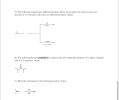 21. Draw the mechanism of the following reaction. (8 pts) Also #20 if at all possible. I don't need #19 though
 help! chemistry predict the products and mechanism!
the Product. Provide the stable organic product(s) for the reactions below. predict the Pro 1. Mgº, CH,CH,OCH,CH 2. CO (9) 3. H,O, HCI MgBr (X) 2. H,0,HCI 1. K Cr2O, H,SO, H,0 2. CH, MgBr (1 eq.) 3. H2O, HCI 1. Mgº, CH,CH,OCHCH 2. H20, HCI echanism. The following Grignard reaction has been observed to yield products A and B. MgCI THF-70 C 2. HCI, H20 0. Org. Chem. 1980, 45, 4952-4954. https://pubs.acs.org/doi/pdf/10.1021/acs.joc.8b01430)...
help! chemistry predict the products and mechanism!
the Product. Provide the stable organic product(s) for the reactions below. predict the Pro 1. Mgº, CH,CH,OCH,CH 2. CO (9) 3. H,O, HCI MgBr (X) 2. H,0,HCI 1. K Cr2O, H,SO, H,0 2. CH, MgBr (1 eq.) 3. H2O, HCI 1. Mgº, CH,CH,OCHCH 2. H20, HCI echanism. The following Grignard reaction has been observed to yield products A and B. MgCI THF-70 C 2. HCI, H20 0. Org. Chem. 1980, 45, 4952-4954. https://pubs.acs.org/doi/pdf/10.1021/acs.joc.8b01430)...
 Organic Chemistry
Need help on the COMPLETE PROBLEM SET PLEASE
Draw the sn2 reaction mechanism for the following reactions. Include transition states and stereochemistry of product.
Organic Chemistry
Need help on the COMPLETE PROBLEM SET PLEASE
Draw the sn2 reaction mechanism for the following reactions. Include transition states and stereochemistry of product.
 Three reactions between a Grignard reagent and a carbonyl
compound are given below. Draw the main organic product for each
reaction and indicate if H+ or H- is needed to complete each
reaction. (The starting material structures are provided in the
answer fields as a starting point for your drawings.)
Three reactions between a Grignard reagent and a carbonyl compound are given below. Draw the main organic product for each reaction and indicate if H+ or H- is needed to...
Three reactions between a Grignard reagent and a carbonyl
compound are given below. Draw the main organic product for each
reaction and indicate if H+ or H- is needed to complete each
reaction. (The starting material structures are provided in the
answer fields as a starting point for your drawings.)
Three reactions between a Grignard reagent and a carbonyl compound are given below. Draw the main organic product for each reaction and indicate if H+ or H- is needed to...
 Two reactions between a Grignard reagent and a carbonyl compound
are given below. Draw the main organic product for each reaction
and indicate if H+ or H- is needed to complete each reaction. (The
starting material structures are provided in the answer fields as a
starting point for your drawings.)
Two reactions between a Grignard reagent and a carbonyl compound are given below. Draw the main organic product for each reaction and indicate if H+ or H- is needed to...
Two reactions between a Grignard reagent and a carbonyl compound
are given below. Draw the main organic product for each reaction
and indicate if H+ or H- is needed to complete each reaction. (The
starting material structures are provided in the answer fields as a
starting point for your drawings.)
Two reactions between a Grignard reagent and a carbonyl compound are given below. Draw the main organic product for each reaction and indicate if H+ or H- is needed to...
 5. Grignard Mechanism. Draw the major product for the Grignard reaction below in the box. Then, draw the proper FULL electron-pushing mechanism for the reaction, including ALL intermediates (with formal charges) and electron pushing arrows. Label the Electrophile and Nucleophile in each step! 1. BrMg 2. H2O+
 I need b, c, and d. Use second photo for reference.
b) Focusing on the product in the box in part (a), draw a mechanism for the desired Grignard reaction with the epoxide, including the final proton transfer from water c) Now starting from the product in the box draw a mechanism for the formation of cyclopentanol including the final proton transfer from water. Suggest an alternate synthesis for getting to the desired product from the given starting material. (Hint,...
I need b, c, and d. Use second photo for reference.
b) Focusing on the product in the box in part (a), draw a mechanism for the desired Grignard reaction with the epoxide, including the final proton transfer from water c) Now starting from the product in the box draw a mechanism for the formation of cyclopentanol including the final proton transfer from water. Suggest an alternate synthesis for getting to the desired product from the given starting material. (Hint,...
 a) complete the curved arrow electron-pushing mechanism and
predict the major organic product of the reaction when
1-chloropentane is treated with hydroxide in ethanol as shown
below.
a) Complete the curved arrow electron-pushing mechanism and predict the major organic product of the reaction when 1-chloropentane is treated with hydroxide in ethanol as shown below. Use curved arrows to show the Draw the structure of the organic product formed in the reaction. Draw lone pairs. conversion to the product. CH3CH2OH -CI...
a) complete the curved arrow electron-pushing mechanism and
predict the major organic product of the reaction when
1-chloropentane is treated with hydroxide in ethanol as shown
below.
a) Complete the curved arrow electron-pushing mechanism and predict the major organic product of the reaction when 1-chloropentane is treated with hydroxide in ethanol as shown below. Use curved arrows to show the Draw the structure of the organic product formed in the reaction. Draw lone pairs. conversion to the product. CH3CH2OH -CI...
Most questions answered within 3 hours.
-
Where is the error in this code sequence?
String s1 = "Hello";
String s2 = "ello";...
asked 11 months ago -
Financial data for Joel de Paris, Inc., for last year
follow:
Joel de Paris, Inc.
Balance...
asked 11 months ago -
Consider this reaction:
Al2(SO4)3 (aq)+ BaCl3
(aq) Al2Cl6 (aq)- +
3BaSO4(s) . What is the...
asked 11 months ago -
Suppose that Savneet is considering increasing her
recent random sample from 20 car rentals to 40...
asked 11 months ago -
Trucks arrive at an unloading terminal at an average rate of 120
per hour.
Trucks arrive...
asked 11 months ago -
Why are methanol and ethanol completely soluble in water while
octanol is not very little soluble....
asked 11 months ago -
A facilities manager at a university reads in a research report
that the mean amount of...
asked 11 months ago -
When the CuSO4 is rehydrated by adding water to the anhydrous
compound, is this an endothermic...
asked 11 months ago -
A ray of sunlight is passing from diamond into crown glass; the
angle of incidence is...
asked 11 months ago -
A block of mass 0.249 kg is placed on top of a light, vertical
spring of...
asked 11 months ago -
how do the kidneys compensate in the presences of acidosis
a) trigger hyperventilate
b) reserve acid...
asked 11 months ago -
Question 501 pts
The rental rate of capital to the firm increases. Which of the
following...
asked 11 months ago