Difficult breathing
Complete the exercise below and experience dyspnea
Homework Answers
Request Answer!
We need at least 10 more requests to produce the answer.
0 / 10 have requested this problem solution
The more requests, the faster the answer.
Difficulty Breathing 17. Complete the exercise below to experience dyspnea. Dyspnea Exercise Materials: Three disposable drinking...
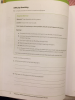 Difficulty Breathing 17. Complete the exercise below to experience dyspnea. Dyspnea Exercise Materials: Three disposable drinking straws Location: A place with room to walk Note: People with respiratory or heart problems should not participate in this Exercise: a. Compress the end of one straw and insert it into the end of a second straw b. Compress the end of the third straw and insert it into one end of the double straw to for an extra-long straw. c Pinch your...
11. When clients have dyspnea (difficult or painful breathing), they are often anxious and upset. What...
 11. When clients have dyspnea (difficult or painful breathing), they are often anxious and upset. What are two interventions the PSW could do to help reduce their anxiety? (2 Marks)
When prescribing exercise for individuals with unstable angina, exercise intensity should be: Slightly above the anaerobic...
When prescribing exercise for individuals with unstable angina, exercise intensity should be: Slightly above the anaerobic threshold Lower intensity levels based on HRR (< 60%) People with this condition should not exercise Slightly below the ischemic threshold Based on the dyspnea scale
Topic #4: The Difficult Patient In the lesson, you read the story about, The Difficult Patient...
 Topic #4: The Difficult Patient In the lesson, you read the story about, The Difficult Patient Reflect on a clinical experience where you cared for a "difficult patient?" Include a description of the experience of the encounter. Delve into your emotions such as peace, confidence, happiness, joy, gratitude, inspiration, frustration, anger and/or uncertainty, as well as insights into interprofessional care and the impact of emotions on nursing practice. How did this encounter contribute to your professional development? How might this...
Topic #4: The Difficult Patient In the lesson, you read the story about, The Difficult Patient...
 Topic #4: The Difficult Patient In the lesson, you read the story about, The Difficult Patient Reflect on a clinical experience where you cared for a "difficult patient?" Include a description of the experience of the encounter. Delve into your emotions such as peace, confidence, happiness, joy, gratitude, inspiration, frustration, anger and/or uncertainty, as well as insights into interprofessional care and the impact of emotions on nursing practice. How did this encounter contribute to your professional development? How might this...
With the given chief complaints ( Difficulty of breathing despite taking furosemide, Bipedal edema, Easy fatiguability)...
 With the given chief complaints ( Difficulty of breathing despite taking
furosemide, Bipedal
edema, Easy fatiguability)
can you please list around 5 disease this person might have or get?
☺️ please explain why too thank you!
CASE A 22- year-old, male, factory worker, diagnosed previously with Rheumatic Fever and is receiving Penicillin G 5 Million unit every month since age 17. Two years prior to consultation, she started to experience shortness of breath while climbing 1 flight of stairs or...
With the given chief complaints ( Difficulty of breathing despite taking
furosemide, Bipedal
edema, Easy fatiguability)
can you please list around 5 disease this person might have or get?
☺️ please explain why too thank you!
CASE A 22- year-old, male, factory worker, diagnosed previously with Rheumatic Fever and is receiving Penicillin G 5 Million unit every month since age 17. Two years prior to consultation, she started to experience shortness of breath while climbing 1 flight of stairs or...
ame:-Amanda znao Person # Recitation Exercise-Chapter b 1.) A clinician has developed a set of breathing...
 ame:-Amanda znao Person # Recitation Exercise-Chapter b 1.) A clinician has developed a set of breathing exercises aimed to treat acute anxiety in individuals with Panic Disorder (PD). She has all of her clients with PD complete the State-Trait Ansiety I immediately after a panic attack. She then computes a population mean of state anxiety. A sample of TO clients with PD is instructed to engage in the breathing exercises during the panic attacka the inventory afterwards. Testing at the...
A 35-year old male with headache, fatigue, light-headedness, dyspnea (difficulty in breathing), and tachycardia (rapid heart...
A 35-year old male with headache, fatigue, light-headedness, dyspnea (difficulty in breathing), and tachycardia (rapid heart rate). Laboratory findings reveal anemia, presence of red blood cell spherocytes, and a positive direct Coomb's test (presence of auto-antibodies on red blood cell surfaces). The patient is currently taking an antibiotic for symptoms of upper respiratory infection. These findings suggest that the antibiotics may have triggered an autoimmune disease which can also be classified as which type of hypersensitivity disease? a. Type II...
Breathing rates, in breaths per minute, were measured for a group of 6 subjects at rest,...
 Breathing rates, in breaths per minute, were measured for a group of 6 subjects at rest, then during moderate exercise. The results were as follows: Subject Rest Exercise 16 37 21 39 17 37 18 40 1539 1934 Find a 95% confidence interval for the increase in breathing rate due to exercise le. Exercise - Rest). (18.33, 2145) (7.83,31.95) (15.78, 19.551 (16.68, 23.32) (17.52.22261
3.) Which of the following patients definitely has inadequate breathing? a. a dyspnea patient with a...
3.) Which of the following patients definitely has inadequate breathing? a. a dyspnea patient with a SpO2 of 94% b. a pediatric patient with wheezing c. An alert adult breathing 24 times per minute d. An unresponsive patient with agonal breaths 5.) Your patient refuses oxygen by NRB mask. She says it makes her claustrophobic. You should: a. tell the patient she may die if she doesn't cooperate. b. document that the patient refuses oxygen therapy c. switch the patient...
 Difficulty Breathing 17. Complete the exercise below to experience dyspnea. Dyspnea Exercise Materials: Three disposable drinking straws Location: A place with room to walk Note: People with respiratory or heart problems should not participate in this Exercise: a. Compress the end of one straw and insert it into the end of a second straw b. Compress the end of the third straw and insert it into one end of the double straw to for an extra-long straw. c Pinch your...
 11. When clients have dyspnea (difficult or painful breathing), they are often anxious and upset. What are two interventions the PSW could do to help reduce their anxiety? (2 Marks)
 Topic #4: The Difficult Patient In the lesson, you read the story about, The Difficult Patient Reflect on a clinical experience where you cared for a "difficult patient?" Include a description of the experience of the encounter. Delve into your emotions such as peace, confidence, happiness, joy, gratitude, inspiration, frustration, anger and/or uncertainty, as well as insights into interprofessional care and the impact of emotions on nursing practice. How did this encounter contribute to your professional development? How might this...
 Topic #4: The Difficult Patient In the lesson, you read the story about, The Difficult Patient Reflect on a clinical experience where you cared for a "difficult patient?" Include a description of the experience of the encounter. Delve into your emotions such as peace, confidence, happiness, joy, gratitude, inspiration, frustration, anger and/or uncertainty, as well as insights into interprofessional care and the impact of emotions on nursing practice. How did this encounter contribute to your professional development? How might this...
 With the given chief complaints ( Difficulty of breathing despite taking
furosemide, Bipedal
edema, Easy fatiguability)
can you please list around 5 disease this person might have or get?
☺️ please explain why too thank you!
CASE A 22- year-old, male, factory worker, diagnosed previously with Rheumatic Fever and is receiving Penicillin G 5 Million unit every month since age 17. Two years prior to consultation, she started to experience shortness of breath while climbing 1 flight of stairs or...
With the given chief complaints ( Difficulty of breathing despite taking
furosemide, Bipedal
edema, Easy fatiguability)
can you please list around 5 disease this person might have or get?
☺️ please explain why too thank you!
CASE A 22- year-old, male, factory worker, diagnosed previously with Rheumatic Fever and is receiving Penicillin G 5 Million unit every month since age 17. Two years prior to consultation, she started to experience shortness of breath while climbing 1 flight of stairs or...
 ame:-Amanda znao Person # Recitation Exercise-Chapter b 1.) A clinician has developed a set of breathing exercises aimed to treat acute anxiety in individuals with Panic Disorder (PD). She has all of her clients with PD complete the State-Trait Ansiety I immediately after a panic attack. She then computes a population mean of state anxiety. A sample of TO clients with PD is instructed to engage in the breathing exercises during the panic attacka the inventory afterwards. Testing at the...
 Breathing rates, in breaths per minute, were measured for a group of 6 subjects at rest, then during moderate exercise. The results were as follows: Subject Rest Exercise 16 37 21 39 17 37 18 40 1539 1934 Find a 95% confidence interval for the increase in breathing rate due to exercise le. Exercise - Rest). (18.33, 2145) (7.83,31.95) (15.78, 19.551 (16.68, 23.32) (17.52.22261
Most questions answered within 3 hours.
-
Where is the error in this code sequence?
String s1 = "Hello";
String s2 = "ello";...
asked 10 months ago -
Financial data for Joel de Paris, Inc., for last year
follow:
Joel de Paris, Inc.
Balance...
asked 10 months ago -
Consider this reaction:
Al2(SO4)3 (aq)+ BaCl3
(aq) Al2Cl6 (aq)- +
3BaSO4(s) . What is the...
asked 10 months ago -
Suppose that Savneet is considering increasing her
recent random sample from 20 car rentals to 40...
asked 10 months ago -
Trucks arrive at an unloading terminal at an average rate of 120
per hour.
Trucks arrive...
asked 10 months ago -
Why are methanol and ethanol completely soluble in water while
octanol is not very little soluble....
asked 10 months ago -
A facilities manager at a university reads in a research report
that the mean amount of...
asked 10 months ago -
When the CuSO4 is rehydrated by adding water to the anhydrous
compound, is this an endothermic...
asked 10 months ago -
A ray of sunlight is passing from diamond into crown glass; the
angle of incidence is...
asked 10 months ago -
A block of mass 0.249 kg is placed on top of a light, vertical
spring of...
asked 10 months ago -
how do the kidneys compensate in the presences of acidosis
a) trigger hyperventilate
b) reserve acid...
asked 10 months ago -
Question 501 pts
The rental rate of capital to the firm increases. Which of the
following...
asked 10 months ago