
Homework Answers
Add Answer to:
The graph of y = f(2) is shown below (dashed curve). Manipulate the green draggable points...
Given the graph of y = f(x), shown as a red dashed curve, drag the green...
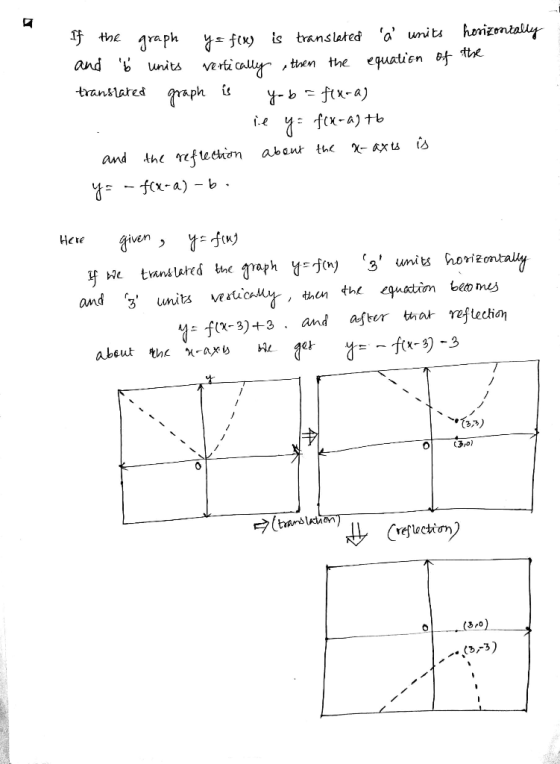
 Given the graph of y = f(x), shown as a red dashed curve, drag the green movable points to draw the graph of y = -f(x). Notice that you can control the positioning of the reflective function with the coordinate labeled "Drag Function and control the width of the reflection with the coordinate labeled "Control Width." Provide your answer below: Control Width -5 o 10 Drag Function 10 -5 Control Width 1 10 -5 0 10 Drag Function 5 -5
The graph of /(x, y) = 2x + y2 is shown below. f(x, y) = 2x+y...
 The graph of /(x, y) = 2x + y2 is shown below. f(x, y) = 2x+y eql : 2 = 2 10 e92: y = 2 10 eq3 : x = 1 -10 The curve resulting from slicing the graph of f(x, y) with the plane 2 = 2 is Select) The curve resulting from slicing the graph of f(x,y) with the plane y = 2 is [Select) The curve resulting from slicing the graph of f(x, y) with the...
(1 point) The figure below gives F() for some function F 1 2 3 Use this graph and the facts that ...
 (1 point) The figure below gives F() for some function F 1 2 3 Use this graph and the facts that the area labeled A is 13.5, that labeled B is 12, that labeled C is 3, and thatF(6)2 to sketch the graph of F(x). Label the values of at least four points. Then, using your graph, give four (x,y) points on the curve: (Give your answer as a list of points separated by commas.)
(1 point) The figure below...
(1 point) The figure below gives F() for some function F 1 2 3 Use this graph and the facts that the area labeled A is 13.5, that labeled B is 12, that labeled C is 3, and thatF(6)2 to sketch the graph of F(x). Label the values of at least four points. Then, using your graph, give four (x,y) points on the curve: (Give your answer as a list of points separated by commas.)
(1 point) The figure below...
In the graph below, the blue solid curves are pre-tax, and the red dashed curve is...
 In the graph below, the blue
solid curves are pre-tax, and the red dashed curve is post-tax.
Based on the graph, select ALL of the following are TRUE at the
post-tax equilibrium:
A. The total price the buyer pays is PD = $23.
B. The supplier submits the tax to the government.
C. The net price the seller receives is PS = $23.
D. The tax is $4 per unit.
E. The tax is 4% of the price.
F. The...
In the graph below, the blue
solid curves are pre-tax, and the red dashed curve is post-tax.
Based on the graph, select ALL of the following are TRUE at the
post-tax equilibrium:
A. The total price the buyer pays is PD = $23.
B. The supplier submits the tax to the government.
C. The net price the seller receives is PS = $23.
D. The tax is $4 per unit.
E. The tax is 4% of the price.
F. The...
10 4. Use the graphs off (dashed) and g (solid) to determine the following: 4.1 (3...
 10 4. Use the graphs off (dashed) and g (solid) to determine the following: 4.1 (3 pts) (f+g)(-2) Show work. f 5. (f +g)(-2) = -10 on 5 10 4.2 (1 pt) For the graph of g: As x → 0, y → -5 -10 7.2 (5 pts) The graph of y=g(x)is shown below. Please provide work and explanation for how you obtained your algebraic expression for g(x). Work and explanation: (0,6) o 5 10 =10 (–3,0) 5
The graph of y = f(x) is shown below: y = f(.) 1 2 3 4...
 The graph of y = f(x) is shown below: y = f(.) 1 2 3 4 5 6 7 8 9 For which values of S and is the following statement FALSE: If 2 - 51 < 8, then f(x) - 2 < 8=1, € = 2 • 8 = 2, = 1.5 8 = 1, € = 3 6= 3, € = 1.5
The absolute function f(x)=pt is shown as a dashed line below. Write an equation for the...
 The absolute function f(x)=pt is shown as a dashed line below. Write an equation for the transformed function depicted by the solid line. -5 5 X (2-3) -5+ 8. For the pair of functions, f(x)= 3x - 3, and g(x)=x2-7, find a) -8) 04) b)-g)(x) c) (g op (3) d) (g) (*) D Focus
I rate quickly The black curve, shown below, is the graph of the function y =...
 I
rate quickly
The black curve, shown below, is the graph of the function y = f(x). Which of the following describes the slope of the blue line? f(x) 5 4 3 ws 2. х 3 6 12 15 18 o a) f(15) - f(3) 12 b) f(9- h) – f(h) lim h0 9 Oc) f(9- h) - f(9) lim h0 9 d) f(9+h) + f(-9) lim h0 h
I
rate quickly
The black curve, shown below, is the graph of the function y = f(x). Which of the following describes the slope of the blue line? f(x) 5 4 3 ws 2. х 3 6 12 15 18 o a) f(15) - f(3) 12 b) f(9- h) – f(h) lim h0 9 Oc) f(9- h) - f(9) lim h0 9 d) f(9+h) + f(-9) lim h0 h
(1 point) Shown below is the graph of y- f'(x), NOT the graph of y-f(x). (Click on the picture fo...
 (1 point) Shown below is the graph of y- f'(x), NOT the graph of y-f(x). (Click on the picture for a better view.) From the information in this graph we can conclude that a good approximation to f(-5.04)- f(-5) is 0.08 Shown below is the graph of a different function, y - g(x). (Click on the picture for a better view.) Indicate the labeled point at which g(x) changes sign: a g'(x) changes sign: d g"(x) changes sign: c
(1...
(1 point) Shown below is the graph of y- f'(x), NOT the graph of y-f(x). (Click on the picture for a better view.) From the information in this graph we can conclude that a good approximation to f(-5.04)- f(-5) is 0.08 Shown below is the graph of a different function, y - g(x). (Click on the picture for a better view.) Indicate the labeled point at which g(x) changes sign: a g'(x) changes sign: d g"(x) changes sign: c
(1...
Question 6 (10 points) In the images below, the blue curve is the graph of y=...
 Question 6 (10 points) In the images below, the blue curve is the graph of y= and the red curve is the graph of y g(x). Determine the graph where fand g are inverse functions
 Given the graph of y = f(x), shown as a red dashed curve, drag the green movable points to draw the graph of y = -f(x). Notice that you can control the positioning of the reflective function with the coordinate labeled "Drag Function and control the width of the reflection with the coordinate labeled "Control Width." Provide your answer below: Control Width -5 o 10 Drag Function 10 -5 Control Width 1 10 -5 0 10 Drag Function 5 -5
 The graph of /(x, y) = 2x + y2 is shown below. f(x, y) = 2x+y eql : 2 = 2 10 e92: y = 2 10 eq3 : x = 1 -10 The curve resulting from slicing the graph of f(x, y) with the plane 2 = 2 is Select) The curve resulting from slicing the graph of f(x,y) with the plane y = 2 is [Select) The curve resulting from slicing the graph of f(x, y) with the...
 (1 point) The figure below gives F() for some function F 1 2 3 Use this graph and the facts that the area labeled A is 13.5, that labeled B is 12, that labeled C is 3, and thatF(6)2 to sketch the graph of F(x). Label the values of at least four points. Then, using your graph, give four (x,y) points on the curve: (Give your answer as a list of points separated by commas.)
(1 point) The figure below...
(1 point) The figure below gives F() for some function F 1 2 3 Use this graph and the facts that the area labeled A is 13.5, that labeled B is 12, that labeled C is 3, and thatF(6)2 to sketch the graph of F(x). Label the values of at least four points. Then, using your graph, give four (x,y) points on the curve: (Give your answer as a list of points separated by commas.)
(1 point) The figure below...
 In the graph below, the blue
solid curves are pre-tax, and the red dashed curve is post-tax.
Based on the graph, select ALL of the following are TRUE at the
post-tax equilibrium:
A. The total price the buyer pays is PD = $23.
B. The supplier submits the tax to the government.
C. The net price the seller receives is PS = $23.
D. The tax is $4 per unit.
E. The tax is 4% of the price.
F. The...
In the graph below, the blue
solid curves are pre-tax, and the red dashed curve is post-tax.
Based on the graph, select ALL of the following are TRUE at the
post-tax equilibrium:
A. The total price the buyer pays is PD = $23.
B. The supplier submits the tax to the government.
C. The net price the seller receives is PS = $23.
D. The tax is $4 per unit.
E. The tax is 4% of the price.
F. The...
 10 4. Use the graphs off (dashed) and g (solid) to determine the following: 4.1 (3 pts) (f+g)(-2) Show work. f 5. (f +g)(-2) = -10 on 5 10 4.2 (1 pt) For the graph of g: As x → 0, y → -5 -10 7.2 (5 pts) The graph of y=g(x)is shown below. Please provide work and explanation for how you obtained your algebraic expression for g(x). Work and explanation: (0,6) o 5 10 =10 (–3,0) 5
 The graph of y = f(x) is shown below: y = f(.) 1 2 3 4 5 6 7 8 9 For which values of S and is the following statement FALSE: If 2 - 51 < 8, then f(x) - 2 < 8=1, € = 2 • 8 = 2, = 1.5 8 = 1, € = 3 6= 3, € = 1.5
 The absolute function f(x)=pt is shown as a dashed line below. Write an equation for the transformed function depicted by the solid line. -5 5 X (2-3) -5+ 8. For the pair of functions, f(x)= 3x - 3, and g(x)=x2-7, find a) -8) 04) b)-g)(x) c) (g op (3) d) (g) (*) D Focus
 I
rate quickly
The black curve, shown below, is the graph of the function y = f(x). Which of the following describes the slope of the blue line? f(x) 5 4 3 ws 2. х 3 6 12 15 18 o a) f(15) - f(3) 12 b) f(9- h) – f(h) lim h0 9 Oc) f(9- h) - f(9) lim h0 9 d) f(9+h) + f(-9) lim h0 h
I
rate quickly
The black curve, shown below, is the graph of the function y = f(x). Which of the following describes the slope of the blue line? f(x) 5 4 3 ws 2. х 3 6 12 15 18 o a) f(15) - f(3) 12 b) f(9- h) – f(h) lim h0 9 Oc) f(9- h) - f(9) lim h0 9 d) f(9+h) + f(-9) lim h0 h
 (1 point) Shown below is the graph of y- f'(x), NOT the graph of y-f(x). (Click on the picture for a better view.) From the information in this graph we can conclude that a good approximation to f(-5.04)- f(-5) is 0.08 Shown below is the graph of a different function, y - g(x). (Click on the picture for a better view.) Indicate the labeled point at which g(x) changes sign: a g'(x) changes sign: d g"(x) changes sign: c
(1...
(1 point) Shown below is the graph of y- f'(x), NOT the graph of y-f(x). (Click on the picture for a better view.) From the information in this graph we can conclude that a good approximation to f(-5.04)- f(-5) is 0.08 Shown below is the graph of a different function, y - g(x). (Click on the picture for a better view.) Indicate the labeled point at which g(x) changes sign: a g'(x) changes sign: d g"(x) changes sign: c
(1...
 Question 6 (10 points) In the images below, the blue curve is the graph of y= and the red curve is the graph of y g(x). Determine the graph where fand g are inverse functions
Most questions answered within 3 hours.
-
Where is the error in this code sequence?
String s1 = "Hello";
String s2 = "ello";...
asked 11 months ago -
Financial data for Joel de Paris, Inc., for last year
follow:
Joel de Paris, Inc.
Balance...
asked 11 months ago -
Consider this reaction:
Al2(SO4)3 (aq)+ BaCl3
(aq) Al2Cl6 (aq)- +
3BaSO4(s) . What is the...
asked 11 months ago -
Suppose that Savneet is considering increasing her
recent random sample from 20 car rentals to 40...
asked 11 months ago -
Trucks arrive at an unloading terminal at an average rate of 120
per hour.
Trucks arrive...
asked 11 months ago -
Why are methanol and ethanol completely soluble in water while
octanol is not very little soluble....
asked 11 months ago -
A facilities manager at a university reads in a research report
that the mean amount of...
asked 11 months ago -
When the CuSO4 is rehydrated by adding water to the anhydrous
compound, is this an endothermic...
asked 11 months ago -
A ray of sunlight is passing from diamond into crown glass; the
angle of incidence is...
asked 11 months ago -
A block of mass 0.249 kg is placed on top of a light, vertical
spring of...
asked 11 months ago -
how do the kidneys compensate in the presences of acidosis
a) trigger hyperventilate
b) reserve acid...
asked 11 months ago -
Question 501 pts
The rental rate of capital to the firm increases. Which of the
following...
asked 11 months ago