![Given an array of ints length 3, return a new array with the elements in reverse order, so (1, 2, 3) becomes (3, 2, 1). reverse3 ([1, 2, 3]) [3, 2, 1] reverse3(15, 11, 9])9, 11, reverse3(17, e, 0]) [e, e, 7] 5]](http://img.homeworklib.com/questions/bf5e37e0-c722-11eb-85ae-ed1844880ac8.png?x-oss-process=image/resize,w_560)
Homework Answers
As per your requirement i have written code which fulfill all your requirements please follow it step by step.
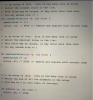
public int[] reverse3(int[] listOfNumbers)
{
int [] listOfReversedNumbers= new int[listOfNumbers.length];
for (int k=listOfNumbers.length-1;k>=0;k--)
{
listOfReversedNumbers[listOfNumbers.length-1-k]=listOfNumbers[k];
}
return listOfReversedNumbers;
}
Add Answer to:
Given an array of ints length 3, return a new array with the elements in reverse...
C++ Language Given an array length 1 or more of ints, return the difference between the...
 C++ Language
Given an array length 1 or more of ints, return the difference between the largest and smallest values in the array. Examples: largeDiff (410, 3, 5, 6}, 4) - 7 largeDiff ({7, 2, 10, 9}, 4) - 8 largeDiff ({2, 10, 7, 2}, 4) + 8 largeDiff ({2}, 1) = 0 code.cpp + New I Full Screen 2- int largeDiff (const int a[], int n) { 3 4 5}
C++ Language
Given an array length 1 or more of ints, return the difference between the largest and smallest values in the array. Examples: largeDiff (410, 3, 5, 6}, 4) - 7 largeDiff ({7, 2, 10, 9}, 4) - 8 largeDiff ({2, 10, 7, 2}, 4) + 8 largeDiff ({2}, 1) = 0 code.cpp + New I Full Screen 2- int largeDiff (const int a[], int n) { 3 4 5}
c++, need help thank you Given an array of ints, return the sum of all elements...
 c++, need help thank you
Given an array of ints, return the sum of all elements from the array that come before the first element that equals number 4 in the array. The array will contain at least one 4. Function prototype: int pre4int array ( ], int size); Hint: to find the array size, use: int size = sizeof(array) / sizeof( array[0]); Sample runs: int array1[ ] = {1, 2, 4, 1); pre4(array1, 4); // returns 3 int array2...
c++, need help thank you
Given an array of ints, return the sum of all elements from the array that come before the first element that equals number 4 in the array. The array will contain at least one 4. Function prototype: int pre4int array ( ], int size); Hint: to find the array size, use: int size = sizeof(array) / sizeof( array[0]); Sample runs: int array1[ ] = {1, 2, 4, 1); pre4(array1, 4); // returns 3 int array2...
/** Given an int array, return an int array with duplicate ints removed if the array...
/** Given an int array, return an int array with duplicate ints removed if the array contains duplicate values. <br> <br> removeDuplicateInts({3}) -> {3} <br> removeDuplicateInts({1, 2}) -> {1, 2} <br> removeDuplicateInts({7, 7}) -> {7} <br> removeDuplicateInts({1, 7, 1, 7, 1}) -> {1, 7} <br> removeDuplicateInts({1, 2, 3, 4, 5}) -> {1, 2, 3, 4, 5}) <br> removeDuplicateInts({1, 2, 3, 2, 4, 2, 5, 2}) -> {1, 2, 3, 4, 5} <br> @param numbers int[] an array of integers. @return...
Write a Java program to remove the duplicate elements of a given array and return the...
Write a Java program to remove the duplicate elements of a given array and return the new length of the array. Sample array: [20, 20, 32, 76, 30, 40, 50, 50, 52] After removing the duplicate elements the program should return 6 as the new length of the array. Out put Original array length: 9 Array elements are: 20 20 32 76 30 40 50 50 52 The new length of the array is: 7
Consider a non-empty int array ints. A contiguous subarray ints[ start .. start + len -1...
Consider a non-empty int array ints. A contiguous subarray ints[ start .. start + len -1 ] (with starting index start and length len) is called a flat if all elements of that subarray are equal. Furthermore, such a subarray is called a plateau if it is flat and each of the elements ints[start -1] and ints[start + len] that immediately proceed/succeed the subarray are either nonexistent (i.e., out of array’s index range) or are strictly smaller than the elements...
1. Define an array of ints with the ten elements { 0, 1,2,3, 4, 5, 6,...
1. Define an array of ints with the ten elements { 0, 1,2,3, 4, 5, 6, 7, 8, 9 }. 2. Define a vector with those ten elements. 3. Define a list with those ten elements. 4. Define a second array, vector, and list, each initialized as a copy of the first array, vector, and list, respectively. 5. Increase the value of each element in the array by 2; increase the value of each element in the vector by 3;...
- Write a program that performs several operations on an array of positive ints. The program...
- Write a program that performs several operations on an array of positive ints. The program should prompt the user for the size of the array (validate the size) and dynamically allocate it. Allow the user to enter the values, do not accept negative values in the array. - Your program should then define the functions described below, call them in order, and display the results of each operation: a) reverse: This function accepts a pointer to an int array...
-Fill in the reverse method below to return a new DoublyLinkedList consisting of the same elements...
-Fill in the reverse method below to return a new DoublyLinkedList consisting of the same elements in reverse order. -The reverse method must not modify the original DoublyLinkedList. -The reverse method must run in linear time. Can someone answer this for me, please? In Java public class DoublyLinkedList { int size; Node firstNode; Node lastNode; public DoublyLinkedList() { size = 0; firstNode = null; lastNode = null; } // Problem 1 (15 pts) // Fill in the method below to...
please write this code in c++ // a: an array of ints. size is how many...
 please write this code in c++
// a: an array of ints. size is how many ints in array 7/ Return the largest value in the list. 7/ This value may be unique, or may occur more than once // You may assume size >= 1 int largestValue(int *a, int size) { assert(size >= 1); return -42; // STUB !!! Remove and replace with correct code 71 a: an array of ints. size is how many ints in array 7/...
please write this code in c++
// a: an array of ints. size is how many ints in array 7/ Return the largest value in the list. 7/ This value may be unique, or may occur more than once // You may assume size >= 1 int largestValue(int *a, int size) { assert(size >= 1); return -42; // STUB !!! Remove and replace with correct code 71 a: an array of ints. size is how many ints in array 7/...
/** Given a String and an array of two Strings, return a three String...
/** Given a String and an array of two Strings, return a three String array containing the strings in alphabetical order. Note: Capital letters count sort3Strings("wallace", {"washington", "irving"}) -> {"irving", "wallace", "washington"} sort3Strings("wallace", {"washington", "Irving"}) -> {"Irving", "wallace", "washington"} sort3Strings("Washington", {"irving", wallace"}) -> {"Washington", "irving", "wallace"} sort3Strings("washington", {"washington", "Washington"}) -> {"Washington", "washington", "washington"} **/ public static String[] sort3Strings(String stringValue, String[] stringArray) { //your code here return new String[1]; }//end sort3Strings ...
 C++ Language
Given an array length 1 or more of ints, return the difference between the largest and smallest values in the array. Examples: largeDiff (410, 3, 5, 6}, 4) - 7 largeDiff ({7, 2, 10, 9}, 4) - 8 largeDiff ({2, 10, 7, 2}, 4) + 8 largeDiff ({2}, 1) = 0 code.cpp + New I Full Screen 2- int largeDiff (const int a[], int n) { 3 4 5}
C++ Language
Given an array length 1 or more of ints, return the difference between the largest and smallest values in the array. Examples: largeDiff (410, 3, 5, 6}, 4) - 7 largeDiff ({7, 2, 10, 9}, 4) - 8 largeDiff ({2, 10, 7, 2}, 4) + 8 largeDiff ({2}, 1) = 0 code.cpp + New I Full Screen 2- int largeDiff (const int a[], int n) { 3 4 5}
 c++, need help thank you
Given an array of ints, return the sum of all elements from the array that come before the first element that equals number 4 in the array. The array will contain at least one 4. Function prototype: int pre4int array ( ], int size); Hint: to find the array size, use: int size = sizeof(array) / sizeof( array[0]); Sample runs: int array1[ ] = {1, 2, 4, 1); pre4(array1, 4); // returns 3 int array2...
c++, need help thank you
Given an array of ints, return the sum of all elements from the array that come before the first element that equals number 4 in the array. The array will contain at least one 4. Function prototype: int pre4int array ( ], int size); Hint: to find the array size, use: int size = sizeof(array) / sizeof( array[0]); Sample runs: int array1[ ] = {1, 2, 4, 1); pre4(array1, 4); // returns 3 int array2...
 please write this code in c++
// a: an array of ints. size is how many ints in array 7/ Return the largest value in the list. 7/ This value may be unique, or may occur more than once // You may assume size >= 1 int largestValue(int *a, int size) { assert(size >= 1); return -42; // STUB !!! Remove and replace with correct code 71 a: an array of ints. size is how many ints in array 7/...
please write this code in c++
// a: an array of ints. size is how many ints in array 7/ Return the largest value in the list. 7/ This value may be unique, or may occur more than once // You may assume size >= 1 int largestValue(int *a, int size) { assert(size >= 1); return -42; // STUB !!! Remove and replace with correct code 71 a: an array of ints. size is how many ints in array 7/...
Most questions answered within 3 hours.
-
Where is the error in this code sequence?
String s1 = "Hello";
String s2 = "ello";...
asked 10 months ago -
Financial data for Joel de Paris, Inc., for last year
follow:
Joel de Paris, Inc.
Balance...
asked 10 months ago -
Consider this reaction:
Al2(SO4)3 (aq)+ BaCl3
(aq) Al2Cl6 (aq)- +
3BaSO4(s) . What is the...
asked 10 months ago -
Suppose that Savneet is considering increasing her
recent random sample from 20 car rentals to 40...
asked 10 months ago -
Trucks arrive at an unloading terminal at an average rate of 120
per hour.
Trucks arrive...
asked 10 months ago -
Why are methanol and ethanol completely soluble in water while
octanol is not very little soluble....
asked 10 months ago -
A facilities manager at a university reads in a research report
that the mean amount of...
asked 10 months ago -
When the CuSO4 is rehydrated by adding water to the anhydrous
compound, is this an endothermic...
asked 10 months ago -
A ray of sunlight is passing from diamond into crown glass; the
angle of incidence is...
asked 10 months ago -
A block of mass 0.249 kg is placed on top of a light, vertical
spring of...
asked 10 months ago -
how do the kidneys compensate in the presences of acidosis
a) trigger hyperventilate
b) reserve acid...
asked 10 months ago -
Question 501 pts
The rental rate of capital to the firm increases. Which of the
following...
asked 10 months ago