Chromatographic features comparison: Predict the relative Rf values for the pigments, lycopene and B-carotene, on a...
Homework Answers
When we perform TLC, the mobile phase moves up via capillary action. Separation occurs when one component of the mixture is strongly adsorbed by the stationary phase than the other component.. The Rf value is a way to express the position of a substance on a developed chromatogram.
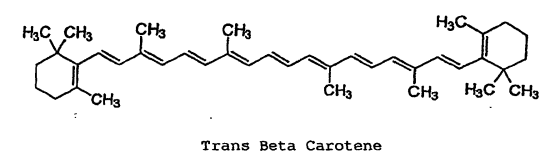
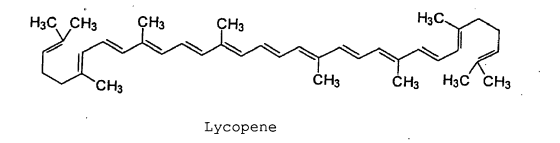
As beta carotene is less polar which makes it more soluble in the TLC solvent (hexane, non or less polar) and adsorbing less to the stationary phase than lycopene which is more polar. Hence,beta carotene carries the highest Rf value than lycopene.
Adsorptivity of compounds increases with increased polarity which in turns yield lower Rf values on TLC.
In column Chromatographybeta carotene will elute first being its less polar nature because it has less double bonds than lycopene. More polar Lycopene sticks to the column more readily than beta carotene, and therefore takes longer to move down. (beta- carotene contains less number of conjugated double bonds)
Add Answer to:
Chromatographic features comparison: Predict the relative Rf values
for the pigments, lycopene and B-carotene, on a...
Past paper question R, values for photosynthetic pigments may be determined using the technique of thin-layer...
 Past paper question R, values for photosynthetic pigments may be determined using the technique of thin-layer chromatography (TLC). TLC plate Origin Solvent a. Outline what happens when spinach extract is spotted on a TLC plate and placed into a container of solvent. [2 marks] b. Explain what the Rf values represent in chromatography. [3 marks) c. State two photosynthetic pigments that could be identified using chromatography. [1 mark]
4. B-carotene and zeaxanthin are both yellow pigments found in plants. Which would you expect to...
 4. B-carotene and zeaxanthin are both yellow pigments found in plants. Which would you expect to have a higher R.? Which would you expect to elute from the column first? (2 points) p-Carotene Zeaxanthin
Help with synthesis of Lumino!! b. What is bioluminescence? How does it work? (Make sure you...
 Help with synthesis of Lumino!!
b. What is bioluminescence? How does it work? (Make sure you are specific with the structure of the compound and the name of the enzyme that creatures produce) Draw the full electron pushing mechanism for the synthesis of the starting material you use in this C. reaction, 3-nitrophthalhydrazide, from 3-nitrophthalic acid and hydrazine. HINT: this is an acyl substitution reaction between a carboxylic acid and amine functionality Chromatographic Features Comparisons: (5 points) 3. Predict the...
Help with synthesis of Lumino!!
b. What is bioluminescence? How does it work? (Make sure you are specific with the structure of the compound and the name of the enzyme that creatures produce) Draw the full electron pushing mechanism for the synthesis of the starting material you use in this C. reaction, 3-nitrophthalhydrazide, from 3-nitrophthalic acid and hydrazine. HINT: this is an acyl substitution reaction between a carboxylic acid and amine functionality Chromatographic Features Comparisons: (5 points) 3. Predict the...
LTC plate A mixture of compounds A, B and C was spotted on a TLC plate...
 LTC plate
A mixture of compounds A, B and C was spotted on a TLC plate and the TLC was run in dichloromethane solvent. Which of the following compounds will have the highest R_f value? Explain why? A mixture of compounds A. B and C was separated using column chromatography with dichloromethane as the mobile phase. Which of the following compounds will elute as the last fraction from the column? Explain why?
LTC plate
A mixture of compounds A, B and C was spotted on a TLC plate and the TLC was run in dichloromethane solvent. Which of the following compounds will have the highest R_f value? Explain why? A mixture of compounds A. B and C was separated using column chromatography with dichloromethane as the mobile phase. Which of the following compounds will elute as the last fraction from the column? Explain why?
Pre lab Introduction Your instructor has prepared an extract of chloroplast pigments from fresh green grass...
 Pre lab
Introduction Your instructor has prepared an extract of chloroplast pigments from fresh green grass or fresh spinach. A blender was used to rupture the cells, and the pigments were then extracted with acetone, an organic solvent. Work- ing with one other student, begin this exercise by separating the pigments extracted using paper chromatography. To do this, you will apply the pig- ment extract to a cylinder of chromatographic paper. You will then place the ylinder in a jar...
Pre lab
Introduction Your instructor has prepared an extract of chloroplast pigments from fresh green grass or fresh spinach. A blender was used to rupture the cells, and the pigments were then extracted with acetone, an organic solvent. Work- ing with one other student, begin this exercise by separating the pigments extracted using paper chromatography. To do this, you will apply the pig- ment extract to a cylinder of chromatographic paper. You will then place the ylinder in a jar...
slightly confused I thought thought Rf 0 was solid andRf1 is slightly liquid please any...
 slightly confused I thought Rf 0 was solid and
Rf1 is slightly liquid please any help is greatly appreciated.3. Two extreme values for the Retention Factor are 0 and 1 a) Explain what each Re value means in terms of the substance's affinity for the mobile phase and for the stationary phase. b) Describe the features of molecules that would have these extreme Rr values under the conditions in this experiment: the solvent an 80:20 mix of petroleum ether and acetone, the...
slightly confused I thought Rf 0 was solid and
Rf1 is slightly liquid please any help is greatly appreciated.3. Two extreme values for the Retention Factor are 0 and 1 a) Explain what each Re value means in terms of the substance's affinity for the mobile phase and for the stationary phase. b) Describe the features of molecules that would have these extreme Rr values under the conditions in this experiment: the solvent an 80:20 mix of petroleum ether and acetone, the...
1. Calculate the Rf values for spots A and B on the TLC plate drawn below....
 1. Calculate the Rf values for spots A and B on the TLC plate drawn below. Based on the Rf values which compound (A or B) is most likely to be more polar? a. Calculate Rf values for A and B b. Which compound A or B will most likely be polar? Why?
The distance that a spot of a particular compound moves up the TLC plate relative to...
The distance that a spot of a particular compound moves up the TLC plate relative to the distance moved by the solvent is called the Rf value. What does Rf stand for? a. Refractive factor b. Reflux fashion c. Raoult’s factor d. Retention factor 1 points QUESTION 2 The components of an immiscible mixture boil at _________________. a. higher temperatures than the boiling points of the individual components of the mixture b. a...
I need help with my pre and post lab questions. The three compounds below were spotted...
 I need help with my pre and post lab questions.
The three compounds below were spotted on a TLC plate and developed to give the TLC plate shown. Which compound corresponds to which spot? Calculate the Rf value for spot B in the TLC plate shown above. When using polarity to determine the relative rates at which organic compounds travel up the TLC plate, we are considering compounds of similar molecular weight. It should also be noted that Rf values...
I need help with my pre and post lab questions.
The three compounds below were spotted on a TLC plate and developed to give the TLC plate shown. Which compound corresponds to which spot? Calculate the Rf value for spot B in the TLC plate shown above. When using polarity to determine the relative rates at which organic compounds travel up the TLC plate, we are considering compounds of similar molecular weight. It should also be noted that Rf values...
4. Consider the following silica gel TLC plac or compounds A, B, and hexines: developed in...
 4. Consider the following silica gel TLC plac or compounds A, B, and hexines: developed in Fo-o- og a) Determine the Rr values of compounds A, B, and C run on a silica gel TLC plate using hexanes as the solvent b) Which compound, A, B, or C. is the most polar? values if you used acetone instead c) What would you expect to happen to the of hexanes as the eluting solvent? 5) Consider a sample that is a...
 Past paper question R, values for photosynthetic pigments may be determined using the technique of thin-layer chromatography (TLC). TLC plate Origin Solvent a. Outline what happens when spinach extract is spotted on a TLC plate and placed into a container of solvent. [2 marks] b. Explain what the Rf values represent in chromatography. [3 marks) c. State two photosynthetic pigments that could be identified using chromatography. [1 mark]
 4. B-carotene and zeaxanthin are both yellow pigments found in plants. Which would you expect to have a higher R.? Which would you expect to elute from the column first? (2 points) p-Carotene Zeaxanthin
 Help with synthesis of Lumino!!
b. What is bioluminescence? How does it work? (Make sure you are specific with the structure of the compound and the name of the enzyme that creatures produce) Draw the full electron pushing mechanism for the synthesis of the starting material you use in this C. reaction, 3-nitrophthalhydrazide, from 3-nitrophthalic acid and hydrazine. HINT: this is an acyl substitution reaction between a carboxylic acid and amine functionality Chromatographic Features Comparisons: (5 points) 3. Predict the...
Help with synthesis of Lumino!!
b. What is bioluminescence? How does it work? (Make sure you are specific with the structure of the compound and the name of the enzyme that creatures produce) Draw the full electron pushing mechanism for the synthesis of the starting material you use in this C. reaction, 3-nitrophthalhydrazide, from 3-nitrophthalic acid and hydrazine. HINT: this is an acyl substitution reaction between a carboxylic acid and amine functionality Chromatographic Features Comparisons: (5 points) 3. Predict the...
 LTC plate
A mixture of compounds A, B and C was spotted on a TLC plate and the TLC was run in dichloromethane solvent. Which of the following compounds will have the highest R_f value? Explain why? A mixture of compounds A. B and C was separated using column chromatography with dichloromethane as the mobile phase. Which of the following compounds will elute as the last fraction from the column? Explain why?
LTC plate
A mixture of compounds A, B and C was spotted on a TLC plate and the TLC was run in dichloromethane solvent. Which of the following compounds will have the highest R_f value? Explain why? A mixture of compounds A. B and C was separated using column chromatography with dichloromethane as the mobile phase. Which of the following compounds will elute as the last fraction from the column? Explain why?
 Pre lab
Introduction Your instructor has prepared an extract of chloroplast pigments from fresh green grass or fresh spinach. A blender was used to rupture the cells, and the pigments were then extracted with acetone, an organic solvent. Work- ing with one other student, begin this exercise by separating the pigments extracted using paper chromatography. To do this, you will apply the pig- ment extract to a cylinder of chromatographic paper. You will then place the ylinder in a jar...
Pre lab
Introduction Your instructor has prepared an extract of chloroplast pigments from fresh green grass or fresh spinach. A blender was used to rupture the cells, and the pigments were then extracted with acetone, an organic solvent. Work- ing with one other student, begin this exercise by separating the pigments extracted using paper chromatography. To do this, you will apply the pig- ment extract to a cylinder of chromatographic paper. You will then place the ylinder in a jar...
 slightly confused I thought Rf 0 was solid and
Rf1 is slightly liquid please any help is greatly appreciated.3. Two extreme values for the Retention Factor are 0 and 1 a) Explain what each Re value means in terms of the substance's affinity for the mobile phase and for the stationary phase. b) Describe the features of molecules that would have these extreme Rr values under the conditions in this experiment: the solvent an 80:20 mix of petroleum ether and acetone, the...
slightly confused I thought Rf 0 was solid and
Rf1 is slightly liquid please any help is greatly appreciated.3. Two extreme values for the Retention Factor are 0 and 1 a) Explain what each Re value means in terms of the substance's affinity for the mobile phase and for the stationary phase. b) Describe the features of molecules that would have these extreme Rr values under the conditions in this experiment: the solvent an 80:20 mix of petroleum ether and acetone, the...
 1. Calculate the Rf values for spots A and B on the TLC plate drawn below. Based on the Rf values which compound (A or B) is most likely to be more polar? a. Calculate Rf values for A and B b. Which compound A or B will most likely be polar? Why?
 I need help with my pre and post lab questions.
The three compounds below were spotted on a TLC plate and developed to give the TLC plate shown. Which compound corresponds to which spot? Calculate the Rf value for spot B in the TLC plate shown above. When using polarity to determine the relative rates at which organic compounds travel up the TLC plate, we are considering compounds of similar molecular weight. It should also be noted that Rf values...
I need help with my pre and post lab questions.
The three compounds below were spotted on a TLC plate and developed to give the TLC plate shown. Which compound corresponds to which spot? Calculate the Rf value for spot B in the TLC plate shown above. When using polarity to determine the relative rates at which organic compounds travel up the TLC plate, we are considering compounds of similar molecular weight. It should also be noted that Rf values...
 4. Consider the following silica gel TLC plac or compounds A, B, and hexines: developed in Fo-o- og a) Determine the Rr values of compounds A, B, and C run on a silica gel TLC plate using hexanes as the solvent b) Which compound, A, B, or C. is the most polar? values if you used acetone instead c) What would you expect to happen to the of hexanes as the eluting solvent? 5) Consider a sample that is a...
Most questions answered within 3 hours.
-
Where is the error in this code sequence?
String s1 = "Hello";
String s2 = "ello";...
asked 10 months ago -
Financial data for Joel de Paris, Inc., for last year
follow:
Joel de Paris, Inc.
Balance...
asked 10 months ago -
Consider this reaction:
Al2(SO4)3 (aq)+ BaCl3
(aq) Al2Cl6 (aq)- +
3BaSO4(s) . What is the...
asked 10 months ago -
Suppose that Savneet is considering increasing her
recent random sample from 20 car rentals to 40...
asked 10 months ago -
Trucks arrive at an unloading terminal at an average rate of 120
per hour.
Trucks arrive...
asked 10 months ago -
Why are methanol and ethanol completely soluble in water while
octanol is not very little soluble....
asked 10 months ago -
A facilities manager at a university reads in a research report
that the mean amount of...
asked 10 months ago -
When the CuSO4 is rehydrated by adding water to the anhydrous
compound, is this an endothermic...
asked 10 months ago -
A ray of sunlight is passing from diamond into crown glass; the
angle of incidence is...
asked 10 months ago -
A block of mass 0.249 kg is placed on top of a light, vertical
spring of...
asked 10 months ago -
how do the kidneys compensate in the presences of acidosis
a) trigger hyperventilate
b) reserve acid...
asked 10 months ago -
Question 501 pts
The rental rate of capital to the firm increases. Which of the
following...
asked 10 months ago