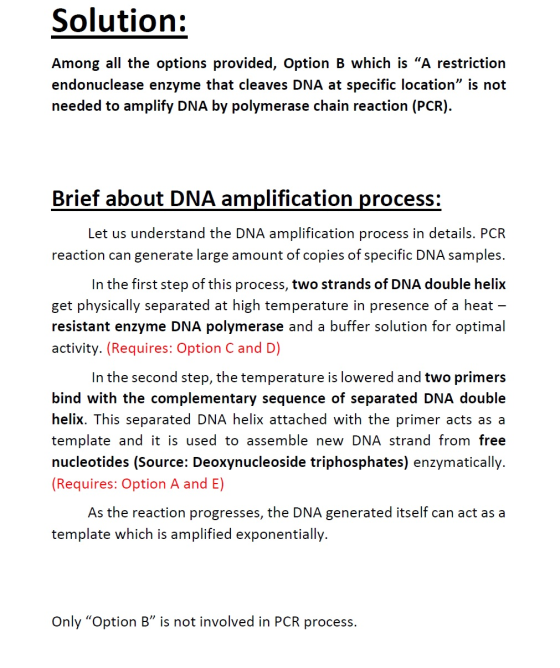
Which is not one of the elements needed to amplify DNA by polymerase chain reaction (PCR)?...
Which is not one of the elements needed to amplify DNA by polymerase chain reaction (PCR)?
Question 16 options:
|
|||
|
|||
|
|||
|
|||
|
Homework Answers
Add Answer to:
Which is not one of the elements needed to amplify DNA by
polymerase chain reaction (PCR)?...
Which of the following is the correct order of events in the polymerase chain reaction (PCR)?...
Which of the following is the correct order of events in the polymerase chain reaction (PCR)? See Section 20.2 (Page 468) cooling to allow primers to attach; heating to separate double-stranded DNA; elongation of DNA strand as nucleotides are added elongation of the DNA strand as nucleotides are added; cooling to allow primers to attach; heating to separate double-stranded DNA heating to separate double-stranded DNA; cooling to allow primers to attach; elongation of DNA strand as nucleotides are added heating...
dentify the correct action and event for clamp loading proteins catalyzes the joining of deoxyribonucleotide 5...
 dentify the correct action and event for clamp loading proteins catalyzes the joining of deoxyribonucleotide 5 -triphosphates (dNTPs) to form the growing DNA chain O an enzyme that can synthesize short fragments of RNA de novo which are complementary to the parent strand template and serve as primers for DNA replication proteins that specifically recognize and bind DNA at the junction between the primer and template proteins that bind adjacent to the clamp-loading proteins, forming a ring around the template...
Question 33 (2 points) The requirements of the polymerase chain reaction (PCR) include: a) knowing parts...
 Question 33 (2 points) The requirements of the polymerase chain reaction (PCR) include: a) knowing parts of a target DNA sequence to be amplified. b) two primers, complementary to each end of the target sequence. c) a large supply of DNA nucleotides. d) a heat-stable DNA polymerase. e) All of the above
Which of the following statements about DNA replication is FALSE? Primase synthesizes the primers. DNA polymerase...
Which of the following statements about DNA replication is FALSE? Primase synthesizes the primers. DNA polymerase is required to add new nucleotides to the growing ends of the DNA strands. DNA ligase joins the small DNA fragments of the lagging strand. Only one strand of the parent DNA serves as a template for a newly synthesized complementary strand.
Which of the following statements about the polymerase chain reaction (PCR) is false? a The DNA...
Which of the following statements about the polymerase chain reaction (PCR) is false? a The DNA ligase used is from a thermophilic bacteria so that it can resist denaturation at high temperatures. b Newly synthesized DNA must be heat-denatured before the next round of DNA synthesis begins. c The boundaries of the amplified DNA segment are determined by the synthetic oligonucleotides used to prime DNA synthesis. d DNA amplified by PCR can be cloned.
1) What does PCR stand for and what does it do? a. Polymerase Chain Reaction; PCR...
1) What does PCR stand for and what does it do? a. Polymerase Chain Reaction; PCR deletes DNA b. Polymerase Copying Repeats; PCR amplifies DNA c. Polymerase Copying Releats; PCR deletes DNA d. Polymerase Chain Reaction; PCR amplifies DNA 2) During gel electrophoresis, the DNA fragments are separated by ____ a. charge b. DNA fragments cannot be separated c. color d. size 3) Primers are a. double stranded DNA oligonucleotide (fragment) b. double stranded RNA oligonucleotide (fragment) c. single stranded...
Which of the following statements about Polymerase Chain Reactions is wrong? a. DNA is briefly heated...
Which of the following statements about Polymerase Chain Reactions is wrong? a. DNA is briefly heated to break the hydrogen bonds holding two strands together. b. Primers hybridize to sequences at opposite ends of the target sequence on the same strand. c. DNA is cooled to allow primers to form hydrogen bonds with the ends of the target sequence. d. The three steps of PCR are denaturation, annealing, and extension. e. PCR produces specific DNA fragments for cloning. f. Taq...
please i need help with a, b, c this is the sequence 5’ATGTATTATTATTTTTTTGTTTTTTTTGCAATATATGCTAATGGATTGCTAAGAAATA AAGATCCTAACATTTTTGCGAG TAGCAATGATGAGATCATAGAAAATGATAAAAGTATGAATACCTTTGTTATGTCAAC AAATGGAAGTTTATATTTAAATA...
 please i need help with a, b, c
this is the sequence
5’ATGTATTATTATTTTTTTGTTTTTTTTGCAATATATGCTAATGGATTGCTAAGAAATA
AAGATCCTAACATTTTTGCGAG
TAGCAATGATGAGATCATAGAAAATGATAAAAGTATGAATACCTTTGTTATGTCAAC
AAATGGAAGTTTATATTTAAATA
GTGATTTTAATTTAAATGAAGCATCCAACGAAAGCTTCTTAGAAAATTGCAATATCA
ATAGTTGTGTAGATATAGGTCAT
GAAAATGGCAACAAAATAAATAGTCAAGAAAATGAGCATGCTAAAAATAATAACA
ACAGTAATAATAACAATTTAAAACC
AGAATACAATAATAATAATAATAATTTAAAACCAGAATACAATAATAATAATTTAA
AACCAGAGTACAATAATAACAATT-3’
1. Polymerase chain reaction 5'- ATGTATTATTATTTTTTTGTTTTTTTTGCAATATATGCTAATGGATTGCTAAGAAATA AAGATCCTAACATTTTTGCGAG TAGCAATGATGAGATCATAGAAAATGATAAAAGTATGAATACCTTTGTTATGTCAAC AAATGGAAGTTTATATTTAAATA GTGATTTTAATTTAAATGAAGCATCCAACGAAAGCTTCTTAGAAAATTGCAATATCA ATAGTTGTGTAGATATAGGTCAT GAAAATGGCAACAAAATAAATAGTCAAGAAAATGAGCATGCTAAAAATAATAACA ACAGTAATAATAACAATTTAAAACC AGAATACAATAATAATAATAATAATTTAAAACCAGAATACAATAATAATAATTTAA AACCAGAGTACAATAATAACAATT-3' a) One strand of a chromosomal DNA sequence is shown above. How would you amplify and isolate a DNA fragment defined by the sequence shown in red, using polymerase chain reaction. Design PCR primers (Forward and Reverse primers, each 20 nucleotides long, that...
please i need help with a, b, c
this is the sequence
5’ATGTATTATTATTTTTTTGTTTTTTTTGCAATATATGCTAATGGATTGCTAAGAAATA
AAGATCCTAACATTTTTGCGAG
TAGCAATGATGAGATCATAGAAAATGATAAAAGTATGAATACCTTTGTTATGTCAAC
AAATGGAAGTTTATATTTAAATA
GTGATTTTAATTTAAATGAAGCATCCAACGAAAGCTTCTTAGAAAATTGCAATATCA
ATAGTTGTGTAGATATAGGTCAT
GAAAATGGCAACAAAATAAATAGTCAAGAAAATGAGCATGCTAAAAATAATAACA
ACAGTAATAATAACAATTTAAAACC
AGAATACAATAATAATAATAATAATTTAAAACCAGAATACAATAATAATAATTTAA
AACCAGAGTACAATAATAACAATT-3’
1. Polymerase chain reaction 5'- ATGTATTATTATTTTTTTGTTTTTTTTGCAATATATGCTAATGGATTGCTAAGAAATA AAGATCCTAACATTTTTGCGAG TAGCAATGATGAGATCATAGAAAATGATAAAAGTATGAATACCTTTGTTATGTCAAC AAATGGAAGTTTATATTTAAATA GTGATTTTAATTTAAATGAAGCATCCAACGAAAGCTTCTTAGAAAATTGCAATATCA ATAGTTGTGTAGATATAGGTCAT GAAAATGGCAACAAAATAAATAGTCAAGAAAATGAGCATGCTAAAAATAATAACA ACAGTAATAATAACAATTTAAAACC AGAATACAATAATAATAATAATAATTTAAAACCAGAATACAATAATAATAATTTAA AACCAGAGTACAATAATAACAATT-3' a) One strand of a chromosomal DNA sequence is shown above. How would you amplify and isolate a DNA fragment defined by the sequence shown in red, using polymerase chain reaction. Design PCR primers (Forward and Reverse primers, each 20 nucleotides long, that...
Now. you should be able to answer the following questions: • How the amplification will be...
 Now. you should be able to answer the following questions: • How the amplification will be done? - How you will determine your target sequence? How the amplification will be specific for certain segment? What are the requirements to carry PCR? • Suppose you perform a PCR that begins with one double-strand of the following DNA template: +5'-CTACCTGCGGGTTGACTGCTACCTTCCCGGGATGCCCAAAATTCTCGAG-3+ +3'-GATGGACGCCCAACTGACGATGGAAGGGCCCTACGGGTTTTAAGAGCTC-5'+ A. Draw one cycle of PCR reaction below the following diagram. B. Label the template DNA, the primers, and what is...
both stranas es:COVID mation & es Question 2 DNA polymerase III (DNA pol III) is needed...
 both stranas es:COVID mation & es Question 2 DNA polymerase III (DNA pol III) is needed for leading strand synthesis o lagging strand synthesis both strands D Question 3 ONE RNA primer is needed for o both strands O lagging strand synthesis leading strand synthesis Question 4 Multiple RNA primers are needed for O both strands leading strand synthesis lagging strand synthesis Question 5
 dentify the correct action and event for clamp loading proteins catalyzes the joining of deoxyribonucleotide 5 -triphosphates (dNTPs) to form the growing DNA chain O an enzyme that can synthesize short fragments of RNA de novo which are complementary to the parent strand template and serve as primers for DNA replication proteins that specifically recognize and bind DNA at the junction between the primer and template proteins that bind adjacent to the clamp-loading proteins, forming a ring around the template...
 Question 33 (2 points) The requirements of the polymerase chain reaction (PCR) include: a) knowing parts of a target DNA sequence to be amplified. b) two primers, complementary to each end of the target sequence. c) a large supply of DNA nucleotides. d) a heat-stable DNA polymerase. e) All of the above
 please i need help with a, b, c
this is the sequence
5’ATGTATTATTATTTTTTTGTTTTTTTTGCAATATATGCTAATGGATTGCTAAGAAATA
AAGATCCTAACATTTTTGCGAG
TAGCAATGATGAGATCATAGAAAATGATAAAAGTATGAATACCTTTGTTATGTCAAC
AAATGGAAGTTTATATTTAAATA
GTGATTTTAATTTAAATGAAGCATCCAACGAAAGCTTCTTAGAAAATTGCAATATCA
ATAGTTGTGTAGATATAGGTCAT
GAAAATGGCAACAAAATAAATAGTCAAGAAAATGAGCATGCTAAAAATAATAACA
ACAGTAATAATAACAATTTAAAACC
AGAATACAATAATAATAATAATAATTTAAAACCAGAATACAATAATAATAATTTAA
AACCAGAGTACAATAATAACAATT-3’
1. Polymerase chain reaction 5'- ATGTATTATTATTTTTTTGTTTTTTTTGCAATATATGCTAATGGATTGCTAAGAAATA AAGATCCTAACATTTTTGCGAG TAGCAATGATGAGATCATAGAAAATGATAAAAGTATGAATACCTTTGTTATGTCAAC AAATGGAAGTTTATATTTAAATA GTGATTTTAATTTAAATGAAGCATCCAACGAAAGCTTCTTAGAAAATTGCAATATCA ATAGTTGTGTAGATATAGGTCAT GAAAATGGCAACAAAATAAATAGTCAAGAAAATGAGCATGCTAAAAATAATAACA ACAGTAATAATAACAATTTAAAACC AGAATACAATAATAATAATAATAATTTAAAACCAGAATACAATAATAATAATTTAA AACCAGAGTACAATAATAACAATT-3' a) One strand of a chromosomal DNA sequence is shown above. How would you amplify and isolate a DNA fragment defined by the sequence shown in red, using polymerase chain reaction. Design PCR primers (Forward and Reverse primers, each 20 nucleotides long, that...
please i need help with a, b, c
this is the sequence
5’ATGTATTATTATTTTTTTGTTTTTTTTGCAATATATGCTAATGGATTGCTAAGAAATA
AAGATCCTAACATTTTTGCGAG
TAGCAATGATGAGATCATAGAAAATGATAAAAGTATGAATACCTTTGTTATGTCAAC
AAATGGAAGTTTATATTTAAATA
GTGATTTTAATTTAAATGAAGCATCCAACGAAAGCTTCTTAGAAAATTGCAATATCA
ATAGTTGTGTAGATATAGGTCAT
GAAAATGGCAACAAAATAAATAGTCAAGAAAATGAGCATGCTAAAAATAATAACA
ACAGTAATAATAACAATTTAAAACC
AGAATACAATAATAATAATAATAATTTAAAACCAGAATACAATAATAATAATTTAA
AACCAGAGTACAATAATAACAATT-3’
1. Polymerase chain reaction 5'- ATGTATTATTATTTTTTTGTTTTTTTTGCAATATATGCTAATGGATTGCTAAGAAATA AAGATCCTAACATTTTTGCGAG TAGCAATGATGAGATCATAGAAAATGATAAAAGTATGAATACCTTTGTTATGTCAAC AAATGGAAGTTTATATTTAAATA GTGATTTTAATTTAAATGAAGCATCCAACGAAAGCTTCTTAGAAAATTGCAATATCA ATAGTTGTGTAGATATAGGTCAT GAAAATGGCAACAAAATAAATAGTCAAGAAAATGAGCATGCTAAAAATAATAACA ACAGTAATAATAACAATTTAAAACC AGAATACAATAATAATAATAATAATTTAAAACCAGAATACAATAATAATAATTTAA AACCAGAGTACAATAATAACAATT-3' a) One strand of a chromosomal DNA sequence is shown above. How would you amplify and isolate a DNA fragment defined by the sequence shown in red, using polymerase chain reaction. Design PCR primers (Forward and Reverse primers, each 20 nucleotides long, that...
 Now. you should be able to answer the following questions: • How the amplification will be done? - How you will determine your target sequence? How the amplification will be specific for certain segment? What are the requirements to carry PCR? • Suppose you perform a PCR that begins with one double-strand of the following DNA template: +5'-CTACCTGCGGGTTGACTGCTACCTTCCCGGGATGCCCAAAATTCTCGAG-3+ +3'-GATGGACGCCCAACTGACGATGGAAGGGCCCTACGGGTTTTAAGAGCTC-5'+ A. Draw one cycle of PCR reaction below the following diagram. B. Label the template DNA, the primers, and what is...
 both stranas es:COVID mation & es Question 2 DNA polymerase III (DNA pol III) is needed for leading strand synthesis o lagging strand synthesis both strands D Question 3 ONE RNA primer is needed for o both strands O lagging strand synthesis leading strand synthesis Question 4 Multiple RNA primers are needed for O both strands leading strand synthesis lagging strand synthesis Question 5
Most questions answered within 3 hours.
-
Where is the error in this code sequence?
String s1 = "Hello";
String s2 = "ello";...
asked 10 months ago -
Financial data for Joel de Paris, Inc., for last year
follow:
Joel de Paris, Inc.
Balance...
asked 10 months ago -
Consider this reaction:
Al2(SO4)3 (aq)+ BaCl3
(aq) Al2Cl6 (aq)- +
3BaSO4(s) . What is the...
asked 10 months ago -
Suppose that Savneet is considering increasing her
recent random sample from 20 car rentals to 40...
asked 10 months ago -
Trucks arrive at an unloading terminal at an average rate of 120
per hour.
Trucks arrive...
asked 10 months ago -
Why are methanol and ethanol completely soluble in water while
octanol is not very little soluble....
asked 10 months ago -
A facilities manager at a university reads in a research report
that the mean amount of...
asked 10 months ago -
When the CuSO4 is rehydrated by adding water to the anhydrous
compound, is this an endothermic...
asked 10 months ago -
A ray of sunlight is passing from diamond into crown glass; the
angle of incidence is...
asked 10 months ago -
A block of mass 0.249 kg is placed on top of a light, vertical
spring of...
asked 10 months ago -
how do the kidneys compensate in the presences of acidosis
a) trigger hyperventilate
b) reserve acid...
asked 10 months ago -
Question 501 pts
The rental rate of capital to the firm increases. Which of the
following...
asked 10 months ago