
Homework Answers
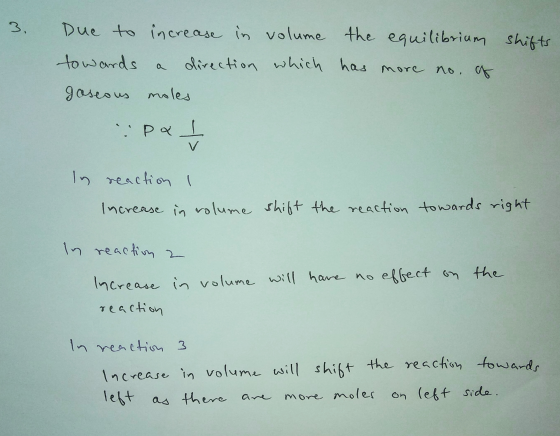
![1. Reaction 2 CO(g) + H2O (2) Comet H2 (9) DH = - 41.2 kJ k = [co] [2] [co] [H₂o Where ka equilibrium Constant 2. Due to an t](http://img.homeworklib.com/questions/7ec88d00-d9d6-11eb-8b35-89cfe07604ad.png?x-oss-process=image/resize,w_560)
Add Answer to:
A typed answer is prefered.
Some of the reactions for coal gasification are as follows: Reaction...
22) In the coal-gasification process, carbon monoxide is converted to carbon dioxide via the following reaction: CO...
 22) In the coal-gasification process, carbon monoxide is converted to carbon dioxide via the following reaction: CO (g) + H20 (9) CO2 (g) + H2 (9) In an experiment, 0.35 mol of CO and 0.40 mol of H2O were placed in a 1.00-L reaction vessel. At equilibrium, there were 0.22 mol of CO remaining. Keg at the temperature of the experiment is A) 0.75 B) 5.5 C) 0.28 D) 1.0 E) 3.5
13. Consider the following equation 2C(s) + 2 H20 (g) CH, (g) + CO2(g) Determine the...
 13. Consider the following equation 2C(s) + 2 H20 (g) CH, (g) + CO2(g) Determine the standard enthalpy change for this reaction from the following standard enthalpies of reaction : (1) C(s) + H2O (g) CO(g) + H, (g) AH° - 131.3 kJ (2) CO(g) + H2O (g) CO2(g) + H2(g) AH° - -41.2 kJ (3) CH, (g) + H,0(g) 3H, (g) + CO(g) AH° - 206.1 kJ A 15.3 B. -116.1 C. 378.2 D. -427.0
Please answer the following question and show all work to receive credit: 12. Coal gasification usually...
 Please answer the following question and show all work to
receive credit:
12. Coal gasification usually begins with the formation of carbon monoxide and hydrogen gas from carbon and steam. C(s) + H2O(g) < - > CO(g) + H2(g) delta H reaction = 131 kJ/mole. An engineer the Kp is only 9.36 X 10^-17 at 25 degrees Celsius. What can be done to the system to increase the yield of the products?
Please answer the following question and show all work to
receive credit:
12. Coal gasification usually begins with the formation of carbon monoxide and hydrogen gas from carbon and steam. C(s) + H2O(g) < - > CO(g) + H2(g) delta H reaction = 131 kJ/mole. An engineer the Kp is only 9.36 X 10^-17 at 25 degrees Celsius. What can be done to the system to increase the yield of the products?
to 14. (20 points) Use the following information to Show your work. e the following information...
 to 14. (20 points) Use the following information to Show your work. e the following information to determine the enthalpy for the reaction shown below. CH(g) + H2O(g) → CO(g) + 3H-(8) AH = ? 2C(s) + 2H2O(g) CH.(g) + CO:(8) All = 15.3 kJ C(s) + H2O(g) → CO(g) +H;(8) AH = 131.3 kJ CO(g) + H2O(g) + CO2(g) + H:(g) AH -41.2 kJ 15. (15 points) Ethanol is being promoted as renewable biofuel. Use the standard enthalpies of...
5. Calculate the enthalpy of formation of carbon dioxide in the following reaction: C(s) + O2(g)...
 5. Calculate the enthalpy of formation of carbon dioxide in the following reaction: C(s) + O2(g) - CO. (g) 213 Use the following equations: 2) H.O (0) -- H() .O() AH: 285.8 kJ/mol b) CH. (g) -- 2C). 3H2(g) AH: +84.7 kJ/mol c) 200,(e) +3H.0 (6-- C.H. (B). (7/2)0,() AH - 1560.7 kJ/mol
Bond H-H Predict whether the following reactions will be exothermic or endothermic. Reaction A. N. (9)...
 Bond H-H Predict whether the following reactions will be exothermic or endothermic. Reaction A. N. (9) + 3H,9 — 2NH, Reaction B. S(g) +0,2) 0,() Reaction C. 2H,09) — 2H,(g) +0,($) Reaction D. 2F(g) — F, (g) N=N AH° (kJ/mol) 432 942 494 155 0=0 F-F H-N 386 459 H-O S=0 522 Which reaction(s) are endothermic? Which reaction(s) are exothermie? D ID OB Strongest bond Weakest bond Answer Bank Si-F Si-I Si-CI
please solve all FREE ENERGY AND CALCULATING AG FOR REACTIONS (Math) 21. Any reaction will be...
 please solve all
FREE ENERGY AND CALCULATING AG FOR REACTIONS (Math) 21. Any reaction will be spontaneous if AG > 0 d. AS < 0 b. AG0 AH, <0 AS > 0 a. e. c. From AGformations 22. What is the AG for the reaction given: CH_(8) +20,(8) CO2(g) + 2H2O(g) Substance CH.(g) CO.(g) H.O(g) AGform (kJ/mol) 50.8 394.4 -228.57 a. -50.8 kJ/mol b. -- 751 kJ/mol c. -113 kJ/mol d. -115 kJ/mol e. -807 kJ/mol 23. Determine AG for...
please solve all
FREE ENERGY AND CALCULATING AG FOR REACTIONS (Math) 21. Any reaction will be spontaneous if AG > 0 d. AS < 0 b. AG0 AH, <0 AS > 0 a. e. c. From AGformations 22. What is the AG for the reaction given: CH_(8) +20,(8) CO2(g) + 2H2O(g) Substance CH.(g) CO.(g) H.O(g) AGform (kJ/mol) 50.8 394.4 -228.57 a. -50.8 kJ/mol b. -- 751 kJ/mol c. -113 kJ/mol d. -115 kJ/mol e. -807 kJ/mol 23. Determine AG for...
Use the energy diagrams of the two reactions to answer the questions. Reaction A Reaction B...
 Use the energy diagrams of the two reactions to answer the questions. Reaction A Reaction B Energy HHHH! (kJ/mol Energy 100 (kJ/mol) 50 Reaction progress Reaction progress What is the change in energy for reaction A? What is the change in energy for reaction B? AEX = kJ/mol AE/x = kJ/mol What is the activation energy for reaction A? What is the activation energy for reaction B? E = kJ/mol E.= kJ/mol Question 2 of 20 > For the reaction...
Question 4 of 4 > The enthalpy changes, AH, for three reactions are given. H, ()0,()H,O)...
 Question 4 of 4 > The enthalpy changes, AH, for three reactions are given. H, ()0,()H,O) Ca(s) +2H (aq) Ca2 (aq) +H,(g) CaO(s) +2H (aq) - AH=-286 kJ/mol AH= -544 kJ/mol Ca2 (aq) +H,O() AH =-193 kJ/mol Using Hess's law, calculate the heat of formation for CaO(s) using the reaction shown. 0,()Ca) Ca(s) + kJ/mol ΔΗ- TOOLS During an experiment, a student adds 1.81 g CaO to 300.0 mL of 1.000 M HCI. The student observès a temperature increase of...
QUESTION 9 If two reactions are coupled, then 2. A product of one reaction is a...
 QUESTION 9 If two reactions are coupled, then 2. A product of one reaction is a reactant of the other, and the overall process is product-favored. b. A product of one reaction is a reactant of the other, and the overall process is reactant-favored C. The heat released from an exothermic reaction is used in an endothermic reaction. The Gibbs free energy released from a product-favored reaction is released to the surroundings. causing an increase in entropy for a second...
 22) In the coal-gasification process, carbon monoxide is converted to carbon dioxide via the following reaction: CO (g) + H20 (9) CO2 (g) + H2 (9) In an experiment, 0.35 mol of CO and 0.40 mol of H2O were placed in a 1.00-L reaction vessel. At equilibrium, there were 0.22 mol of CO remaining. Keg at the temperature of the experiment is A) 0.75 B) 5.5 C) 0.28 D) 1.0 E) 3.5
 13. Consider the following equation 2C(s) + 2 H20 (g) CH, (g) + CO2(g) Determine the standard enthalpy change for this reaction from the following standard enthalpies of reaction : (1) C(s) + H2O (g) CO(g) + H, (g) AH° - 131.3 kJ (2) CO(g) + H2O (g) CO2(g) + H2(g) AH° - -41.2 kJ (3) CH, (g) + H,0(g) 3H, (g) + CO(g) AH° - 206.1 kJ A 15.3 B. -116.1 C. 378.2 D. -427.0
 Please answer the following question and show all work to
receive credit:
12. Coal gasification usually begins with the formation of carbon monoxide and hydrogen gas from carbon and steam. C(s) + H2O(g) < - > CO(g) + H2(g) delta H reaction = 131 kJ/mole. An engineer the Kp is only 9.36 X 10^-17 at 25 degrees Celsius. What can be done to the system to increase the yield of the products?
Please answer the following question and show all work to
receive credit:
12. Coal gasification usually begins with the formation of carbon monoxide and hydrogen gas from carbon and steam. C(s) + H2O(g) < - > CO(g) + H2(g) delta H reaction = 131 kJ/mole. An engineer the Kp is only 9.36 X 10^-17 at 25 degrees Celsius. What can be done to the system to increase the yield of the products?
 to 14. (20 points) Use the following information to Show your work. e the following information to determine the enthalpy for the reaction shown below. CH(g) + H2O(g) → CO(g) + 3H-(8) AH = ? 2C(s) + 2H2O(g) CH.(g) + CO:(8) All = 15.3 kJ C(s) + H2O(g) → CO(g) +H;(8) AH = 131.3 kJ CO(g) + H2O(g) + CO2(g) + H:(g) AH -41.2 kJ 15. (15 points) Ethanol is being promoted as renewable biofuel. Use the standard enthalpies of...
 5. Calculate the enthalpy of formation of carbon dioxide in the following reaction: C(s) + O2(g) - CO. (g) 213 Use the following equations: 2) H.O (0) -- H() .O() AH: 285.8 kJ/mol b) CH. (g) -- 2C). 3H2(g) AH: +84.7 kJ/mol c) 200,(e) +3H.0 (6-- C.H. (B). (7/2)0,() AH - 1560.7 kJ/mol
 Bond H-H Predict whether the following reactions will be exothermic or endothermic. Reaction A. N. (9) + 3H,9 — 2NH, Reaction B. S(g) +0,2) 0,() Reaction C. 2H,09) — 2H,(g) +0,($) Reaction D. 2F(g) — F, (g) N=N AH° (kJ/mol) 432 942 494 155 0=0 F-F H-N 386 459 H-O S=0 522 Which reaction(s) are endothermic? Which reaction(s) are exothermie? D ID OB Strongest bond Weakest bond Answer Bank Si-F Si-I Si-CI
 please solve all
FREE ENERGY AND CALCULATING AG FOR REACTIONS (Math) 21. Any reaction will be spontaneous if AG > 0 d. AS < 0 b. AG0 AH, <0 AS > 0 a. e. c. From AGformations 22. What is the AG for the reaction given: CH_(8) +20,(8) CO2(g) + 2H2O(g) Substance CH.(g) CO.(g) H.O(g) AGform (kJ/mol) 50.8 394.4 -228.57 a. -50.8 kJ/mol b. -- 751 kJ/mol c. -113 kJ/mol d. -115 kJ/mol e. -807 kJ/mol 23. Determine AG for...
please solve all
FREE ENERGY AND CALCULATING AG FOR REACTIONS (Math) 21. Any reaction will be spontaneous if AG > 0 d. AS < 0 b. AG0 AH, <0 AS > 0 a. e. c. From AGformations 22. What is the AG for the reaction given: CH_(8) +20,(8) CO2(g) + 2H2O(g) Substance CH.(g) CO.(g) H.O(g) AGform (kJ/mol) 50.8 394.4 -228.57 a. -50.8 kJ/mol b. -- 751 kJ/mol c. -113 kJ/mol d. -115 kJ/mol e. -807 kJ/mol 23. Determine AG for...
 Use the energy diagrams of the two reactions to answer the questions. Reaction A Reaction B Energy HHHH! (kJ/mol Energy 100 (kJ/mol) 50 Reaction progress Reaction progress What is the change in energy for reaction A? What is the change in energy for reaction B? AEX = kJ/mol AE/x = kJ/mol What is the activation energy for reaction A? What is the activation energy for reaction B? E = kJ/mol E.= kJ/mol Question 2 of 20 > For the reaction...
 Question 4 of 4 > The enthalpy changes, AH, for three reactions are given. H, ()0,()H,O) Ca(s) +2H (aq) Ca2 (aq) +H,(g) CaO(s) +2H (aq) - AH=-286 kJ/mol AH= -544 kJ/mol Ca2 (aq) +H,O() AH =-193 kJ/mol Using Hess's law, calculate the heat of formation for CaO(s) using the reaction shown. 0,()Ca) Ca(s) + kJ/mol ΔΗ- TOOLS During an experiment, a student adds 1.81 g CaO to 300.0 mL of 1.000 M HCI. The student observès a temperature increase of...
 QUESTION 9 If two reactions are coupled, then 2. A product of one reaction is a reactant of the other, and the overall process is product-favored. b. A product of one reaction is a reactant of the other, and the overall process is reactant-favored C. The heat released from an exothermic reaction is used in an endothermic reaction. The Gibbs free energy released from a product-favored reaction is released to the surroundings. causing an increase in entropy for a second...
Most questions answered within 3 hours.
-
Where is the error in this code sequence?
String s1 = "Hello";
String s2 = "ello";...
asked 11 months ago -
Financial data for Joel de Paris, Inc., for last year
follow:
Joel de Paris, Inc.
Balance...
asked 11 months ago -
Consider this reaction:
Al2(SO4)3 (aq)+ BaCl3
(aq) Al2Cl6 (aq)- +
3BaSO4(s) . What is the...
asked 11 months ago -
Suppose that Savneet is considering increasing her
recent random sample from 20 car rentals to 40...
asked 11 months ago -
Trucks arrive at an unloading terminal at an average rate of 120
per hour.
Trucks arrive...
asked 11 months ago -
Why are methanol and ethanol completely soluble in water while
octanol is not very little soluble....
asked 11 months ago -
A facilities manager at a university reads in a research report
that the mean amount of...
asked 11 months ago -
When the CuSO4 is rehydrated by adding water to the anhydrous
compound, is this an endothermic...
asked 11 months ago -
A ray of sunlight is passing from diamond into crown glass; the
angle of incidence is...
asked 11 months ago -
A block of mass 0.249 kg is placed on top of a light, vertical
spring of...
asked 11 months ago -
how do the kidneys compensate in the presences of acidosis
a) trigger hyperventilate
b) reserve acid...
asked 11 months ago -
Question 501 pts
The rental rate of capital to the firm increases. Which of the
following...
asked 11 months ago