If one (1) molecule of glyceraldehyde 3-phosphate is oxidized via glycolysis, the PDC, and the CAC...
If one (1) molecule of glyceraldehyde 3-phosphate is oxidized via glycolysis, the PDC, and the CAC in a skeletal muscle cell, how many protons are pumped into the inner membrane space at ETC Complex IV?
Homework Answers
An electron transport chain (ETC) is a series of complexes that transfer electrons through redox reactions and couples this electron transfer with the transfer of protons across the membrane.PDC is located in the mitochondrial matrix and it is a multiple enzyme complex.The CAC (citric acid cycle) plays a major role in the process of energy production and biosynthesis.
Electron transport is a series of redox reactions in that electrons are passed rapidly from one component to the next,to the endpoint of the chain where the electrons reduce molecular oxygen,producing water.
- NADH is produced from glycolysis
- nadh from glycolysis can be converted to energy via ETC.
- Mitochondrial inner membrane is impermeable to NADH.
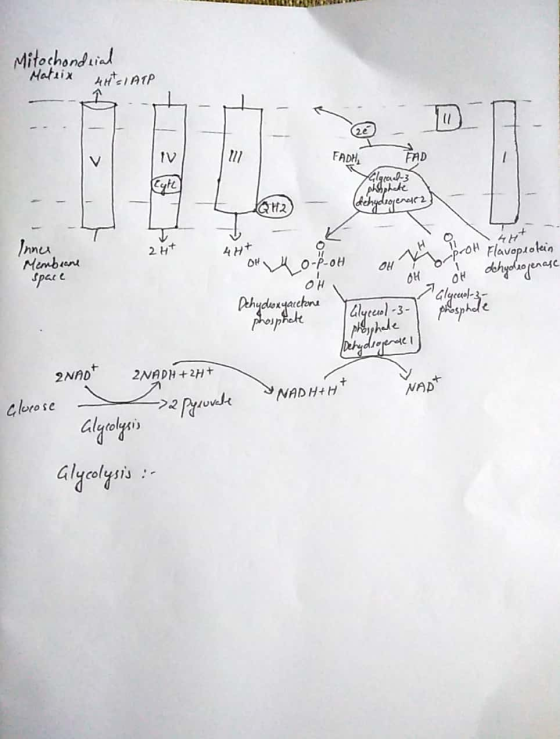
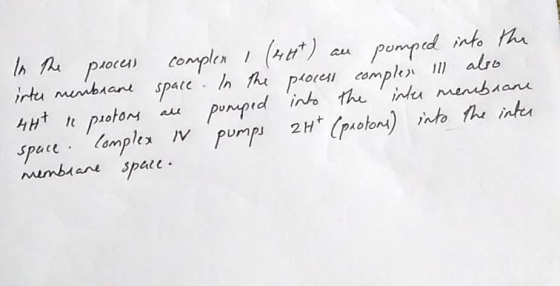 Therefore 2 protons are pumped
at ETC Complex IV.
Therefore 2 protons are pumped
at ETC Complex IV.
 Therefore 2 protons are pumped
at ETC Complex IV.
Therefore 2 protons are pumped
at ETC Complex IV.Add Answer to:
If one (1) molecule of glyceraldehyde 3-phosphate is oxidized
via glycolysis, the PDC, and the CAC...
1. If one (1) molecule of phosphonenol pyruvate is oxidized via glycolysis, the PDC, and the...
1. If one (1) molecule of phosphonenol pyruvate is oxidized via glycolysis, the PDC, and the CAC in a kidney cell, how many protons are pumped into the inner membrane space at ETC Complex III? 2. If one (1) molecule of glyceraldehyde 3-phosphate is oxidized via glycolysis, the PDC, and the CAC in a skeletal muscle cell, how many protons are pumped into the inner membrane space at ETC Complex IV? 3. If two (2) molecules of pyruvate are oxidized...
If one (1) molecule of dihydroxyacetone phosphate is oxidized via glycolysis, the PDC, and the CAC...
If one (1) molecule of dihydroxyacetone phosphate is oxidized via glycolysis, the PDC, and the CAC in a kidney cell, how many protons are pumped into the inner membrane space at ETC Complex II?
If one (1) molecule of fructose 1,6-bisphosphate is oxidized via glycolysis, the PDC, and the CAC...
If one (1) molecule of fructose 1,6-bisphosphate is oxidized via glycolysis, the PDC, and the CAC in a skeletal muscle cell, how many protons are pumped into the inner membrane space at ETC Complex I?
If one (1) molecules of 3-phosphoglycerateate is oxidized via glycolysis, the PDC, and the CAC in...
If one (1) molecules of 3-phosphoglycerateate is oxidized via glycolysis, the PDC, and the CAC in a kidney cell, how many total protons are pumped across the inner mitochondrial membrane by the ETC?
If two (2) molecules of 2-phosphoglycerate is oxidized via glycolysis, the PDC, and the CAC in...
If two (2) molecules of 2-phosphoglycerate is oxidized via glycolysis, the PDC, and the CAC in a kidney cell, how many net molecules of ATP (plus GTP) will be produced by oxidative phosphorylation and substrate level phosphorylation? Assume that this particular ATP synthase has 9 c-subunits and that the phosphate translocate symporter is utilized. (Net ATP = total ATP produced - total ATP used up.)
1. If one glucose molecule enters into glycolysis and proceeds through the PDC and through the...
1. If one glucose molecule enters into glycolysis and proceeds through the PDC and through the citric acid cycle, how many NADH molecules are generated in these reactions? 2. If one glucose molecule enters into glycolysis and proceeds through the PDC and through the citric acid cycle, how many FADH2 molecules (that can be used directly by the ETC) are generated in these reactions? 3. If one glucose molecule enters into glycolysis and proceeds through the PDC and through the...
1. If one glucose molecule enters into glycolysis and proceeds through the PDC and through the...
1. If one glucose molecule enters into glycolysis and proceeds through the PDC and through the citric acid cycle, how many NADH molecules are generated in these reactions? 2. If one glucose molecule enters into glycolysis and proceeds through the PDC and through the citric acid cycle, how many FADH2 molecules (that can be used directly by the ETC) are generated in these reactions? 3. If one glucose molecule enters into glycolysis and proceeds through the PDC and through the...
1. If one glucose molecule enters into glycolysis and proceeds through the PDC to acetyl-CoA, how...
1. If one glucose molecule enters into glycolysis and proceeds through the PDC to acetyl-CoA, how many NET ATP are generated in these reactions? ("Net" refers to total # generated - total number consumed.) 2. If one glucose molecule enters into glycolysis and proceeds through the PDC to acetyl-CoA, how many CO2 molecules are released in these reactions? 3. If one glucose molecule enters into glycolysis and proceeds through the PDC to acetyl-CoA, how many NADH molecules are generated in...
1. If one glucose molecule enters into glycolysis and proceeds through the PDC to acetyl-CoA, how...
1. If one glucose molecule enters into glycolysis and proceeds through the PDC to acetyl-CoA, how many NET ATP are generated in these reactions? ("Net" refers to total # generated - total number consumed.) 2. If one glucose molecule enters into glycolysis and proceeds through the PDC to acetyl-CoA, how many CO2 molecules are released in these reactions? 3. If one glucose molecule enters into glycolysis and proceeds through the PDC to acetyl-CoA, how many NADH molecules are generated in...
please help. Juction reaction In one step of glycolysis, glyceraldehyde 3-phosphate is oxidized by NAD+ to...
 please help.
Juction reaction In one step of glycolysis, glyceraldehyde 3-phosphate is oxidized by NAD+ to yield 3-phosphoglycerate and NADH. 1) Consider that reaction, in the direction written. Which chemical(s) is/are) losing electrons, and which chemical(s) is(are) gaining electrons? It's best to answer this in a clear complete sentence! 2) Calculate the standard reduction potential for this reaction. Show a reasonable amount of your work (you don't need to show every step in a calculation, but at least show your...
please help.
Juction reaction In one step of glycolysis, glyceraldehyde 3-phosphate is oxidized by NAD+ to yield 3-phosphoglycerate and NADH. 1) Consider that reaction, in the direction written. Which chemical(s) is/are) losing electrons, and which chemical(s) is(are) gaining electrons? It's best to answer this in a clear complete sentence! 2) Calculate the standard reduction potential for this reaction. Show a reasonable amount of your work (you don't need to show every step in a calculation, but at least show your...
 please help.
Juction reaction In one step of glycolysis, glyceraldehyde 3-phosphate is oxidized by NAD+ to yield 3-phosphoglycerate and NADH. 1) Consider that reaction, in the direction written. Which chemical(s) is/are) losing electrons, and which chemical(s) is(are) gaining electrons? It's best to answer this in a clear complete sentence! 2) Calculate the standard reduction potential for this reaction. Show a reasonable amount of your work (you don't need to show every step in a calculation, but at least show your...
please help.
Juction reaction In one step of glycolysis, glyceraldehyde 3-phosphate is oxidized by NAD+ to yield 3-phosphoglycerate and NADH. 1) Consider that reaction, in the direction written. Which chemical(s) is/are) losing electrons, and which chemical(s) is(are) gaining electrons? It's best to answer this in a clear complete sentence! 2) Calculate the standard reduction potential for this reaction. Show a reasonable amount of your work (you don't need to show every step in a calculation, but at least show your...
Most questions answered within 3 hours.
-
Where is the error in this code sequence?
String s1 = "Hello";
String s2 = "ello";...
asked 11 months ago -
Financial data for Joel de Paris, Inc., for last year
follow:
Joel de Paris, Inc.
Balance...
asked 11 months ago -
Consider this reaction:
Al2(SO4)3 (aq)+ BaCl3
(aq) Al2Cl6 (aq)- +
3BaSO4(s) . What is the...
asked 11 months ago -
Suppose that Savneet is considering increasing her
recent random sample from 20 car rentals to 40...
asked 11 months ago -
Trucks arrive at an unloading terminal at an average rate of 120
per hour.
Trucks arrive...
asked 11 months ago -
Why are methanol and ethanol completely soluble in water while
octanol is not very little soluble....
asked 11 months ago -
A facilities manager at a university reads in a research report
that the mean amount of...
asked 11 months ago -
When the CuSO4 is rehydrated by adding water to the anhydrous
compound, is this an endothermic...
asked 11 months ago -
A ray of sunlight is passing from diamond into crown glass; the
angle of incidence is...
asked 11 months ago -
A block of mass 0.249 kg is placed on top of a light, vertical
spring of...
asked 11 months ago -
how do the kidneys compensate in the presences of acidosis
a) trigger hyperventilate
b) reserve acid...
asked 11 months ago -
Question 501 pts
The rental rate of capital to the firm increases. Which of the
following...
asked 11 months ago