
Homework Answers
In this case, we need to understand what means each part of the treatments and what the goal is. I assume that we are looking to determinate the difference between an resistance strain and a non resistant strain in contact with an antibiotic. “ampR” means the ampicillin resistance gene. Ampicillin is the antibiotic and the E.coli is the specie.
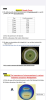
Plate 1: Control Awar with E.coli + ampR: In this plate, we will observe a normal growth rate of the bacteria.
Plate 2: Agar + ampicillin with E.Coli + ampR : In this case, the E.coli is resistant against penicillin, so we should observe similar results than in Plate 1. A normal growth.
Plate 3: Control Agar with E.coli – ampR : Here, we will observe a normal growth because the agar plate does not posses any antibiotic and the bacteria wont be affected
Plate 4: Agar + ampicillin with E.coli- ampR: Finally, we will observe a reduced growth in comparison with the rest of the plates because the bacteria is not resistant against ampicillin.
Add Answer to:
what is the prediction for each of these petri dishes
Petri Dish #1: Control Agar with...
PART IV: We can model the equilibrium process using BB's to represent molecules and petri dishes to separate "r...
 PART IV: We can model the equilibrium process using BB's to represent molecules and petri dishes to separate "reactant molecules" from "product molecules." 1) Consider the simple equilibrium A = B For this BI Кф [A] and we'll assign a value to Koq of 8. Keq = 8.0 Get 2 petri dishes and place 27 BB's in one of them. These represent 27 "A" molecules, while the empty dish shows that there are "B" molecules. no [B] value is 8...
Exercise 7 Experimental Variables EXERCISE 7: EXPERIMENTAL VARIABLES Determine the variables tested in the each of...
 Exercise 7 Experimental Variables EXERCISE 7: EXPERIMENTAL VARIABLES Determine the variables tested in the each of the following experiments. If applicable, determine and identify any positive or negative controls 1. A study is being done to test the effects of habitat space on the size of fish populations. Different sized aquariums are set up with six goldfish in each one. Over a period of six months, the fish are fed the same type and amount of food. The aquariums are...
3 poi 7. The number of cells in a petri dish grows exponential with time. The...
 3 poi 7. The number of cells in a petri dish grows exponential with time. The function h models the number of cells present after t hours. Based on the function, which statement is NOT true? h(t) = 50(2): There were 50 cells initially in the petri dish. O The predicted number of cells doubles every 15 minutes. O Approximately 400 cells will be in the petri dish after 12 hours The predicted number of cells doubles every 4 hours.
27. Two species of yeast persist indefinitely when each species is grown on agar in separate...
 27. Two species of yeast persist indefinitely when each species is grown on agar in separate petri dishes in the lab. However, when the species are grown together on agar in the same petri dish, only a single species remains after a few days. What is the most likely explanation for the elimination of one of the species? a) Competition between the two yeast species resulted in a change in the way the two species used the limited resource (agar)....
GROUP (Report 1 Growth Curve 1) The following table shows the measurements of bacterial growth in...
 GROUP (Report 1 Growth Curve 1) The following table shows the measurements of bacterial growth in a specific period by the color Spectrophotometer Time time 3 hour Growth measurement 7.56 7.56 30.25 32.25 6 hour 9 hour 12 hour 32.25 15 hour 2.69 A) Draw the growth curve for bacteria B) Write a discussion of the results (Abbreviator) 2) The plate was inoculation with a fungal disc 1 cm, and then incubated for 7 days and 25C * The following...
Cloning/Transformation Homework Please indicate what you would see on each media plate given the following conditions...
 Cloning/Transformation Homework Please indicate what you would see on each media plate given the following conditions (blue colonies or white colonies) E. coli cell Nutrient agar plate, no ampicillin, no X- gal E. coli cell Nutrient agar plate with ampicillin added, no X-gal OM OM 01 01 E. coli cell with plasmid CO ОООО Nutrient agar plate with ampicillin & X- gal added E. coli cell with plasmid and correctly inserted Insulin gene in the multiple cloning site C LB...
1. Fill in the table above with what you observe on your plates. 2. Bacterial transformation...
 1. Fill in the table above with what you observe on your
plates.
2. Bacterial transformation occurred on which agar plate (s)?
What evidence do you have that the bacteria were transformed
here?
3. Which plates have glowing growth? Explain what causes
bacteria to glow.
II. Transformation of E. coli with Plasmid DNA (PGLO) 1. Three LB (Luria Broth) agar plates are obtained. The plates contain: • Plate A: LB-Agar/Ampicillin/Arabinose • Plate B: LB-Agar/Ampicillin • Plate C: LB-Agar 2. Three...
1. Fill in the table above with what you observe on your
plates.
2. Bacterial transformation occurred on which agar plate (s)?
What evidence do you have that the bacteria were transformed
here?
3. Which plates have glowing growth? Explain what causes
bacteria to glow.
II. Transformation of E. coli with Plasmid DNA (PGLO) 1. Three LB (Luria Broth) agar plates are obtained. The plates contain: • Plate A: LB-Agar/Ampicillin/Arabinose • Plate B: LB-Agar/Ampicillin • Plate C: LB-Agar 2. Three...
Short answer. Write your answer in the space provided. (1 point each) 6. Order the steps...
 Short answer. Write your answer in the space provided. (1 point each) 6. Order the steps for the preparation of growing bacterial cells on solid agar plate. . place the cells in the cold for short-term storage measure the ingredients and prepare the nutrient agar in a heat-resistant glassware pour the agar into a Petri dish and let it solidify autoclave at 121 °C for 15 psi the agar for 15 minutes transfer the bacterial cells to the agar in...
1. In a transformation experiment, E. coli uptake pRGLO plasmids that carry GFP gene. The transformed...
 1. In a transformation experiment, E. coli uptake pRGLO plasmids that carry GFP gene. The transformed bacterial cells are grown on an ampicillin-treated agar plate. Which of the following is considered as a vector? GFP gene C E. coli cell c ampicillin-treated agar plate 0.5 points QUESTION 2 1. What is the function of bla gene? Break down the ampicillin Regulate the transcription of GFP gene Express the fluorescent trait in bacteria Control the uptake of DNA molecules in bacteria...
wa y LOUR at the petri dish at this station. Use the data in live answer...
 wa y LOUR at the petri dish at this station. Use the data in live answer questions 1 - 3. Assume same size (volume) Bean Picture Mass of 1 bean (g) white 0.14 Black 0.28 Green 0.14 yellow 0.22 Whicle bean as the highest mass density W elboan has the highest-numbur density 5 BeanCo 3. Imagine the beans are really molecules in a mixture. What is the mole percent of Bean C? There are a total of 24 beans in...
 PART IV: We can model the equilibrium process using BB's to represent molecules and petri dishes to separate "reactant molecules" from "product molecules." 1) Consider the simple equilibrium A = B For this BI Кф [A] and we'll assign a value to Koq of 8. Keq = 8.0 Get 2 petri dishes and place 27 BB's in one of them. These represent 27 "A" molecules, while the empty dish shows that there are "B" molecules. no [B] value is 8...
 Exercise 7 Experimental Variables EXERCISE 7: EXPERIMENTAL VARIABLES Determine the variables tested in the each of the following experiments. If applicable, determine and identify any positive or negative controls 1. A study is being done to test the effects of habitat space on the size of fish populations. Different sized aquariums are set up with six goldfish in each one. Over a period of six months, the fish are fed the same type and amount of food. The aquariums are...
 3 poi 7. The number of cells in a petri dish grows exponential with time. The function h models the number of cells present after t hours. Based on the function, which statement is NOT true? h(t) = 50(2): There were 50 cells initially in the petri dish. O The predicted number of cells doubles every 15 minutes. O Approximately 400 cells will be in the petri dish after 12 hours The predicted number of cells doubles every 4 hours.
 27. Two species of yeast persist indefinitely when each species is grown on agar in separate petri dishes in the lab. However, when the species are grown together on agar in the same petri dish, only a single species remains after a few days. What is the most likely explanation for the elimination of one of the species? a) Competition between the two yeast species resulted in a change in the way the two species used the limited resource (agar)....
 GROUP (Report 1 Growth Curve 1) The following table shows the measurements of bacterial growth in a specific period by the color Spectrophotometer Time time 3 hour Growth measurement 7.56 7.56 30.25 32.25 6 hour 9 hour 12 hour 32.25 15 hour 2.69 A) Draw the growth curve for bacteria B) Write a discussion of the results (Abbreviator) 2) The plate was inoculation with a fungal disc 1 cm, and then incubated for 7 days and 25C * The following...
 Cloning/Transformation Homework Please indicate what you would see on each media plate given the following conditions (blue colonies or white colonies) E. coli cell Nutrient agar plate, no ampicillin, no X- gal E. coli cell Nutrient agar plate with ampicillin added, no X-gal OM OM 01 01 E. coli cell with plasmid CO ОООО Nutrient agar plate with ampicillin & X- gal added E. coli cell with plasmid and correctly inserted Insulin gene in the multiple cloning site C LB...
 1. Fill in the table above with what you observe on your
plates.
2. Bacterial transformation occurred on which agar plate (s)?
What evidence do you have that the bacteria were transformed
here?
3. Which plates have glowing growth? Explain what causes
bacteria to glow.
II. Transformation of E. coli with Plasmid DNA (PGLO) 1. Three LB (Luria Broth) agar plates are obtained. The plates contain: • Plate A: LB-Agar/Ampicillin/Arabinose • Plate B: LB-Agar/Ampicillin • Plate C: LB-Agar 2. Three...
1. Fill in the table above with what you observe on your
plates.
2. Bacterial transformation occurred on which agar plate (s)?
What evidence do you have that the bacteria were transformed
here?
3. Which plates have glowing growth? Explain what causes
bacteria to glow.
II. Transformation of E. coli with Plasmid DNA (PGLO) 1. Three LB (Luria Broth) agar plates are obtained. The plates contain: • Plate A: LB-Agar/Ampicillin/Arabinose • Plate B: LB-Agar/Ampicillin • Plate C: LB-Agar 2. Three...
 Short answer. Write your answer in the space provided. (1 point each) 6. Order the steps for the preparation of growing bacterial cells on solid agar plate. . place the cells in the cold for short-term storage measure the ingredients and prepare the nutrient agar in a heat-resistant glassware pour the agar into a Petri dish and let it solidify autoclave at 121 °C for 15 psi the agar for 15 minutes transfer the bacterial cells to the agar in...
 1. In a transformation experiment, E. coli uptake pRGLO plasmids that carry GFP gene. The transformed bacterial cells are grown on an ampicillin-treated agar plate. Which of the following is considered as a vector? GFP gene C E. coli cell c ampicillin-treated agar plate 0.5 points QUESTION 2 1. What is the function of bla gene? Break down the ampicillin Regulate the transcription of GFP gene Express the fluorescent trait in bacteria Control the uptake of DNA molecules in bacteria...
 wa y LOUR at the petri dish at this station. Use the data in live answer questions 1 - 3. Assume same size (volume) Bean Picture Mass of 1 bean (g) white 0.14 Black 0.28 Green 0.14 yellow 0.22 Whicle bean as the highest mass density W elboan has the highest-numbur density 5 BeanCo 3. Imagine the beans are really molecules in a mixture. What is the mole percent of Bean C? There are a total of 24 beans in...
Most questions answered within 3 hours.
-
Where is the error in this code sequence?
String s1 = "Hello";
String s2 = "ello";...
asked 11 months ago -
Financial data for Joel de Paris, Inc., for last year
follow:
Joel de Paris, Inc.
Balance...
asked 11 months ago -
Consider this reaction:
Al2(SO4)3 (aq)+ BaCl3
(aq) Al2Cl6 (aq)- +
3BaSO4(s) . What is the...
asked 11 months ago -
Suppose that Savneet is considering increasing her
recent random sample from 20 car rentals to 40...
asked 11 months ago -
Trucks arrive at an unloading terminal at an average rate of 120
per hour.
Trucks arrive...
asked 11 months ago -
Why are methanol and ethanol completely soluble in water while
octanol is not very little soluble....
asked 11 months ago -
A facilities manager at a university reads in a research report
that the mean amount of...
asked 11 months ago -
When the CuSO4 is rehydrated by adding water to the anhydrous
compound, is this an endothermic...
asked 11 months ago -
A ray of sunlight is passing from diamond into crown glass; the
angle of incidence is...
asked 11 months ago -
A block of mass 0.249 kg is placed on top of a light, vertical
spring of...
asked 11 months ago -
how do the kidneys compensate in the presences of acidosis
a) trigger hyperventilate
b) reserve acid...
asked 11 months ago -
Question 501 pts
The rental rate of capital to the firm increases. Which of the
following...
asked 11 months ago