

Homework Answers
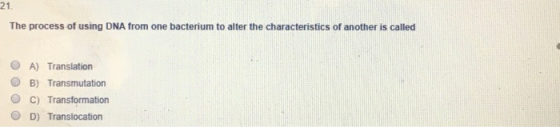
21). C. Transformation
Transformation is a process where cells are made to take up foreign DNA (contained in a plasmid) that is used to alter the characteristics of a cell. This is the only appropriate option since translation is the process of converting RNA to protein, translocation is change is the position of genes and transmutation is the transformation of species into another.
22).A. Transduction
Transduction is defined as the process of transfer of DNA from one bacterial cell to another via a bacteria-infecting virus known as bacteriophage.
23) D. Rosalind Franklin
Rosalind Elsie Franklin was an English, woman scientist and X-ray crystallographer whose work was essential for the understanding of the molecular structure of DNA.
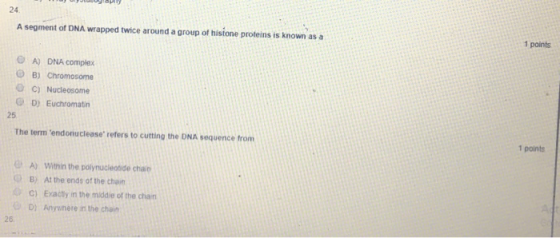
24). C. Nucleosome
The nucleosome is the basic repeating unit of chromatin. it consists of approximately two turns of DNA wrapped around the histone octamer(a set of 8 histone proteins).
25). A. within the polynucleotide chain
Endonucleases are a class of enzymes that cuts DNA into fragments at or near specific recognition sites within the molecules. These sites are called restriction sites.
26) B. Non-coding genes
DNA fingerprinting detects a number of minisatellites in the genome to identify a pattern that is unique to an individual.
27). A. probe
It is a single-stranded molecule of specific sequence that is used to identify a molecule with a complementary sequence.
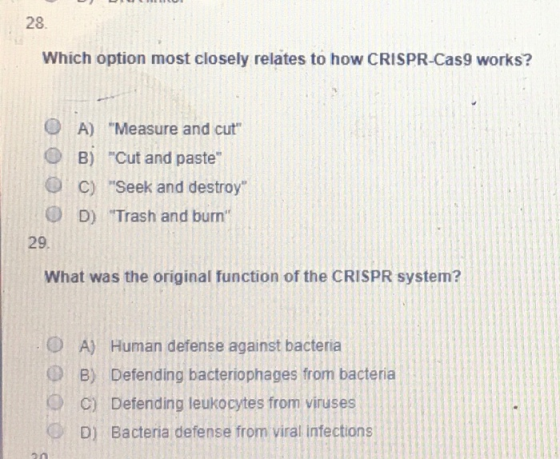
28). C. seek and destroy
CRISPR cas9 consists of a single-stranded RNA molecule to attach to a target and a protein complex that cleaves the target.
29). D. Bacterial defence from viral infections
Originally CRISPR cas9 was found in Bacteria in order to defend the bacterial cells from viral infections.
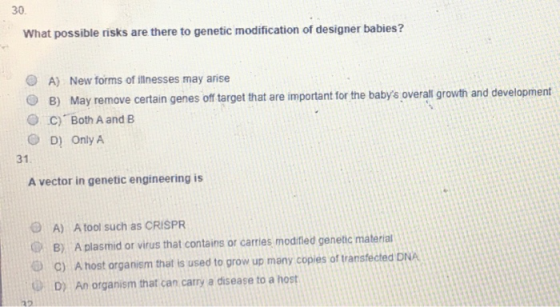
30).C. Both A and B
options stated in A and B could be the possible outcomes of gene editing and designing babies with desirable genetic characteristics. It may also lead to less variation, loss of important genes and affordable only by the rich.
31) B. a plasmid or virus carrying genetic material
A vector is a carrier that transports modified genes into a cell by the process of transformation. Plasmids and viral vectors are the most commonly used vectors in genetic engineering.
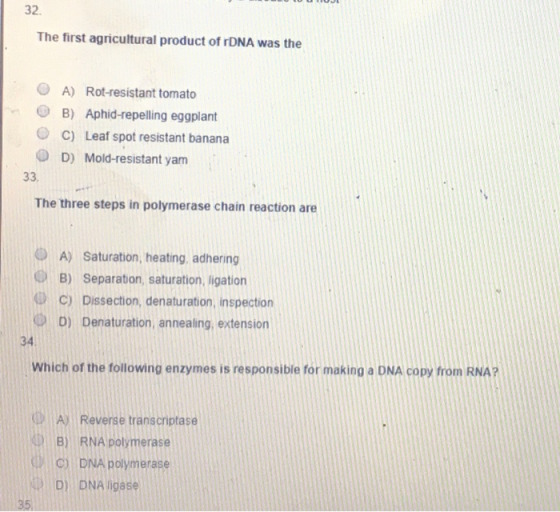
32). A) rot-resistant tomato
The first agriculture to be produced by recombinant DNA technology is Flavr Savr tomato, that had enhanced shelf life.
33). D. Denaturation, annealing extension
PCR or polymerase chain reaction is the process of in-vitro replication of DNA. It involves 3 steps:
Denaturation is the process of melting the DNA double-strands to produce 2 single strands, annealing is the process of attaching of the primer to the DNA strands and extension is the process of attaching complementary nucleotides to the growing strand by the polymerase enzyme.
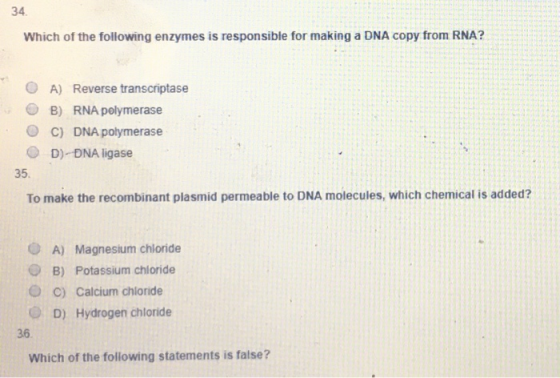
34).A. reverse transcriptase
Reverse transcriptase is an enzyme present usually in viruses to produce the respective DNA molecule using RNA as the template.
35).B. Calcium chloride
Calcium chloride (CaCl2) transformation is one of the techniques for the transformation of a cell. the chemical increases the permeability of the prokaryotic cell to uptake plasmid DNA.
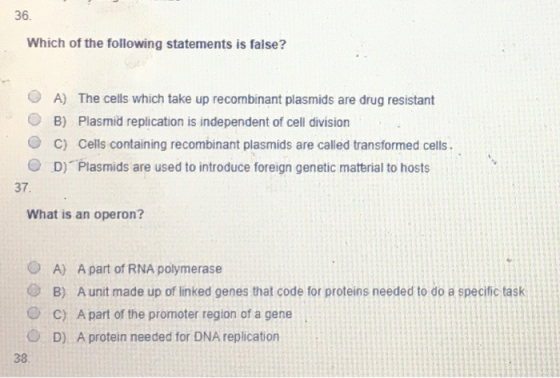
36).A. The cells which take up plasmid are drug-resistant.
Although all the options seem true, the cell which takes up the plasmid is not always drug-resistant (may contain other types of selectable markers).
37).B Operon is defined as a set of similar genes that are under the control of a single promoter. It codes for a set of proteins that code for similar functions and is regulated together.
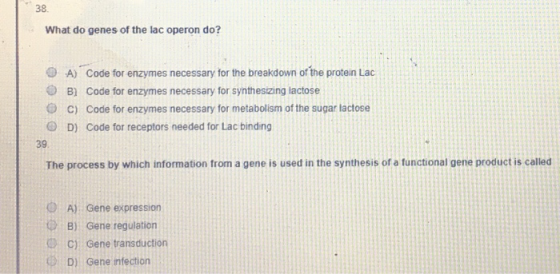
38). C. code for enzyme for the metabolism of lactose sugar.
The lac operon is present in organisms that are capable of utilising the lactose sugar as energy in the absence of glucose. Therefore it consists of genes to metabolise lactose.
39). A. gene expression
Gene expression is the process by which the information encoded in the gene undergoes transcription and translation to synthesise gene products called proteins.
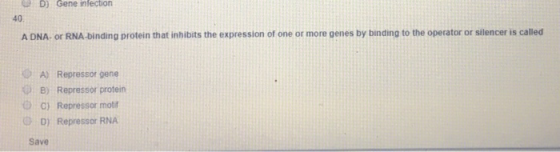
40). B. Repressor protein
The most suitable option is Repressor protein since the question mentions "DNA/RNA binding protein".A repressor molecule binds to the regulatory domain to prevent the expression of a gene.
According to Chegg guidelines, MCQs must contain appropriate explanation along with the answer. Thank you for using Chegg!!
Add Answer to:
please answer All the multiple choice questions in the pic (all
pics) i dont need a...
Please answer all 3 R (resistant) plasmids confer resistance on their parent organism because OR plasmids...
 Please answer all 3
R (resistant) plasmids confer resistance on their parent organism because OR plasmids encode genes that inactivate drugs. OR plasmids encode enzymes that pump out drugs. OR plasmids encode enzymes that prevent drug uptake. OR plasmids only encode genes, not enzymes all of the above O a, b, and c Which of the following is not a resistance mechanism in microorganisms? O alteration of antibiotic to inactive form O modification of antibiotic target O development of resistant...
Please answer all 3
R (resistant) plasmids confer resistance on their parent organism because OR plasmids encode genes that inactivate drugs. OR plasmids encode enzymes that pump out drugs. OR plasmids encode enzymes that prevent drug uptake. OR plasmids only encode genes, not enzymes all of the above O a, b, and c Which of the following is not a resistance mechanism in microorganisms? O alteration of antibiotic to inactive form O modification of antibiotic target O development of resistant...
The lac operon contains a DNA sequence known as the lac promoter (P or P+ for...
The lac operon contains a DNA sequence known as the lac promoter (P or P+ for wild type; P– for mutant (RNA polymerase does not bind)) that serves as the RNA polymerase binding site. The lac operon also contains a DNA sequence known as the Lac operator (O or O+ for wild type; O– or Oc for mutant (lac repressor cannot bind)) which is the binding site for lac repressor. The lac repressor, a protein, is encoded by the lac...
Yet, all the cells in your body contain the same genes (and same alleles). The difference...
 Yet, all the cells in your body contain the same
genes (and same alleles). The difference across cell types
is that genes get selectively expressed (turned on or off)
based on the proteins needed for cellular function given their
environment.
Select which statement explains the reason why hair does not
normally grow on your muscle cells.
a.
Muscle cells have the gene for keratin, but do not express
it
b.
Muscle cells do not have the gene for keratin and...
Yet, all the cells in your body contain the same
genes (and same alleles). The difference across cell types
is that genes get selectively expressed (turned on or off)
based on the proteins needed for cellular function given their
environment.
Select which statement explains the reason why hair does not
normally grow on your muscle cells.
a.
Muscle cells have the gene for keratin, but do not express
it
b.
Muscle cells do not have the gene for keratin and...
please help me with the question 15 to 18. Basic structure of an operon Note that...
 please help me with the question 15 to 18.
Basic structure of an operon Note that the diagram below is one section of DNA master strend with some areas of DNA labeled in blocks The bracketed area illustrates the basic parts of an operon repressor gene promoter operator structural genes DNA 3 mRNA 5 - 3 repressor protein shown attached to operator #2 Repressor preten "Use purple to color in the repressor gene. The repressor gene codes for a repressor...
please help me with the question 15 to 18.
Basic structure of an operon Note that the diagram below is one section of DNA master strend with some areas of DNA labeled in blocks The bracketed area illustrates the basic parts of an operon repressor gene promoter operator structural genes DNA 3 mRNA 5 - 3 repressor protein shown attached to operator #2 Repressor preten "Use purple to color in the repressor gene. The repressor gene codes for a repressor...
please i need help with a, b, c this is the sequence 5’ATGTATTATTATTTTTTTGTTTTTTTTGCAATATATGCTAATGGATTGCTAAGAAATA AAGATCCTAACATTTTTGCGAG TAGCAATGATGAGATCATAGAAAATGATAAAAGTATGAATACCTTTGTTATGTCAAC AAATGGAAGTTTATATTTAAATA...
 please i need help with a, b, c
this is the sequence
5’ATGTATTATTATTTTTTTGTTTTTTTTGCAATATATGCTAATGGATTGCTAAGAAATA
AAGATCCTAACATTTTTGCGAG
TAGCAATGATGAGATCATAGAAAATGATAAAAGTATGAATACCTTTGTTATGTCAAC
AAATGGAAGTTTATATTTAAATA
GTGATTTTAATTTAAATGAAGCATCCAACGAAAGCTTCTTAGAAAATTGCAATATCA
ATAGTTGTGTAGATATAGGTCAT
GAAAATGGCAACAAAATAAATAGTCAAGAAAATGAGCATGCTAAAAATAATAACA
ACAGTAATAATAACAATTTAAAACC
AGAATACAATAATAATAATAATAATTTAAAACCAGAATACAATAATAATAATTTAA
AACCAGAGTACAATAATAACAATT-3’
1. Polymerase chain reaction 5'- ATGTATTATTATTTTTTTGTTTTTTTTGCAATATATGCTAATGGATTGCTAAGAAATA AAGATCCTAACATTTTTGCGAG TAGCAATGATGAGATCATAGAAAATGATAAAAGTATGAATACCTTTGTTATGTCAAC AAATGGAAGTTTATATTTAAATA GTGATTTTAATTTAAATGAAGCATCCAACGAAAGCTTCTTAGAAAATTGCAATATCA ATAGTTGTGTAGATATAGGTCAT GAAAATGGCAACAAAATAAATAGTCAAGAAAATGAGCATGCTAAAAATAATAACA ACAGTAATAATAACAATTTAAAACC AGAATACAATAATAATAATAATAATTTAAAACCAGAATACAATAATAATAATTTAA AACCAGAGTACAATAATAACAATT-3' a) One strand of a chromosomal DNA sequence is shown above. How would you amplify and isolate a DNA fragment defined by the sequence shown in red, using polymerase chain reaction. Design PCR primers (Forward and Reverse primers, each 20 nucleotides long, that...
please i need help with a, b, c
this is the sequence
5’ATGTATTATTATTTTTTTGTTTTTTTTGCAATATATGCTAATGGATTGCTAAGAAATA
AAGATCCTAACATTTTTGCGAG
TAGCAATGATGAGATCATAGAAAATGATAAAAGTATGAATACCTTTGTTATGTCAAC
AAATGGAAGTTTATATTTAAATA
GTGATTTTAATTTAAATGAAGCATCCAACGAAAGCTTCTTAGAAAATTGCAATATCA
ATAGTTGTGTAGATATAGGTCAT
GAAAATGGCAACAAAATAAATAGTCAAGAAAATGAGCATGCTAAAAATAATAACA
ACAGTAATAATAACAATTTAAAACC
AGAATACAATAATAATAATAATAATTTAAAACCAGAATACAATAATAATAATTTAA
AACCAGAGTACAATAATAACAATT-3’
1. Polymerase chain reaction 5'- ATGTATTATTATTTTTTTGTTTTTTTTGCAATATATGCTAATGGATTGCTAAGAAATA AAGATCCTAACATTTTTGCGAG TAGCAATGATGAGATCATAGAAAATGATAAAAGTATGAATACCTTTGTTATGTCAAC AAATGGAAGTTTATATTTAAATA GTGATTTTAATTTAAATGAAGCATCCAACGAAAGCTTCTTAGAAAATTGCAATATCA ATAGTTGTGTAGATATAGGTCAT GAAAATGGCAACAAAATAAATAGTCAAGAAAATGAGCATGCTAAAAATAATAACA ACAGTAATAATAACAATTTAAAACC AGAATACAATAATAATAATAATAATTTAAAACCAGAATACAATAATAATAATTTAA AACCAGAGTACAATAATAACAATT-3' a) One strand of a chromosomal DNA sequence is shown above. How would you amplify and isolate a DNA fragment defined by the sequence shown in red, using polymerase chain reaction. Design PCR primers (Forward and Reverse primers, each 20 nucleotides long, that...
The diagram below illustrates the LAC operon in its OFF state when the inducer molecule —lactose—is...
 The diagram below illustrates the LAC operon in its OFF state when the inducer molecule —lactose—is absent. Predict the ways in which the following conditions will affect the transcription of the lactose-utilization genes. OPERON Regulatory Promoter Operator_ gene Lactose-utilization genes DNA mRNA RNA polymerase cannot attach to promoter Active repressor Protein If a mutation in the regulatory gene results in a misfolding of the repressor protein so that it can no longer bind DNA, the lactose-utilization genes O Will be...
alllll them please all To MOST readily demonstrate transformation of bacteria in the laboratory one could...
 alllll them please all
To MOST readily demonstrate transformation of bacteria in the laboratory one could extract DNA from: A) his cells and add the DNA to his cells, then grow the cells on plates with histidine B) hist cells and add the DNA to his cells, then grow the cells on plates without histidine C) lac" cells and add the DNA to lact cells, then grow the cells on plates without histidine D) amp cells and add the DNA...
alllll them please all
To MOST readily demonstrate transformation of bacteria in the laboratory one could extract DNA from: A) his cells and add the DNA to his cells, then grow the cells on plates with histidine B) hist cells and add the DNA to his cells, then grow the cells on plates without histidine C) lac" cells and add the DNA to lact cells, then grow the cells on plates without histidine D) amp cells and add the DNA...
54. The advantage of a cDNA library of eukaryotic genes compared with a genomic library is...
 54. The advantage of a cDNA library of eukaryotic genes compared with a genomic library is that the cDNA library: a. always has the entire gene sequence b. lacks introns C. contains both introns and exons d. consists of single-stranded DNA e consists of RNA and DNA 55. Which of the following is an example of a cloning vector? a. Human growth hormone b. Mosquito c. Plasmid d. Tick e. Ribosomal RNA 56. Transformation in recombinant DNA technology: a. Requires...
Which of the following is the correct order of events in the polymerase chain reaction (PCR)?...
Which of the following is the correct order of events in the polymerase chain reaction (PCR)? See Section 20.2 (Page 468) cooling to allow primers to attach; heating to separate double-stranded DNA; elongation of DNA strand as nucleotides are added elongation of the DNA strand as nucleotides are added; cooling to allow primers to attach; heating to separate double-stranded DNA heating to separate double-stranded DNA; cooling to allow primers to attach; elongation of DNA strand as nucleotides are added heating...
for 1-5 define those The Lac operon is an inducible set of genes found in bacteria...
 for
1-5 define those
The Lac operon is an inducible set of genes found in bacteria cells that helps the bacteria to metabolize the disaccharide lactose. When it is turned on it produces proteins that pump lactose into the bacteria cell and break it down into glucose and galactose, which can then be used by the bacteria as a source of energy The two figures below show the Lac Operon along with the lacl gene (which regulates the Lac operon...
for
1-5 define those
The Lac operon is an inducible set of genes found in bacteria cells that helps the bacteria to metabolize the disaccharide lactose. When it is turned on it produces proteins that pump lactose into the bacteria cell and break it down into glucose and galactose, which can then be used by the bacteria as a source of energy The two figures below show the Lac Operon along with the lacl gene (which regulates the Lac operon...
 Please answer all 3
R (resistant) plasmids confer resistance on their parent organism because OR plasmids encode genes that inactivate drugs. OR plasmids encode enzymes that pump out drugs. OR plasmids encode enzymes that prevent drug uptake. OR plasmids only encode genes, not enzymes all of the above O a, b, and c Which of the following is not a resistance mechanism in microorganisms? O alteration of antibiotic to inactive form O modification of antibiotic target O development of resistant...
Please answer all 3
R (resistant) plasmids confer resistance on their parent organism because OR plasmids encode genes that inactivate drugs. OR plasmids encode enzymes that pump out drugs. OR plasmids encode enzymes that prevent drug uptake. OR plasmids only encode genes, not enzymes all of the above O a, b, and c Which of the following is not a resistance mechanism in microorganisms? O alteration of antibiotic to inactive form O modification of antibiotic target O development of resistant...
 Yet, all the cells in your body contain the same
genes (and same alleles). The difference across cell types
is that genes get selectively expressed (turned on or off)
based on the proteins needed for cellular function given their
environment.
Select which statement explains the reason why hair does not
normally grow on your muscle cells.
a.
Muscle cells have the gene for keratin, but do not express
it
b.
Muscle cells do not have the gene for keratin and...
Yet, all the cells in your body contain the same
genes (and same alleles). The difference across cell types
is that genes get selectively expressed (turned on or off)
based on the proteins needed for cellular function given their
environment.
Select which statement explains the reason why hair does not
normally grow on your muscle cells.
a.
Muscle cells have the gene for keratin, but do not express
it
b.
Muscle cells do not have the gene for keratin and...
 please help me with the question 15 to 18.
Basic structure of an operon Note that the diagram below is one section of DNA master strend with some areas of DNA labeled in blocks The bracketed area illustrates the basic parts of an operon repressor gene promoter operator structural genes DNA 3 mRNA 5 - 3 repressor protein shown attached to operator #2 Repressor preten "Use purple to color in the repressor gene. The repressor gene codes for a repressor...
please help me with the question 15 to 18.
Basic structure of an operon Note that the diagram below is one section of DNA master strend with some areas of DNA labeled in blocks The bracketed area illustrates the basic parts of an operon repressor gene promoter operator structural genes DNA 3 mRNA 5 - 3 repressor protein shown attached to operator #2 Repressor preten "Use purple to color in the repressor gene. The repressor gene codes for a repressor...
 please i need help with a, b, c
this is the sequence
5’ATGTATTATTATTTTTTTGTTTTTTTTGCAATATATGCTAATGGATTGCTAAGAAATA
AAGATCCTAACATTTTTGCGAG
TAGCAATGATGAGATCATAGAAAATGATAAAAGTATGAATACCTTTGTTATGTCAAC
AAATGGAAGTTTATATTTAAATA
GTGATTTTAATTTAAATGAAGCATCCAACGAAAGCTTCTTAGAAAATTGCAATATCA
ATAGTTGTGTAGATATAGGTCAT
GAAAATGGCAACAAAATAAATAGTCAAGAAAATGAGCATGCTAAAAATAATAACA
ACAGTAATAATAACAATTTAAAACC
AGAATACAATAATAATAATAATAATTTAAAACCAGAATACAATAATAATAATTTAA
AACCAGAGTACAATAATAACAATT-3’
1. Polymerase chain reaction 5'- ATGTATTATTATTTTTTTGTTTTTTTTGCAATATATGCTAATGGATTGCTAAGAAATA AAGATCCTAACATTTTTGCGAG TAGCAATGATGAGATCATAGAAAATGATAAAAGTATGAATACCTTTGTTATGTCAAC AAATGGAAGTTTATATTTAAATA GTGATTTTAATTTAAATGAAGCATCCAACGAAAGCTTCTTAGAAAATTGCAATATCA ATAGTTGTGTAGATATAGGTCAT GAAAATGGCAACAAAATAAATAGTCAAGAAAATGAGCATGCTAAAAATAATAACA ACAGTAATAATAACAATTTAAAACC AGAATACAATAATAATAATAATAATTTAAAACCAGAATACAATAATAATAATTTAA AACCAGAGTACAATAATAACAATT-3' a) One strand of a chromosomal DNA sequence is shown above. How would you amplify and isolate a DNA fragment defined by the sequence shown in red, using polymerase chain reaction. Design PCR primers (Forward and Reverse primers, each 20 nucleotides long, that...
please i need help with a, b, c
this is the sequence
5’ATGTATTATTATTTTTTTGTTTTTTTTGCAATATATGCTAATGGATTGCTAAGAAATA
AAGATCCTAACATTTTTGCGAG
TAGCAATGATGAGATCATAGAAAATGATAAAAGTATGAATACCTTTGTTATGTCAAC
AAATGGAAGTTTATATTTAAATA
GTGATTTTAATTTAAATGAAGCATCCAACGAAAGCTTCTTAGAAAATTGCAATATCA
ATAGTTGTGTAGATATAGGTCAT
GAAAATGGCAACAAAATAAATAGTCAAGAAAATGAGCATGCTAAAAATAATAACA
ACAGTAATAATAACAATTTAAAACC
AGAATACAATAATAATAATAATAATTTAAAACCAGAATACAATAATAATAATTTAA
AACCAGAGTACAATAATAACAATT-3’
1. Polymerase chain reaction 5'- ATGTATTATTATTTTTTTGTTTTTTTTGCAATATATGCTAATGGATTGCTAAGAAATA AAGATCCTAACATTTTTGCGAG TAGCAATGATGAGATCATAGAAAATGATAAAAGTATGAATACCTTTGTTATGTCAAC AAATGGAAGTTTATATTTAAATA GTGATTTTAATTTAAATGAAGCATCCAACGAAAGCTTCTTAGAAAATTGCAATATCA ATAGTTGTGTAGATATAGGTCAT GAAAATGGCAACAAAATAAATAGTCAAGAAAATGAGCATGCTAAAAATAATAACA ACAGTAATAATAACAATTTAAAACC AGAATACAATAATAATAATAATAATTTAAAACCAGAATACAATAATAATAATTTAA AACCAGAGTACAATAATAACAATT-3' a) One strand of a chromosomal DNA sequence is shown above. How would you amplify and isolate a DNA fragment defined by the sequence shown in red, using polymerase chain reaction. Design PCR primers (Forward and Reverse primers, each 20 nucleotides long, that...
 The diagram below illustrates the LAC operon in its OFF state when the inducer molecule —lactose—is absent. Predict the ways in which the following conditions will affect the transcription of the lactose-utilization genes. OPERON Regulatory Promoter Operator_ gene Lactose-utilization genes DNA mRNA RNA polymerase cannot attach to promoter Active repressor Protein If a mutation in the regulatory gene results in a misfolding of the repressor protein so that it can no longer bind DNA, the lactose-utilization genes O Will be...
 alllll them please all
To MOST readily demonstrate transformation of bacteria in the laboratory one could extract DNA from: A) his cells and add the DNA to his cells, then grow the cells on plates with histidine B) hist cells and add the DNA to his cells, then grow the cells on plates without histidine C) lac" cells and add the DNA to lact cells, then grow the cells on plates without histidine D) amp cells and add the DNA...
alllll them please all
To MOST readily demonstrate transformation of bacteria in the laboratory one could extract DNA from: A) his cells and add the DNA to his cells, then grow the cells on plates with histidine B) hist cells and add the DNA to his cells, then grow the cells on plates without histidine C) lac" cells and add the DNA to lact cells, then grow the cells on plates without histidine D) amp cells and add the DNA...
 54. The advantage of a cDNA library of eukaryotic genes compared with a genomic library is that the cDNA library: a. always has the entire gene sequence b. lacks introns C. contains both introns and exons d. consists of single-stranded DNA e consists of RNA and DNA 55. Which of the following is an example of a cloning vector? a. Human growth hormone b. Mosquito c. Plasmid d. Tick e. Ribosomal RNA 56. Transformation in recombinant DNA technology: a. Requires...
 for
1-5 define those
The Lac operon is an inducible set of genes found in bacteria cells that helps the bacteria to metabolize the disaccharide lactose. When it is turned on it produces proteins that pump lactose into the bacteria cell and break it down into glucose and galactose, which can then be used by the bacteria as a source of energy The two figures below show the Lac Operon along with the lacl gene (which regulates the Lac operon...
for
1-5 define those
The Lac operon is an inducible set of genes found in bacteria cells that helps the bacteria to metabolize the disaccharide lactose. When it is turned on it produces proteins that pump lactose into the bacteria cell and break it down into glucose and galactose, which can then be used by the bacteria as a source of energy The two figures below show the Lac Operon along with the lacl gene (which regulates the Lac operon...
Most questions answered within 3 hours.
-
Where is the error in this code sequence?
String s1 = "Hello";
String s2 = "ello";...
asked 11 months ago -
Financial data for Joel de Paris, Inc., for last year
follow:
Joel de Paris, Inc.
Balance...
asked 11 months ago -
Consider this reaction:
Al2(SO4)3 (aq)+ BaCl3
(aq) Al2Cl6 (aq)- +
3BaSO4(s) . What is the...
asked 11 months ago -
Suppose that Savneet is considering increasing her
recent random sample from 20 car rentals to 40...
asked 11 months ago -
Trucks arrive at an unloading terminal at an average rate of 120
per hour.
Trucks arrive...
asked 11 months ago -
Why are methanol and ethanol completely soluble in water while
octanol is not very little soluble....
asked 11 months ago -
A facilities manager at a university reads in a research report
that the mean amount of...
asked 11 months ago -
When the CuSO4 is rehydrated by adding water to the anhydrous
compound, is this an endothermic...
asked 11 months ago -
A ray of sunlight is passing from diamond into crown glass; the
angle of incidence is...
asked 11 months ago -
A block of mass 0.249 kg is placed on top of a light, vertical
spring of...
asked 11 months ago -
how do the kidneys compensate in the presences of acidosis
a) trigger hyperventilate
b) reserve acid...
asked 11 months ago -
Question 501 pts
The rental rate of capital to the firm increases. Which of the
following...
asked 11 months ago