
Homework Answers

Add Answer to:
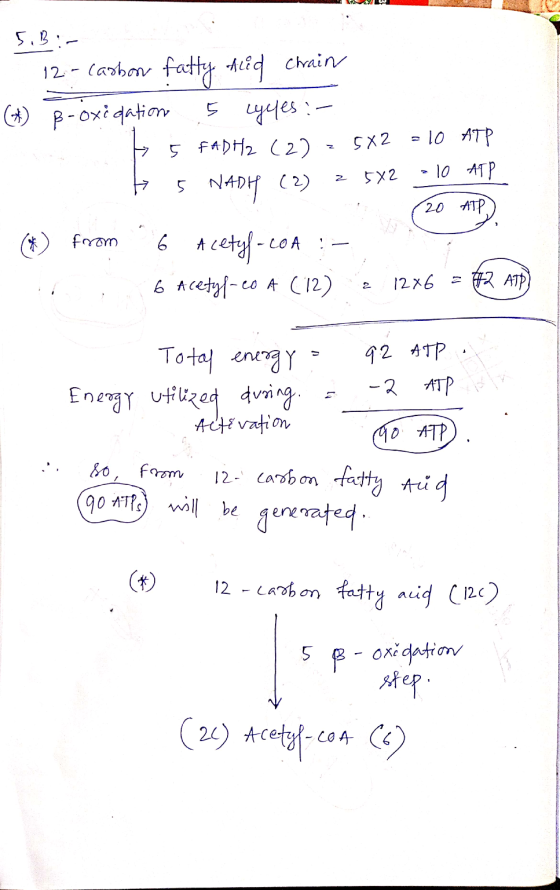
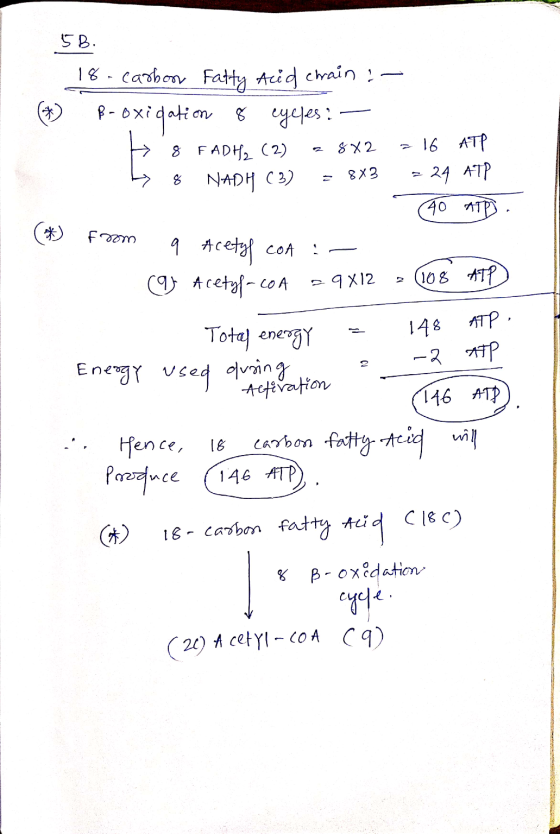
A & B please help!!
5. If a bacterium using aerobic respiration was to degrade one...
15. Draw out the Cell respiration pathway, include: stage locations Glucose Pyruvic acid Acetyl COA Oxygen...
 15. Draw out the Cell respiration pathway, include: stage locations Glucose Pyruvic acid Acetyl COA Oxygen Water Carbon dioxide NAD+/NADH FAD/FADH2 ADP + P ATP
2 NAD NADII and FAD/TADHa s bo (a) function as coenaymes b) ageats to anfer elesrons...
 2 NAD NADII and FAD/TADHa s bo (a) function as coenaymes b) ageats to anfer elesrons in beokugical oxidalion reduction reactions a source of energy in the comunon casabolic pathway (d) function as an agent to transfer 26 The final product of the common catabolic pathway ts aHO (b) ATP () NAD () co, (e all of these (a. b, c and d) 27. The molecule used by the body to transfer and store energy is (a) NAD (b) ATP...
General Biology Chapter 6 Cellular Respiration Exercise For the Following questions, answer each thoroughly and sketch...
 General Biology Chapter 6 Cellular Respiration Exercise For the Following questions, answer each thoroughly and sketch the parts of the Cell and/or Mitochondrion to illustrate your answer. 1. Triglycerides can be broken down by hydrolysis reactions to glycerol and fatty acid chains in the digestive tract. Glycerol is easily converted to 1 phosphoglyceraldehyde also known as PGAL Using your knowledge about how aerobic cellular respiration functions, explain how from this original glycerol molecule how many ATP's are formed in this...
1A) How many rounds/cycles of beta-oxidation would be needed to completely break down a 16-carbon fatty...
 1A) How many rounds/cycles of beta-oxidation would be needed to
completely break down a 16-carbon fatty acid molecule?
8
6
10
7
9
1B) What type of reaction is step 2?
isomerization
hydration
oxidation-reduction reaction
hydrolysis
1C) What type of enzyme catalyzes step 3?
oxidoreductase
lyase
hydrolase
transferase
ligase
1D) How many net ATP equivalents are generated
by the complete break down of a 12-Carbon fatty acid molecule?
97 ATP
95 ATP
100 ATP
146 ATP
124 ATP
117 ATP...
1A) How many rounds/cycles of beta-oxidation would be needed to
completely break down a 16-carbon fatty acid molecule?
8
6
10
7
9
1B) What type of reaction is step 2?
isomerization
hydration
oxidation-reduction reaction
hydrolysis
1C) What type of enzyme catalyzes step 3?
oxidoreductase
lyase
hydrolase
transferase
ligase
1D) How many net ATP equivalents are generated
by the complete break down of a 12-Carbon fatty acid molecule?
97 ATP
95 ATP
100 ATP
146 ATP
124 ATP
117 ATP...
) the system's entropy D) the cell's energy equilibrium E) the heat content of a chemical...
 ) the system's entropy D) the cell's energy equilibrium E) the heat content of a chemical system In the presence of oxygen, the three-carbon however, the pyruvate (1) loses a carbon, which is given off as a m compound called acetate, and (3) is bonded to coenzyme A. compound pyruvate can be catabolized in the citric acid cycle. First, olecule of CO2, (2) is oxidized to form a two-carbon 10) These three steps result in the formation of 10) A)...
The common molecule produced from all foods at the second stage of catabolism is A) ADP. B acetyl...
 just checking my answers, except for number 10.
The common molecule produced from all foods at the second stage of catabolism is A) ADP. B acetyl-CoA. C) glucose. D) citric acid. Which group of compounds includes only low-energy molecules? 1. 2. Hih A)ATP; acetyl-CoA; NADH; FADH2 C) ADP: CO2; NADH; FADH2 DONO BADP: acetyl-CoA; NAD+:FAD-mau ADP: CO2: NAD+, FAD After O2 has been reduced in the electron transport chain, the oxygen atoms are part of what molecules? A) ATP 3....
just checking my answers, except for number 10.
The common molecule produced from all foods at the second stage of catabolism is A) ADP. B acetyl-CoA. C) glucose. D) citric acid. Which group of compounds includes only low-energy molecules? 1. 2. Hih A)ATP; acetyl-CoA; NADH; FADH2 C) ADP: CO2; NADH; FADH2 DONO BADP: acetyl-CoA; NAD+:FAD-mau ADP: CO2: NAD+, FAD After O2 has been reduced in the electron transport chain, the oxygen atoms are part of what molecules? A) ATP 3....
Select ALL of the statements that correctly describe the Krebs cycle. A. Pyruvic acid must be...
Select ALL of the statements that correctly describe the Krebs cycle. A. Pyruvic acid must be converted to acetyl CoA prior to entering the cycle B. The molecule oxaloacetic acid picks up the acetyl group from acetylCoA, and in the last step of the cycle, oxaloacetic acid is regenerated. C. Electrons removed during oxidation steps are picked up by NAD or FAD. D. Each turn of the cycle generates one ATP molecule for a total of two per molecule of...
Transport of ________is NOT shared (or in common) during both aerobic respiration AND beta oxidation of...
Transport of ________is NOT shared (or in common) during both aerobic respiration AND beta oxidation of lipids? ATP, PYRUVATE, ELECTRONS, PROTONS Which pair of pathways are regulated so they do not occur at the same time (to avoid futile cycle) by using different transporters? GLYCOGEN SYNTHESIS AND DEGRADATION OF GLYCOGEN, LIPID SYNTHESIS & BETA OXIDATION, FERMENTATION & GLYCOLYSIS, GLUCONEOGENESIS AND GLYCOLYSIS Which of the following citric acid cycle intermediates can make the amino acid aspartate if an amino group is...
Fatty Acid Catabolism (B Oxidation) Examine Figure 12.15 to answer the questions below. B carbon -SCOA...
 Fatty Acid Catabolism (B Oxidation) Examine Figure 12.15 to answer the questions below. B carbon -SCOA 000000000000000 Fatty acyl CoA of 18C FAD FADH 00000000000000000 scoa @]H40 00000000000000001_scoa or NAD" HO HO -SCOA NAD K.NADH + H NADH+H* 0 0 000-SCOA 0000000000 © COA-SH -SCOA 0 0000000000000000-SCA Fatty acyl CoA of 16C repeats cycle (reactions 1-4) QUESTIONS 1. How is the fatty acyl CoA at the top of the cycle different from the fatty acyl COA at the bottom of...
Fatty Acid Metabolism. The reactions of the fatty acid spiral are shown below. Use the description...
 Fatty Acid Metabolism. The reactions of the fatty acid spiral are shown below. Use the description on the left side of the page to classify the reactions and fill in the boxes on the right side of the page Activation Step. The activation of the fatty acid begins by the addition of CoA which will carry the fatty acid from the cytosol into the mitochondria. The product, which is a fatty acid with a CoA attached, is known as a...
 15. Draw out the Cell respiration pathway, include: stage locations Glucose Pyruvic acid Acetyl COA Oxygen Water Carbon dioxide NAD+/NADH FAD/FADH2 ADP + P ATP
 2 NAD NADII and FAD/TADHa s bo (a) function as coenaymes b) ageats to anfer elesrons in beokugical oxidalion reduction reactions a source of energy in the comunon casabolic pathway (d) function as an agent to transfer 26 The final product of the common catabolic pathway ts aHO (b) ATP () NAD () co, (e all of these (a. b, c and d) 27. The molecule used by the body to transfer and store energy is (a) NAD (b) ATP...
 General Biology Chapter 6 Cellular Respiration Exercise For the Following questions, answer each thoroughly and sketch the parts of the Cell and/or Mitochondrion to illustrate your answer. 1. Triglycerides can be broken down by hydrolysis reactions to glycerol and fatty acid chains in the digestive tract. Glycerol is easily converted to 1 phosphoglyceraldehyde also known as PGAL Using your knowledge about how aerobic cellular respiration functions, explain how from this original glycerol molecule how many ATP's are formed in this...
 1A) How many rounds/cycles of beta-oxidation would be needed to
completely break down a 16-carbon fatty acid molecule?
8
6
10
7
9
1B) What type of reaction is step 2?
isomerization
hydration
oxidation-reduction reaction
hydrolysis
1C) What type of enzyme catalyzes step 3?
oxidoreductase
lyase
hydrolase
transferase
ligase
1D) How many net ATP equivalents are generated
by the complete break down of a 12-Carbon fatty acid molecule?
97 ATP
95 ATP
100 ATP
146 ATP
124 ATP
117 ATP...
1A) How many rounds/cycles of beta-oxidation would be needed to
completely break down a 16-carbon fatty acid molecule?
8
6
10
7
9
1B) What type of reaction is step 2?
isomerization
hydration
oxidation-reduction reaction
hydrolysis
1C) What type of enzyme catalyzes step 3?
oxidoreductase
lyase
hydrolase
transferase
ligase
1D) How many net ATP equivalents are generated
by the complete break down of a 12-Carbon fatty acid molecule?
97 ATP
95 ATP
100 ATP
146 ATP
124 ATP
117 ATP...
 ) the system's entropy D) the cell's energy equilibrium E) the heat content of a chemical system In the presence of oxygen, the three-carbon however, the pyruvate (1) loses a carbon, which is given off as a m compound called acetate, and (3) is bonded to coenzyme A. compound pyruvate can be catabolized in the citric acid cycle. First, olecule of CO2, (2) is oxidized to form a two-carbon 10) These three steps result in the formation of 10) A)...
 just checking my answers, except for number 10.
The common molecule produced from all foods at the second stage of catabolism is A) ADP. B acetyl-CoA. C) glucose. D) citric acid. Which group of compounds includes only low-energy molecules? 1. 2. Hih A)ATP; acetyl-CoA; NADH; FADH2 C) ADP: CO2; NADH; FADH2 DONO BADP: acetyl-CoA; NAD+:FAD-mau ADP: CO2: NAD+, FAD After O2 has been reduced in the electron transport chain, the oxygen atoms are part of what molecules? A) ATP 3....
just checking my answers, except for number 10.
The common molecule produced from all foods at the second stage of catabolism is A) ADP. B acetyl-CoA. C) glucose. D) citric acid. Which group of compounds includes only low-energy molecules? 1. 2. Hih A)ATP; acetyl-CoA; NADH; FADH2 C) ADP: CO2; NADH; FADH2 DONO BADP: acetyl-CoA; NAD+:FAD-mau ADP: CO2: NAD+, FAD After O2 has been reduced in the electron transport chain, the oxygen atoms are part of what molecules? A) ATP 3....
 Fatty Acid Catabolism (B Oxidation) Examine Figure 12.15 to answer the questions below. B carbon -SCOA 000000000000000 Fatty acyl CoA of 18C FAD FADH 00000000000000000 scoa @]H40 00000000000000001_scoa or NAD" HO HO -SCOA NAD K.NADH + H NADH+H* 0 0 000-SCOA 0000000000 © COA-SH -SCOA 0 0000000000000000-SCA Fatty acyl CoA of 16C repeats cycle (reactions 1-4) QUESTIONS 1. How is the fatty acyl CoA at the top of the cycle different from the fatty acyl COA at the bottom of...
 Fatty Acid Metabolism. The reactions of the fatty acid spiral are shown below. Use the description on the left side of the page to classify the reactions and fill in the boxes on the right side of the page Activation Step. The activation of the fatty acid begins by the addition of CoA which will carry the fatty acid from the cytosol into the mitochondria. The product, which is a fatty acid with a CoA attached, is known as a...
Most questions answered within 3 hours.
-
Where is the error in this code sequence?
String s1 = "Hello";
String s2 = "ello";...
asked 10 months ago -
Financial data for Joel de Paris, Inc., for last year
follow:
Joel de Paris, Inc.
Balance...
asked 10 months ago -
Consider this reaction:
Al2(SO4)3 (aq)+ BaCl3
(aq) Al2Cl6 (aq)- +
3BaSO4(s) . What is the...
asked 10 months ago -
Suppose that Savneet is considering increasing her
recent random sample from 20 car rentals to 40...
asked 10 months ago -
Trucks arrive at an unloading terminal at an average rate of 120
per hour.
Trucks arrive...
asked 10 months ago -
Why are methanol and ethanol completely soluble in water while
octanol is not very little soluble....
asked 10 months ago -
A facilities manager at a university reads in a research report
that the mean amount of...
asked 10 months ago -
When the CuSO4 is rehydrated by adding water to the anhydrous
compound, is this an endothermic...
asked 10 months ago -
A ray of sunlight is passing from diamond into crown glass; the
angle of incidence is...
asked 10 months ago -
A block of mass 0.249 kg is placed on top of a light, vertical
spring of...
asked 10 months ago -
how do the kidneys compensate in the presences of acidosis
a) trigger hyperventilate
b) reserve acid...
asked 10 months ago -
Question 501 pts
The rental rate of capital to the firm increases. Which of the
following...
asked 10 months ago