In a footprinting assay, you use dsDNA that is 16bp long. Here is the sequence of...
In a footprinting assay, you use dsDNA that is 16bp long. Here is the sequence of the top
strand: 5’TTTTGCGCTTTTAGAG. The restriction enzyme MSpI binds to the GCGC sequence.
What would a footprint look like if the strand above has a single 32P group on the 5’ end? Draw
your autoradiogram results clearly showing the sequence of each fragment/band on the gel. (2
lanes: + MSpI and - MSpI). Now, what would happen if every phosphate in the top strand was
radioactive? Do you get a footprint? Explain.
Homework Answers
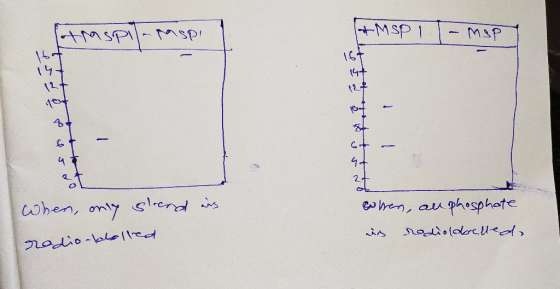
 because this chain will be
cleaved by restriction endonuclease and produces 2 strand one of
length 6 no which will be autoradiography because it will only
contain the radioisotopes phosphorus
because this chain will be
cleaved by restriction endonuclease and produces 2 strand one of
length 6 no which will be autoradiography because it will only
contain the radioisotopes phosphorus
And another of 1pbp will not give emission.
If all phosphate are radiosotyoes then, both the 10 and 6 no will give signal when present with MSP1 AND WILL GIVE ONE lenGTH OF 16 WHEN NO MSP1 IS PRESENT.THANK YOU A LOT
Add Answer to:
In a footprinting assay, you use dsDNA that is 16bp long. Here
is the sequence of...
Luestion 3 1 pts Review: You have the DNA that is radioactively labeled at the S'ends...
 Luestion 3 1 pts Review: You have the DNA that is radioactively labeled at the S'ends of DNA as shown below. But you want DNA that is labeled only at one end of the DNA, not both ends. One of the other undergraduate students in the lab suggests that you use a restriction enzyme to cut the DNA, then electrophorese the DNA in an agarose gel, then cut out the region of the gel with radioactive DNA fragment you want,...
HP1 is a DNA binding protein that interacts with a specific sequence (TGCTTATTC). You want to...
 HP1 is a DNA binding protein that interacts with a specific
sequence (TGCTTATTC). You want to analyze, by a Dnase I
footprinting assay, the effect on DNA binding of the interaction
between HP1 and its 6 binding partner PA. In each assay, you
combine a radiolabeled fragment of DNA that binds to HP1 and a
specific combination of proteins. After incubation with DNase I,
each reaction mixture was resolved by gel electrophoresis, and then
exposed to film. The autoradiogram showing...
HP1 is a DNA binding protein that interacts with a specific
sequence (TGCTTATTC). You want to analyze, by a Dnase I
footprinting assay, the effect on DNA binding of the interaction
between HP1 and its 6 binding partner PA. In each assay, you
combine a radiolabeled fragment of DNA that binds to HP1 and a
specific combination of proteins. After incubation with DNase I,
each reaction mixture was resolved by gel electrophoresis, and then
exposed to film. The autoradiogram showing...
Actual gels don't have labels. Here, the labels have been removed, but the ladder remains the...
 Actual gels don't have labels. Here, the labels have been removed, but the ladder remains the same as in the previous example. 6. On the gel to the right, write the approximate size of each DNA fragment. Write the sizes next to each appropriate band. 7. Imagine that you have a sample of DNA that contains a single, specific DNA sequence. Before you run your gel, you split your sample into two tubes. You run the DNA from the first...
Review. Consider how one might label the 5'ends of DNA for a footprinting experiment where you...
 Review. Consider how one might label the 5'ends of DNA for a footprinting experiment where you visualize where on the DNA a transacting protein binds to the cis acting promoter sequence The 5 phosphate(s) at the S'ends a DNA can be removed using a phosphatase, like calf intestinal phosphatase (CIP), in vitro, leaving a 5-hydroxyl group at the end of DNA CIP has no impact on the phosphates along the backbone of the DNA, just the 5' end phosphate and...
Molecular Bio lab. HELP!! Here is the first part: the sequence traces and the entire sequence....
 Molecular Bio lab. HELP!!
Here is the first part: the sequence traces and the entire
sequence. i just need the last 3 tasks. i color coded the ends so
you can see where it overlaps and connects
In the files section for your group there is a simulated output from an automated DNA sequencer using a variation of the classic Sanger method. (If you want to print it, it is formatted for legal sized paper.) This sequence encodes a protein...
Molecular Bio lab. HELP!!
Here is the first part: the sequence traces and the entire
sequence. i just need the last 3 tasks. i color coded the ends so
you can see where it overlaps and connects
In the files section for your group there is a simulated output from an automated DNA sequencer using a variation of the classic Sanger method. (If you want to print it, it is formatted for legal sized paper.) This sequence encodes a protein...
1) Imagine that you had two restriction enzymes and a known segment of linear DNA 160...
 1) Imagine that you had two restriction enzymes and a known segment of linear DNA 160 kb long: Enzyme A cuts at location(s): 20 kb, 45 kb 70 kb and 110 kb. Enzyme B cuts at location(s): 15 kb and 140 kb. Based on this information, first construct a linear map of this DNA showing the positions of these restriction enzyme cut sites. In the space below.draw what the gel would look like given the following lanes: (8 points total)...
You are given a circular DNA molecule to analyze that is 3,000bp (3 Kb) long. You...
 You are given a circular DNA molecule to analyze that is 3,000bp
(3 Kb) long. You proceed to treat the DNA molecule with different
cutting enzymes and then you run the individual reactions on a gel.
The following gel is produced with each column representing a
different reaction (lane). In lane 1 a molecule weight ladder is
run. In lane 2, the circular DNA is NOT treated with any enzyme. In
lane 3 the DNA is treated with an enzyme...
You are given a circular DNA molecule to analyze that is 3,000bp
(3 Kb) long. You proceed to treat the DNA molecule with different
cutting enzymes and then you run the individual reactions on a gel.
The following gel is produced with each column representing a
different reaction (lane). In lane 1 a molecule weight ladder is
run. In lane 2, the circular DNA is NOT treated with any enzyme. In
lane 3 the DNA is treated with an enzyme...
You wish to determine if there is a mutation somewhere within the promoter of the adult...
You wish to determine if there is a mutation somewhere within the promoter of the adult b-globin gene that could possibly be responsible for a case of b-thalassemia. Which ONE method, when compared to the same process performed on wild type DNA, would NOT provide you with information that could be consistent with this idea? A) Prepare a pair of 18 nucleotide long primers that hybridize upstream and downstream of the promoter, perform PCR, and sequence the resulting fragment B)...
please i need help with a, b, c this is the sequence 5’ATGTATTATTATTTTTTTGTTTTTTTTGCAATATATGCTAATGGATTGCTAAGAAATA AAGATCCTAACATTTTTGCGAG TAGCAATGATGAGATCATAGAAAATGATAAAAGTATGAATACCTTTGTTATGTCAAC AAATGGAAGTTTATATTTAAATA...
 please i need help with a, b, c
this is the sequence
5’ATGTATTATTATTTTTTTGTTTTTTTTGCAATATATGCTAATGGATTGCTAAGAAATA
AAGATCCTAACATTTTTGCGAG
TAGCAATGATGAGATCATAGAAAATGATAAAAGTATGAATACCTTTGTTATGTCAAC
AAATGGAAGTTTATATTTAAATA
GTGATTTTAATTTAAATGAAGCATCCAACGAAAGCTTCTTAGAAAATTGCAATATCA
ATAGTTGTGTAGATATAGGTCAT
GAAAATGGCAACAAAATAAATAGTCAAGAAAATGAGCATGCTAAAAATAATAACA
ACAGTAATAATAACAATTTAAAACC
AGAATACAATAATAATAATAATAATTTAAAACCAGAATACAATAATAATAATTTAA
AACCAGAGTACAATAATAACAATT-3’
1. Polymerase chain reaction 5'- ATGTATTATTATTTTTTTGTTTTTTTTGCAATATATGCTAATGGATTGCTAAGAAATA AAGATCCTAACATTTTTGCGAG TAGCAATGATGAGATCATAGAAAATGATAAAAGTATGAATACCTTTGTTATGTCAAC AAATGGAAGTTTATATTTAAATA GTGATTTTAATTTAAATGAAGCATCCAACGAAAGCTTCTTAGAAAATTGCAATATCA ATAGTTGTGTAGATATAGGTCAT GAAAATGGCAACAAAATAAATAGTCAAGAAAATGAGCATGCTAAAAATAATAACA ACAGTAATAATAACAATTTAAAACC AGAATACAATAATAATAATAATAATTTAAAACCAGAATACAATAATAATAATTTAA AACCAGAGTACAATAATAACAATT-3' a) One strand of a chromosomal DNA sequence is shown above. How would you amplify and isolate a DNA fragment defined by the sequence shown in red, using polymerase chain reaction. Design PCR primers (Forward and Reverse primers, each 20 nucleotides long, that...
please i need help with a, b, c
this is the sequence
5’ATGTATTATTATTTTTTTGTTTTTTTTGCAATATATGCTAATGGATTGCTAAGAAATA
AAGATCCTAACATTTTTGCGAG
TAGCAATGATGAGATCATAGAAAATGATAAAAGTATGAATACCTTTGTTATGTCAAC
AAATGGAAGTTTATATTTAAATA
GTGATTTTAATTTAAATGAAGCATCCAACGAAAGCTTCTTAGAAAATTGCAATATCA
ATAGTTGTGTAGATATAGGTCAT
GAAAATGGCAACAAAATAAATAGTCAAGAAAATGAGCATGCTAAAAATAATAACA
ACAGTAATAATAACAATTTAAAACC
AGAATACAATAATAATAATAATAATTTAAAACCAGAATACAATAATAATAATTTAA
AACCAGAGTACAATAATAACAATT-3’
1. Polymerase chain reaction 5'- ATGTATTATTATTTTTTTGTTTTTTTTGCAATATATGCTAATGGATTGCTAAGAAATA AAGATCCTAACATTTTTGCGAG TAGCAATGATGAGATCATAGAAAATGATAAAAGTATGAATACCTTTGTTATGTCAAC AAATGGAAGTTTATATTTAAATA GTGATTTTAATTTAAATGAAGCATCCAACGAAAGCTTCTTAGAAAATTGCAATATCA ATAGTTGTGTAGATATAGGTCAT GAAAATGGCAACAAAATAAATAGTCAAGAAAATGAGCATGCTAAAAATAATAACA ACAGTAATAATAACAATTTAAAACC AGAATACAATAATAATAATAATAATTTAAAACCAGAATACAATAATAATAATTTAA AACCAGAGTACAATAATAACAATT-3' a) One strand of a chromosomal DNA sequence is shown above. How would you amplify and isolate a DNA fragment defined by the sequence shown in red, using polymerase chain reaction. Design PCR primers (Forward and Reverse primers, each 20 nucleotides long, that...
1) In order to do an enzyme activity assay you must isolate your favorite enzyme from...
1) In order to do an enzyme activity assay you must isolate your favorite enzyme from the cell. After isolating your enzyme you find that the active form of the enzyme is 6x the size that the primary structure would suggest. What is likely true about your enzyme? a)It has denatured, but NOT aggregated b) It has lost its original primary structure c) It has quaternary structure d) It has mostly beta-strand secondary structure e) It has denatured and aggregated...
 Luestion 3 1 pts Review: You have the DNA that is radioactively labeled at the S'ends of DNA as shown below. But you want DNA that is labeled only at one end of the DNA, not both ends. One of the other undergraduate students in the lab suggests that you use a restriction enzyme to cut the DNA, then electrophorese the DNA in an agarose gel, then cut out the region of the gel with radioactive DNA fragment you want,...
 HP1 is a DNA binding protein that interacts with a specific
sequence (TGCTTATTC). You want to analyze, by a Dnase I
footprinting assay, the effect on DNA binding of the interaction
between HP1 and its 6 binding partner PA. In each assay, you
combine a radiolabeled fragment of DNA that binds to HP1 and a
specific combination of proteins. After incubation with DNase I,
each reaction mixture was resolved by gel electrophoresis, and then
exposed to film. The autoradiogram showing...
HP1 is a DNA binding protein that interacts with a specific
sequence (TGCTTATTC). You want to analyze, by a Dnase I
footprinting assay, the effect on DNA binding of the interaction
between HP1 and its 6 binding partner PA. In each assay, you
combine a radiolabeled fragment of DNA that binds to HP1 and a
specific combination of proteins. After incubation with DNase I,
each reaction mixture was resolved by gel electrophoresis, and then
exposed to film. The autoradiogram showing...
 Actual gels don't have labels. Here, the labels have been removed, but the ladder remains the same as in the previous example. 6. On the gel to the right, write the approximate size of each DNA fragment. Write the sizes next to each appropriate band. 7. Imagine that you have a sample of DNA that contains a single, specific DNA sequence. Before you run your gel, you split your sample into two tubes. You run the DNA from the first...
 Review. Consider how one might label the 5'ends of DNA for a footprinting experiment where you visualize where on the DNA a transacting protein binds to the cis acting promoter sequence The 5 phosphate(s) at the S'ends a DNA can be removed using a phosphatase, like calf intestinal phosphatase (CIP), in vitro, leaving a 5-hydroxyl group at the end of DNA CIP has no impact on the phosphates along the backbone of the DNA, just the 5' end phosphate and...
 Molecular Bio lab. HELP!!
Here is the first part: the sequence traces and the entire
sequence. i just need the last 3 tasks. i color coded the ends so
you can see where it overlaps and connects
In the files section for your group there is a simulated output from an automated DNA sequencer using a variation of the classic Sanger method. (If you want to print it, it is formatted for legal sized paper.) This sequence encodes a protein...
Molecular Bio lab. HELP!!
Here is the first part: the sequence traces and the entire
sequence. i just need the last 3 tasks. i color coded the ends so
you can see where it overlaps and connects
In the files section for your group there is a simulated output from an automated DNA sequencer using a variation of the classic Sanger method. (If you want to print it, it is formatted for legal sized paper.) This sequence encodes a protein...
 1) Imagine that you had two restriction enzymes and a known segment of linear DNA 160 kb long: Enzyme A cuts at location(s): 20 kb, 45 kb 70 kb and 110 kb. Enzyme B cuts at location(s): 15 kb and 140 kb. Based on this information, first construct a linear map of this DNA showing the positions of these restriction enzyme cut sites. In the space below.draw what the gel would look like given the following lanes: (8 points total)...
 You are given a circular DNA molecule to analyze that is 3,000bp
(3 Kb) long. You proceed to treat the DNA molecule with different
cutting enzymes and then you run the individual reactions on a gel.
The following gel is produced with each column representing a
different reaction (lane). In lane 1 a molecule weight ladder is
run. In lane 2, the circular DNA is NOT treated with any enzyme. In
lane 3 the DNA is treated with an enzyme...
You are given a circular DNA molecule to analyze that is 3,000bp
(3 Kb) long. You proceed to treat the DNA molecule with different
cutting enzymes and then you run the individual reactions on a gel.
The following gel is produced with each column representing a
different reaction (lane). In lane 1 a molecule weight ladder is
run. In lane 2, the circular DNA is NOT treated with any enzyme. In
lane 3 the DNA is treated with an enzyme...
 please i need help with a, b, c
this is the sequence
5’ATGTATTATTATTTTTTTGTTTTTTTTGCAATATATGCTAATGGATTGCTAAGAAATA
AAGATCCTAACATTTTTGCGAG
TAGCAATGATGAGATCATAGAAAATGATAAAAGTATGAATACCTTTGTTATGTCAAC
AAATGGAAGTTTATATTTAAATA
GTGATTTTAATTTAAATGAAGCATCCAACGAAAGCTTCTTAGAAAATTGCAATATCA
ATAGTTGTGTAGATATAGGTCAT
GAAAATGGCAACAAAATAAATAGTCAAGAAAATGAGCATGCTAAAAATAATAACA
ACAGTAATAATAACAATTTAAAACC
AGAATACAATAATAATAATAATAATTTAAAACCAGAATACAATAATAATAATTTAA
AACCAGAGTACAATAATAACAATT-3’
1. Polymerase chain reaction 5'- ATGTATTATTATTTTTTTGTTTTTTTTGCAATATATGCTAATGGATTGCTAAGAAATA AAGATCCTAACATTTTTGCGAG TAGCAATGATGAGATCATAGAAAATGATAAAAGTATGAATACCTTTGTTATGTCAAC AAATGGAAGTTTATATTTAAATA GTGATTTTAATTTAAATGAAGCATCCAACGAAAGCTTCTTAGAAAATTGCAATATCA ATAGTTGTGTAGATATAGGTCAT GAAAATGGCAACAAAATAAATAGTCAAGAAAATGAGCATGCTAAAAATAATAACA ACAGTAATAATAACAATTTAAAACC AGAATACAATAATAATAATAATAATTTAAAACCAGAATACAATAATAATAATTTAA AACCAGAGTACAATAATAACAATT-3' a) One strand of a chromosomal DNA sequence is shown above. How would you amplify and isolate a DNA fragment defined by the sequence shown in red, using polymerase chain reaction. Design PCR primers (Forward and Reverse primers, each 20 nucleotides long, that...
please i need help with a, b, c
this is the sequence
5’ATGTATTATTATTTTTTTGTTTTTTTTGCAATATATGCTAATGGATTGCTAAGAAATA
AAGATCCTAACATTTTTGCGAG
TAGCAATGATGAGATCATAGAAAATGATAAAAGTATGAATACCTTTGTTATGTCAAC
AAATGGAAGTTTATATTTAAATA
GTGATTTTAATTTAAATGAAGCATCCAACGAAAGCTTCTTAGAAAATTGCAATATCA
ATAGTTGTGTAGATATAGGTCAT
GAAAATGGCAACAAAATAAATAGTCAAGAAAATGAGCATGCTAAAAATAATAACA
ACAGTAATAATAACAATTTAAAACC
AGAATACAATAATAATAATAATAATTTAAAACCAGAATACAATAATAATAATTTAA
AACCAGAGTACAATAATAACAATT-3’
1. Polymerase chain reaction 5'- ATGTATTATTATTTTTTTGTTTTTTTTGCAATATATGCTAATGGATTGCTAAGAAATA AAGATCCTAACATTTTTGCGAG TAGCAATGATGAGATCATAGAAAATGATAAAAGTATGAATACCTTTGTTATGTCAAC AAATGGAAGTTTATATTTAAATA GTGATTTTAATTTAAATGAAGCATCCAACGAAAGCTTCTTAGAAAATTGCAATATCA ATAGTTGTGTAGATATAGGTCAT GAAAATGGCAACAAAATAAATAGTCAAGAAAATGAGCATGCTAAAAATAATAACA ACAGTAATAATAACAATTTAAAACC AGAATACAATAATAATAATAATAATTTAAAACCAGAATACAATAATAATAATTTAA AACCAGAGTACAATAATAACAATT-3' a) One strand of a chromosomal DNA sequence is shown above. How would you amplify and isolate a DNA fragment defined by the sequence shown in red, using polymerase chain reaction. Design PCR primers (Forward and Reverse primers, each 20 nucleotides long, that...
Most questions answered within 3 hours.
-
Where is the error in this code sequence?
String s1 = "Hello";
String s2 = "ello";...
asked 11 months ago -
Financial data for Joel de Paris, Inc., for last year
follow:
Joel de Paris, Inc.
Balance...
asked 11 months ago -
Consider this reaction:
Al2(SO4)3 (aq)+ BaCl3
(aq) Al2Cl6 (aq)- +
3BaSO4(s) . What is the...
asked 11 months ago -
Suppose that Savneet is considering increasing her
recent random sample from 20 car rentals to 40...
asked 11 months ago -
Trucks arrive at an unloading terminal at an average rate of 120
per hour.
Trucks arrive...
asked 11 months ago -
Why are methanol and ethanol completely soluble in water while
octanol is not very little soluble....
asked 11 months ago -
A facilities manager at a university reads in a research report
that the mean amount of...
asked 11 months ago -
When the CuSO4 is rehydrated by adding water to the anhydrous
compound, is this an endothermic...
asked 11 months ago -
A ray of sunlight is passing from diamond into crown glass; the
angle of incidence is...
asked 11 months ago -
A block of mass 0.249 kg is placed on top of a light, vertical
spring of...
asked 11 months ago -
how do the kidneys compensate in the presences of acidosis
a) trigger hyperventilate
b) reserve acid...
asked 11 months ago -
Question 501 pts
The rental rate of capital to the firm increases. Which of the
following...
asked 11 months ago