
Homework Answers

This is the most feasible pathway I could find for your answer C. Here for each molecule of ribulose-5-phosphate you get a net of 3 ATP and 2 NADH.
Add Answer to:
The
answer is C.
I want to know the pathway!! Thanks~
61. Which amount of ATP...
..il Uide bol. 4G 15:02 1 16% Chapter 14-Homework.xls 32. ten Which amount of ATP and...
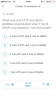 ..il Uide bol. 4G 15:02 1 16% Chapter 14-Homework.xls 32. ten Which amount of ATP and NADH identifies net production when 1 mol of DHAP is converted to 1 mol of pyruvate? A 2 mol of ATP and 2 mol of NADH (B) 2 mol of ATP and 1 mol of NADH (C 2 mol ATP and 0 mol of NADH D 1 mol ATP and 2 mol of NADH E 1 mol ATP and 0 mol of NADH 32/45...
Which will produce more ATP: i). Three molecules of glucose that are metabolized by glycolysis to...
Which will produce more ATP: i). Three molecules of glucose that are metabolized by glycolysis to yield pyruvate orii). Three molecules of glucose that enter the Pentose Phosphate pathway and are converted to two molecules of fructose-6-phosphate and one molecule of glyceraldehyde-3-phosphate, which can then enter glycolysis. Explain your metabolic calculations/logic. NOTE: Do not consider ATP equivalents from NADH or NADPH in your answer.
PLEASE SHOW CALCULATIONS, Calculate the amount of ATP produced from glucose fully converted to CO2 by...
 PLEASE SHOW CALCULATIONS, Calculate the amount of ATP produced
from glucose fully converted to CO2 by a:]
Calculate the amount of ATP produced from glucose fully converted to CO2 by a 1. Bacterium that ferments and uses the Entner Doudoroff Pathway to convert glucose to pyruvate 2. Bacterium that ferments and uses glycolysis to convert glucose to pyruvate 3. Bacterium that respires and uses the Entner Doudoroff Pathway to convert glucose to pyruvate 4. Bacterium that respires and uses glycolysis...
PLEASE SHOW CALCULATIONS, Calculate the amount of ATP produced
from glucose fully converted to CO2 by a:]
Calculate the amount of ATP produced from glucose fully converted to CO2 by a 1. Bacterium that ferments and uses the Entner Doudoroff Pathway to convert glucose to pyruvate 2. Bacterium that ferments and uses glycolysis to convert glucose to pyruvate 3. Bacterium that respires and uses the Entner Doudoroff Pathway to convert glucose to pyruvate 4. Bacterium that respires and uses glycolysis...
This is a biochemistry question, please take the time to answer both questions and I will...
 This is a biochemistry question, please take the time to answer
both questions and I will like as soon as the answer is posted.
Thanks in advance!
QUESTION 7 Which of these molecules is NOT produced in glycolysis? Glucose-6-phosphate Fructose-6-phosphate water Inorganic phosphate ATP QUESTION 8 Glycolysis is connected to many other metabolic pathways, which can feed intermediates into glycolysis at different steps. Starting glycolysis at dihydroxyacetone phosphate will give a net yield (per DHAP molecule) of: 2 mol of...
This is a biochemistry question, please take the time to answer
both questions and I will like as soon as the answer is posted.
Thanks in advance!
QUESTION 7 Which of these molecules is NOT produced in glycolysis? Glucose-6-phosphate Fructose-6-phosphate water Inorganic phosphate ATP QUESTION 8 Glycolysis is connected to many other metabolic pathways, which can feed intermediates into glycolysis at different steps. Starting glycolysis at dihydroxyacetone phosphate will give a net yield (per DHAP molecule) of: 2 mol of...
12/25 answered Click on glycolysis if would like to review it in details. Glucose Preparatory phase...
 12/25 answered Click on glycolysis if would like to review it in details. Glucose Preparatory phase first ATP Phosphorylation of glucos and its conversion to glyceraldehyde 3-phosphat Priming © > ADP Glucose 6-phosphate 1-0 Hz Hexokinase ΝΟΗ Η e Phosphohexose isomerase Fructose 6-phosphate ATP (8 Phospho- fructokinase-1 primins и он -OCH, CH-OH HOH он и ©--CH, CH-0- Кинон Aldolase ADP Fructose 1,6-bisphosphate (6) Triose phosphate somerase eleava oferte suar phosphate to two carbon sur phosphate Glyceraldehyde 3-phosphate udehyde a phosphate...
16 Which step consists of a phosphorylation reaction in which ATP is the phosphate source? b...
 16 Which step consists of a phosphorylation reaction in which ATP is the phosphate source? b B с с d D е Е 17 Substrate-level phosphorylation accounts for approximately what percentage of the ATP formed during glycolysis? a 0% b 2% c 10% d 38% @ 100% 18 In addition to ATP, what are the end products of glycolysis? a CO2 and H2O b CO2 and pyruvate NADH and pyruvate d CO, and NADH e H2O, FADH2, and citrate 19...
1. 2. 3. 4. Select all that apply. Identify the reaction(s) of glycolysis inhibited by ATP □ glyceraldehyde-3-phosphate → 1,3-bisphosphoglycerate phosphoenolpyruvate +pyruvate 3-phosphoglycerate...
 1.
2.
3.
4.
Select all that apply. Identify the reaction(s) of glycolysis inhibited by ATP □ glyceraldehyde-3-phosphate → 1,3-bisphosphoglycerate phosphoenolpyruvate +pyruvate 3-phosphoglycerate ~2-phosphoglycerate 1) fructose-6-phosphate→ fructose-1,6-bisphosphate . glucose glucose-6-phosphate Select all that apply. Alcohol fermentation: consumes ATP as it produces ethanol. O produces carbon dioxide begins as pyruvate is decarboxylated to acetaldehyde in a reaction catalyzed by alcohol dehydrogenase m regenerates NAD requires the enzyme alcohol dehydrogenase, In the figure below, what is the reaction occurring at the location...
1.
2.
3.
4.
Select all that apply. Identify the reaction(s) of glycolysis inhibited by ATP □ glyceraldehyde-3-phosphate → 1,3-bisphosphoglycerate phosphoenolpyruvate +pyruvate 3-phosphoglycerate ~2-phosphoglycerate 1) fructose-6-phosphate→ fructose-1,6-bisphosphate . glucose glucose-6-phosphate Select all that apply. Alcohol fermentation: consumes ATP as it produces ethanol. O produces carbon dioxide begins as pyruvate is decarboxylated to acetaldehyde in a reaction catalyzed by alcohol dehydrogenase m regenerates NAD requires the enzyme alcohol dehydrogenase, In the figure below, what is the reaction occurring at the location...
Short answer questions, answer on blank paper. These questions cannot be answered without work, you must...
 Short answer questions, answer on blank paper. These questions cannot be answered without work, you must show all work for full credit. 1. (8 points) Given the following metabolic pathway of aspartate to pyruvate, all of which occurs in the cytosol thus requiring transport of electrons into the mitochondria, calculate the number of ATP that can produced from the complete cxcidation of aspartate in the muscle aspartate oxaloacetate m NAD NADH NADH NAD alate Pyruvate NAD NADH 2. (7 points)...
i need help with the "if all protons could be uses for atp production" questions please!!!...
 i need help with the "if all protons could be uses for atp
production" questions please!!!
5. (8 points) Consider the oxidation of a mole of NADH: 202 +2e + 2H+ - HO EⓇ = 0.83 V NAD + 2e + H+ - NADH E = -0.32 V What is the AG for the oxidation of a mole of NADH by oxygen? How many moles of protons are pumped as a result of the oxidation of a mole of NADH?...
i need help with the "if all protons could be uses for atp
production" questions please!!!
5. (8 points) Consider the oxidation of a mole of NADH: 202 +2e + 2H+ - HO EⓇ = 0.83 V NAD + 2e + H+ - NADH E = -0.32 V What is the AG for the oxidation of a mole of NADH by oxygen? How many moles of protons are pumped as a result of the oxidation of a mole of NADH?...
ve the overall reaction ATP + glucose→glucose-6-phosphate + ADP + H. lf the &G" of ATP...
 ve the overall reaction ATP + glucose→glucose-6-phosphate + ADP + H. lf the &G" of ATP hydrolysis is /mol, what is AG for the coupled reaction? A. 46 kJ/mo B-18.4 kJ/mol C. -32.2 kJ/mol D. 18.4kJ/mol 26. Which of the following is true about oxidation-reduction reactions? A. B. C. D. During oxidation a compound gains electrons. Every oxidation must be accompanied by a reduction Dehydrogenases typically remove two electrons and two hydrides (H). There are four commonly accessed oxidation states...
 ..il Uide bol. 4G 15:02 1 16% Chapter 14-Homework.xls 32. ten Which amount of ATP and NADH identifies net production when 1 mol of DHAP is converted to 1 mol of pyruvate? A 2 mol of ATP and 2 mol of NADH (B) 2 mol of ATP and 1 mol of NADH (C 2 mol ATP and 0 mol of NADH D 1 mol ATP and 2 mol of NADH E 1 mol ATP and 0 mol of NADH 32/45...
 PLEASE SHOW CALCULATIONS, Calculate the amount of ATP produced
from glucose fully converted to CO2 by a:]
Calculate the amount of ATP produced from glucose fully converted to CO2 by a 1. Bacterium that ferments and uses the Entner Doudoroff Pathway to convert glucose to pyruvate 2. Bacterium that ferments and uses glycolysis to convert glucose to pyruvate 3. Bacterium that respires and uses the Entner Doudoroff Pathway to convert glucose to pyruvate 4. Bacterium that respires and uses glycolysis...
PLEASE SHOW CALCULATIONS, Calculate the amount of ATP produced
from glucose fully converted to CO2 by a:]
Calculate the amount of ATP produced from glucose fully converted to CO2 by a 1. Bacterium that ferments and uses the Entner Doudoroff Pathway to convert glucose to pyruvate 2. Bacterium that ferments and uses glycolysis to convert glucose to pyruvate 3. Bacterium that respires and uses the Entner Doudoroff Pathway to convert glucose to pyruvate 4. Bacterium that respires and uses glycolysis...
 This is a biochemistry question, please take the time to answer
both questions and I will like as soon as the answer is posted.
Thanks in advance!
QUESTION 7 Which of these molecules is NOT produced in glycolysis? Glucose-6-phosphate Fructose-6-phosphate water Inorganic phosphate ATP QUESTION 8 Glycolysis is connected to many other metabolic pathways, which can feed intermediates into glycolysis at different steps. Starting glycolysis at dihydroxyacetone phosphate will give a net yield (per DHAP molecule) of: 2 mol of...
This is a biochemistry question, please take the time to answer
both questions and I will like as soon as the answer is posted.
Thanks in advance!
QUESTION 7 Which of these molecules is NOT produced in glycolysis? Glucose-6-phosphate Fructose-6-phosphate water Inorganic phosphate ATP QUESTION 8 Glycolysis is connected to many other metabolic pathways, which can feed intermediates into glycolysis at different steps. Starting glycolysis at dihydroxyacetone phosphate will give a net yield (per DHAP molecule) of: 2 mol of...
 12/25 answered Click on glycolysis if would like to review it in details. Glucose Preparatory phase first ATP Phosphorylation of glucos and its conversion to glyceraldehyde 3-phosphat Priming © > ADP Glucose 6-phosphate 1-0 Hz Hexokinase ΝΟΗ Η e Phosphohexose isomerase Fructose 6-phosphate ATP (8 Phospho- fructokinase-1 primins и он -OCH, CH-OH HOH он и ©--CH, CH-0- Кинон Aldolase ADP Fructose 1,6-bisphosphate (6) Triose phosphate somerase eleava oferte suar phosphate to two carbon sur phosphate Glyceraldehyde 3-phosphate udehyde a phosphate...
 16 Which step consists of a phosphorylation reaction in which ATP is the phosphate source? b B с с d D е Е 17 Substrate-level phosphorylation accounts for approximately what percentage of the ATP formed during glycolysis? a 0% b 2% c 10% d 38% @ 100% 18 In addition to ATP, what are the end products of glycolysis? a CO2 and H2O b CO2 and pyruvate NADH and pyruvate d CO, and NADH e H2O, FADH2, and citrate 19...
 1.
2.
3.
4.
Select all that apply. Identify the reaction(s) of glycolysis inhibited by ATP □ glyceraldehyde-3-phosphate → 1,3-bisphosphoglycerate phosphoenolpyruvate +pyruvate 3-phosphoglycerate ~2-phosphoglycerate 1) fructose-6-phosphate→ fructose-1,6-bisphosphate . glucose glucose-6-phosphate Select all that apply. Alcohol fermentation: consumes ATP as it produces ethanol. O produces carbon dioxide begins as pyruvate is decarboxylated to acetaldehyde in a reaction catalyzed by alcohol dehydrogenase m regenerates NAD requires the enzyme alcohol dehydrogenase, In the figure below, what is the reaction occurring at the location...
1.
2.
3.
4.
Select all that apply. Identify the reaction(s) of glycolysis inhibited by ATP □ glyceraldehyde-3-phosphate → 1,3-bisphosphoglycerate phosphoenolpyruvate +pyruvate 3-phosphoglycerate ~2-phosphoglycerate 1) fructose-6-phosphate→ fructose-1,6-bisphosphate . glucose glucose-6-phosphate Select all that apply. Alcohol fermentation: consumes ATP as it produces ethanol. O produces carbon dioxide begins as pyruvate is decarboxylated to acetaldehyde in a reaction catalyzed by alcohol dehydrogenase m regenerates NAD requires the enzyme alcohol dehydrogenase, In the figure below, what is the reaction occurring at the location...
 Short answer questions, answer on blank paper. These questions cannot be answered without work, you must show all work for full credit. 1. (8 points) Given the following metabolic pathway of aspartate to pyruvate, all of which occurs in the cytosol thus requiring transport of electrons into the mitochondria, calculate the number of ATP that can produced from the complete cxcidation of aspartate in the muscle aspartate oxaloacetate m NAD NADH NADH NAD alate Pyruvate NAD NADH 2. (7 points)...
 i need help with the "if all protons could be uses for atp
production" questions please!!!
5. (8 points) Consider the oxidation of a mole of NADH: 202 +2e + 2H+ - HO EⓇ = 0.83 V NAD + 2e + H+ - NADH E = -0.32 V What is the AG for the oxidation of a mole of NADH by oxygen? How many moles of protons are pumped as a result of the oxidation of a mole of NADH?...
i need help with the "if all protons could be uses for atp
production" questions please!!!
5. (8 points) Consider the oxidation of a mole of NADH: 202 +2e + 2H+ - HO EⓇ = 0.83 V NAD + 2e + H+ - NADH E = -0.32 V What is the AG for the oxidation of a mole of NADH by oxygen? How many moles of protons are pumped as a result of the oxidation of a mole of NADH?...
 ve the overall reaction ATP + glucose→glucose-6-phosphate + ADP + H. lf the &G" of ATP hydrolysis is /mol, what is AG for the coupled reaction? A. 46 kJ/mo B-18.4 kJ/mol C. -32.2 kJ/mol D. 18.4kJ/mol 26. Which of the following is true about oxidation-reduction reactions? A. B. C. D. During oxidation a compound gains electrons. Every oxidation must be accompanied by a reduction Dehydrogenases typically remove two electrons and two hydrides (H). There are four commonly accessed oxidation states...
Most questions answered within 3 hours.
-
Where is the error in this code sequence?
String s1 = "Hello";
String s2 = "ello";...
asked 10 months ago -
Financial data for Joel de Paris, Inc., for last year
follow:
Joel de Paris, Inc.
Balance...
asked 10 months ago -
Consider this reaction:
Al2(SO4)3 (aq)+ BaCl3
(aq) Al2Cl6 (aq)- +
3BaSO4(s) . What is the...
asked 10 months ago -
Suppose that Savneet is considering increasing her
recent random sample from 20 car rentals to 40...
asked 10 months ago -
Trucks arrive at an unloading terminal at an average rate of 120
per hour.
Trucks arrive...
asked 10 months ago -
Why are methanol and ethanol completely soluble in water while
octanol is not very little soluble....
asked 10 months ago -
A facilities manager at a university reads in a research report
that the mean amount of...
asked 10 months ago -
When the CuSO4 is rehydrated by adding water to the anhydrous
compound, is this an endothermic...
asked 10 months ago -
A ray of sunlight is passing from diamond into crown glass; the
angle of incidence is...
asked 10 months ago -
A block of mass 0.249 kg is placed on top of a light, vertical
spring of...
asked 10 months ago -
how do the kidneys compensate in the presences of acidosis
a) trigger hyperventilate
b) reserve acid...
asked 10 months ago -
Question 501 pts
The rental rate of capital to the firm increases. Which of the
following...
asked 10 months ago