
Homework Answers
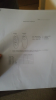
| Strain I | Strain II | |
| Agar | + | + |
| + amp | + | - |
| + Tet | - | + |
| + Kan | + | - |
| + Pen | - | + |
| + Kan +Tet | - | - |
| + Kan + Amp | + | - |
| + Tet + Amp | - | - |
| + Pen + Kan | - | - |
| + Tet + Pen | - | + |
Presence of an antibiotic in a medium leads to the damage and ultimate death of a bacterium. However if it has a resitant plasmid it can grow even in the presence of the antibiotic. For ex - In the presence of antibiotic ampicillin, Strain I could survive becuase it had a ampicillin resistance plasmid. But strain II couldn't survive because it had no ampicillin resistance plasmid. Similarly in cases of where two antibiotics are present, it needs to be seen if the bacteria has resistance to both the antibiotics present in media. If the bacterium doesn't have resistance to even any of the the antibiotics, then it may lead to its death. For ex - In the medium where both Ampicillin and tetracycline are present, neither of the strains survive because strain I doesn't have any resistance to Tetracycline and strain II doesn't carry any resistance to Ampicillin.
Add Answer to:
Strain ! Strain II Amper Pen = penicillinC = chromosome Kan = kanyomycin P = plasmid...
Name Jumping Genes Assignment #1 Strain 1 Strain II Tet tetracycline Van - vancomycin Amp =...
 Name Jumping Genes Assignment #1 Strain 1 Strain II Tet tetracycline Van - vancomycin Amp = ampicillin C chromosome P = plasmid r=resistance 1 Strains I and II are plated on confirmation plates. Fill in the table with a + or - according to whether you think the bacteria will grown on the plate () or not Strain Strain I Plan agar A + Amp Asar Tet Agar Van Agar - Van - Tel Ar Van + Amp Agar Tet+...
.2 . . .3 Agar + Kan Agar + Pen Agar + Kan + Tet Agar...
 .2 . . .3 Agar + Kan Agar + Pen Agar + Kan + Tet Agar + Kan + Amp Agar +Tet + Amp Agar + Pen +Kan Agar +Tet + Pen 2. Strains I and II undergo conjugation and colonies from the "mating plate are put on the following agar plates with antibiotics. Look at the results in the following table: 1 Strain III + E S Plain agar38832 Agar + Ampe SENS Agar +Tet Agar+Kan Agar-Pen 03 Agar...
Please answer these four questions. 6C. A type of plasmid used frequently as a vector in...
 Please answer these four questions.
6C. A type of plasmid used frequently as a vector in recombinant DNA procedures carries gene markers for resistance to tetracycline (Tet') and to ampicillin (Amp). In one experiment, such plasmids were exposed to a restriction enzyme that cuts within the Amp' gene but leaves the Tet' gene intact. Plasmids exposed to the enzyme were next mixed with genomic restriction fragments from a cloned library of mouse DNA. The aim was to produce and detect...
Please answer these four questions.
6C. A type of plasmid used frequently as a vector in recombinant DNA procedures carries gene markers for resistance to tetracycline (Tet') and to ampicillin (Amp). In one experiment, such plasmids were exposed to a restriction enzyme that cuts within the Amp' gene but leaves the Tet' gene intact. Plasmids exposed to the enzyme were next mixed with genomic restriction fragments from a cloned library of mouse DNA. The aim was to produce and detect...
1. Fill in the table above with what you observe on your plates. 2. Bacterial transformation...
 1. Fill in the table above with what you observe on your
plates.
2. Bacterial transformation occurred on which agar plate (s)?
What evidence do you have that the bacteria were transformed
here?
3. Which plates have glowing growth? Explain what causes
bacteria to glow.
II. Transformation of E. coli with Plasmid DNA (PGLO) 1. Three LB (Luria Broth) agar plates are obtained. The plates contain: • Plate A: LB-Agar/Ampicillin/Arabinose • Plate B: LB-Agar/Ampicillin • Plate C: LB-Agar 2. Three...
1. Fill in the table above with what you observe on your
plates.
2. Bacterial transformation occurred on which agar plate (s)?
What evidence do you have that the bacteria were transformed
here?
3. Which plates have glowing growth? Explain what causes
bacteria to glow.
II. Transformation of E. coli with Plasmid DNA (PGLO) 1. Three LB (Luria Broth) agar plates are obtained. The plates contain: • Plate A: LB-Agar/Ampicillin/Arabinose • Plate B: LB-Agar/Ampicillin • Plate C: LB-Agar 2. Three...
Protein P is synthesized in relatively high amounts in the human pancreas. This protein has been...
 Protein P is synthesized in relatively high amounts in the human pancreas. This protein has been isolated and purified, but its amino acid sequence has not been determined. We wish to clone the gene for protein P. (a) How can a probe be prepared to identify the gene for protein P? (b) If we have prepared a radioactive messenger RNA as our probe in part (a), how could we verify that it is the mRNA for protein P? (c) If...
LAB Genetic Engineering of Bacteria Problem Is it possible to transfer the allele for resistance to...
 LAB Genetic Engineering of Bacteria Problem Is it possible to transfer the allele for resistance to the antibiotic ampicillin into a bacterial cell? Objectives After completing this lab, the student will be able to: 1. Demonstrate micropipetting and sterile pipetting techniques for handling and transferring bacteria and plasmid DNA. 2. Maintain sterile conditions for culturing bacterial cells. 3. Inoculate bacteria into flasks, culture tubes, or agar plates. 4. Culture isolated individual colonies from an agar plate to form genetically identical...
LAB17 Genetic Engineering of Bacteria Problem Is it possible to transfer the allele for resistance to...
 LAB17 Genetic Engineering of Bacteria Problem Is it possible to transfer the allele for resistance to the antibiotic ampicillin into a bacterial cell? Objectives After completing this lab, the student will be able to: 1. Demonstrate micropipetting and sterile pipetting techniques for handling and transferring bacteria and plasmid DNA. 2. Maintain sterile conditions for culturing bacterial cells. 3. Inoculate bacteria into flasks, culture tubes, or agar plates. 4. Culture isolated individual colonies from an agar plate to form genetically identical...
Need help filling in the chart and answering the questions that go along with it. I...
 Need help filling in the chart and answering the questions
that go along with it. I have added the procedure and the
instructions as well as the "results" that are supposed to be used
to fill in the chart. Thank you!
We were unable to transcribe this imageTABLE 8-1 Cast of Characters and a Legend of Abbreviations Name Symbol Function in This Experiment Green fluorescent protein GFP It serves as an indicator of successful transformation and gene transcription expression in...
Need help filling in the chart and answering the questions
that go along with it. I have added the procedure and the
instructions as well as the "results" that are supposed to be used
to fill in the chart. Thank you!
We were unable to transcribe this imageTABLE 8-1 Cast of Characters and a Legend of Abbreviations Name Symbol Function in This Experiment Green fluorescent protein GFP It serves as an indicator of successful transformation and gene transcription expression in...
2 What is the minimum genotype of a recombinant cell that grew on minimal media supplemented...
 2 What is the minimum genotype of a recombinant cell that grew on minimal media supplemented with arginine, methionine and the antibiotic tetracycline but lacking the essential amino acid isoleucine 3 How would you determine if your recombinant cells had also acquired the tryptophan gene from the Hart Complete the following table indicating which of the organisms (F and/or Hfr used in this experiment would be expected to grow on the given media. Unless specified, MMD is just minimal medium...
Title: Development of an Adhesion Assay and Characterization of an Adhesion-Deficient Mutant of Pseudomonas fluorescens RESULTS...
Title: Development of an Adhesion Assay and Characterization of an Adhesion-Deficient Mutant of Pseudomonas fluorescens RESULTS Bacterial adhesion to sand columns. In the initial column assays with soil-and-sand mixtures, P. fluorescens PfO-1 and E. coli SLH25 had the highest and lowest adhesion values, respectively. Therefore, the sand column assay was optimized to yield the greatest difference in percent adhesion for these two strains. PfO-1 bacteria grown in minimal medium to the logarithmic phase were washed and suspended in either minimal...
 Name Jumping Genes Assignment #1 Strain 1 Strain II Tet tetracycline Van - vancomycin Amp = ampicillin C chromosome P = plasmid r=resistance 1 Strains I and II are plated on confirmation plates. Fill in the table with a + or - according to whether you think the bacteria will grown on the plate () or not Strain Strain I Plan agar A + Amp Asar Tet Agar Van Agar - Van - Tel Ar Van + Amp Agar Tet+...
 .2 . . .3 Agar + Kan Agar + Pen Agar + Kan + Tet Agar + Kan + Amp Agar +Tet + Amp Agar + Pen +Kan Agar +Tet + Pen 2. Strains I and II undergo conjugation and colonies from the "mating plate are put on the following agar plates with antibiotics. Look at the results in the following table: 1 Strain III + E S Plain agar38832 Agar + Ampe SENS Agar +Tet Agar+Kan Agar-Pen 03 Agar...
 Please answer these four questions.
6C. A type of plasmid used frequently as a vector in recombinant DNA procedures carries gene markers for resistance to tetracycline (Tet') and to ampicillin (Amp). In one experiment, such plasmids were exposed to a restriction enzyme that cuts within the Amp' gene but leaves the Tet' gene intact. Plasmids exposed to the enzyme were next mixed with genomic restriction fragments from a cloned library of mouse DNA. The aim was to produce and detect...
Please answer these four questions.
6C. A type of plasmid used frequently as a vector in recombinant DNA procedures carries gene markers for resistance to tetracycline (Tet') and to ampicillin (Amp). In one experiment, such plasmids were exposed to a restriction enzyme that cuts within the Amp' gene but leaves the Tet' gene intact. Plasmids exposed to the enzyme were next mixed with genomic restriction fragments from a cloned library of mouse DNA. The aim was to produce and detect...
 1. Fill in the table above with what you observe on your
plates.
2. Bacterial transformation occurred on which agar plate (s)?
What evidence do you have that the bacteria were transformed
here?
3. Which plates have glowing growth? Explain what causes
bacteria to glow.
II. Transformation of E. coli with Plasmid DNA (PGLO) 1. Three LB (Luria Broth) agar plates are obtained. The plates contain: • Plate A: LB-Agar/Ampicillin/Arabinose • Plate B: LB-Agar/Ampicillin • Plate C: LB-Agar 2. Three...
1. Fill in the table above with what you observe on your
plates.
2. Bacterial transformation occurred on which agar plate (s)?
What evidence do you have that the bacteria were transformed
here?
3. Which plates have glowing growth? Explain what causes
bacteria to glow.
II. Transformation of E. coli with Plasmid DNA (PGLO) 1. Three LB (Luria Broth) agar plates are obtained. The plates contain: • Plate A: LB-Agar/Ampicillin/Arabinose • Plate B: LB-Agar/Ampicillin • Plate C: LB-Agar 2. Three...
 Protein P is synthesized in relatively high amounts in the human pancreas. This protein has been isolated and purified, but its amino acid sequence has not been determined. We wish to clone the gene for protein P. (a) How can a probe be prepared to identify the gene for protein P? (b) If we have prepared a radioactive messenger RNA as our probe in part (a), how could we verify that it is the mRNA for protein P? (c) If...
 LAB Genetic Engineering of Bacteria Problem Is it possible to transfer the allele for resistance to the antibiotic ampicillin into a bacterial cell? Objectives After completing this lab, the student will be able to: 1. Demonstrate micropipetting and sterile pipetting techniques for handling and transferring bacteria and plasmid DNA. 2. Maintain sterile conditions for culturing bacterial cells. 3. Inoculate bacteria into flasks, culture tubes, or agar plates. 4. Culture isolated individual colonies from an agar plate to form genetically identical...
 LAB17 Genetic Engineering of Bacteria Problem Is it possible to transfer the allele for resistance to the antibiotic ampicillin into a bacterial cell? Objectives After completing this lab, the student will be able to: 1. Demonstrate micropipetting and sterile pipetting techniques for handling and transferring bacteria and plasmid DNA. 2. Maintain sterile conditions for culturing bacterial cells. 3. Inoculate bacteria into flasks, culture tubes, or agar plates. 4. Culture isolated individual colonies from an agar plate to form genetically identical...
 Need help filling in the chart and answering the questions
that go along with it. I have added the procedure and the
instructions as well as the "results" that are supposed to be used
to fill in the chart. Thank you!
We were unable to transcribe this imageTABLE 8-1 Cast of Characters and a Legend of Abbreviations Name Symbol Function in This Experiment Green fluorescent protein GFP It serves as an indicator of successful transformation and gene transcription expression in...
Need help filling in the chart and answering the questions
that go along with it. I have added the procedure and the
instructions as well as the "results" that are supposed to be used
to fill in the chart. Thank you!
We were unable to transcribe this imageTABLE 8-1 Cast of Characters and a Legend of Abbreviations Name Symbol Function in This Experiment Green fluorescent protein GFP It serves as an indicator of successful transformation and gene transcription expression in...
 2 What is the minimum genotype of a recombinant cell that grew on minimal media supplemented with arginine, methionine and the antibiotic tetracycline but lacking the essential amino acid isoleucine 3 How would you determine if your recombinant cells had also acquired the tryptophan gene from the Hart Complete the following table indicating which of the organisms (F and/or Hfr used in this experiment would be expected to grow on the given media. Unless specified, MMD is just minimal medium...
Most questions answered within 3 hours.
-
Where is the error in this code sequence?
String s1 = "Hello";
String s2 = "ello";...
asked 11 months ago -
Financial data for Joel de Paris, Inc., for last year
follow:
Joel de Paris, Inc.
Balance...
asked 11 months ago -
Consider this reaction:
Al2(SO4)3 (aq)+ BaCl3
(aq) Al2Cl6 (aq)- +
3BaSO4(s) . What is the...
asked 11 months ago -
Suppose that Savneet is considering increasing her
recent random sample from 20 car rentals to 40...
asked 11 months ago -
Trucks arrive at an unloading terminal at an average rate of 120
per hour.
Trucks arrive...
asked 11 months ago -
Why are methanol and ethanol completely soluble in water while
octanol is not very little soluble....
asked 11 months ago -
A facilities manager at a university reads in a research report
that the mean amount of...
asked 11 months ago -
When the CuSO4 is rehydrated by adding water to the anhydrous
compound, is this an endothermic...
asked 11 months ago -
A ray of sunlight is passing from diamond into crown glass; the
angle of incidence is...
asked 11 months ago -
A block of mass 0.249 kg is placed on top of a light, vertical
spring of...
asked 11 months ago -
how do the kidneys compensate in the presences of acidosis
a) trigger hyperventilate
b) reserve acid...
asked 11 months ago -
Question 501 pts
The rental rate of capital to the firm increases. Which of the
following...
asked 11 months ago