
Homework Answers
1. 
2.
3.
4.
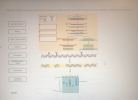
The above pictures represents prokaryotic DNA replication.
DNA replication is the biological process of synthesis of new daughter DNA molecule identical to the parental DNA.
Prokaryotes have single circular DNA. The DNA replication in prokaryotes is bidirectional. DNA replication starts at a specific point called origin of replication. DNA replication proceeds from 5' to 3' direction.
In prokaryotes DNA replication takes place in three steps.
- Initiation
- Elongation
- Termination
Initiation: this is the first step of the DNA replication. The DNA replication starts at a specific site called origin of replication. Prokaryotes have single origin of replication. The DNA open complex forms and DNA polymerase binds at open complex stars replication in both directions.
Elongation: in elongation DNA polymerase extend the existing DNA strand by incorporating dNTPs from 5' to 3' direction.
Termination : in termination the DNA replication will stop. The both replication forks will terminate at the tersites. After the two DNA moleces separates from each other.
Add Answer to:
Arrange the images in their proper order to review the process of bidirectional replication, Origin of...
arrange the following proteins in the proper order in which they participate in DNA replication. 1....
arrange the following proteins in the proper order in which they participate in DNA replication. 1. DNA primase 2. DNA helicase 3. DNA polymerase 4. DNA ligase
Please arrange the labels in their proper order with the images to assess your understanding of...
 Please arrange the labels in their proper order with the images to assess your understanding of the part of the Hershey-Chase experiment that identified DNA as the "infectious agent of virus particles. Radioactive T2 phage particles are used to infect new E. coll cells. After a brief treatment in a blender, a sample is centrifuged to separate cells from T2 phage "ghosts" (outer protein structure). Radioactivity is found inside infected cells and not in ghosts New T2 phage particles are...
tell the steps Place the images in the proper order to provide the correct mechanism of...
 tell the steps
Place the images in the proper order to provide the correct mechanism of carboxypeptidase A. Glu-T2 GU-72 H-105 HIS Hs 190 Ang-121- Net 2 $ Ang-127- NI NH. Arg 145 Arg. 146 Glu-270 G373 GT2 198 S No 121 27 NH - HN R Tel: Arg.14 OCH
tell the steps
Place the images in the proper order to provide the correct mechanism of carboxypeptidase A. Glu-T2 GU-72 H-105 HIS Hs 190 Ang-121- Net 2 $ Ang-127- NI NH. Arg 145 Arg. 146 Glu-270 G373 GT2 198 S No 121 27 NH - HN R Tel: Arg.14 OCH
12. You have cloned an origin of replication and are interested in identifying the proteins that...
 12. You have cloned an origin of replication and are interested
in identifying the proteins that bring about initiation of
replication. You find that proteins in a cell extract bind to your
origin. You fractionate the extract and identify three fractions,
X, Y and Z, that you believe contain proteins that directly or
indirectly bind to your origin. You carry out an EMSA experiment
and obtain the data shown in the figure below.
Which of the following (A-F) is order...
12. You have cloned an origin of replication and are interested
in identifying the proteins that bring about initiation of
replication. You find that proteins in a cell extract bind to your
origin. You fractionate the extract and identify three fractions,
X, Y and Z, that you believe contain proteins that directly or
indirectly bind to your origin. You carry out an EMSA experiment
and obtain the data shown in the figure below.
Which of the following (A-F) is order...
Label the images to review the process of polymerase chain reaction and how its products con...
 Label the images to review the process of polymerase chain reaction and how its products con be analyzed using gel electrophoresis Restriction ragments Priming Attracing postve charge Extension Size markers Repeling negative charge スハ 1000001 0000( Denaturation Restriction Reset
Meiosis I sequence Arrange the following events in the proper order in which they occur during...
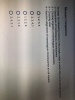 Meiosis I sequence Arrange the following events in the proper order in which they occur during melosis L Separation of homologous chromosomes 2 = Coming together of homologous chromosomes 3 = Crossing-over 4 = Random alignment of homologous chromosomes at cell equator O 1,2,3,4 O 2,3, 4,1 O 1,3, 2, 4 O 2,3, 1, 4 O 2,4, 3, 1 3
Arrange in proper order the events of the signal-transduction cascade for glycogen degradation in muscle. Muscle...
 Arrange in proper order the events of the signal-transduction cascade for glycogen degradation in muscle. Muscle contraction begins. Phosphorolysis of glycogen yields glucose l-phosphate. Answer Bank Phosphorylase kinase is phosphorylated on its and a subunits. Intracellular CAMP levels increase, which activates protein kinase A. Epinephrine is released and binds to muscle ß-adrenergic receptors. The stimulatory G, protein dissociates and activates adenylate cyclase. Phosphorylase kinase is partly activated by binding Ca2+ Glycogen phosphorylase b is converted to glycogen phosphorylase a.
1. a) (1 mark) Arrange these elements in order of increasing atomic radius, from smallest to...
 1. a) (1 mark) Arrange these elements in order of increasing atomic radius, from smallest to largest: Sb, S, Pb, Se Smallest smallest b) (1 mark) Arrange this isoelectronic series in order of increasing radius, from smallest to largest: Se?, Sr2*, Rb, Br Smallest Largest c) (1 mark) Arrange these elements in order of increasing first ionization energy, from smallest to largest: CI, S, Ge, Pb smallest < < < Largest NAME AND STUDENT NUMBER: 2. (4 marks) A molecule...
Review the Robatelli's Pizzeria Case Study. Ensure proper governance of Information Technology assets. Create a 700-...
Review the Robatelli's Pizzeria Case Study. Ensure proper governance of Information Technology assets. Create a 700- to 1,050-word risk assessment process for IT functions. Describe the objectives of governance of Information Technology and the general controls in an IT system. Include a test of control activity in each of the following five categories: Authentication Network security Physical security Organizational structure 5.Business continuity
Match the event or term with the proper process from the drop-down menu. Process terms may...
Match the event or term with the proper process from the drop-down menu. Process terms may be used once, more than once, or not at all. Group of answer choices are: [ Choose 1 answer per term] DNA replication G1 phase Post-translational processing Transcription G2 phase Post-transcriptional processing S phase Translation Mitosis ...
 Please arrange the labels in their proper order with the images to assess your understanding of the part of the Hershey-Chase experiment that identified DNA as the "infectious agent of virus particles. Radioactive T2 phage particles are used to infect new E. coll cells. After a brief treatment in a blender, a sample is centrifuged to separate cells from T2 phage "ghosts" (outer protein structure). Radioactivity is found inside infected cells and not in ghosts New T2 phage particles are...
 tell the steps
Place the images in the proper order to provide the correct mechanism of carboxypeptidase A. Glu-T2 GU-72 H-105 HIS Hs 190 Ang-121- Net 2 $ Ang-127- NI NH. Arg 145 Arg. 146 Glu-270 G373 GT2 198 S No 121 27 NH - HN R Tel: Arg.14 OCH
tell the steps
Place the images in the proper order to provide the correct mechanism of carboxypeptidase A. Glu-T2 GU-72 H-105 HIS Hs 190 Ang-121- Net 2 $ Ang-127- NI NH. Arg 145 Arg. 146 Glu-270 G373 GT2 198 S No 121 27 NH - HN R Tel: Arg.14 OCH
 12. You have cloned an origin of replication and are interested
in identifying the proteins that bring about initiation of
replication. You find that proteins in a cell extract bind to your
origin. You fractionate the extract and identify three fractions,
X, Y and Z, that you believe contain proteins that directly or
indirectly bind to your origin. You carry out an EMSA experiment
and obtain the data shown in the figure below.
Which of the following (A-F) is order...
12. You have cloned an origin of replication and are interested
in identifying the proteins that bring about initiation of
replication. You find that proteins in a cell extract bind to your
origin. You fractionate the extract and identify three fractions,
X, Y and Z, that you believe contain proteins that directly or
indirectly bind to your origin. You carry out an EMSA experiment
and obtain the data shown in the figure below.
Which of the following (A-F) is order...
 Label the images to review the process of polymerase chain reaction and how its products con be analyzed using gel electrophoresis Restriction ragments Priming Attracing postve charge Extension Size markers Repeling negative charge スハ 1000001 0000( Denaturation Restriction Reset
 Meiosis I sequence Arrange the following events in the proper order in which they occur during melosis L Separation of homologous chromosomes 2 = Coming together of homologous chromosomes 3 = Crossing-over 4 = Random alignment of homologous chromosomes at cell equator O 1,2,3,4 O 2,3, 4,1 O 1,3, 2, 4 O 2,3, 1, 4 O 2,4, 3, 1 3
 Arrange in proper order the events of the signal-transduction cascade for glycogen degradation in muscle. Muscle contraction begins. Phosphorolysis of glycogen yields glucose l-phosphate. Answer Bank Phosphorylase kinase is phosphorylated on its and a subunits. Intracellular CAMP levels increase, which activates protein kinase A. Epinephrine is released and binds to muscle ß-adrenergic receptors. The stimulatory G, protein dissociates and activates adenylate cyclase. Phosphorylase kinase is partly activated by binding Ca2+ Glycogen phosphorylase b is converted to glycogen phosphorylase a.
 1. a) (1 mark) Arrange these elements in order of increasing atomic radius, from smallest to largest: Sb, S, Pb, Se Smallest smallest b) (1 mark) Arrange this isoelectronic series in order of increasing radius, from smallest to largest: Se?, Sr2*, Rb, Br Smallest Largest c) (1 mark) Arrange these elements in order of increasing first ionization energy, from smallest to largest: CI, S, Ge, Pb smallest < < < Largest NAME AND STUDENT NUMBER: 2. (4 marks) A molecule...
Most questions answered within 3 hours.
-
Where is the error in this code sequence?
String s1 = "Hello";
String s2 = "ello";...
asked 11 months ago -
Financial data for Joel de Paris, Inc., for last year
follow:
Joel de Paris, Inc.
Balance...
asked 11 months ago -
Consider this reaction:
Al2(SO4)3 (aq)+ BaCl3
(aq) Al2Cl6 (aq)- +
3BaSO4(s) . What is the...
asked 11 months ago -
Suppose that Savneet is considering increasing her
recent random sample from 20 car rentals to 40...
asked 11 months ago -
Trucks arrive at an unloading terminal at an average rate of 120
per hour.
Trucks arrive...
asked 11 months ago -
Why are methanol and ethanol completely soluble in water while
octanol is not very little soluble....
asked 11 months ago -
A facilities manager at a university reads in a research report
that the mean amount of...
asked 11 months ago -
When the CuSO4 is rehydrated by adding water to the anhydrous
compound, is this an endothermic...
asked 11 months ago -
A ray of sunlight is passing from diamond into crown glass; the
angle of incidence is...
asked 11 months ago -
A block of mass 0.249 kg is placed on top of a light, vertical
spring of...
asked 11 months ago -
how do the kidneys compensate in the presences of acidosis
a) trigger hyperventilate
b) reserve acid...
asked 11 months ago -
Question 501 pts
The rental rate of capital to the firm increases. Which of the
following...
asked 11 months ago