
Homework Answers
![m = 8x4 * (6*0,0254)? * in = 18.24 #V, m/sec D=6inches D=6* 0.0254 m ㅍ putting it in en-eq - lin 40 18:24 * V *[ vsmo #M] =1](http://img.homeworklib.com/questions/43282520-ee7e-11eb-b104-ab8bddc9345d.png?x-oss-process=image/resize,w_560)
Add Answer to:
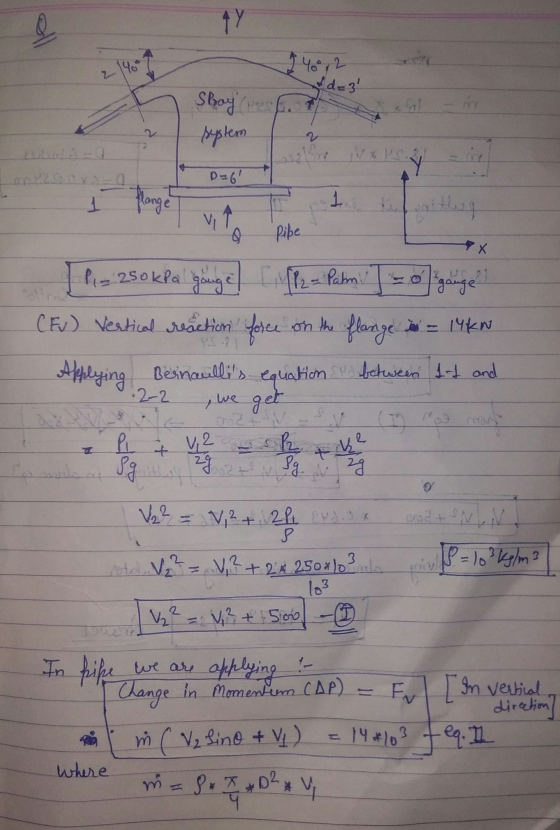
A
water spray system discharge water to the atmosphere. Water is
released to the atmosphere by...
g through a nozzle. The inlet pressure is p 3.7 kPa (gage) air flowing and the air exhausts into the atmosphere. The...
 g through a nozzle. The inlet pressure is p 3.7 kPa (gage) air flowing and the air exhausts into the atmosphere. The nozzle has an inlet diameter of 60 mm and an exit diameter of 10 mm, and the nozzle is connected to the supply pipe by flanges. Find the force required to hold the nozzle stationary. Assume the air has a constant density of 1.22 kg/m Neglect the weight of the nozzle. m Flanges Flow 2
g through a...
g through a nozzle. The inlet pressure is p 3.7 kPa (gage) air flowing and the air exhausts into the atmosphere. The nozzle has an inlet diameter of 60 mm and an exit diameter of 10 mm, and the nozzle is connected to the supply pipe by flanges. Find the force required to hold the nozzle stationary. Assume the air has a constant density of 1.22 kg/m Neglect the weight of the nozzle. m Flanges Flow 2
g through a...
Water is flows through a nozzle at a rate of 18 ft/s (Q) and discharge into...
 Water is flows through a nozzle at a rate of 18 ft/s (Q) and discharge into the atmosphere. The diameters Di 15 in. and D2- 5.5 in. The pressure measured at section 1 is P1-3100 1b/ft (gage). Determine the horizontal force required at the flange to hold the nozzle in place. Indicated the direction of the force (to the left or to the right). D2
Water at 60 °F flows through the elbow as shown below and is then injected to...
 Water at 60 °F flows through the elbow as shown below and is then injected to the atmosphere through a nozzle (on a horizontal plane). The pipe diameter is Di = 4 in. while the diameter of the exit of the nozzle is D2 = 1 in. At a flow rate of Q = 245 gpm, the gage pressure at the section (1) where the flange locates is Pi = 34 psig. Neglect the weight of the water and elbow,...
4. The discharge pressure gauge reading is 5 lb/in2 (psi) for the pumping system shown in the ske...
 4. The discharge pressure gauge reading is 5 lb/in2 (psi) for the pumping system shown in the sketch below, with the outlet nozzle discharging a 2-inch diameter stream of water directly to the atmosphere. The gauge pressure at the pump suction inlet at the point of incipient cavitation is (-2,071.12) lb/ft, i.e., for vapor pressure of water at 68° F of 50.54 lb/ft2 absolute, and standard atmospheric pressure 30 in Hg. Friction losses in the suction piping from the reservoir...
5.26 A nozzle is attached to a vertical pipe and discharges water into the atmosphere as...
 5.26 A nozzle is attached to a vertical pipe and discharges water into the atmosphere as shown in Fig. P5.26. When the discharge is 0.1 m/s, the gage pressure at the flange is 40 kPa. Determine the vertical component of the anchoring force required to hold the nozzle in place. The nozzle has a weight of 200 N, and the volume of water in the nozzle is 0.012 mº. Is the anchoring force directed upward or downward? 300 Area =...
8. Water at 15°C flows out of the elbow at 0.0153 m3/s. The water is discharged...
 8. Water at 15°C flows out of the elbow at 0.0153 m3/s. The water is discharged to the atmosphere at section 2. The pipe diameter is D1 = 100 mm and D2 = 30 mm. The pressure pi = 2.3 atm (gage). Neglect the weight of the elbow and the water within it. Neglect elevation change between 1 and 2. Determine the force on the flange bolts at section 1. (40 points)
Water is discharged through an elbow nozzle as shown below. PB - Patm ds The exit...
 Water is discharged through an elbow nozzle as shown below. PB - Patm ds The exit velocity VB = 30 ft/s, the inlet diameter da = 0.5 ft, the exit diameter dB = 0.25 ft. For water density, use p = 32.2 lb/ft = 1.94 lb/ft. Assume steady flow. Neglect the weight of the nozzle and the water in the nozzle. The mass flow rate through the nozzle is 2.86 slug/s 11.4 slug/s O 92.0 slug/s 18.8 slug/s Determine the...
QUESTION 5 A curved nozzle assembly that discharges to the atmosphere is shown. The nozzle mass...
 QUESTION 5 A curved nozzle assembly that discharges to the atmosphere is shown. The nozzle mass is 3 kg and its internal volume is 0.002 m3. The fluid is water. Determine the reaction force in x-direction Rx in unit of N exerted by the nozzle on the coupling to the inlet pipe. P1 =231 kPa absolute. D1 = 7 cm, D2 = 3 cm, angle = 250, V1=4.5 m/s. Round to the nearest one decimal place. V PI D у...
Water flows steadily through a curved duct that turns the flow through angle = 135 degrees,...
 Water flows steadily through a curved duct that turns the flow
through angle = 135 degrees, as shown in Fig. 3. The
cross-sectional area of the duct changes from A1 = 0.025 m2 at the
inlet to A2 = 0.05 m2 at the outlet. The average velocity at the
duct inlet is V1 = 6 m/s. The momentum flux correction factor may
be taken as 1 = 1.01 at the duct inlet and 2 = 1.03 at the its
outlet....
Water flows steadily through a curved duct that turns the flow
through angle = 135 degrees, as shown in Fig. 3. The
cross-sectional area of the duct changes from A1 = 0.025 m2 at the
inlet to A2 = 0.05 m2 at the outlet. The average velocity at the
duct inlet is V1 = 6 m/s. The momentum flux correction factor may
be taken as 1 = 1.01 at the duct inlet and 2 = 1.03 at the its
outlet....
The sketch shows a system used to spray polluted water into the air to increase the water's oxygen content and to cause volatile solvents in the 6. water to vaporize. The pressure at B of the...
 The sketch shows a system used to spray polluted water into the air to increase the water's oxygen content and to cause volatile solvents in the 6. water to vaporize. The pressure at B of the nozzle must be 25 psig for proper nozzle performance. The pressure at point A (the pump inlet) is -3.5 psig. The volume flow rate is 0.5 ft3/s. The dynamic viscosity of the fluid is 4.0 x 10 Ib-s/ft?. The specific gravity of the fluid...
 g through a nozzle. The inlet pressure is p 3.7 kPa (gage) air flowing and the air exhausts into the atmosphere. The nozzle has an inlet diameter of 60 mm and an exit diameter of 10 mm, and the nozzle is connected to the supply pipe by flanges. Find the force required to hold the nozzle stationary. Assume the air has a constant density of 1.22 kg/m Neglect the weight of the nozzle. m Flanges Flow 2
g through a...
g through a nozzle. The inlet pressure is p 3.7 kPa (gage) air flowing and the air exhausts into the atmosphere. The nozzle has an inlet diameter of 60 mm and an exit diameter of 10 mm, and the nozzle is connected to the supply pipe by flanges. Find the force required to hold the nozzle stationary. Assume the air has a constant density of 1.22 kg/m Neglect the weight of the nozzle. m Flanges Flow 2
g through a...
 Water is flows through a nozzle at a rate of 18 ft/s (Q) and discharge into the atmosphere. The diameters Di 15 in. and D2- 5.5 in. The pressure measured at section 1 is P1-3100 1b/ft (gage). Determine the horizontal force required at the flange to hold the nozzle in place. Indicated the direction of the force (to the left or to the right). D2
 Water at 60 °F flows through the elbow as shown below and is then injected to the atmosphere through a nozzle (on a horizontal plane). The pipe diameter is Di = 4 in. while the diameter of the exit of the nozzle is D2 = 1 in. At a flow rate of Q = 245 gpm, the gage pressure at the section (1) where the flange locates is Pi = 34 psig. Neglect the weight of the water and elbow,...
 4. The discharge pressure gauge reading is 5 lb/in2 (psi) for the pumping system shown in the sketch below, with the outlet nozzle discharging a 2-inch diameter stream of water directly to the atmosphere. The gauge pressure at the pump suction inlet at the point of incipient cavitation is (-2,071.12) lb/ft, i.e., for vapor pressure of water at 68° F of 50.54 lb/ft2 absolute, and standard atmospheric pressure 30 in Hg. Friction losses in the suction piping from the reservoir...
 5.26 A nozzle is attached to a vertical pipe and discharges water into the atmosphere as shown in Fig. P5.26. When the discharge is 0.1 m/s, the gage pressure at the flange is 40 kPa. Determine the vertical component of the anchoring force required to hold the nozzle in place. The nozzle has a weight of 200 N, and the volume of water in the nozzle is 0.012 mº. Is the anchoring force directed upward or downward? 300 Area =...
 8. Water at 15°C flows out of the elbow at 0.0153 m3/s. The water is discharged to the atmosphere at section 2. The pipe diameter is D1 = 100 mm and D2 = 30 mm. The pressure pi = 2.3 atm (gage). Neglect the weight of the elbow and the water within it. Neglect elevation change between 1 and 2. Determine the force on the flange bolts at section 1. (40 points)
 Water is discharged through an elbow nozzle as shown below. PB - Patm ds The exit velocity VB = 30 ft/s, the inlet diameter da = 0.5 ft, the exit diameter dB = 0.25 ft. For water density, use p = 32.2 lb/ft = 1.94 lb/ft. Assume steady flow. Neglect the weight of the nozzle and the water in the nozzle. The mass flow rate through the nozzle is 2.86 slug/s 11.4 slug/s O 92.0 slug/s 18.8 slug/s Determine the...
 QUESTION 5 A curved nozzle assembly that discharges to the atmosphere is shown. The nozzle mass is 3 kg and its internal volume is 0.002 m3. The fluid is water. Determine the reaction force in x-direction Rx in unit of N exerted by the nozzle on the coupling to the inlet pipe. P1 =231 kPa absolute. D1 = 7 cm, D2 = 3 cm, angle = 250, V1=4.5 m/s. Round to the nearest one decimal place. V PI D у...
 Water flows steadily through a curved duct that turns the flow
through angle = 135 degrees, as shown in Fig. 3. The
cross-sectional area of the duct changes from A1 = 0.025 m2 at the
inlet to A2 = 0.05 m2 at the outlet. The average velocity at the
duct inlet is V1 = 6 m/s. The momentum flux correction factor may
be taken as 1 = 1.01 at the duct inlet and 2 = 1.03 at the its
outlet....
Water flows steadily through a curved duct that turns the flow
through angle = 135 degrees, as shown in Fig. 3. The
cross-sectional area of the duct changes from A1 = 0.025 m2 at the
inlet to A2 = 0.05 m2 at the outlet. The average velocity at the
duct inlet is V1 = 6 m/s. The momentum flux correction factor may
be taken as 1 = 1.01 at the duct inlet and 2 = 1.03 at the its
outlet....
 The sketch shows a system used to spray polluted water into the air to increase the water's oxygen content and to cause volatile solvents in the 6. water to vaporize. The pressure at B of the nozzle must be 25 psig for proper nozzle performance. The pressure at point A (the pump inlet) is -3.5 psig. The volume flow rate is 0.5 ft3/s. The dynamic viscosity of the fluid is 4.0 x 10 Ib-s/ft?. The specific gravity of the fluid...
Most questions answered within 3 hours.
-
Where is the error in this code sequence?
String s1 = "Hello";
String s2 = "ello";...
asked 11 months ago -
Financial data for Joel de Paris, Inc., for last year
follow:
Joel de Paris, Inc.
Balance...
asked 11 months ago -
Consider this reaction:
Al2(SO4)3 (aq)+ BaCl3
(aq) Al2Cl6 (aq)- +
3BaSO4(s) . What is the...
asked 11 months ago -
Suppose that Savneet is considering increasing her
recent random sample from 20 car rentals to 40...
asked 11 months ago -
Trucks arrive at an unloading terminal at an average rate of 120
per hour.
Trucks arrive...
asked 11 months ago -
Why are methanol and ethanol completely soluble in water while
octanol is not very little soluble....
asked 11 months ago -
A facilities manager at a university reads in a research report
that the mean amount of...
asked 11 months ago -
When the CuSO4 is rehydrated by adding water to the anhydrous
compound, is this an endothermic...
asked 11 months ago -
A ray of sunlight is passing from diamond into crown glass; the
angle of incidence is...
asked 11 months ago -
A block of mass 0.249 kg is placed on top of a light, vertical
spring of...
asked 11 months ago -
how do the kidneys compensate in the presences of acidosis
a) trigger hyperventilate
b) reserve acid...
asked 11 months ago -
Question 501 pts
The rental rate of capital to the firm increases. Which of the
following...
asked 11 months ago