a.Several DNA motifs in proximal promoters are essential for the commencement of transcription from particular genes....
a.Several DNA motifs in proximal promoters are essential for the commencement of transcription from particular genes. What are two of these motifs and how do they function to promote transcription?
b.How do “basal” or “general” transcription factors compare with tissue- or cell-type specific transcription factors?
Homework Answers
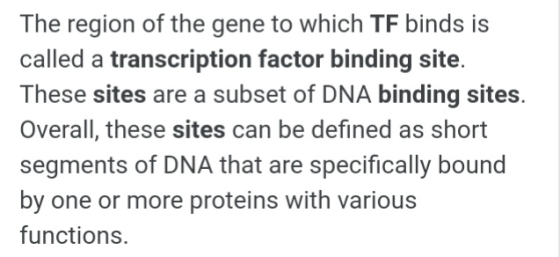
a) Motifs are short, recurring patterns in DNA are presume to have a biological function. They indicated sequence specific binding site for protein, such as NUCLEASES and TRANSCRIPTION FACTOR ( TF).
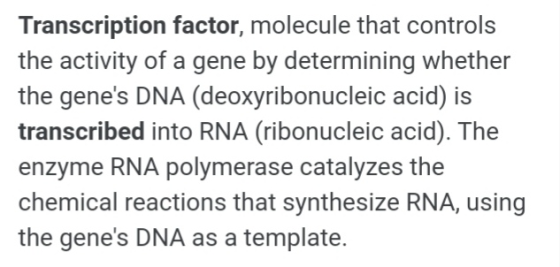
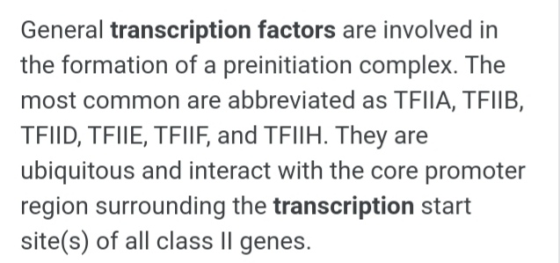
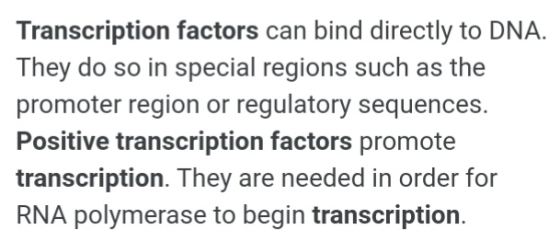
b) in comparison of prokaryotes, the eukaryotes and in humans there is an extra step. Rna polymerase can attach to pthe promotor only with the help of protein called basal (general) TF. They are part of cells core transcription toolkit needed for transcription of any gene.
However may TF not the general kind. Instead there is a large class of TF that control the expression of specific individual genes. For instance, a TF might activated only a set of gene needed a certain neuron.
Add Answer to:
a.Several DNA motifs in proximal promoters are essential
for the commencement of transcription from particular genes....
Which of the following is NOT a function of transcription that requires the activity from subunits...
 Which of the following is NOT a function of transcription that requires the activity from subunits of the Core RNA Palymerase? a. RNA polymerase activity that base-pairs and polymerizes nucleotides to make mRNA. b. Helicase activity that unwinds the double-stranded DNA molecule for transcription c. Specific recognition of -35 box and -10 box sites in the promoter region. d. General binding that helps RNA polymerase loosely adhere to DNA, before Transcription begins. Oe. Trick Question. The Core RNA polymerase can...
QUESTION 1 Hox genes are genes that code for transcription factors. What do transcription factors do?...
QUESTION 1 Hox genes are genes that code for transcription factors. What do transcription factors do? A. Bind to DNA to make it available for transcription B. Make up specific body parts C. Activate ribosomes QUESTION 2 Genes that need to be turned on at the same time (for example, the genes that encode the proteins that build toes) will all respond to the same transcription factor. A. True B. False QUESTION 3 Hox genes are sometimes called "master switches"....
In a recent study, the expression profiles for 6900 genes in normal and malignant breast tissues...
 In a recent study, the expression profiles for 6900 genes in normal and malignant breast tissues from rats were compared. RNA was extracted using the following tissues: a. breast tissue from virgin rats b. breast tissue from pregnant rats c. breast tissue from lactating rats d. breast carcinomas induced by the meat-derived carcinogen, PhIP e. breast carcinomas induced by the experimental carcinogen, DMBA Tissues a, b, c were grouped together as normal and tissues d, e were grouped as carcinoma...
Describe DNA microarray analysis to identify which genes are expressed at a particular developmental stage and...
Describe DNA microarray analysis to identify which genes are expressed at a particular developmental stage and in a particular cell type. What type of molecules should be attached to the microarray? What should be fluorescently labeled and be part of the hybridization solution? How can one determine when analyzing the results of such an experiment?
need to know correct answers 26. B. Which of the following enzymes is associated with the...
 need to know correct answers
26. B. Which of the following enzymes is associated with the repression of transcription? methyl transferase DNA polymerasex acetyl transferase histone kinase none of the above Section 2 - True/False (2 points each) 27. TFIIB regulates tissue or cell type-specific transcription 28._1 Eukaryotes have three different RNA polymerases that each can transcribe non-protein coding genes. 29. T The P site of the ribosome refers to peptidyl. be For T heoph UND 30._F_The input genetic material...
need to know correct answers
26. B. Which of the following enzymes is associated with the repression of transcription? methyl transferase DNA polymerasex acetyl transferase histone kinase none of the above Section 2 - True/False (2 points each) 27. TFIIB regulates tissue or cell type-specific transcription 28._1 Eukaryotes have three different RNA polymerases that each can transcribe non-protein coding genes. 29. T The P site of the ribosome refers to peptidyl. be For T heoph UND 30._F_The input genetic material...
The diagram below shows two stretches of DNA in the genome of an imaginary eukaryotic cell....
 The diagram below shows two stretches of DNA in the genome of an
imaginary eukaryotic cell. The top stretch of DNA includes the
fantasin gene, along with its promoter and one of its enhancers.
The bottom stretch of DNA includes the imaginin gene, its promoter,
and one of its enhancers. The slash marks (//) indicate that more
than 1,000 nucleotides separate the promoter and enhancer of each
gene
Which statements about the regulation of transcription
initiation in these genes are...
The diagram below shows two stretches of DNA in the genome of an
imaginary eukaryotic cell. The top stretch of DNA includes the
fantasin gene, along with its promoter and one of its enhancers.
The bottom stretch of DNA includes the imaginin gene, its promoter,
and one of its enhancers. The slash marks (//) indicate that more
than 1,000 nucleotides separate the promoter and enhancer of each
gene
Which statements about the regulation of transcription
initiation in these genes are...
1. trans-acting factors are able to regulate target genes from any chromosome, whereas cis-acting elements can...
1. trans-acting factors are able to regulate target genes from any chromosome, whereas cis-acting elements can only regulate genes located in the same chromosome. a. True only in operons. In Eukaryotic systems, trans-acting factors only regulate genes in the same chromosome. b. True only in Eukaryotes. Prokaryotes don’t have cis-acting elements. c. True for any organism. d. False. The statement is erroneous 2. Unlike activators, repressors never affect chromatin structure. Repressors inhibit transcription only by binding to the binding sites...
Transcription is the process of rewriting DNA. DNA molecules are made from 4 different nucleotides which...
Transcription is the process of rewriting DNA. DNA molecules are made from 4 different nucleotides which acts as building blocks. These building blocks are adenine, thymine, guanine and cytosine. When put together in different chemical combinations they become directions for the functions of the cell molecules which are primarily proteins. When a certain protein is needed, the RNA polymerase enzyme will find the gene for that particular protein and makes an RNA copy of it. DNA and RNA have similar...
Question 1 Match the term with the best definition or description; most topics relate to the...
 Question 1 Match the term with the best definition or description; most topics relate to the regulation of gene expression. General type of protein which will increase transcription rates when it attaches to a site A. Factor connected to a particular gene - B. Co-repressor C. Enhancer D. Promoter E. Structural F. Intron G. Activator H. Operator I. Basal transcription J. Glucocorticoid receptor K. Sigma factor L. Mediator M. Inducer N. TATA box O. Repressor The rates of mRNA produced...
NA Biology: Lab 5 & 6___________________________________________________________________ List steps to set up a gel and how to...
NA Biology: Lab 5 & 6___________________________________________________________________ List steps to set up a gel and how to run it (electrophoresis) Buffer, gel, wells, lane, band How to visualized DNA and how EtBr (ethidium bromide) works – intercalation Factors that affect how far the DNA runs (6 main factors) Know important abbreviation and nomenclature used: SNP, RFLP, RE, EcoRI, bp, kb Describe and know relationships between: DNA, Palindromes, SNP, RFLP, RE Identify a palindrome and how many pieces of DNA would result...
 Which of the following is NOT a function of transcription that requires the activity from subunits of the Core RNA Palymerase? a. RNA polymerase activity that base-pairs and polymerizes nucleotides to make mRNA. b. Helicase activity that unwinds the double-stranded DNA molecule for transcription c. Specific recognition of -35 box and -10 box sites in the promoter region. d. General binding that helps RNA polymerase loosely adhere to DNA, before Transcription begins. Oe. Trick Question. The Core RNA polymerase can...
 In a recent study, the expression profiles for 6900 genes in normal and malignant breast tissues from rats were compared. RNA was extracted using the following tissues: a. breast tissue from virgin rats b. breast tissue from pregnant rats c. breast tissue from lactating rats d. breast carcinomas induced by the meat-derived carcinogen, PhIP e. breast carcinomas induced by the experimental carcinogen, DMBA Tissues a, b, c were grouped together as normal and tissues d, e were grouped as carcinoma...
 need to know correct answers
26. B. Which of the following enzymes is associated with the repression of transcription? methyl transferase DNA polymerasex acetyl transferase histone kinase none of the above Section 2 - True/False (2 points each) 27. TFIIB regulates tissue or cell type-specific transcription 28._1 Eukaryotes have three different RNA polymerases that each can transcribe non-protein coding genes. 29. T The P site of the ribosome refers to peptidyl. be For T heoph UND 30._F_The input genetic material...
need to know correct answers
26. B. Which of the following enzymes is associated with the repression of transcription? methyl transferase DNA polymerasex acetyl transferase histone kinase none of the above Section 2 - True/False (2 points each) 27. TFIIB regulates tissue or cell type-specific transcription 28._1 Eukaryotes have three different RNA polymerases that each can transcribe non-protein coding genes. 29. T The P site of the ribosome refers to peptidyl. be For T heoph UND 30._F_The input genetic material...
 The diagram below shows two stretches of DNA in the genome of an
imaginary eukaryotic cell. The top stretch of DNA includes the
fantasin gene, along with its promoter and one of its enhancers.
The bottom stretch of DNA includes the imaginin gene, its promoter,
and one of its enhancers. The slash marks (//) indicate that more
than 1,000 nucleotides separate the promoter and enhancer of each
gene
Which statements about the regulation of transcription
initiation in these genes are...
The diagram below shows two stretches of DNA in the genome of an
imaginary eukaryotic cell. The top stretch of DNA includes the
fantasin gene, along with its promoter and one of its enhancers.
The bottom stretch of DNA includes the imaginin gene, its promoter,
and one of its enhancers. The slash marks (//) indicate that more
than 1,000 nucleotides separate the promoter and enhancer of each
gene
Which statements about the regulation of transcription
initiation in these genes are...
 Question 1 Match the term with the best definition or description; most topics relate to the regulation of gene expression. General type of protein which will increase transcription rates when it attaches to a site A. Factor connected to a particular gene - B. Co-repressor C. Enhancer D. Promoter E. Structural F. Intron G. Activator H. Operator I. Basal transcription J. Glucocorticoid receptor K. Sigma factor L. Mediator M. Inducer N. TATA box O. Repressor The rates of mRNA produced...
Most questions answered within 3 hours.
-
Where is the error in this code sequence?
String s1 = "Hello";
String s2 = "ello";...
asked 11 months ago -
Financial data for Joel de Paris, Inc., for last year
follow:
Joel de Paris, Inc.
Balance...
asked 11 months ago -
Consider this reaction:
Al2(SO4)3 (aq)+ BaCl3
(aq) Al2Cl6 (aq)- +
3BaSO4(s) . What is the...
asked 11 months ago -
Suppose that Savneet is considering increasing her
recent random sample from 20 car rentals to 40...
asked 11 months ago -
Trucks arrive at an unloading terminal at an average rate of 120
per hour.
Trucks arrive...
asked 11 months ago -
Why are methanol and ethanol completely soluble in water while
octanol is not very little soluble....
asked 11 months ago -
A facilities manager at a university reads in a research report
that the mean amount of...
asked 11 months ago -
When the CuSO4 is rehydrated by adding water to the anhydrous
compound, is this an endothermic...
asked 11 months ago -
A ray of sunlight is passing from diamond into crown glass; the
angle of incidence is...
asked 11 months ago -
A block of mass 0.249 kg is placed on top of a light, vertical
spring of...
asked 11 months ago -
how do the kidneys compensate in the presences of acidosis
a) trigger hyperventilate
b) reserve acid...
asked 11 months ago -
Question 501 pts
The rental rate of capital to the firm increases. Which of the
following...
asked 11 months ago