1a) The genes of eukaryotic cells contain intervening sequences or Introns; in mammals the vast majority...
1a) The genes of eukaryotic cells contain intervening sequences or Introns; in mammals the vast majority of protein encoding genes have introns with some genes containing over 60. Discuss at least two functions of introns in mammalian genes. b) Do prokaryotic cells have introns? Why? (think about your answer in “a”). c) Describe the role (not the mechanism, but more of the basic function) of SnRNPs in the removal of introns from primary mRNA transcripts, i.e. what do the SnRNPs actually do in the splicesome
Homework Answers
Answer: This question i have to write pointswise,because it's easy to understand you...
a):
- Introns are known to have many functions in eukayotic genome though they donot code proteins.
- Few are direct where as few are indirect in gene expression regulation.
- They are important for regulation of alternative splicing.
- Alternative splicing is a molecular mechanism of producing different proteins from the same gene in a eukaryotic cell.
- Introns contain small or short sequences that are important for efficient splicing, like acceptor, donor and branch points.
- Some Introns are known to enhance the gene expression using Intron mediated enhancement.
- In particular the intron should be present in the transcribed region of the gene for the enhancement to occur, differentiating this from the action of typical transcriptional enhancers.
b):
- The reason that prokaryotic cells don't have introns is the mechanism of translation and transcription are coupled and hence there is no space for splicing if introns are present.
- Also prokaryotic genes are organised into operons and multiple proteins are produced from multiple adjacent genes there is no need of complex regulatory system.
c):
- snRNPs contain proteins and snRNAs also called as small nuclear RNA.
- The snRNA component of the snRNP gives it the specificity to individual introns by recognising the critical signal sequences at 5' 3' and branch sites of the introns.
- Just like ribosome the spliceosome also involves base pairing of the RNA sequence to be spliced with the RNAs of the snRNPs.
- Some proteins are directly involved in splicing the RNA while others are needed for structural binding and attachment of introns.
Please Rate My Answer.........Thank........u...
Add Answer to:
1a) The genes of eukaryotic cells contain intervening sequences
or Introns; in mammals the vast majority...
It had always been assumedthat eukaryotic genes were similar in organization to prokaryotic genes. However, modern tech...
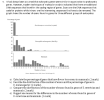 It had always been assumedthat eukaryotic genes were similar in organization to prokaryotic genes. However, modern techniques of molecular analysis indicated that there areadditional DNA sequences that lie within the coding region of genes, Exons are the DNA sequences that code for proteins while introns are the intervening sequences that have to be removed. The graph shows the number of exons found in genes for three different groups of eukaryotes. 5. Percentage of genes 100 80 Saccharomyees cevevisiae (a yeast)...
Operons are unique to prokaryotic organisms; the genomes of eukaryotic cells do not contain operons. Which...
Operons are unique to prokaryotic organisms; the genomes of eukaryotic cells do not contain operons. Which of these explains why operons are useful to prokaryotes? Genes encoded by operons are more accessible to RNA polymerase than other genes. RNA polymerase can transcribe more quickly when genes are located within operons. Encoding genes in operons allows the synchronous transcription of genes with related functions. Operons are not highly regulated and this simplicity is an advantage for prokaryotic organisms.
In humans, there are about 200 different types of cells. Why are your liver cells different...
 In humans, there are about 200 different types of cells. Why are your liver cells different from skin cells, or neurons, or muscle cells? During development, each cell accumulates different mutations changing their DNA They produce the same proteins but some of those proteins are denatured in each cell They have different DNA and thus, each cell produces different proteins They produce the same kind of proteins but not all proteins are active in each cell They have the same...
Yet, all the cells in your body contain the same genes (and same alleles). The difference...
 Yet, all the cells in your body contain the same
genes (and same alleles). The difference across cell types
is that genes get selectively expressed (turned on or off)
based on the proteins needed for cellular function given their
environment.
Select which statement explains the reason why hair does not
normally grow on your muscle cells.
a.
Muscle cells have the gene for keratin, but do not express
it
b.
Muscle cells do not have the gene for keratin and...
Yet, all the cells in your body contain the same
genes (and same alleles). The difference across cell types
is that genes get selectively expressed (turned on or off)
based on the proteins needed for cellular function given their
environment.
Select which statement explains the reason why hair does not
normally grow on your muscle cells.
a.
Muscle cells have the gene for keratin, but do not express
it
b.
Muscle cells do not have the gene for keratin and...
Prokaryotic mRNA usually encodes for more than one protein while eukaryotic mRNA a single protein. Eukaryotic...
 Prokaryotic mRNA usually encodes for more than one protein while eukaryotic mRNA a single protein. Eukaryotic DNA is linear and bacterial and archaeal DNA is-linear. In prokaryotes, ribosomes attach to the mRNA and start protein synthesis even before transcription is completed. Eukaryotic mRNA, rRNA, and tRNA are all highway processed. Nuclear pore complexes control the entry and exit to and from the nucleus. They will not let mRNA exit the nucleus before it is full processed. Eukaryotic and archaeal DNA...
Of: a) NA as the site s eukaryotic cells become more specialized, the nucleus is NOT important sy...
 PLEASE ANSWER ALL
of: a) NA as the site s eukaryotic cells become more specialized, the nucleus is NOT important synthesis. b) Changes in the regulation of genes, c) DNA mutation, d) synthesis of mRNA, e) Golgi apparatus synthesis 4. Which of the following is associated with Co-enzyme A by the membrane of the mitochondrion for use in the Krebs cycle? a) proteins, b) amino acids, c) fatty acids, d) pyruvate e) glycogen 5. Which is NOT a characteristic of...
PLEASE ANSWER ALL
of: a) NA as the site s eukaryotic cells become more specialized, the nucleus is NOT important synthesis. b) Changes in the regulation of genes, c) DNA mutation, d) synthesis of mRNA, e) Golgi apparatus synthesis 4. Which of the following is associated with Co-enzyme A by the membrane of the mitochondrion for use in the Krebs cycle? a) proteins, b) amino acids, c) fatty acids, d) pyruvate e) glycogen 5. Which is NOT a characteristic of...
A) An Operon is:? 1- A gene that affect another gene transcription. 2. A gene coding...
A) An Operon is:? 1- A gene that affect another gene transcription. 2. A gene coding for a metabolic pathway. 3. A protein that blockgene expression. 4. A set of genes under the control of one promoter. B )- In bacteria the Lac Operon genes code for proteins that break down.? 1- Arabinose 2- Lactose 3- Galactose 4- Glucose C )mRNA processing involves removal of .......? 1- Introns 2- The poly-A tail 3- The 5' cap 4- Exons D )...
Genes in eukaryotes are often organized into exons and intrans, which require splicing to produce an...
Genes in eukaryotes are often organized into exons and intrans, which require splicing to produce an mRNA that can be translated. The gene organization is the order of the DNA segments that comprise the gene starting with the promoter, the first exon, the first intron, the second exon, and so on. The interspersed intrans can make gene identification difficult in eukaryotesparticularly in higher eukaryotes with many introns and alternative spliced mRNAs. Prediction of many genes and their organization has been...
Which of the following statements is true? A. RNA polymerase has a proofreading activity B. Prokaryotic...
 Which of the following statements is true? A. RNA polymerase has a proofreading activity B. Prokaryotic RNA usually undergoes nuclear processing C. Polypeptides are synthesized by addition of amino acids to the amino terminus. D. The 3' end of mRNA corresponds to the carboxyl terminus of the protein. Grade 2. Which of the following A. It may be autocatalytic. B. Spliceosomes are present in organelles and nuclei C. It involves removal of exons is true regarding RNA processing? D. It...
Below is a series of events involved in the mechanism of forming a retrotransposon. Place these...
 Below is a series of events involved in the mechanism of forming a retrotransposon. Place these steps in the correct order 1. the DNA copy is made double-stranded 2. DNA of the transposable element is transcribed 3. The DNA of the transposable element is integrated into a target DNA site 4. The RNA is reverse transcribed by reverse transcriptase, producing a complementary DNA 4,2,3,1 3,2,4,1 2,4,1,3 4,2,1,3 1,2,3,4 What is the function of the poly(A) tail on most mRNAs To...
 It had always been assumedthat eukaryotic genes were similar in organization to prokaryotic genes. However, modern techniques of molecular analysis indicated that there areadditional DNA sequences that lie within the coding region of genes, Exons are the DNA sequences that code for proteins while introns are the intervening sequences that have to be removed. The graph shows the number of exons found in genes for three different groups of eukaryotes. 5. Percentage of genes 100 80 Saccharomyees cevevisiae (a yeast)...
 In humans, there are about 200 different types of cells. Why are your liver cells different from skin cells, or neurons, or muscle cells? During development, each cell accumulates different mutations changing their DNA They produce the same proteins but some of those proteins are denatured in each cell They have different DNA and thus, each cell produces different proteins They produce the same kind of proteins but not all proteins are active in each cell They have the same...
 Yet, all the cells in your body contain the same
genes (and same alleles). The difference across cell types
is that genes get selectively expressed (turned on or off)
based on the proteins needed for cellular function given their
environment.
Select which statement explains the reason why hair does not
normally grow on your muscle cells.
a.
Muscle cells have the gene for keratin, but do not express
it
b.
Muscle cells do not have the gene for keratin and...
Yet, all the cells in your body contain the same
genes (and same alleles). The difference across cell types
is that genes get selectively expressed (turned on or off)
based on the proteins needed for cellular function given their
environment.
Select which statement explains the reason why hair does not
normally grow on your muscle cells.
a.
Muscle cells have the gene for keratin, but do not express
it
b.
Muscle cells do not have the gene for keratin and...
 Prokaryotic mRNA usually encodes for more than one protein while eukaryotic mRNA a single protein. Eukaryotic DNA is linear and bacterial and archaeal DNA is-linear. In prokaryotes, ribosomes attach to the mRNA and start protein synthesis even before transcription is completed. Eukaryotic mRNA, rRNA, and tRNA are all highway processed. Nuclear pore complexes control the entry and exit to and from the nucleus. They will not let mRNA exit the nucleus before it is full processed. Eukaryotic and archaeal DNA...
 PLEASE ANSWER ALL
of: a) NA as the site s eukaryotic cells become more specialized, the nucleus is NOT important synthesis. b) Changes in the regulation of genes, c) DNA mutation, d) synthesis of mRNA, e) Golgi apparatus synthesis 4. Which of the following is associated with Co-enzyme A by the membrane of the mitochondrion for use in the Krebs cycle? a) proteins, b) amino acids, c) fatty acids, d) pyruvate e) glycogen 5. Which is NOT a characteristic of...
PLEASE ANSWER ALL
of: a) NA as the site s eukaryotic cells become more specialized, the nucleus is NOT important synthesis. b) Changes in the regulation of genes, c) DNA mutation, d) synthesis of mRNA, e) Golgi apparatus synthesis 4. Which of the following is associated with Co-enzyme A by the membrane of the mitochondrion for use in the Krebs cycle? a) proteins, b) amino acids, c) fatty acids, d) pyruvate e) glycogen 5. Which is NOT a characteristic of...
 Which of the following statements is true? A. RNA polymerase has a proofreading activity B. Prokaryotic RNA usually undergoes nuclear processing C. Polypeptides are synthesized by addition of amino acids to the amino terminus. D. The 3' end of mRNA corresponds to the carboxyl terminus of the protein. Grade 2. Which of the following A. It may be autocatalytic. B. Spliceosomes are present in organelles and nuclei C. It involves removal of exons is true regarding RNA processing? D. It...
 Below is a series of events involved in the mechanism of forming a retrotransposon. Place these steps in the correct order 1. the DNA copy is made double-stranded 2. DNA of the transposable element is transcribed 3. The DNA of the transposable element is integrated into a target DNA site 4. The RNA is reverse transcribed by reverse transcriptase, producing a complementary DNA 4,2,3,1 3,2,4,1 2,4,1,3 4,2,1,3 1,2,3,4 What is the function of the poly(A) tail on most mRNAs To...
Most questions answered within 3 hours.
-
Where is the error in this code sequence?
String s1 = "Hello";
String s2 = "ello";...
asked 11 months ago -
Financial data for Joel de Paris, Inc., for last year
follow:
Joel de Paris, Inc.
Balance...
asked 11 months ago -
Consider this reaction:
Al2(SO4)3 (aq)+ BaCl3
(aq) Al2Cl6 (aq)- +
3BaSO4(s) . What is the...
asked 11 months ago -
Suppose that Savneet is considering increasing her
recent random sample from 20 car rentals to 40...
asked 11 months ago -
Trucks arrive at an unloading terminal at an average rate of 120
per hour.
Trucks arrive...
asked 11 months ago -
Why are methanol and ethanol completely soluble in water while
octanol is not very little soluble....
asked 11 months ago -
A facilities manager at a university reads in a research report
that the mean amount of...
asked 11 months ago -
When the CuSO4 is rehydrated by adding water to the anhydrous
compound, is this an endothermic...
asked 11 months ago -
A ray of sunlight is passing from diamond into crown glass; the
angle of incidence is...
asked 11 months ago -
A block of mass 0.249 kg is placed on top of a light, vertical
spring of...
asked 11 months ago -
how do the kidneys compensate in the presences of acidosis
a) trigger hyperventilate
b) reserve acid...
asked 11 months ago -
Question 501 pts
The rental rate of capital to the firm increases. Which of the
following...
asked 11 months ago