Know the major components of the CNS, and the general functions of each, featuring the forebrain...
Know the major components of the CNS, and the general functions of each, featuring the forebrain (and all its subdivisions) and spinal cord. Explain your answer.
Homework Answers
Together,the brain and the spinal cord are known as the Central Nervous System (CNS).
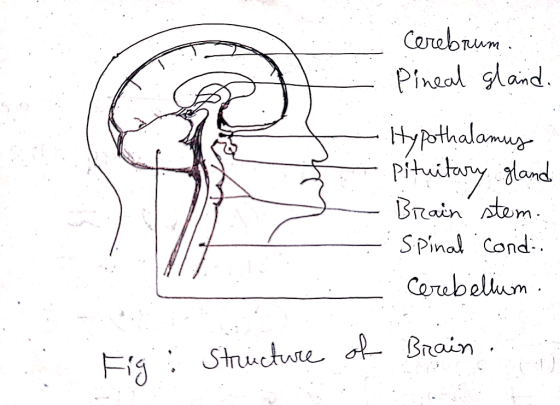
Brain- Brain is the body's control centre.It constantly receives and interprets nerve signals from the body and sends new signals based on this information.Different part of the brain control movement,speech, emotions, consciousness and internal body function such as heart rate, breathing and body temperature.
Forebrain- The largest region of the brain is the forebrain (derived from the developmental prosencephalon) which contains the entire Cerebrum and several structures directly nestled within it - the thalamus, hypothalamus,pineal gland and limbic system.
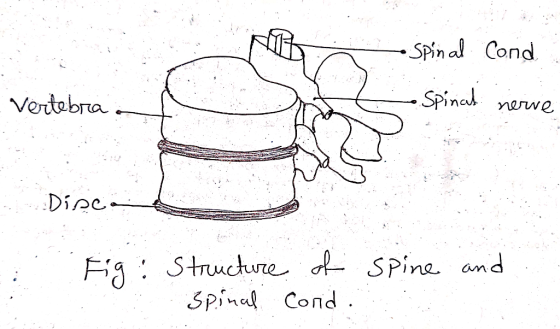
Spinal cord- The spine is made up of 26 bones divided into five sections.These bones surround and protect the spinal cord , include 24 vertebrae (Cervical,thoracic,lumbar), the sacrum and coccyx.
Spinal cord is a thick column of nerves surrounded by vertebrae that runs from the brain stem to the lumbar region of the spine. Like the brain,it has both grey and white matter.
The spinal cord sends information between the brain and most of the body through the spinal nerves.
Add Answer to:
Know the major components of the CNS, and the general functions
of each, featuring the forebrain...
Identify the major anatomical components of the cardiovascular and respiratory systems and explain their functions.
Identify the major anatomical components of the cardiovascular and respiratory systems and explain their functions.
28. Identify and describe the functions of the major components of the human male and female...
28. Identify and describe the functions of the major components of the human male and female reproductive systems.detail answer
Body System Checklist Circulatory System • Major functions of circulatory system • Diagram that includes the...
Body System Checklist Circulatory System • Major functions of circulatory system • Diagram that includes the major parts - heart, artery, vein, capillary - and list the function(s) of each. • Describe each of the components of blood- red blood cells, white blood cells, platelets, & plasma • Describe the path blood travels through your body • Explain how your body system works with other systems in the body. Use 2 examples. • Find 5 fun facts about your body...
what are the major components of a human. resources management system? explain each of them.
what are the major components of a human. resources management system? explain each of them.
1. A. Name the three planes and the positions they each describe to identify a unique...
1. A. Name the three planes and the positions they each describe to identify a unique position in the human body. B. Name the two major ventral body cavities plus the major organs found in them. C. Name the cavities that the heart and lungs reside in. D. Finally, list the six levels of organization in nature. 2. A. Describe the three components of an atom in terms of charge and location. Define atomic mass and atomic number. B. For...
SILIST wers Wbe use Part B: Match the organ sys points each), ystem to its components...
 SILIST wers Wbe use Part B: Match the organ sys points each), ystem to its components or function. Not all answe A. Integumentary B. Endocrine C. Cardiovascular D. Digestive 1. Reproductive J. Skeletal K. Respiratory E. Nervous F. Muscular G. Lymphatic/Immune H. Urinary 1. is composed of bones only. _ 2. produces 3. Includes mout 4. carries produces body movements, such as walking udes mouth, pharynx, esophagus, colon, rectum and anus organs carries oxygen and nutrients to cells and carbon...
Question 4 (25 marks) What are the components of the general environment? How does each affect...
 Question 4 (25 marks) What are the components of the general environment? How does each affect the strategy of a firm? Fully explain and illustrate with a local example
Describe the three general components of total rewards compensation and give an example of each. The...
Describe the three general components of total rewards compensation and give an example of each. The FLSA regulates major areas such as minimum wage, child labor and overtime. What policies could be developed to help facilitate compliance with the FLSA? Why do you think employers would want to classify someone as an independent contractor vs. an employee? What are the three primary guidelines the IRS uses to qualify someone as an independent contractor?
Chapter 7-Vitamins Chapter 7 Short Answer Questions 1. List the 5 general functions of vitamins. Explain...
 Chapter 7-Vitamins Chapter 7 Short Answer Questions 1. List the 5 general functions of vitamins. Explain the 3 other functions of vitamins. 2. Explain why vitamins A, D, E, and K are called fat-soluble vitamins, and why B and C are called water- soluble 3. Which vitamin is considered the sunshine vitamin? 4. Which vitamin is given to newborns to prevent hemorrhage after the umbilical cord is cut? 5. Which vitamin is considered the "iron enhancer"? 6. Identify 4 functions...
Fill-in-the-Blank Questions 1) The ________ functions as the sensory area for touch, vision, hearing, and olfaction...
Fill-in-the-Blank Questions 1) The ________ functions as the sensory area for touch, vision, hearing, and olfaction as well as association areas for interpreting sensations, language, thinking, decision making, self-awareness, creativity, and storing memories. 2) ________ memory stores large amounts of information for hours, days, or years. 3) The thin outer layer (1- to 2-mm thick) of each hemisphere of the brain that serves to increase the surface area by being arranged in a folded manner is called the ________. 4)...
 SILIST wers Wbe use Part B: Match the organ sys points each), ystem to its components or function. Not all answe A. Integumentary B. Endocrine C. Cardiovascular D. Digestive 1. Reproductive J. Skeletal K. Respiratory E. Nervous F. Muscular G. Lymphatic/Immune H. Urinary 1. is composed of bones only. _ 2. produces 3. Includes mout 4. carries produces body movements, such as walking udes mouth, pharynx, esophagus, colon, rectum and anus organs carries oxygen and nutrients to cells and carbon...
 Question 4 (25 marks) What are the components of the general environment? How does each affect the strategy of a firm? Fully explain and illustrate with a local example
 Chapter 7-Vitamins Chapter 7 Short Answer Questions 1. List the 5 general functions of vitamins. Explain the 3 other functions of vitamins. 2. Explain why vitamins A, D, E, and K are called fat-soluble vitamins, and why B and C are called water- soluble 3. Which vitamin is considered the sunshine vitamin? 4. Which vitamin is given to newborns to prevent hemorrhage after the umbilical cord is cut? 5. Which vitamin is considered the "iron enhancer"? 6. Identify 4 functions...
Most questions answered within 3 hours.
-
Where is the error in this code sequence?
String s1 = "Hello";
String s2 = "ello";...
asked 11 months ago -
Financial data for Joel de Paris, Inc., for last year
follow:
Joel de Paris, Inc.
Balance...
asked 11 months ago -
Consider this reaction:
Al2(SO4)3 (aq)+ BaCl3
(aq) Al2Cl6 (aq)- +
3BaSO4(s) . What is the...
asked 11 months ago -
Suppose that Savneet is considering increasing her
recent random sample from 20 car rentals to 40...
asked 11 months ago -
Trucks arrive at an unloading terminal at an average rate of 120
per hour.
Trucks arrive...
asked 11 months ago -
Why are methanol and ethanol completely soluble in water while
octanol is not very little soluble....
asked 11 months ago -
A facilities manager at a university reads in a research report
that the mean amount of...
asked 11 months ago -
When the CuSO4 is rehydrated by adding water to the anhydrous
compound, is this an endothermic...
asked 11 months ago -
A ray of sunlight is passing from diamond into crown glass; the
angle of incidence is...
asked 11 months ago -
A block of mass 0.249 kg is placed on top of a light, vertical
spring of...
asked 11 months ago -
how do the kidneys compensate in the presences of acidosis
a) trigger hyperventilate
b) reserve acid...
asked 11 months ago -
Question 501 pts
The rental rate of capital to the firm increases. Which of the
following...
asked 11 months ago