The movement of glucose into the cell, against its concentration gradient, can be powered by the...
The movement of glucose into the cell, against its concentration gradient, can be powered by the co-transport of Na+ into the cell. Explain this movement with respect to the net entropy of the system (i.e. thermodynamics).
Homework Answers
Answer: This question i have to write pointswise,because it'e asy to understand you....
- There are two factors at play here.
- One is the thermodynamic. deltaG which is based on concentration gradients.
- The value for this is positive because you are going against the concentration.
- The other factor is electrostatic. z*F*deltaPsi
- The value for this is more negative than the above positive value. This is because the net charge inside the cell is negative, thus it is favorable to bring an overall net positive charge (Na+ is positive and Glc is neutral) inside.
- The favorability of going with the electrostatic gradient (moving a positive charge Na+, from a highly positive place to a highly negative place) is much more favorable than moving it against its concentration gradient.
-
Thus the net is a negative deltaG which means transport is favorable.
Please Rate My Answer......Thank.....u....
Add Answer to:
The movement of glucose into the cell, against its concentration
gradient, can be powered by the...
moving a large molecule such as glucose against its own concentration gradient and in the opposite...
 moving a large molecule such as glucose against its own
concentration gradient and in the opposite direction of passive
diffusion of NA+ is
Moving a large molecule such as glucose against its own concentration gradient and in the opposite direction of passive diffusion of Natis: Co-Transport B. Facilitated Diffusion c Primary Active Transport Counter-Transport
moving a large molecule such as glucose against its own
concentration gradient and in the opposite direction of passive
diffusion of NA+ is
Moving a large molecule such as glucose against its own concentration gradient and in the opposite direction of passive diffusion of Natis: Co-Transport B. Facilitated Diffusion c Primary Active Transport Counter-Transport
5/2400 Resources Give Up Hint Intestinal epithelial cells pump glucose into the cell against its concentration grad...
 5/2400 Resources Give Up Hint Intestinal epithelial cells pump glucose into the cell against its concentration gradient using the Nat-glucose symporter. Recall that the Nat concentration is significantly higher outside the cell than inside the cell. The symporter couples the "downhill" transport of two Nations into the cell to the "uphill" transport of glucose into the cell. If the Na+ concentration outside the cell (INa1.) is 151 mM and that inside the cell ([Na]) is 23.0 mm, and the cell...
The Na –glucose symport system of intestinal epithelial cells couples the \"downhill\" transport of two Na...
 The Na –glucose symport system of
intestinal epithelial cells couples the \"downhill\" transport of
two Na ions into the cell to the \"uphill\" transport of glucose,
pumping glucose into the cell against its concentration gradient.
If the Na concentration outside the cell ([Na ]out) is 155 mM and
that inside the cell ([Na ]in) is 17.0 mM, and the cell potential
is -53.0 mV (inside negative), calculate the maximum ratio of
[glucose]in to [glucose]out that could theoretically be produced if...
The Na –glucose symport system of
intestinal epithelial cells couples the \"downhill\" transport of
two Na ions into the cell to the \"uphill\" transport of glucose,
pumping glucose into the cell against its concentration gradient.
If the Na concentration outside the cell ([Na ]out) is 155 mM and
that inside the cell ([Na ]in) is 17.0 mM, and the cell potential
is -53.0 mV (inside negative), calculate the maximum ratio of
[glucose]in to [glucose]out that could theoretically be produced if...
The Na –glucose symport system of intestinal epithelial cells couples the "downhill" transport of two Na...
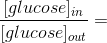 The Na –glucose symport system of intestinal epithelial cells
couples the "downhill" transport of two Na ions into the cell to
the "uphill" transport of glucose, pumping glucose into the cell
against its concentration gradient. If the Na concentration outside
the cell ([Na+]out) is 163 mM and that inside
the cell ([Na+]in) is 17.0 mM, and the cell
potential is -53.0 mV (inside negative), calculate the maximum
ratio of [glucose]in to [glucose]out that
could theoretically be produced if the energy...
The Na –glucose symport system of intestinal epithelial cells
couples the "downhill" transport of two Na ions into the cell to
the "uphill" transport of glucose, pumping glucose into the cell
against its concentration gradient. If the Na concentration outside
the cell ([Na+]out) is 163 mM and that inside
the cell ([Na+]in) is 17.0 mM, and the cell
potential is -53.0 mV (inside negative), calculate the maximum
ratio of [glucose]in to [glucose]out that
could theoretically be produced if the energy...
33) Which of the following is most likely true of a protein that cotransports glucose and...
 33) Which of the following is most likely true of a protein that cotransports glucose and sodium ions into the intestinal cells of an animal? A) Sodium and glucose bind to the same site on the cotransporter. B) Transport of glucose against its concentration gradient provides energy for uptake of sodium ions against the electrochemical gradient. C) Sodium ions can be transported whether or not glucose is present outside the cell, but glucose transport requires cotransport of sodium ions. D)...
How is glucose moved across the cell membrane against a concentration gradient? I did not get...
How is glucose moved across the cell membrane against a concentration gradient? I did not get good notes on this during biochem today. I think it is to involve sodium-glucose transporter sorta thing? Thank you for your help, (I know this is bio related, but it is for biochem and at my uni it is more of a chem based class than bio)
The Nat-glucose symport system of intestinal epithelial cells couples the "downhill" transport of two Nat ions...
 The Nat-glucose symport system of intestinal epithelial cells couples the "downhill" transport of two Nat ions into the cell to the "uphill" transport of glucose, pumping glucose into the cell against its concentration gradient. If the Na concentration outside the cell (Na lout) is 153 mM and that inside the cell ([Nalinis 19.0 mm, and the cell potential is -53.0 mV (inside negative), calculate the maximum ratio of (glucoseJin to (glucoseJout that could theoretically be produced if the energy coupling...
Magnesium ions move out of a cell through a transmembrane protein down (i.e. with) their concentration...
 Magnesium ions move out of a cell through a transmembrane protein down (i.e. with) their concentration gradient. The energy harvested from this movement of magnesium ions is used to move sodium ions into the cell against their concentration gradient. This is an example of which type of transport? symport ABC transport antiport facilitated diffusion
1) Glucose enters human enterocytes (intestinal epithelial cells) against its concentration gradient. A Na+ ion enters...
1) Glucose enters human enterocytes (intestinal epithelial cells) against its concentration gradient. A Na+ ion enters the cell with each glucose molecule, and while the glucose transporter does not hydrolyze ATP, it depends on a pre-existing gradient of Na+ ions that is created by the Na+/K+ ATPase. This is an example of ____________. A. primary active uniport B. secondary active antiport C. primary active symport D. secondary active symport 2) Which statement is FALSE? A. Acetyl CoA is oxidized to...
How is glucose moved across the cell membrane against a concentration gradient? I did not get good notes on this during...
How is glucose moved across the cell membrane against a concentration gradient? I did not get good notes on this during biochem today. I think it is to involve sodium-glucose transporter sorta thing? Thank you for your help, (I know this is bio related, but it is for biochem and at my uni it is more of a chem based class than bio)
 moving a large molecule such as glucose against its own
concentration gradient and in the opposite direction of passive
diffusion of NA+ is
Moving a large molecule such as glucose against its own concentration gradient and in the opposite direction of passive diffusion of Natis: Co-Transport B. Facilitated Diffusion c Primary Active Transport Counter-Transport
moving a large molecule such as glucose against its own
concentration gradient and in the opposite direction of passive
diffusion of NA+ is
Moving a large molecule such as glucose against its own concentration gradient and in the opposite direction of passive diffusion of Natis: Co-Transport B. Facilitated Diffusion c Primary Active Transport Counter-Transport
 5/2400 Resources Give Up Hint Intestinal epithelial cells pump glucose into the cell against its concentration gradient using the Nat-glucose symporter. Recall that the Nat concentration is significantly higher outside the cell than inside the cell. The symporter couples the "downhill" transport of two Nations into the cell to the "uphill" transport of glucose into the cell. If the Na+ concentration outside the cell (INa1.) is 151 mM and that inside the cell ([Na]) is 23.0 mm, and the cell...
 The Na –glucose symport system of
intestinal epithelial cells couples the \"downhill\" transport of
two Na ions into the cell to the \"uphill\" transport of glucose,
pumping glucose into the cell against its concentration gradient.
If the Na concentration outside the cell ([Na ]out) is 155 mM and
that inside the cell ([Na ]in) is 17.0 mM, and the cell potential
is -53.0 mV (inside negative), calculate the maximum ratio of
[glucose]in to [glucose]out that could theoretically be produced if...
The Na –glucose symport system of
intestinal epithelial cells couples the \"downhill\" transport of
two Na ions into the cell to the \"uphill\" transport of glucose,
pumping glucose into the cell against its concentration gradient.
If the Na concentration outside the cell ([Na ]out) is 155 mM and
that inside the cell ([Na ]in) is 17.0 mM, and the cell potential
is -53.0 mV (inside negative), calculate the maximum ratio of
[glucose]in to [glucose]out that could theoretically be produced if...
 The Na –glucose symport system of intestinal epithelial cells
couples the "downhill" transport of two Na ions into the cell to
the "uphill" transport of glucose, pumping glucose into the cell
against its concentration gradient. If the Na concentration outside
the cell ([Na+]out) is 163 mM and that inside
the cell ([Na+]in) is 17.0 mM, and the cell
potential is -53.0 mV (inside negative), calculate the maximum
ratio of [glucose]in to [glucose]out that
could theoretically be produced if the energy...
The Na –glucose symport system of intestinal epithelial cells
couples the "downhill" transport of two Na ions into the cell to
the "uphill" transport of glucose, pumping glucose into the cell
against its concentration gradient. If the Na concentration outside
the cell ([Na+]out) is 163 mM and that inside
the cell ([Na+]in) is 17.0 mM, and the cell
potential is -53.0 mV (inside negative), calculate the maximum
ratio of [glucose]in to [glucose]out that
could theoretically be produced if the energy...
 33) Which of the following is most likely true of a protein that cotransports glucose and sodium ions into the intestinal cells of an animal? A) Sodium and glucose bind to the same site on the cotransporter. B) Transport of glucose against its concentration gradient provides energy for uptake of sodium ions against the electrochemical gradient. C) Sodium ions can be transported whether or not glucose is present outside the cell, but glucose transport requires cotransport of sodium ions. D)...
 The Nat-glucose symport system of intestinal epithelial cells couples the "downhill" transport of two Nat ions into the cell to the "uphill" transport of glucose, pumping glucose into the cell against its concentration gradient. If the Na concentration outside the cell (Na lout) is 153 mM and that inside the cell ([Nalinis 19.0 mm, and the cell potential is -53.0 mV (inside negative), calculate the maximum ratio of (glucoseJin to (glucoseJout that could theoretically be produced if the energy coupling...
 Magnesium ions move out of a cell through a transmembrane protein down (i.e. with) their concentration gradient. The energy harvested from this movement of magnesium ions is used to move sodium ions into the cell against their concentration gradient. This is an example of which type of transport? symport ABC transport antiport facilitated diffusion
Most questions answered within 3 hours.
-
Where is the error in this code sequence?
String s1 = "Hello";
String s2 = "ello";...
asked 11 months ago -
Financial data for Joel de Paris, Inc., for last year
follow:
Joel de Paris, Inc.
Balance...
asked 11 months ago -
Consider this reaction:
Al2(SO4)3 (aq)+ BaCl3
(aq) Al2Cl6 (aq)- +
3BaSO4(s) . What is the...
asked 11 months ago -
Suppose that Savneet is considering increasing her
recent random sample from 20 car rentals to 40...
asked 11 months ago -
Trucks arrive at an unloading terminal at an average rate of 120
per hour.
Trucks arrive...
asked 11 months ago -
Why are methanol and ethanol completely soluble in water while
octanol is not very little soluble....
asked 11 months ago -
A facilities manager at a university reads in a research report
that the mean amount of...
asked 11 months ago -
When the CuSO4 is rehydrated by adding water to the anhydrous
compound, is this an endothermic...
asked 11 months ago -
A ray of sunlight is passing from diamond into crown glass; the
angle of incidence is...
asked 11 months ago -
A block of mass 0.249 kg is placed on top of a light, vertical
spring of...
asked 11 months ago -
how do the kidneys compensate in the presences of acidosis
a) trigger hyperventilate
b) reserve acid...
asked 11 months ago -
Question 501 pts
The rental rate of capital to the firm increases. Which of the
following...
asked 11 months ago