Use the animal phyla to explain the evolutionary development of tissues. Include which phyla they first...
Use the animal phyla to explain the evolutionary development of tissues. Include which phyla they first appeared in. Include what structures/organ systems those tissues become. Include the advantages organisms have with each tissue (what does that tissue allow).
Homework Answers
---Ans:
Trends in Animal Evolution | Sponges: The Phylum Porifera ... animal fossils and burrows (presumably made by multicellular animals) first appear 700 million . Sac-like body plan animals do not have tissue specialization or development of organs.
---Ans:
As larvae, sponges are able to swim, but as adults, they are sessile, spending their life attached to a substrate.
- Although the majority of sponges live in marine habitats, one family, the Spongillidae, is found in fresh water.
- Calcarea, Hexactinellida, Demospongiae, and Homoscleromorpha make up the four classes of sponges; each type is classified based on the presence or composition of its spicules or spongin.
- Most sponges reproduce sexually; however, some can reproduce through budding and the regeneration of fragments.
- The majority of sponges are filter-feeders, but a few species are carnivorous due to the nutrient -poor environment in which they are found.
- parazoan: include only one phylum known as the sponges
- endosymbiont: an organism that lives within the body or cells of another organism
- spongin: a horny, sulfur-containing protein related to keratin that forms the skeletal structure of certain classes of sponge
- spicule: a sharp, needle-like piece
- holdfast: a root-like structure that anchors aquatic sessile organisms, such as seaweed, other sessile algae, stalked crinoids, benthic cnidarians, and sponges, to the substrate
---Ans: Sponges are important in nutrient cycles in coral reef systems. ... This process would lower excess nitrogen levels in coral reefs, also preventing harmful ecosystem changes. Scientists believe that the conversion of nitrogen gas into useful nitrogen is also beneficial to the survival of other organisms in the area.
Please comment in the comment box if any doubt.
Thanks.
Add Answer to:
Use the animal phyla to explain the evolutionary development of
tissues. Include which phyla they first...
D) Chidanans. E) nematodes. 10) Between organs and body wall, complex animals have a body cavity...
 D) Chidanans. E) nematodes. 10) Between organs and body wall, complex animals have a body cavity called a A) cnidarian. B) mesoderm. C) mesoglea. D) coelom. E) thorax. 4) In the animal kingdom, cephalization is A) development of a body that has paired structures forming a side-to-side mirror image. B) concentration of sensory structures in the head. C) the ability to respond rapidly to external stimuli. D) evolutionary development of a netlike system of veins. E) development of eyes at...
1. Be able to describe/define an animal 2. Be able to describe the early steps in...
1. Be able to describe/define an animal 2. Be able to describe the early steps in animal development (including cleavage, formation of a blastula, and gastrulation) 3. Know the structures and tissue layers associated with a gastrula (e.g., blastopore, ectoderm, endoderm, etc.) 4. Know why animals are considered to be closely related to choanoflagellates 5. Be able to briefly describe the early radiations of animals (Ediacaran, Cambrian explosion) 6. Know that animal body plans are characterized by symmetry, the number...
1. Explain how animal respiratory organs have evolved to increase diffusion rates by manipulating these variables;...
1. Explain how animal respiratory organs have evolved to increase diffusion rates by manipulating these variables; distance of diffusion, concentration gradient and area for diffusion. B) For each variable, provide- and explain- an example of an animal that has maximized it the most. Use a different animal group for each example. 2. Explain how pH and temperature affect the loading of oxygen in the lungs and its unloading in the tissues. 3. Compare the advantage and disadvantages of A )...
Even though the name protozoa means first animal, the larger protist group contains some organisms that...
 Even though the name protozoa means first animal, the larger protist group contains some organisms that appear plant like because they A. Have roots that anchor them in one place and cannot move to feed. B. Contain chlorophyll. C. Produce their own food using sunlight to carry out photosynthesis. D. Live in the soil while using nutrients like nitrogen and phosphorus to grow. A protozoan is a single cell. So, what makes a protozoan any different from any of the...
DIGESTIVE SYSTEM: STRUCTURES THAT HELP PROMOTE FUNCTION 1) Provide two vertebrate innovations that helped promote ingestion...
DIGESTIVE SYSTEM: STRUCTURES THAT HELP PROMOTE FUNCTION 1) Provide two vertebrate innovations that helped promote ingestion of food. Include evidence to suggest the evolutionary origins of one of these innovations. 2) How does the esophagus promote both ingestion and digestion of food. For ingestion, be sure to describe how the food is moved through the esophagus. 3) Briefly describe how features of the stomach helps promotes the digestion of food. Include the major macromolecule that begins to get broken down...
1. If you were to build a phylogenetic tree of living animals, which of the following...
 1. If you were to build a phylogenetic tree of living animals,
which of the following derived characters would appear first?
A. deuterostome development
B. true tissues
C. protostome development
D. bilateral symmetry
2. Birds and mammals are endotherms. They maintain body
temperature by producing heat through metabolism. Endothermy is
energetically expensive for an organism, yet endotherms have become
the dominant group of tetrapods. What is a major evolutionary
advantage of endothermy?
A. Endothermy allows greater independence from water.
B....
1. If you were to build a phylogenetic tree of living animals,
which of the following derived characters would appear first?
A. deuterostome development
B. true tissues
C. protostome development
D. bilateral symmetry
2. Birds and mammals are endotherms. They maintain body
temperature by producing heat through metabolism. Endothermy is
energetically expensive for an organism, yet endotherms have become
the dominant group of tetrapods. What is a major evolutionary
advantage of endothermy?
A. Endothermy allows greater independence from water.
B....
Lab 8: Muscles, Torque and T-Rex 8.1 Purpose: Evolutionary biologists, ecologists, and paleontologists study the development,...
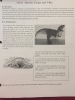 Lab 8: Muscles, Torque and T-Rex 8.1 Purpose: Evolutionary biologists, ecologists, and paleontologists study the development, abundance and diversity of living organisms. One particular creature which has captivated the interest of both scientists and non-scientists is the dinosaurs. Through reconstruction of bones, studying fossils, and other forensic techniques, these animals have undergone numerous studies which have given clues as to their physical and social characteristics. Even with all this research, there remain many unanswered questions In this lab, you will...
1) We humans recognize that non-human animal behavior is often predictable and that animals appear to...
1) We humans recognize that non-human animal behavior is often predictable and that animals appear to have clearly defined goals and purposes in their behaviors. Which of the following is the most accurate and complete statement about this "purposefulness?" a. Purposeful behavior represents the strategies that are most successful in replicating the design information that builds those behaviors, arising in deliberate pursuit of biological reproduction. b. Purposeful behavior reflects the inherent purposefulness of the entire universe, representing the drive by...
bio 170 organismal bio lab need help filling out last 4 questions! Phylum Porifera Cnidaria Platyhelminthes...
 bio 170 organismal bio lab
need help filling out last 4 questions!
Phylum Porifera Cnidaria Platyhelminthes Place Nematoda Filesios Mollusca octopus wa Annelida Arthropoda bulacan Echinodermata which Chordata un sca anon coral anthozoa serung des with Publu urhlong 1 FP gar telletish portuguese man of war/ hydrozoa sea pansy Ianthozoa wacht www Looks Lice nce Phylum Platyhelminthes these are the flatworms. They have soft, elongated bodies and exhibit several advances over cnidarians. They have three distinct tissue layers (triploblastic construction),...
bio 170 organismal bio lab
need help filling out last 4 questions!
Phylum Porifera Cnidaria Platyhelminthes Place Nematoda Filesios Mollusca octopus wa Annelida Arthropoda bulacan Echinodermata which Chordata un sca anon coral anthozoa serung des with Publu urhlong 1 FP gar telletish portuguese man of war/ hydrozoa sea pansy Ianthozoa wacht www Looks Lice nce Phylum Platyhelminthes these are the flatworms. They have soft, elongated bodies and exhibit several advances over cnidarians. They have three distinct tissue layers (triploblastic construction),...
12 hr 24 hr 48 hr 3. CHORDATE DEVELOPMENT a. Indicate the plane (polar or equatorial)...
 12 hr 24 hr 48 hr 3. CHORDATE DEVELOPMENT a. Indicate the plane (polar or equatorial) of the cleavage divisions. 1. First division 2. Second division 3. Third division b. Are the planes the same as in the sea urchin? c. Why are the cells formed in the vegetal hemisphere larger than those of the animal hemisphere? d. In which hemisphere does gastrulation occur? Is this the same site as in the sea urchin? c. Indicate the embryonic tissue that...
 D) Chidanans. E) nematodes. 10) Between organs and body wall, complex animals have a body cavity called a A) cnidarian. B) mesoderm. C) mesoglea. D) coelom. E) thorax. 4) In the animal kingdom, cephalization is A) development of a body that has paired structures forming a side-to-side mirror image. B) concentration of sensory structures in the head. C) the ability to respond rapidly to external stimuli. D) evolutionary development of a netlike system of veins. E) development of eyes at...
 Even though the name protozoa means first animal, the larger protist group contains some organisms that appear plant like because they A. Have roots that anchor them in one place and cannot move to feed. B. Contain chlorophyll. C. Produce their own food using sunlight to carry out photosynthesis. D. Live in the soil while using nutrients like nitrogen and phosphorus to grow. A protozoan is a single cell. So, what makes a protozoan any different from any of the...
 1. If you were to build a phylogenetic tree of living animals,
which of the following derived characters would appear first?
A. deuterostome development
B. true tissues
C. protostome development
D. bilateral symmetry
2. Birds and mammals are endotherms. They maintain body
temperature by producing heat through metabolism. Endothermy is
energetically expensive for an organism, yet endotherms have become
the dominant group of tetrapods. What is a major evolutionary
advantage of endothermy?
A. Endothermy allows greater independence from water.
B....
1. If you were to build a phylogenetic tree of living animals,
which of the following derived characters would appear first?
A. deuterostome development
B. true tissues
C. protostome development
D. bilateral symmetry
2. Birds and mammals are endotherms. They maintain body
temperature by producing heat through metabolism. Endothermy is
energetically expensive for an organism, yet endotherms have become
the dominant group of tetrapods. What is a major evolutionary
advantage of endothermy?
A. Endothermy allows greater independence from water.
B....
 Lab 8: Muscles, Torque and T-Rex 8.1 Purpose: Evolutionary biologists, ecologists, and paleontologists study the development, abundance and diversity of living organisms. One particular creature which has captivated the interest of both scientists and non-scientists is the dinosaurs. Through reconstruction of bones, studying fossils, and other forensic techniques, these animals have undergone numerous studies which have given clues as to their physical and social characteristics. Even with all this research, there remain many unanswered questions In this lab, you will...
 bio 170 organismal bio lab
need help filling out last 4 questions!
Phylum Porifera Cnidaria Platyhelminthes Place Nematoda Filesios Mollusca octopus wa Annelida Arthropoda bulacan Echinodermata which Chordata un sca anon coral anthozoa serung des with Publu urhlong 1 FP gar telletish portuguese man of war/ hydrozoa sea pansy Ianthozoa wacht www Looks Lice nce Phylum Platyhelminthes these are the flatworms. They have soft, elongated bodies and exhibit several advances over cnidarians. They have three distinct tissue layers (triploblastic construction),...
bio 170 organismal bio lab
need help filling out last 4 questions!
Phylum Porifera Cnidaria Platyhelminthes Place Nematoda Filesios Mollusca octopus wa Annelida Arthropoda bulacan Echinodermata which Chordata un sca anon coral anthozoa serung des with Publu urhlong 1 FP gar telletish portuguese man of war/ hydrozoa sea pansy Ianthozoa wacht www Looks Lice nce Phylum Platyhelminthes these are the flatworms. They have soft, elongated bodies and exhibit several advances over cnidarians. They have three distinct tissue layers (triploblastic construction),...
 12 hr 24 hr 48 hr 3. CHORDATE DEVELOPMENT a. Indicate the plane (polar or equatorial) of the cleavage divisions. 1. First division 2. Second division 3. Third division b. Are the planes the same as in the sea urchin? c. Why are the cells formed in the vegetal hemisphere larger than those of the animal hemisphere? d. In which hemisphere does gastrulation occur? Is this the same site as in the sea urchin? c. Indicate the embryonic tissue that...
Most questions answered within 3 hours.
-
Where is the error in this code sequence?
String s1 = "Hello";
String s2 = "ello";...
asked 10 months ago -
Financial data for Joel de Paris, Inc., for last year
follow:
Joel de Paris, Inc.
Balance...
asked 10 months ago -
Consider this reaction:
Al2(SO4)3 (aq)+ BaCl3
(aq) Al2Cl6 (aq)- +
3BaSO4(s) . What is the...
asked 10 months ago -
Suppose that Savneet is considering increasing her
recent random sample from 20 car rentals to 40...
asked 10 months ago -
Trucks arrive at an unloading terminal at an average rate of 120
per hour.
Trucks arrive...
asked 10 months ago -
Why are methanol and ethanol completely soluble in water while
octanol is not very little soluble....
asked 10 months ago -
A facilities manager at a university reads in a research report
that the mean amount of...
asked 10 months ago -
When the CuSO4 is rehydrated by adding water to the anhydrous
compound, is this an endothermic...
asked 10 months ago -
A ray of sunlight is passing from diamond into crown glass; the
angle of incidence is...
asked 10 months ago -
A block of mass 0.249 kg is placed on top of a light, vertical
spring of...
asked 10 months ago -
how do the kidneys compensate in the presences of acidosis
a) trigger hyperventilate
b) reserve acid...
asked 10 months ago -
Question 501 pts
The rental rate of capital to the firm increases. Which of the
following...
asked 10 months ago