multiplier = 13 multiplicand = -14 using booths algorithm with 5-bit operands, what is value would...
Homework Answers


Add Answer to:
multiplier = 13
multiplicand = -14
using booths algorithm with 5-bit operands, what is value
would...
use booths algorithm to complete the chart. HW 6 Math Name Use the optimized multiplier hardware...
 use
booths algorithm to complete the chart.
HW 6 Math Name Use the optimized multiplier hardware to multiply the unsigned numbers 10110 and 01101 using 5-bit values Product Step Multiplicand Action Multiplier Initialization
use
booths algorithm to complete the chart.
HW 6 Math Name Use the optimized multiplier hardware to multiply the unsigned numbers 10110 and 01101 using 5-bit values Product Step Multiplicand Action Multiplier Initialization
Assume we are using 6-bit long 2’s complement integers and want to multiply 0x33 by 0x16....
Assume we are using 6-bit long 2’s complement integers and want to multiply 0x33 by 0x16. Treating the first as the multiplier and the second as the multiplicand, show the steps used to multiply these two numbers together using the algorithm (the one which used one register for both the multiplier and the product). If either of these numbers represent a negative value, convert them to their positive version before multiplying, then negate your answer (if necessary). Give your answer...
1. (2 pts) Perform a multiplication of two binary numbers (multiplicand 0101 and multiplier 0101) by...
1. (2 pts) Perform a multiplication of two binary numbers (multiplicand 0101 and multiplier 0101) by creating a table to show steps taken, multiplicand register value, multiplier register value and product register value for each iteration by following the steps described in the following document. (Points will be deducted if steps are not shown.) Read this steps You can use this table to start: Multiplication table 2. (2 pts) Perform a division of two binary numbers (divide 0010 1101 by...
Given: The following questions deal with two unsigned 6-bit numbers shown below in the hex format....
 Given: The following questions deal with two unsigned 6-bit numbers shown below in the hex format. A= 0x08 B=0x15 Suppose that the multiplier shown below is used to calculate the product of A (Multiplicand) and B (Multiplier) (Assume both values are unsigned). Consider using the "Add-and-Right-Shift Multiplier" design to compute A*B. You may assume all registers are large enough to contain as many bits as are required. Sought: a) What are the value in for the Multiplicand, Multiplier and Product...
Given: The following questions deal with two unsigned 6-bit numbers shown below in the hex format....
 Given: The following questions deal with two unsigned 6-bit numbers shown below in the hex format. A= 0x02 B=0x1F Suppose that the multiplier shown below is used to calculate the product of A (Multiplicand) and B (Multiplier) (Assume both values are unsigned). Consider using the "Add-and-Right-Shift Multiplier" design to compute A B. You may assume all registers are large enough to contain as many bits as are required. Sought: a) What are the value in for the Multiplicand, Multiplier and...
lis 2) ALU Design: Carry-Select Adder 31 Given: The following questions deal with two unsigned 6-bit...
 lis 2) ALU Design: Carry-Select Adder 31 Given: The following questions deal with two unsigned 6-bit numbers shown below in the hex format. A= 0x02 B=0x15 Suppose that the multiplier shown below is used to calculate the product of A (Multiplicand) and B (Multiplier) (Assume both values are unsigned). Consider using the "Add-and-Right-Shift Multiplier" design to compute A B. You may assume all registers are large enough to contain as many bits as are required. Sought: a) What are the...
Figure 3 shows two 5-bit registers, AC and M, which together form a shift register. These...
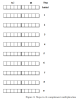 Figure 3 shows two 5-bit registers, AC and M, which together
form a shift register. These reqisters are part of a 2s complement
multipler that uses the add/shift method. Let the multiplicand be Y
= ?14 and the multiplier be X = ?7. Execute the steps of the
add/shift 2s complement multiplication procedure and fill in the
contents of the AC-M registers at the end of each step. Note: You
must determine what the last step will be. Filling in...
Figure 3 shows two 5-bit registers, AC and M, which together
form a shift register. These reqisters are part of a 2s complement
multipler that uses the add/shift method. Let the multiplicand be Y
= ?14 and the multiplier be X = ?7. Execute the steps of the
add/shift 2s complement multiplication procedure and fill in the
contents of the AC-M registers at the end of each step. Note: You
must determine what the last step will be. Filling in...
A. Assuming that register $14 has the value 8563, what is the value of $15 after...
A. Assuming that register $14 has the value 8563, what is the value of $15 after the following instruction is carried out: srl $15 $14 4 Give the answer in decimal. B. Assuming that register $10 has the value 9424, what is the value of $13 after the following instruction is carried out: srl $13 $10 3 Give the answer in decimal. C. Assuming that register $10 has the value 51, what is the value of $10 after the following...
Java We did in lecture, and explain your answer briefly. Problem 4: Sorting practice 14 points;...
 Java
We did in lecture, and explain your answer briefly. Problem 4: Sorting practice 14 points; 2 points for each part individual-only Important: When answering these questions, make sure to apply the versions of these algorithms that were discussed in lecture. The Java code for each algorithm can be found in our Sort class. Given the following array: {14, 7, 27, 13, 24, 20, 10, 33 1. If the array were sorted using selection sort, what would the array look...
Java
We did in lecture, and explain your answer briefly. Problem 4: Sorting practice 14 points; 2 points for each part individual-only Important: When answering these questions, make sure to apply the versions of these algorithms that were discussed in lecture. The Java code for each algorithm can be found in our Sort class. Given the following array: {14, 7, 27, 13, 24, 20, 10, 33 1. If the array were sorted using selection sort, what would the array look...
COMPUTER ARCHITECTURE QUESTION 1. Calculate 2*14 using the optimized algorithm for integer multiplication learned in the...
 COMPUTER ARCHITECTURE QUESTION
1. Calculate 2*14 using the optimized
algorithm for integer multiplication learned in the class.
Write the solution in a tabular form as shown in
the course slides. Here we assume both integers are in 4 bits.
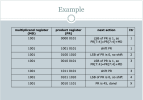
THIS IS THE TABULAR FORM EXAMPLE SHOWN IN COURSE SLIDE:
Example multiplicand register next action (MD) product register (PR) 0000 0101 1001 LSB of PR is 1, so PR[7:4]=PR[7:4]+MD 1001 1001 0101 shift PR 1001 0100 1010 LSB of PR is...
COMPUTER ARCHITECTURE QUESTION
1. Calculate 2*14 using the optimized
algorithm for integer multiplication learned in the class.
Write the solution in a tabular form as shown in
the course slides. Here we assume both integers are in 4 bits.
THIS IS THE TABULAR FORM EXAMPLE SHOWN IN COURSE SLIDE:
Example multiplicand register next action (MD) product register (PR) 0000 0101 1001 LSB of PR is 1, so PR[7:4]=PR[7:4]+MD 1001 1001 0101 shift PR 1001 0100 1010 LSB of PR is...
 use
booths algorithm to complete the chart.
HW 6 Math Name Use the optimized multiplier hardware to multiply the unsigned numbers 10110 and 01101 using 5-bit values Product Step Multiplicand Action Multiplier Initialization
use
booths algorithm to complete the chart.
HW 6 Math Name Use the optimized multiplier hardware to multiply the unsigned numbers 10110 and 01101 using 5-bit values Product Step Multiplicand Action Multiplier Initialization
 Given: The following questions deal with two unsigned 6-bit numbers shown below in the hex format. A= 0x08 B=0x15 Suppose that the multiplier shown below is used to calculate the product of A (Multiplicand) and B (Multiplier) (Assume both values are unsigned). Consider using the "Add-and-Right-Shift Multiplier" design to compute A*B. You may assume all registers are large enough to contain as many bits as are required. Sought: a) What are the value in for the Multiplicand, Multiplier and Product...
 Given: The following questions deal with two unsigned 6-bit numbers shown below in the hex format. A= 0x02 B=0x1F Suppose that the multiplier shown below is used to calculate the product of A (Multiplicand) and B (Multiplier) (Assume both values are unsigned). Consider using the "Add-and-Right-Shift Multiplier" design to compute A B. You may assume all registers are large enough to contain as many bits as are required. Sought: a) What are the value in for the Multiplicand, Multiplier and...
 lis 2) ALU Design: Carry-Select Adder 31 Given: The following questions deal with two unsigned 6-bit numbers shown below in the hex format. A= 0x02 B=0x15 Suppose that the multiplier shown below is used to calculate the product of A (Multiplicand) and B (Multiplier) (Assume both values are unsigned). Consider using the "Add-and-Right-Shift Multiplier" design to compute A B. You may assume all registers are large enough to contain as many bits as are required. Sought: a) What are the...
 Figure 3 shows two 5-bit registers, AC and M, which together
form a shift register. These reqisters are part of a 2s complement
multipler that uses the add/shift method. Let the multiplicand be Y
= ?14 and the multiplier be X = ?7. Execute the steps of the
add/shift 2s complement multiplication procedure and fill in the
contents of the AC-M registers at the end of each step. Note: You
must determine what the last step will be. Filling in...
Figure 3 shows two 5-bit registers, AC and M, which together
form a shift register. These reqisters are part of a 2s complement
multipler that uses the add/shift method. Let the multiplicand be Y
= ?14 and the multiplier be X = ?7. Execute the steps of the
add/shift 2s complement multiplication procedure and fill in the
contents of the AC-M registers at the end of each step. Note: You
must determine what the last step will be. Filling in...
 Java
We did in lecture, and explain your answer briefly. Problem 4: Sorting practice 14 points; 2 points for each part individual-only Important: When answering these questions, make sure to apply the versions of these algorithms that were discussed in lecture. The Java code for each algorithm can be found in our Sort class. Given the following array: {14, 7, 27, 13, 24, 20, 10, 33 1. If the array were sorted using selection sort, what would the array look...
Java
We did in lecture, and explain your answer briefly. Problem 4: Sorting practice 14 points; 2 points for each part individual-only Important: When answering these questions, make sure to apply the versions of these algorithms that were discussed in lecture. The Java code for each algorithm can be found in our Sort class. Given the following array: {14, 7, 27, 13, 24, 20, 10, 33 1. If the array were sorted using selection sort, what would the array look...
 COMPUTER ARCHITECTURE QUESTION
1. Calculate 2*14 using the optimized
algorithm for integer multiplication learned in the class.
Write the solution in a tabular form as shown in
the course slides. Here we assume both integers are in 4 bits.
THIS IS THE TABULAR FORM EXAMPLE SHOWN IN COURSE SLIDE:
Example multiplicand register next action (MD) product register (PR) 0000 0101 1001 LSB of PR is 1, so PR[7:4]=PR[7:4]+MD 1001 1001 0101 shift PR 1001 0100 1010 LSB of PR is...
COMPUTER ARCHITECTURE QUESTION
1. Calculate 2*14 using the optimized
algorithm for integer multiplication learned in the class.
Write the solution in a tabular form as shown in
the course slides. Here we assume both integers are in 4 bits.
THIS IS THE TABULAR FORM EXAMPLE SHOWN IN COURSE SLIDE:
Example multiplicand register next action (MD) product register (PR) 0000 0101 1001 LSB of PR is 1, so PR[7:4]=PR[7:4]+MD 1001 1001 0101 shift PR 1001 0100 1010 LSB of PR is...
Most questions answered within 3 hours.
-
Where is the error in this code sequence?
String s1 = "Hello";
String s2 = "ello";...
asked 10 months ago -
Financial data for Joel de Paris, Inc., for last year
follow:
Joel de Paris, Inc.
Balance...
asked 10 months ago -
Consider this reaction:
Al2(SO4)3 (aq)+ BaCl3
(aq) Al2Cl6 (aq)- +
3BaSO4(s) . What is the...
asked 10 months ago -
Suppose that Savneet is considering increasing her
recent random sample from 20 car rentals to 40...
asked 10 months ago -
Trucks arrive at an unloading terminal at an average rate of 120
per hour.
Trucks arrive...
asked 10 months ago -
Why are methanol and ethanol completely soluble in water while
octanol is not very little soluble....
asked 10 months ago -
A facilities manager at a university reads in a research report
that the mean amount of...
asked 10 months ago -
When the CuSO4 is rehydrated by adding water to the anhydrous
compound, is this an endothermic...
asked 10 months ago -
A ray of sunlight is passing from diamond into crown glass; the
angle of incidence is...
asked 10 months ago -
A block of mass 0.249 kg is placed on top of a light, vertical
spring of...
asked 10 months ago -
how do the kidneys compensate in the presences of acidosis
a) trigger hyperventilate
b) reserve acid...
asked 10 months ago -
Question 501 pts
The rental rate of capital to the firm increases. Which of the
following...
asked 10 months ago