Sometimes equilibria for complex ions are described in terms of dissociation constants, Kd. For the complex...
Sometimes equilibria for complex ions are described in terms of dissociation constants, Kd. For the complex ion AlF63− the dissociation reaction is:
AlF63− ⇌ Al3+ + 6F− and Kd = [Al3+][F−]6 divided by [AlF63−] =2×10⁻²⁴
Calculate the value of the formation constant, Kf, for AlF63−.
Homework Answers

Add Answer to:
Sometimes equilibria for complex ions are described in terms of
dissociation constants, Kd. For the complex...
Silver (I) ions in aqueous solutions react with NH3(aq) to form a complex ion according to...
Silver (I) ions in aqueous solutions react with NH3(aq) to form a complex ion according to the following reaction: Ag+ + 2NH3(aq) ---> Ag(NH3)2+ with a formation constant, Kf of 1.5 x 10⁷. Calculate the solubility in g/L, of AgCN(s) (Ksp = 2.2 x 10⁻¹⁶) in 0.75M NH3(aq)
Question #9 Release kinetics. The dissociation constant KD for the release of oxygen from oxymyoglobin is...
Question #9 Release kinetics. The dissociation constant KD for the release of oxygen from oxymyoglobin is 10-6 M, where the KD = [Mb][O2]/[MbO2], the rate constant for the combination of O2 with myoglobin is 2 x 10⁷ M-1s-1. a) What is the rate constant for the dissociation of O2 from myoglobin? b) What is the mean duration of the oxymyoglobin complex?
I need help with the formation constant (Kf) in question 3 at the bottom. anything else...
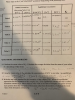 I need help with the formation constant (Kf) in question 3 at
the bottom. anything else you might catch would be greatly
appreciated as wel ?
Please refer to the 'CALCULATIONS' section for help filling in the ponowing uvie. Equilibrium Concentrations anal Initial Concentrations (after mixing."before" rxn) [Fe3+ (SCN) (FeNCS2+1 | [Fe3+] [SCN) (sve question 2) 0.0bolcom/0.colum Tube 1 10.100M 1 (C) 10.ol 1o. oloom/0.000loom 6.43.10" 0.0099 3.65 1.560 Tube 3 |0.00 50omo.coolcom 4.85x100 .00495 5 1.03.10 Tube 4 16.002.500.oooloom...
I need help with the formation constant (Kf) in question 3 at
the bottom. anything else you might catch would be greatly
appreciated as wel ?
Please refer to the 'CALCULATIONS' section for help filling in the ponowing uvie. Equilibrium Concentrations anal Initial Concentrations (after mixing."before" rxn) [Fe3+ (SCN) (FeNCS2+1 | [Fe3+] [SCN) (sve question 2) 0.0bolcom/0.colum Tube 1 10.100M 1 (C) 10.ol 1o. oloom/0.000loom 6.43.10" 0.0099 3.65 1.560 Tube 3 |0.00 50omo.coolcom 4.85x100 .00495 5 1.03.10 Tube 4 16.002.500.oooloom...
Calculate concentration of species in a solution containing a complex ion. Close Problem In the p...
Calculate concentration of species in a solution containing a complex ion. Close Problem In the presence of excess OH-, the Al3+(aq) ion forms a hydroxide complex ion, Al(OH)4-. Calculate the concentration of free Al3+ ion when 1.21×10⁻² mol Al(CH3COO)3(s) is added to 1.00 L of solution in which [OH- ] is held constant (buffered at pH 12.60). For Al(OH)4-, Kf = 1.1×1033. [Al3+] = M
Complex Reaction Equilibria: EDTA Titrations 1. Adenosine triphosphate (ATP) is a tetradentate ligand. This means that...
 Complex Reaction Equilibria: EDTA
Titrations
1. Adenosine triphosphate (ATP) is a tetradentate ligand. This
means that ATP
(A) binds to four metal ions.
(B) binds to metal ions with a charge of 4+.
(C) occupies six coordination positions of the metal ions
only.
(D) binds to divalent metal ions.
(E) uses four atoms to bind to the metal ion.
2. Which of the following statements is true about an auxiliary
complexing agent?
(A) Increases the conditional formation constant
(B) Forms...
Complex Reaction Equilibria: EDTA
Titrations
1. Adenosine triphosphate (ATP) is a tetradentate ligand. This
means that ATP
(A) binds to four metal ions.
(B) binds to metal ions with a charge of 4+.
(C) occupies six coordination positions of the metal ions
only.
(D) binds to divalent metal ions.
(E) uses four atoms to bind to the metal ion.
2. Which of the following statements is true about an auxiliary
complexing agent?
(A) Increases the conditional formation constant
(B) Forms...
In the presence of excess OH-, the Al3+(aq) ion forms a hydroxide complex ion, Al(OH)4-. Calculate the concentration of...
In the presence of excess OH-, the Al3+(aq) ion forms a hydroxide complex ion, Al(OH)4-. Calculate the concentration of free Al3+ ion when 1.32×10⁻² mol Al(NO3)3(s) is added to 1.00 L of solution in which [OH- ] is held constant (buffered at pH 13.00). For Al(OH)4-, Kf = 1.1×1033. [Al3+] = ?M
A) Consider the insoluble compound zinc hydroxide, Zn(OH)2. The zinc ion also forms a complex with...
A) Consider the insoluble compound zinc hydroxide, Zn(OH)2. The zinc ion also forms a complex with ammonia. Write a balanced net ionic equation to show why the solubility of Zn(OH)2(s) increases in the presence of ammonia and calculate the equilibrium constant for this reaction. For Zn(NH3)42+, Kf = 2.9×10⁹. Specify states such as (aq) or (s) and provide K. K = ______ B) Consider the insoluble compound nickel(II) hydroxide, Ni(OH)2. The nickel ion also forms a complex with cyanide ions....
Ethylenediamine (shown below) is a chelate that is typically abbreviated as "end" The formation constants, K_F,...
 Ethylenediamine (shown below) is a chelate that is typically abbreviated as "end" The formation constants, K_F, of octahedral Ni^2+ complex ions at 25 degree C are: Write the reactions for the formation and the formation constants (in terms of concentrations) for each complex ion The Delta H_f of the two complex ions are the same to two significant figures How do you explain the difference in formation constants? If NH_3 were added to an aqueous solution of [Ni(en)_3]^2+ such that...
The solubility-product constant for Zn(OH)2 is Ksp=3.00×10⁻¹⁶. The formation constant for the hydroxo complex, Zn(OH)42−, is...
The solubility-product constant for Zn(OH)2 is Ksp=3.00×10⁻¹⁶. The formation constant for the hydroxo complex, Zn(OH)42−, is Kf=4.60×10¹⁷. A solubility-product constant, Ksp, corresponds to a reaction with the following general format: salt(s)⇌cation(aq)+anion(aq) A formation constant, Kf, corresponds to a reaction with the following general format: metal ion(aq)+Lewis base(aq)⇌complex ion(aq) Part A When Zn(OH)2(s) was added to 1.00 L of a basic solution, 1.11×10⁻² mol of the solid dissolved. What is the concentration of OH− in the final solution?
A) Consider the insoluble compound cobalt(II) hydroxide , Co(OH)2. The cobalt(II) ion also forms a complex...
A) Consider the insoluble compound cobalt(II) hydroxide , Co(OH)2. The cobalt(II) ion also forms a complex with ammonia . Write a balanced net ionic equation to show why the solubility of Co(OH)2(s) increases in the presence of ammonia and calculate the equilibrium constant for this reaction. For Co(NH3)62+, Kf = 7.7×10⁴. Use the pull-down boxes to specify states such as (aq) or (s). _____ + _____ = _____ + _____ K = B) Consider the insoluble compound nickel(II) carbonate ,...
 I need help with the formation constant (Kf) in question 3 at
the bottom. anything else you might catch would be greatly
appreciated as wel ?
Please refer to the 'CALCULATIONS' section for help filling in the ponowing uvie. Equilibrium Concentrations anal Initial Concentrations (after mixing."before" rxn) [Fe3+ (SCN) (FeNCS2+1 | [Fe3+] [SCN) (sve question 2) 0.0bolcom/0.colum Tube 1 10.100M 1 (C) 10.ol 1o. oloom/0.000loom 6.43.10" 0.0099 3.65 1.560 Tube 3 |0.00 50omo.coolcom 4.85x100 .00495 5 1.03.10 Tube 4 16.002.500.oooloom...
I need help with the formation constant (Kf) in question 3 at
the bottom. anything else you might catch would be greatly
appreciated as wel ?
Please refer to the 'CALCULATIONS' section for help filling in the ponowing uvie. Equilibrium Concentrations anal Initial Concentrations (after mixing."before" rxn) [Fe3+ (SCN) (FeNCS2+1 | [Fe3+] [SCN) (sve question 2) 0.0bolcom/0.colum Tube 1 10.100M 1 (C) 10.ol 1o. oloom/0.000loom 6.43.10" 0.0099 3.65 1.560 Tube 3 |0.00 50omo.coolcom 4.85x100 .00495 5 1.03.10 Tube 4 16.002.500.oooloom...
 Complex Reaction Equilibria: EDTA
Titrations
1. Adenosine triphosphate (ATP) is a tetradentate ligand. This
means that ATP
(A) binds to four metal ions.
(B) binds to metal ions with a charge of 4+.
(C) occupies six coordination positions of the metal ions
only.
(D) binds to divalent metal ions.
(E) uses four atoms to bind to the metal ion.
2. Which of the following statements is true about an auxiliary
complexing agent?
(A) Increases the conditional formation constant
(B) Forms...
Complex Reaction Equilibria: EDTA
Titrations
1. Adenosine triphosphate (ATP) is a tetradentate ligand. This
means that ATP
(A) binds to four metal ions.
(B) binds to metal ions with a charge of 4+.
(C) occupies six coordination positions of the metal ions
only.
(D) binds to divalent metal ions.
(E) uses four atoms to bind to the metal ion.
2. Which of the following statements is true about an auxiliary
complexing agent?
(A) Increases the conditional formation constant
(B) Forms...
 Ethylenediamine (shown below) is a chelate that is typically abbreviated as "end" The formation constants, K_F, of octahedral Ni^2+ complex ions at 25 degree C are: Write the reactions for the formation and the formation constants (in terms of concentrations) for each complex ion The Delta H_f of the two complex ions are the same to two significant figures How do you explain the difference in formation constants? If NH_3 were added to an aqueous solution of [Ni(en)_3]^2+ such that...
Most questions answered within 3 hours.
-
Where is the error in this code sequence?
String s1 = "Hello";
String s2 = "ello";...
asked 10 months ago -
Financial data for Joel de Paris, Inc., for last year
follow:
Joel de Paris, Inc.
Balance...
asked 10 months ago -
Consider this reaction:
Al2(SO4)3 (aq)+ BaCl3
(aq) Al2Cl6 (aq)- +
3BaSO4(s) . What is the...
asked 10 months ago -
Suppose that Savneet is considering increasing her
recent random sample from 20 car rentals to 40...
asked 10 months ago -
Trucks arrive at an unloading terminal at an average rate of 120
per hour.
Trucks arrive...
asked 10 months ago -
Why are methanol and ethanol completely soluble in water while
octanol is not very little soluble....
asked 10 months ago -
A facilities manager at a university reads in a research report
that the mean amount of...
asked 10 months ago -
When the CuSO4 is rehydrated by adding water to the anhydrous
compound, is this an endothermic...
asked 10 months ago -
A ray of sunlight is passing from diamond into crown glass; the
angle of incidence is...
asked 10 months ago -
A block of mass 0.249 kg is placed on top of a light, vertical
spring of...
asked 10 months ago -
how do the kidneys compensate in the presences of acidosis
a) trigger hyperventilate
b) reserve acid...
asked 10 months ago -
Question 501 pts
The rental rate of capital to the firm increases. Which of the
following...
asked 10 months ago