14. What characteristic do gymnosperms and angiosperms have the ferns and other monilophytes do not?
14. What characteristic do gymnosperms and angiosperms have the ferns and other monilophytes do not?
Homework Answers
| Ferns | Gymnosperms | Angiosperms | |
| Plant body | less differentiated into root stem and leaf | highly differentiated | highly differentiated |
| Dominant phase | sporophyte | sporophyte | sporophyte |
| Vasculature | primitive type of conducting cell and conducting tissues present for conduction of water and nutrients | less differentiated xylem and phloem is present | highly differentiated xylem and phloem |
| Double fertilization | absent | double fertilization is present and endosperm is formed before embryo formation | double fertilization is present and endosperm is formed after embryo formation |
| Seed | absent | present | present |
| Flower/fruit | absent | absent | present |
For your answer you can use the differences given in bold words.
Please rate.
Add Answer to:
14. What characteristic do gymnosperms and angiosperms have the
ferns and other monilophytes do not?
Which of the following are not a monophyletic group? angiosperms ferns gymnosperms lycophytes bryophytes ferns/horsetails and...
 Which of the following are not a monophyletic group?
angiosperms
ferns
gymnosperms
lycophytes
bryophytes
ferns/horsetails and bryophytes
ferns/horsetails
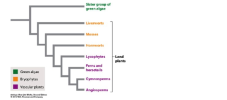
Sister group of green algae Liverworts Mosses Hornworts Lycophytes Land plants Ferns and horsetails Green algae Bryophytes Gymnosperms Vascular plants Angiosperms De How We Seed Cation HO
Which of the following are not a monophyletic group?
angiosperms
ferns
gymnosperms
lycophytes
bryophytes
ferns/horsetails and bryophytes
ferns/horsetails
Sister group of green algae Liverworts Mosses Hornworts Lycophytes Land plants Ferns and horsetails Green algae Bryophytes Gymnosperms Vascular plants Angiosperms De How We Seed Cation HO
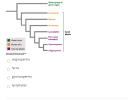
Which of the following are not a monophyletic group? Other options include angiosperms bryophytes ferns/horsetails and...
 Which of the following are not a monophyletic group?
Other options include
angiosperms
bryophytes
ferns/horsetails and bryophytes
ferns/horsetails
gymnosperms
Please select all of them
Sister group of green algae Liverworts Mosses Hornworts Lycophytes Land plants Ferns and horsetails Green algae Bryophytes Gymnosperms Vascular plants Angiosperms Dirbour How LoneWres Sound MENNO angiosperms o ferns O gymnosperms olycophytes
Which of the following are not a monophyletic group?
Other options include
angiosperms
bryophytes
ferns/horsetails and bryophytes
ferns/horsetails
gymnosperms
Please select all of them
Sister group of green algae Liverworts Mosses Hornworts Lycophytes Land plants Ferns and horsetails Green algae Bryophytes Gymnosperms Vascular plants Angiosperms Dirbour How LoneWres Sound MENNO angiosperms o ferns O gymnosperms olycophytes
In which plants--mosses, ferns, gymnosperms, and/or angiosperms--is the sporophyte generation dominant (i.e., the most recognizable form)?...
In which plants--mosses, ferns, gymnosperms, and/or angiosperms--is the sporophyte generation dominant (i.e., the most recognizable form)? Where is the gametophyte found in these plants?
In which plants--mosses, ferns, gymnosperms, and/or angiosperms--is the gametophyte generation dominant (i.e., the most recognizable form)?...
In which plants--mosses, ferns, gymnosperms, and/or angiosperms--is the gametophyte generation dominant (i.e., the most recognizable form)? Where is the sporophyte found in these plants?
please choose the right answer Question 21 What do both gymnosperms and angiosperms have in common...
 please choose the right answer
Question 21 What do both gymnosperms and angiosperms have in common that is not true about other plant groups? a. they have only xylem and no phloem. b. they have a gametophyte generation. c. their gametes do not require water for fertilization to occur. d. they have true roots. e. they have ovules that are not enclosed.
please choose the right answer
Question 21 What do both gymnosperms and angiosperms have in common that is not true about other plant groups? a. they have only xylem and no phloem. b. they have a gametophyte generation. c. their gametes do not require water for fertilization to occur. d. they have true roots. e. they have ovules that are not enclosed.
Which of the following plants have a gametophyte that is nutitionally dependent on the sporophyte? O...
 Which of the following plants have a gametophyte that is
nutitionally dependent on the sporophyte?
O gymnosperms and angiosperms O bryophytes and angiosperms O monilophytes and gymnosperms O lycophytes and bryophytes O lycophytes and monilophytes
Which of the following plants have a gametophyte that is
nutitionally dependent on the sporophyte?
O gymnosperms and angiosperms O bryophytes and angiosperms O monilophytes and gymnosperms O lycophytes and bryophytes O lycophytes and monilophytes
1)Write brief notes on any two of the following: a) bryophytes b) ferns c) gymnosperms d)...
1)Write brief notes on any two of the following: a) bryophytes b) ferns c) gymnosperms d) angiosperms 100 marks 2)What is a dichotomous key, and how can it be used in the study of plant diversity? 100 marks about 2 pages each question. thank you
Ferns 1)what are the male and the female located? 2)How does the sperm get to the...
Ferns 1)what are the male and the female located? 2)How does the sperm get to the egg? 3)What features of the this group is more complex or advanced compared to Bryophytes and , how are they less advanced the Gymnosperms and Angiosperms? 4)Finally, explain the significance of both of these groups
Question 3 1 pts 3) The closest relatives of the familiar pine and spruce trees (Gymnosperms)...
 Question 3 1 pts 3) The closest relatives of the familiar pine and spruce trees (Gymnosperms) are A) ferns, horsetails, lycophytes, and other Seedless vascular plants B) hornworts, liverworts, mosses and other Bryophytes C) Chlorophyta and Charophyta D) elms, maples, and other Angiosperms OA
The ancestors of plants were probably algae. True/False 2) What do plants and the green algae...
The ancestors of plants were probably algae. True/False 2) What do plants and the green algae charophytes have in common? 3) What advantages did life in land provide for plants? 4) What were the disadvantages for life on land for plants? 5) What are some differences between plants and algae? 6) How do land plants maintain moisture in their cells? 7) What structures do land plants use to obtain resources such as water, minerals, and CO2? 8) List the two...
 Which of the following are not a monophyletic group?
angiosperms
ferns
gymnosperms
lycophytes
bryophytes
ferns/horsetails and bryophytes
ferns/horsetails
Sister group of green algae Liverworts Mosses Hornworts Lycophytes Land plants Ferns and horsetails Green algae Bryophytes Gymnosperms Vascular plants Angiosperms De How We Seed Cation HO
Which of the following are not a monophyletic group?
angiosperms
ferns
gymnosperms
lycophytes
bryophytes
ferns/horsetails and bryophytes
ferns/horsetails
Sister group of green algae Liverworts Mosses Hornworts Lycophytes Land plants Ferns and horsetails Green algae Bryophytes Gymnosperms Vascular plants Angiosperms De How We Seed Cation HO
 Which of the following are not a monophyletic group?
Other options include
angiosperms
bryophytes
ferns/horsetails and bryophytes
ferns/horsetails
gymnosperms
Please select all of them
Sister group of green algae Liverworts Mosses Hornworts Lycophytes Land plants Ferns and horsetails Green algae Bryophytes Gymnosperms Vascular plants Angiosperms Dirbour How LoneWres Sound MENNO angiosperms o ferns O gymnosperms olycophytes
Which of the following are not a monophyletic group?
Other options include
angiosperms
bryophytes
ferns/horsetails and bryophytes
ferns/horsetails
gymnosperms
Please select all of them
Sister group of green algae Liverworts Mosses Hornworts Lycophytes Land plants Ferns and horsetails Green algae Bryophytes Gymnosperms Vascular plants Angiosperms Dirbour How LoneWres Sound MENNO angiosperms o ferns O gymnosperms olycophytes
 please choose the right answer
Question 21 What do both gymnosperms and angiosperms have in common that is not true about other plant groups? a. they have only xylem and no phloem. b. they have a gametophyte generation. c. their gametes do not require water for fertilization to occur. d. they have true roots. e. they have ovules that are not enclosed.
please choose the right answer
Question 21 What do both gymnosperms and angiosperms have in common that is not true about other plant groups? a. they have only xylem and no phloem. b. they have a gametophyte generation. c. their gametes do not require water for fertilization to occur. d. they have true roots. e. they have ovules that are not enclosed.
 Which of the following plants have a gametophyte that is
nutitionally dependent on the sporophyte?
O gymnosperms and angiosperms O bryophytes and angiosperms O monilophytes and gymnosperms O lycophytes and bryophytes O lycophytes and monilophytes
Which of the following plants have a gametophyte that is
nutitionally dependent on the sporophyte?
O gymnosperms and angiosperms O bryophytes and angiosperms O monilophytes and gymnosperms O lycophytes and bryophytes O lycophytes and monilophytes
 Question 3 1 pts 3) The closest relatives of the familiar pine and spruce trees (Gymnosperms) are A) ferns, horsetails, lycophytes, and other Seedless vascular plants B) hornworts, liverworts, mosses and other Bryophytes C) Chlorophyta and Charophyta D) elms, maples, and other Angiosperms OA
Most questions answered within 3 hours.
-
Where is the error in this code sequence?
String s1 = "Hello";
String s2 = "ello";...
asked 10 months ago -
Financial data for Joel de Paris, Inc., for last year
follow:
Joel de Paris, Inc.
Balance...
asked 10 months ago -
Consider this reaction:
Al2(SO4)3 (aq)+ BaCl3
(aq) Al2Cl6 (aq)- +
3BaSO4(s) . What is the...
asked 10 months ago -
Suppose that Savneet is considering increasing her
recent random sample from 20 car rentals to 40...
asked 10 months ago -
Trucks arrive at an unloading terminal at an average rate of 120
per hour.
Trucks arrive...
asked 10 months ago -
Why are methanol and ethanol completely soluble in water while
octanol is not very little soluble....
asked 10 months ago -
A facilities manager at a university reads in a research report
that the mean amount of...
asked 10 months ago -
When the CuSO4 is rehydrated by adding water to the anhydrous
compound, is this an endothermic...
asked 10 months ago -
A ray of sunlight is passing from diamond into crown glass; the
angle of incidence is...
asked 10 months ago -
A block of mass 0.249 kg is placed on top of a light, vertical
spring of...
asked 10 months ago -
how do the kidneys compensate in the presences of acidosis
a) trigger hyperventilate
b) reserve acid...
asked 10 months ago -
Question 501 pts
The rental rate of capital to the firm increases. Which of the
following...
asked 10 months ago