AN ESSAY ON CHILD LABOR DURING INDUSTRIAL REVOLUTION IN BRITAIN.
AN ESSAY ON CHILD LABOR DURING INDUSTRIAL REVOLUTION IN BRITAIN.
Homework Answers
The Industrial Revolution was a period of barely any
administration guidelines on working conditions and hours. Children
regularly needed to work under extremely risky conditions. They
lost appendages or fingers dealing with powerful apparatus with
small preparing. They worked in mines with terrible ventilation and
created lung maladies. Now and then they worked around perilous
synthetics where they got debilitated from the vapor.
Child labor was a typical practice all through a great part of the
Industrial Revolution. Appraisals show that over half of the
laborers in some British factories in the mid 1800s were younger
than 14. In the United States, there were more than 750,000
children younger than 15 working in 1870.
During the Industrial Revolution poor children frequently worked
all day occupations so as to help bolster their families. Children
as youthful as four years of age worked extended periods of time in
factories under perilous conditions. The practice of child labor
proceeded all through a great part of the Industrial Revolution
until laws were in the long run passed that made child labor
unlawful.
Children played out a wide range of occupations remembering working
for machines in factories, selling papers on city intersections,
separating coal at the coal mineshafts, and as fireplace clears.
Once in a while children were wanted to grown-ups on the grounds
that they were little and could without much of a stretch fit among
machines and into little spaces.
A few organizations enlisted children since they were modest,
buckled down, and could carry out certain responsibilities that
grown-ups couldn't do. Now and again, the organizations treated the
children no superior to slaves. They kept them bolted up and
constrained them to work extended periods of time. In different
cases, the organizations felt they were helping the children out by
taking care of them and shielding them from starving.
In the United States, a genuine exertion to manage and stop child
labor started in the mid 1900s. Numerous organizations were against
it since they enjoyed the modest labor. A few families likewise
required the cash their children brought home. In any case, in the
long run laws were passed. In 1938, the Fair labor Standards Act
was passed that set a few impediments on child labor, set a lowest
pay permitted by law, and set caps for how long a representative
should function.
The battle against child labor finished in two significant bits of
enactment – the Factory Act (1833) and the Mines Act (1842). The
Factory Act denied the work of children more youthful than nine
years old and restricted the hours that children somewhere in the
range of nine and 13 could work.
Thanks:)...
During the Industrial Revolution, the increase in wages relative to price of coal in Britain OCreated...
 During the Industrial Revolution, the increase in wages relative to price of coal in Britain OCreated the incentive to innovate less capital-intensive technologies resulting in cheaper machines. Created incentives to move labor-intensive work to France. Created incentives to begin colonizing India. Created the incentive to innovate more capital-intensive technologies.
Write an essay: Identify and describe the causes of the Industrial Revolution. How did the Industrial...
Write an essay: Identify and describe the causes of the Industrial Revolution. How did the Industrial Revolution change imperialism?
Write an essay: Identify and describe the causes of the Industrial Revolution. How did the Industrial...
Write an essay: Identify and describe the causes of the Industrial Revolution. How did the Industrial Revolution change imperialism? Provide and cite your sources. Please TYPE IT!
Draw a steady-state diagram showing Britain before the industrial revolution. Label the capital stock in 1500...
 Draw a steady-state diagram showing Britain before the
industrial revolution. Label the capital stock in 1500 through 1502
as well as
steady-state capital, steady-state investment, and steady-state
output.
Numbers #1.4-1.6
1 Technology and the Industrial Revolution Global Income, Maddison Historical Estimatas nd Re Suppose Britain's economy in the year 1500 is described by the following production function and parameters: s= 0.2 8 0.1 The capital stock is K1500 = 1 1.1. Fill in the following table, which will give us...
Draw a steady-state diagram showing Britain before the
industrial revolution. Label the capital stock in 1500 through 1502
as well as
steady-state capital, steady-state investment, and steady-state
output.
Numbers #1.4-1.6
1 Technology and the Industrial Revolution Global Income, Maddison Historical Estimatas nd Re Suppose Britain's economy in the year 1500 is described by the following production function and parameters: s= 0.2 8 0.1 The capital stock is K1500 = 1 1.1. Fill in the following table, which will give us...
management of labor and pain management in child birth" essay
management of labor and pain management in child birth" essay
4. During the industrial revolution, there were two phenotypes of a particular species of moth, dark...
 4. During the industrial revolution, there were two phenotypes of a particular species of moth, dark gray and light gray. Before the industrial revolution, the population of moths consisted of 1839 dark gray moths and 121 light gray moths as dark grey moths could easily blend into trees and escape detection by predators. After the industrial revolution, the population of moths consisted of 1607 light gray moths and 523 dark gray moths as light gray moths could now easily blend...
Explain the main features of the “First Industrial Revolution” and how it differed from the “Second...
Explain the main features of the “First Industrial Revolution” and how it differed from the “Second Industrial Revolution”. Identify the factors that contributed to the USA’s economic growth in the late 1800s. Identify the UNIQUE advantages the USA enjoyed over its industrial rivals of Great Britain, France, Germany, and other European nations. Explain the concepts of horizontal and vertical integration as practiced in the U.S. in the late 1800s. Define the term “laissez-faire”; explain U.S government policies toward the economy...
1. Technology and the Industrial Revolution Global Income, Maddison Historical Estimates Ind. 0500 1000 Year 1500...
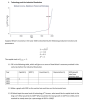 1. Technology and the Industrial Revolution Global Income, Maddison Historical Estimates Ind. 0500 1000 Year 1500 2000 Suppose Britain's economy in the year 1500 is described by the following production function and parameters: s0.2 δ 0.1 The capital stock is K15001 1.1.Fill in the following table, which will give us a sense of how Britain's economy evolved in the centuries before the Industrial Revolution. Year Capital Kt GDPY InvestmentI Depreciation Dt GDP growth rate from previous yea 1500 1501 1502...
Write a short note on health problems during the industrial revolution and public health responses to these problems
Write a short note on health problems during the industrial revolution and public health responses to these problems
A small research about fourth industrial revolution Proposed research methodology of fourth industrial revolution The fo...
A small research about fourth industrial revolution Proposed research methodology of fourth industrial revolution The following headers may be considered: o Introduction and overview o Proposed research strategy (e.g. surveys, case studies, etc.) o Data that will be collected (the themes, topics, ideas, that will be addressed during interviews or surveys) o Sources of data / research participants / sampling o Data collection method (e.g. interviews, surveys) o Data treatment / analysis approach o Ethical issues in data collection o...
 During the Industrial Revolution, the increase in wages relative to price of coal in Britain OCreated the incentive to innovate less capital-intensive technologies resulting in cheaper machines. Created incentives to move labor-intensive work to France. Created incentives to begin colonizing India. Created the incentive to innovate more capital-intensive technologies.
 Draw a steady-state diagram showing Britain before the
industrial revolution. Label the capital stock in 1500 through 1502
as well as
steady-state capital, steady-state investment, and steady-state
output.
Numbers #1.4-1.6
1 Technology and the Industrial Revolution Global Income, Maddison Historical Estimatas nd Re Suppose Britain's economy in the year 1500 is described by the following production function and parameters: s= 0.2 8 0.1 The capital stock is K1500 = 1 1.1. Fill in the following table, which will give us...
Draw a steady-state diagram showing Britain before the
industrial revolution. Label the capital stock in 1500 through 1502
as well as
steady-state capital, steady-state investment, and steady-state
output.
Numbers #1.4-1.6
1 Technology and the Industrial Revolution Global Income, Maddison Historical Estimatas nd Re Suppose Britain's economy in the year 1500 is described by the following production function and parameters: s= 0.2 8 0.1 The capital stock is K1500 = 1 1.1. Fill in the following table, which will give us...
 4. During the industrial revolution, there were two phenotypes of a particular species of moth, dark gray and light gray. Before the industrial revolution, the population of moths consisted of 1839 dark gray moths and 121 light gray moths as dark grey moths could easily blend into trees and escape detection by predators. After the industrial revolution, the population of moths consisted of 1607 light gray moths and 523 dark gray moths as light gray moths could now easily blend...
 1. Technology and the Industrial Revolution Global Income, Maddison Historical Estimates Ind. 0500 1000 Year 1500 2000 Suppose Britain's economy in the year 1500 is described by the following production function and parameters: s0.2 δ 0.1 The capital stock is K15001 1.1.Fill in the following table, which will give us a sense of how Britain's economy evolved in the centuries before the Industrial Revolution. Year Capital Kt GDPY InvestmentI Depreciation Dt GDP growth rate from previous yea 1500 1501 1502...
Most questions answered within 3 hours.
-
Where is the error in this code sequence?
String s1 = "Hello";
String s2 = "ello";...
asked 10 months ago -
Financial data for Joel de Paris, Inc., for last year
follow:
Joel de Paris, Inc.
Balance...
asked 10 months ago -
Consider this reaction:
Al2(SO4)3 (aq)+ BaCl3
(aq) Al2Cl6 (aq)- +
3BaSO4(s) . What is the...
asked 10 months ago -
Suppose that Savneet is considering increasing her
recent random sample from 20 car rentals to 40...
asked 10 months ago -
Trucks arrive at an unloading terminal at an average rate of 120
per hour.
Trucks arrive...
asked 10 months ago -
Why are methanol and ethanol completely soluble in water while
octanol is not very little soluble....
asked 10 months ago -
A facilities manager at a university reads in a research report
that the mean amount of...
asked 10 months ago -
When the CuSO4 is rehydrated by adding water to the anhydrous
compound, is this an endothermic...
asked 10 months ago -
A ray of sunlight is passing from diamond into crown glass; the
angle of incidence is...
asked 10 months ago -
A block of mass 0.249 kg is placed on top of a light, vertical
spring of...
asked 10 months ago -
how do the kidneys compensate in the presences of acidosis
a) trigger hyperventilate
b) reserve acid...
asked 10 months ago -
Question 501 pts
The rental rate of capital to the firm increases. Which of the
following...
asked 10 months ago