A peptide from a novel bacterial protein was isolated and sequenced. The amino acid sequence is...
A peptide from a novel bacterial protein was isolated and sequenced. The amino acid sequence is NH2-Leu-Met-Pro-Tyr-Ser-Ala-Ala-Pro-Cys-Leu-Trp-Glu-Ala-Gly-Asp-Arg-COOH. To verify and clone the gene encoding this protein from this uncharacterized bacterium, a student has to purify the bacterial genomic DNA and use it as the template to isolate the DNA fragment that encodes this peptide using PCR. The student plans to design a pair of oligonucleotides as the forward and reverse primers to PCR the DNA fragment that encodes this peptide. How does the student design these forward and reverse oligonucleotides? How does he/she identify the bacterial DNA fragment encoding this peptide with confidence? What is the chance to obtain this DNA fragment (how many DNA fragments he/she has to minimally sequence)?
Homework Answers
What we have is the following protein sequence
NH2-Leu-Met-Pro-Tyr-Ser-Ala-Ala-Pro-Cys-Leu-Trp-Glu-Ala-Gly-Asp-Arg-COOH
(Protein sequence - LMPYSAAPCLWEAGDR)
So, Leucine is coded by the following codons in bacteria (Leu) – TTA/TTG/CTT/CTC/CTA/CTG
Methionine (Met) – ATG
Proline (Pro) – CCT/CCC/CCA/CCG
Tyrosine (Tyr) – TAT/TAC
Serine (Ser) – TCT/TCC/TCA/TCG
Alanine (Ala) – GCT/GCC/GCA/GCG
Cysteine (Cys) – TGT/TGC
Tryptophan (Trp) – TGG
Glutamic Acid (Glu) – GAA/GAG
Glycine (Gly) – GGT/GGG/GGA/GGC
Aspartic Acid (Asp) – GAT/GAC
(Source - https://www.genscript.com/tools/codon-frequency-table)
To amplify from genomic DNA, forward and reverse primer, both to be designed should be about 15-18 basepairs each.
Step 1
Go to NCBI Blast and do a protein BLAST search. The link is
https://blast.ncbi.nlm.nih.gov/Blast.cgi
From there, choose the best suited protein sequence. Make sure you choose
- Complete cDNA sequences (do not use ESTs, partial cDNAs, exons or introns).
- Sequences of bacteria (and not humans, or other kingdoms or archaebacteria, etc)
Generally, the first codon in an amino acid sequence is “Methionine”. So, I would consider the first and only Methionine in the sequence to be the first amino acid of the protein.
So, the first sequence from the list is of bacteria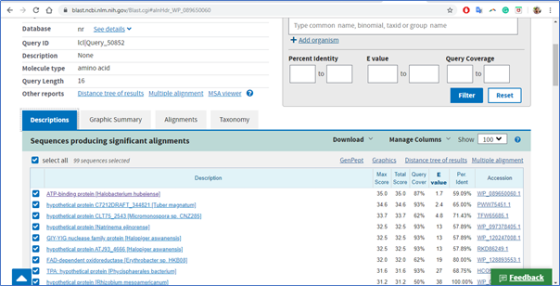
Step 2
I would take the first sequence, and then go to select “Sequence ID”.
A new page will open, which looks like this
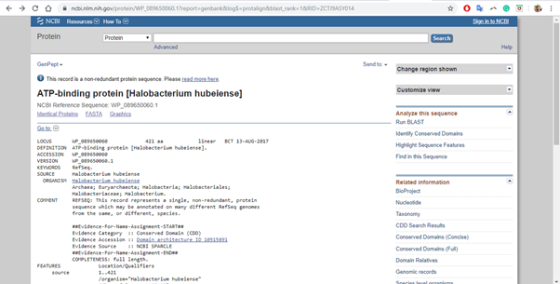
Go to FASTA on top and it will show you the protein sequence. From the protein sequence, you can get the gene sequence and check which all codons have been used more for each amino acid given.
Now the next step is primer design. The key to primer design based
on an alignment of amino acid sequences is focusing on the
relationship between the amino acid sequence and the nucleotide
sequence(s) that may code for it. This step in molecular
cloning by PCR is very important. Nearly every other
step requires adherence to a strict protocol, but luck also matter
with regards to with degenerate primer design.
Since the gene is unknown, the primers have high possibility that they would end up being degenerate primers and the whole process would be a hit and trial. A "good" primer pair has the following characteristics:
- Minimal degeneracy to insure the maximum likelihood of a sufficient concentration of the correct primer.
- Maximum specificity at the 3' end to optimize binding of primer to template.
- Minimal hairpin formation within the primer, especially producing a 3' end annealed to a potential template.
- Minimal primer dimer formation with one primer itself or with the other member of the pair, especially leaving an extendable 3' end.
- Approximately equal melting temperatures to simplify establishing the PCR reaction conditions.
So, starting with Methionine as N’terminal Amino acid, the
sequence of Forward Primer could be
ATGCCTTATTCTGCT (15 bp)
ATGCCTTATTCTGCC (15 bp)
ATGCCTTATTCTGCA (15bp)
ATGCCTTATTCTGCG (15 bp)
ATGCCTTATTCCGCT (15 bp)
ATGCCTTATTCCGCC (15 bp)
And so on… There could be many possibilities of a degenerate Forward primer. Similarly, for Reverse primer, considering the last codon to be a stop codon (TAA/TAG/TGA)
Hairpin, dimer formation, and the melting temperature (Tm), can be calculated using a Java applet called NetPrimer, available online at
http://www.premierbiosoft.com/netprimer/netprlaunch/netprlaunch.html. Hairpins and primer dimers should be avoided if at all possible, and melting temperatures for a forward and reverse pair should be within 5oC of each other.
It is a good plan to design two forward primers and two reverse primers for each sequence you wish to amplify. At least one combination may work for you! It is impossible to predict the success of any particular primer pair. Following these suggestions should help you in your cloning efforts, but there are no guarantees. Of course, the very best primers are those that give you one well-amplified product of the size and sequence of the thing you’re after!
Add Answer to:
A peptide from a novel bacterial protein was isolated and
sequenced. The amino acid sequence is...
28. What is the amino acid sequence that will be produced from this original DNA sequence:...
 28. What is the amino acid sequence that will be produced from this original DNA sequence: 3' GCATGTACACCTTGGCGACGACTGCTTA 5' a. Met - Tyr - Asn - Thr - Leu - Ala - Thr-Thr - Ala b. Met - Trp -Asn-Arg - Cys C. Ala-Lys - Thr-Pro-Gly - Asp - Asp - Cys d. Arg - Thr-Cys - Gly-Pro-Leu-Leu - Thr - Asn e. None of the above Using the original DNA OG the new mutat
Table 1: Partial RPE65 protein sequence (amino acids 41-60) for the 9-year-old LCA patient. Unmutated Protein...
 Table 1: Partial RPE65 protein sequence (amino acids 41-60) for the 9-year-old LCA patient. Unmutated Protein Sequence Patient's Allele 1 Protein Sequence Patient's Allele 2 Protein Sequence START...Ser-Leu-Leu-Arg-Cyc-Gly-Pro-Gly-Leu-Phe-Glu-Val-Gly-Ser-Glu-Pro-Phe-Tyr- His-Gly...STOP START...Ser-Leu-Leu-Gin-Cyc-Gly-Pro-Gly-Leu-Phe-Glu-Val-Gly-Ser-Glu-Pro-Phe-Tyr- His-Gly...STOP START...Ser-Leu-Leu-Gin-Cyc-Gly-Pro-Gly-Leu-Phe-Glu-Val-Gly-Ser-Glu-Pro-Phe-Tyr- His-Gly...STOP Table 2. Partial RPE65 protein sequence (amino acids 61-70 and 291–300) for the 11-year-old LCA patient. Unmutated Protein Sequence Patient's Allele 1 Protein Sequence Patient's Allele 2 Protein Sequence START...Phe-Asp-Gly-Gln-Ala-Leu-Leu-His-Lys-Phe...lle-Ala-Asp-Lys-Lys-Arg-Lys-Lys- Tyr-Leu...STOP START...Phe-Asp-Gly-Gln-Ala-Leu-Leu-Tyr-Lys-Phe...lle-Ala-Asp-Lys-Lys-Arg-Lys-Lys- Tyr-Leu...STOP START...Phe-Asp-Gly-Gln-Ala-Leu-Leu-His-Lys-Phe...lle-Ala-Asp-Lys-STOP Source: Data from Russell et al. (2017). Use Tables 1 and 2 to...
Table 1: Partial RPE65 protein sequence (amino acids 41-60) for the 9-year-old LCA patient. Unmutated Protein...
 Table 1: Partial RPE65 protein sequence (amino acids 41-60) for the 9-year-old LCA patient. Unmutated Protein Sequence Patient's Allele 1 Protein Sequence Patient's Allele 2 Protein Sequence START...Ser-Leu-Leu-Arg-Cyc-Gly-Pro-Gly-Leu-Phe-Glu-Val-Gly-Ser-Glu-Pro-Phe-Tyr- His-Gly...STOP START...Ser-Leu-Leu-Gin-Cyc-Gly-Pro-Gly-Leu-Phe-Glu-Val-Gly-Ser-Glu-Pro-Phe-Tyr- His-Gly...STOP START...Ser-Leu-Leu-Gin-Cyc-Gly-Pro-Gly-Leu-Phe-Glu-Val-Gly-Ser-Glu-Pro-Phe-Tyr- His-Gly...STOP Table 2. Partial RPE65 protein sequence (amino acids 61-70 and 291-300) for the 11-year-old LCA patient. Unmutated Protein Sequence Patient's Allele 1 Protein Sequence Patient's Allele 2 Protein Sequence START...Phe-Asp-Gly-Gln-Ala-Leu-Leu-His-Lys-Phe...lle-Ala-Asp-Lys-Lys-Arg-Lys-Lys- Tyr-Leu...STOP START...Phe-Asp-Gly-In-Ala-Leu-Leu-Tyr-Lys-Phe...Ile-Ala-Asp-Lys-Lys-Arg-Lys-Lys- Tyr-Leu...STOP START...Phe-Asp-Gly-Gln-Ala-Leu-Leu-His-Lys-Phe...lle-Ala-Asp-Lys-STOP Source: Data from Russell et al. (2017). Use Tables 1 and 2 to...
Question 13 of 19 > Suppose Kara has isolated a peptide and must determine the amino...
 Question 13 of 19 > Suppose Kara has isolated a peptide and must determine the amino acid sequence. After one cycle of Edman degradation on a sample of the peptide, she produces a phenylthiohydantoin (PTH) derivative, OH Treatment with cyanogen bromide on another sample of her peptide gives her the fragments • Lys-Pro-Ala-Met, • Pro-Asp. • Leu-Ile-Cys-Trp-Met, and • Thr-Arg.Met. She also digested a sample of her peptide with the enzyme chymotrpsin. One of the fragments produced after treatment with...
This question has multiple parts. Work all the parts to get the most points. The amino...
 This question has multiple parts. Work all the parts to get the most points. The amino acid sequence across a region of interest in a protein is: Asn-Ser-Trp-Ser-Gly-Pro-Thr-Ile-Val-Ala-Ala-His-Lys-Leu-Pro-Asn-Ser The nucleotide sequence encoding this region begins and ends with an EcoRI site, making it easy to clone the sequence and amplify it using polymerase chain reaction (PCR). a Which of the following is a possible nucleotide sequence of this region. DNA Sequence: O 5'-AATTCAGGTATGCACCCGGGAAAGTTAGCCTCTTGGTTCGTAGGGAATTCA-3' O 5'-AATTCGTGGAGCGGTCCGACAATCGTAGCTGCACATAAGCTGCCGAATTCT-3' O 5'-AATTCGCGTATCGCATCCGAAGGTCCATTCATGCATTGCGTAACGAATTCG-3' O 5'-AATTCGATGCCAGGTGGCAATCTGTTCTATTTCGCACGTCAGCAGAATTCG-3' Submit
Suppose part of the amino acid sequence of a protein is N... Gly - Ala -...
 Suppose part of the amino acid sequence of a protein is N... Gly
- Ala - Pro - Arg - Lys ...C. Which of the following amino acid
sequences could result from a frameshift mutation (+1 or -1) in the
part of the gene that encodes this sequence of amino acids?
Ο N... Gly - Ala - Asn - Ser - Leu ...C Ο Ν...Αla - Ala - Arg - Pro - Lys...C Ο Ν...Gly - Gly - Thr -...
Suppose part of the amino acid sequence of a protein is N... Gly
- Ala - Pro - Arg - Lys ...C. Which of the following amino acid
sequences could result from a frameshift mutation (+1 or -1) in the
part of the gene that encodes this sequence of amino acids?
Ο N... Gly - Ala - Asn - Ser - Leu ...C Ο Ν...Αla - Ala - Arg - Pro - Lys...C Ο Ν...Gly - Gly - Thr -...
A DNA sequence that reads TAC CCC GAA will code for a protein with what ammo...
 A DNA sequence that reads TAC CCC GAA will code for a protein with what ammo acid sequence? A. Met-Pro-Glu B. Tyr-Pro-Glu C. Tyr-Gly-Lcu D. Met-G I y-Leu E. Met-Pro-Lcu If the sequence on at RNA is UAC. then the sequence on the mRNA is: A. AUG B. UAC C.ATG D. CAUWhat happens at the "P" site on the ribosome? A. A peptide bond is formedB. A protein is released C. The ribosome prepares for translation D. There is no...
You have a small gene that encodes the following amino acid: N-MET-ASP-SER-VAL-ALA-ARG-PHE-MET-TRP-C. There is a single...
You have a small gene that encodes the following amino acid: N-MET-ASP-SER-VAL-ALA-ARG-PHE-MET-TRP-C. There is a single mutation in the DNA that causes a change in the amino acid sequence to: N-MET-VAL-GLN-TRP-PRO-ASP-LEU-CYS-GLY-C. a) What kind of mutation is this? Explain. (2 points) b) Indicate the DNA sequence (coding strand) of the gene. Show the original DNA sequence then the mutated sequence. Wild type DNA: Mutant DNA: You have another mutation (a different mutation from the one described in parts a and...
A small portion of the human transport protein amino acid sequence is shown below. The upper...
 A small portion of the human transport protein amino acid sequence is shown below. The upper sequence is associated with darker skin, and the lower sequence is associated with lighter skin. What DNA base-pair change created the light-skin form of the human protein from the gene that coded for the dark-skir form? Ala-Gly Ala ThrPhe Ala Gly-Thr-Thr - Phe SECOND BASE SUAU TI Phe TUUU UUC UUA UUG] TUCU UCC UCA UCG Ser (UAC LUGU) UGC UAA Stop UAG Stop...
15. Transcribe into mRNA and then translate into amino acids (protein) the following DNA sequence TAC...
 15. Transcribe into mRNA and then translate into amino acids (protein) the following DNA sequence TAC ATG TCT AGG ATC. Write out the tRNA anticodons for each of the 5 codons as well. What is the complementary DNA sequence for the above DNA (the complementary sequence would be produced in DNA replication)? Suggested Format: DNA: TAC ATG TCT AGG ATC. Complementary: mRNA based on DNA: TRNAs that would pair with mRNA (the anticodon): Amino Acid Sequence: To transcribe the sequence...
 28. What is the amino acid sequence that will be produced from this original DNA sequence: 3' GCATGTACACCTTGGCGACGACTGCTTA 5' a. Met - Tyr - Asn - Thr - Leu - Ala - Thr-Thr - Ala b. Met - Trp -Asn-Arg - Cys C. Ala-Lys - Thr-Pro-Gly - Asp - Asp - Cys d. Arg - Thr-Cys - Gly-Pro-Leu-Leu - Thr - Asn e. None of the above Using the original DNA OG the new mutat
 Table 1: Partial RPE65 protein sequence (amino acids 41-60) for the 9-year-old LCA patient. Unmutated Protein Sequence Patient's Allele 1 Protein Sequence Patient's Allele 2 Protein Sequence START...Ser-Leu-Leu-Arg-Cyc-Gly-Pro-Gly-Leu-Phe-Glu-Val-Gly-Ser-Glu-Pro-Phe-Tyr- His-Gly...STOP START...Ser-Leu-Leu-Gin-Cyc-Gly-Pro-Gly-Leu-Phe-Glu-Val-Gly-Ser-Glu-Pro-Phe-Tyr- His-Gly...STOP START...Ser-Leu-Leu-Gin-Cyc-Gly-Pro-Gly-Leu-Phe-Glu-Val-Gly-Ser-Glu-Pro-Phe-Tyr- His-Gly...STOP Table 2. Partial RPE65 protein sequence (amino acids 61-70 and 291–300) for the 11-year-old LCA patient. Unmutated Protein Sequence Patient's Allele 1 Protein Sequence Patient's Allele 2 Protein Sequence START...Phe-Asp-Gly-Gln-Ala-Leu-Leu-His-Lys-Phe...lle-Ala-Asp-Lys-Lys-Arg-Lys-Lys- Tyr-Leu...STOP START...Phe-Asp-Gly-Gln-Ala-Leu-Leu-Tyr-Lys-Phe...lle-Ala-Asp-Lys-Lys-Arg-Lys-Lys- Tyr-Leu...STOP START...Phe-Asp-Gly-Gln-Ala-Leu-Leu-His-Lys-Phe...lle-Ala-Asp-Lys-STOP Source: Data from Russell et al. (2017). Use Tables 1 and 2 to...
 Table 1: Partial RPE65 protein sequence (amino acids 41-60) for the 9-year-old LCA patient. Unmutated Protein Sequence Patient's Allele 1 Protein Sequence Patient's Allele 2 Protein Sequence START...Ser-Leu-Leu-Arg-Cyc-Gly-Pro-Gly-Leu-Phe-Glu-Val-Gly-Ser-Glu-Pro-Phe-Tyr- His-Gly...STOP START...Ser-Leu-Leu-Gin-Cyc-Gly-Pro-Gly-Leu-Phe-Glu-Val-Gly-Ser-Glu-Pro-Phe-Tyr- His-Gly...STOP START...Ser-Leu-Leu-Gin-Cyc-Gly-Pro-Gly-Leu-Phe-Glu-Val-Gly-Ser-Glu-Pro-Phe-Tyr- His-Gly...STOP Table 2. Partial RPE65 protein sequence (amino acids 61-70 and 291-300) for the 11-year-old LCA patient. Unmutated Protein Sequence Patient's Allele 1 Protein Sequence Patient's Allele 2 Protein Sequence START...Phe-Asp-Gly-Gln-Ala-Leu-Leu-His-Lys-Phe...lle-Ala-Asp-Lys-Lys-Arg-Lys-Lys- Tyr-Leu...STOP START...Phe-Asp-Gly-In-Ala-Leu-Leu-Tyr-Lys-Phe...Ile-Ala-Asp-Lys-Lys-Arg-Lys-Lys- Tyr-Leu...STOP START...Phe-Asp-Gly-Gln-Ala-Leu-Leu-His-Lys-Phe...lle-Ala-Asp-Lys-STOP Source: Data from Russell et al. (2017). Use Tables 1 and 2 to...
 Question 13 of 19 > Suppose Kara has isolated a peptide and must determine the amino acid sequence. After one cycle of Edman degradation on a sample of the peptide, she produces a phenylthiohydantoin (PTH) derivative, OH Treatment with cyanogen bromide on another sample of her peptide gives her the fragments • Lys-Pro-Ala-Met, • Pro-Asp. • Leu-Ile-Cys-Trp-Met, and • Thr-Arg.Met. She also digested a sample of her peptide with the enzyme chymotrpsin. One of the fragments produced after treatment with...
 This question has multiple parts. Work all the parts to get the most points. The amino acid sequence across a region of interest in a protein is: Asn-Ser-Trp-Ser-Gly-Pro-Thr-Ile-Val-Ala-Ala-His-Lys-Leu-Pro-Asn-Ser The nucleotide sequence encoding this region begins and ends with an EcoRI site, making it easy to clone the sequence and amplify it using polymerase chain reaction (PCR). a Which of the following is a possible nucleotide sequence of this region. DNA Sequence: O 5'-AATTCAGGTATGCACCCGGGAAAGTTAGCCTCTTGGTTCGTAGGGAATTCA-3' O 5'-AATTCGTGGAGCGGTCCGACAATCGTAGCTGCACATAAGCTGCCGAATTCT-3' O 5'-AATTCGCGTATCGCATCCGAAGGTCCATTCATGCATTGCGTAACGAATTCG-3' O 5'-AATTCGATGCCAGGTGGCAATCTGTTCTATTTCGCACGTCAGCAGAATTCG-3' Submit
 Suppose part of the amino acid sequence of a protein is N... Gly
- Ala - Pro - Arg - Lys ...C. Which of the following amino acid
sequences could result from a frameshift mutation (+1 or -1) in the
part of the gene that encodes this sequence of amino acids?
Ο N... Gly - Ala - Asn - Ser - Leu ...C Ο Ν...Αla - Ala - Arg - Pro - Lys...C Ο Ν...Gly - Gly - Thr -...
Suppose part of the amino acid sequence of a protein is N... Gly
- Ala - Pro - Arg - Lys ...C. Which of the following amino acid
sequences could result from a frameshift mutation (+1 or -1) in the
part of the gene that encodes this sequence of amino acids?
Ο N... Gly - Ala - Asn - Ser - Leu ...C Ο Ν...Αla - Ala - Arg - Pro - Lys...C Ο Ν...Gly - Gly - Thr -...
 A DNA sequence that reads TAC CCC GAA will code for a protein with what ammo acid sequence? A. Met-Pro-Glu B. Tyr-Pro-Glu C. Tyr-Gly-Lcu D. Met-G I y-Leu E. Met-Pro-Lcu If the sequence on at RNA is UAC. then the sequence on the mRNA is: A. AUG B. UAC C.ATG D. CAUWhat happens at the "P" site on the ribosome? A. A peptide bond is formedB. A protein is released C. The ribosome prepares for translation D. There is no...
 A small portion of the human transport protein amino acid sequence is shown below. The upper sequence is associated with darker skin, and the lower sequence is associated with lighter skin. What DNA base-pair change created the light-skin form of the human protein from the gene that coded for the dark-skir form? Ala-Gly Ala ThrPhe Ala Gly-Thr-Thr - Phe SECOND BASE SUAU TI Phe TUUU UUC UUA UUG] TUCU UCC UCA UCG Ser (UAC LUGU) UGC UAA Stop UAG Stop...
 15. Transcribe into mRNA and then translate into amino acids (protein) the following DNA sequence TAC ATG TCT AGG ATC. Write out the tRNA anticodons for each of the 5 codons as well. What is the complementary DNA sequence for the above DNA (the complementary sequence would be produced in DNA replication)? Suggested Format: DNA: TAC ATG TCT AGG ATC. Complementary: mRNA based on DNA: TRNAs that would pair with mRNA (the anticodon): Amino Acid Sequence: To transcribe the sequence...
Most questions answered within 3 hours.
-
Where is the error in this code sequence?
String s1 = "Hello";
String s2 = "ello";...
asked 10 months ago -
Financial data for Joel de Paris, Inc., for last year
follow:
Joel de Paris, Inc.
Balance...
asked 10 months ago -
Consider this reaction:
Al2(SO4)3 (aq)+ BaCl3
(aq) Al2Cl6 (aq)- +
3BaSO4(s) . What is the...
asked 10 months ago -
Suppose that Savneet is considering increasing her
recent random sample from 20 car rentals to 40...
asked 10 months ago -
Trucks arrive at an unloading terminal at an average rate of 120
per hour.
Trucks arrive...
asked 10 months ago -
Why are methanol and ethanol completely soluble in water while
octanol is not very little soluble....
asked 10 months ago -
A facilities manager at a university reads in a research report
that the mean amount of...
asked 10 months ago -
When the CuSO4 is rehydrated by adding water to the anhydrous
compound, is this an endothermic...
asked 10 months ago -
A ray of sunlight is passing from diamond into crown glass; the
angle of incidence is...
asked 10 months ago -
A block of mass 0.249 kg is placed on top of a light, vertical
spring of...
asked 10 months ago -
how do the kidneys compensate in the presences of acidosis
a) trigger hyperventilate
b) reserve acid...
asked 10 months ago -
Question 501 pts
The rental rate of capital to the firm increases. Which of the
following...
asked 10 months ago