Which of the following characters are shared by echinoderms and corals? a. no excretory system b....
Which of the following characters are shared by echinoderms and corals?
a. no excretory system
b. radial symmetry
c. no respiratory system
d. no head
e. all of the above
Homework Answers
Coral are in the phylum cnidarians. Both echinoderms and corals have radial symmetry in common. Hence, correct option is b.
Add Answer to:
Which of the following characters are shared by echinoderms and
corals?
a. no excretory system
b....
Which of the following is NOT a characteristic of ll Fish? A) two-chambered heart B) aquatic...
 Which of the following is NOT a characteristic of ll Fish? A) two-chambered heart B) aquatic life C) presence of jaws. D) skin with scales E) gills as respiratory organ. Which organ system(s) is /are present in flatworms? A) muscular B) digestive C) reproductive 95. D) excretory E) all of the above. What is characteristic of all ecdysozoans? A) the deuterostome condition. B) a pseudocoelom. C) some kind of exoskeleton, or hard outer covering. D) aglle, speedy, and powerful locomotion....
QUESTION 5 Which of the following traits are associated with Echinoderms? O A. Water vascular system...
 QUESTION 5 Which of the following traits are associated with Echinoderms? O A. Water vascular system for movement B. Cells with stinging structures (nematocytes) Dorsoventrally flattened; no digestive tract Lacks true tissues Segmented body wall and internal organs OC. OD. E. QUESTION 41 While swimming in the ocean, you notice a floating organism with a radial body plan that caught a fish in its tentacles. You probably are looking at OA A flatworm OB. An octopus O C. The medusa...
Which of the following are features of Echinoderms? (mark all that apply) Deuterostome development Bilateral symmetry...
 Which of the following are features of Echinoderms? (mark all that apply) Deuterostome development Bilateral symmetry Complete nervous system Lack of tissues Endoskeleton Exoskeleton
The most commonly infected organ system is the A. Excretory B. Circulatory C. Digestive D. Respiratory...
The most commonly infected organ system is the A. Excretory B. Circulatory C. Digestive D. Respiratory Acute respiratory infections are most common in A. Children under 5 in developing countries B. Children under 5 in developed countries C. Elderly in developing countries D. Elderly in developed countries Which factor contributed most to the measles outbreak at Disneyland in 2015? A. Reduced vaccination rates B. Measles evolution C. Ineffective batches of the MMR vaccine D. Poor sanitation at the Disneyland parks
Which of the following s NOT a characteristic of all ah? B) aquatic life c) presence...
 Which of the following s NOT a characteristic of all ah? B) aquatic life c) presence of jaws. DI skin with scales E) gills as respiratory organ 95. Which organ systemls) is /are present in flatworms? A) muscular 8) digestive C) reproductive D) excretory El all of the above 96. What is characteristic of all ecdysozoans? A) the deuterastome condion B) a pseudoccelom C) some kind of exoskeleton, or hard outer covering. D) agle, speedy, and powerful locomotion. 6) the...
1. Which of the following features is found in the common ancestor of the deuterostomes? Radial...
1. Which of the following features is found in the common ancestor of the deuterostomes? Radial symmetry Notochord Pharyngeal slits 2. Which of the deuterostome groups does not display bilateral symmetry at some time during their development? Echinoderms Hemichordates Chordates None of the above 3. Which of the following deuterostome groups include species that live on land? Hemichordates Chordates Echinoderms
19. In the human urinary/excretory system, there are two: Check all that apply. A. nephrons B....
 19. In the human urinary/excretory system, there are two: Check all that apply. A. nephrons B. ureters C. collecting ducts D. kidneys E. urethras Which cannot be considered an antigen? Check all that apply A. a foreign protein or cell B. an antibody C. something you are allergic to D. a transplanted organ E. all of these are antigens 21. What happens to most water, amino acids and glucose in the filtrate of the nephron? A. It is filtered again...
11. Which of the following pairs are mismatched in arthropods? A. compound eyes-vision B. olfactory receptors-smell...
 11. Which of the following pairs are mismatched in arthropods? A. compound eyes-vision B. olfactory receptors-smell antennae - touch & sense environment tube feet-locomotion 12· The distinction between protostomes and deutensames is based on differences in their A. digestive tracts B. nervous systems C. circulatory systenss E. eye spots 13. Most mollusks have a A. jointed appendages B. suckers used in for feeding. C. radula D. tube feet E. teeth 14. Which of the following pairs are mismatched in mollusks,...
The functions of the respiratory system include which of the following? d. Converting glucose into ATP...
 The functions of the respiratory system include which of the following? d. Converting glucose into ATP through cellular respiration b. Gas exchange across the alveoli C. Gas exchange between the blood vessels and tissues of the body d. All of the above e. B and Care both functions of the respiratory system
butterfly It appears to possess the following characters Protein (chitin) exoskeleton B Calcium carbonate shell C...
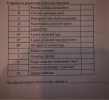 butterfly
It appears to possess the following characters Protein (chitin) exoskeleton B Calcium carbonate shell C Waterproof skin (fully terrestrial) D Segmentation (repeated parts) E Jointed legs F* 3 pairs of jointed legs 4 pairs of jointed legs (not claws) H* 20+ pairs of jointed legs Radial symmetry Grasping claw(s) Single muscular hydrostatic "foot" L Multiple hydrostatic “tube-feet” Jointed antennae This species appears most closely related to
butterfly
It appears to possess the following characters Protein (chitin) exoskeleton B Calcium carbonate shell C Waterproof skin (fully terrestrial) D Segmentation (repeated parts) E Jointed legs F* 3 pairs of jointed legs 4 pairs of jointed legs (not claws) H* 20+ pairs of jointed legs Radial symmetry Grasping claw(s) Single muscular hydrostatic "foot" L Multiple hydrostatic “tube-feet” Jointed antennae This species appears most closely related to
 Which of the following is NOT a characteristic of ll Fish? A) two-chambered heart B) aquatic life C) presence of jaws. D) skin with scales E) gills as respiratory organ. Which organ system(s) is /are present in flatworms? A) muscular B) digestive C) reproductive 95. D) excretory E) all of the above. What is characteristic of all ecdysozoans? A) the deuterostome condition. B) a pseudocoelom. C) some kind of exoskeleton, or hard outer covering. D) aglle, speedy, and powerful locomotion....
 QUESTION 5 Which of the following traits are associated with Echinoderms? O A. Water vascular system for movement B. Cells with stinging structures (nematocytes) Dorsoventrally flattened; no digestive tract Lacks true tissues Segmented body wall and internal organs OC. OD. E. QUESTION 41 While swimming in the ocean, you notice a floating organism with a radial body plan that caught a fish in its tentacles. You probably are looking at OA A flatworm OB. An octopus O C. The medusa...
 Which of the following are features of Echinoderms? (mark all that apply) Deuterostome development Bilateral symmetry Complete nervous system Lack of tissues Endoskeleton Exoskeleton
 Which of the following s NOT a characteristic of all ah? B) aquatic life c) presence of jaws. DI skin with scales E) gills as respiratory organ 95. Which organ systemls) is /are present in flatworms? A) muscular 8) digestive C) reproductive D) excretory El all of the above 96. What is characteristic of all ecdysozoans? A) the deuterastome condion B) a pseudoccelom C) some kind of exoskeleton, or hard outer covering. D) agle, speedy, and powerful locomotion. 6) the...
 19. In the human urinary/excretory system, there are two: Check all that apply. A. nephrons B. ureters C. collecting ducts D. kidneys E. urethras Which cannot be considered an antigen? Check all that apply A. a foreign protein or cell B. an antibody C. something you are allergic to D. a transplanted organ E. all of these are antigens 21. What happens to most water, amino acids and glucose in the filtrate of the nephron? A. It is filtered again...
 11. Which of the following pairs are mismatched in arthropods? A. compound eyes-vision B. olfactory receptors-smell antennae - touch & sense environment tube feet-locomotion 12· The distinction between protostomes and deutensames is based on differences in their A. digestive tracts B. nervous systems C. circulatory systenss E. eye spots 13. Most mollusks have a A. jointed appendages B. suckers used in for feeding. C. radula D. tube feet E. teeth 14. Which of the following pairs are mismatched in mollusks,...
 The functions of the respiratory system include which of the following? d. Converting glucose into ATP through cellular respiration b. Gas exchange across the alveoli C. Gas exchange between the blood vessels and tissues of the body d. All of the above e. B and Care both functions of the respiratory system
 butterfly
It appears to possess the following characters Protein (chitin) exoskeleton B Calcium carbonate shell C Waterproof skin (fully terrestrial) D Segmentation (repeated parts) E Jointed legs F* 3 pairs of jointed legs 4 pairs of jointed legs (not claws) H* 20+ pairs of jointed legs Radial symmetry Grasping claw(s) Single muscular hydrostatic "foot" L Multiple hydrostatic “tube-feet” Jointed antennae This species appears most closely related to
butterfly
It appears to possess the following characters Protein (chitin) exoskeleton B Calcium carbonate shell C Waterproof skin (fully terrestrial) D Segmentation (repeated parts) E Jointed legs F* 3 pairs of jointed legs 4 pairs of jointed legs (not claws) H* 20+ pairs of jointed legs Radial symmetry Grasping claw(s) Single muscular hydrostatic "foot" L Multiple hydrostatic “tube-feet” Jointed antennae This species appears most closely related to
Most questions answered within 3 hours.
-
Where is the error in this code sequence?
String s1 = "Hello";
String s2 = "ello";...
asked 10 months ago -
Financial data for Joel de Paris, Inc., for last year
follow:
Joel de Paris, Inc.
Balance...
asked 10 months ago -
Consider this reaction:
Al2(SO4)3 (aq)+ BaCl3
(aq) Al2Cl6 (aq)- +
3BaSO4(s) . What is the...
asked 10 months ago -
Suppose that Savneet is considering increasing her
recent random sample from 20 car rentals to 40...
asked 10 months ago -
Trucks arrive at an unloading terminal at an average rate of 120
per hour.
Trucks arrive...
asked 10 months ago -
Why are methanol and ethanol completely soluble in water while
octanol is not very little soluble....
asked 10 months ago -
A facilities manager at a university reads in a research report
that the mean amount of...
asked 10 months ago -
When the CuSO4 is rehydrated by adding water to the anhydrous
compound, is this an endothermic...
asked 10 months ago -
A ray of sunlight is passing from diamond into crown glass; the
angle of incidence is...
asked 10 months ago -
A block of mass 0.249 kg is placed on top of a light, vertical
spring of...
asked 10 months ago -
how do the kidneys compensate in the presences of acidosis
a) trigger hyperventilate
b) reserve acid...
asked 10 months ago -
Question 501 pts
The rental rate of capital to the firm increases. Which of the
following...
asked 10 months ago