Megaphylls a.) Probably evolved only once b.) Are found in all the vascular plant groups c.)...
Megaphylls
a.) Probably evolved only once
b.) Are found in all the vascular plant groups
c.) Probably arose from sterile sporangia
d.) Are the characteristic leaves of club mosses
e.) Are the characteristic leaves of ferns and horsetails
Homework Answers

Add Answer to:
Megaphylls
a.) Probably evolved only once
b.) Are found in all the vascular plant groups
c.)...
3) Leaves are photosynthetic organs found on the sporophytes of most extant vascular plants. Based on...
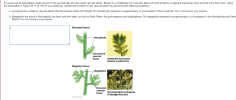 3) Leaves are photosynthetic organs found on the sporophytes of most extant vascular plants. Based on a combination of molecular data and fossil evidence, it appears that leaves have evolved more than once. Using the information in Figure 29.13 (p. 629 of your textbook), explain leaf evolution in the vascular plants by answering the following questions. a. Lycophyta are a clade of vascular plants that have leaves called microphylls. Do microphylls represent a synapomorphy or a homoplasy in the Lycophyta?...
Below is a phylogenetic tree of a few major groups of photosynthetic organisms. At each node...
 Below is a phylogenetic tree of a few major groups of photosynthetic organisms. At each node on the tree (branching point) we can list specific features, indicated by numbers, that are characteristic of the organisms higher on the tree. Using only the features provided in the list below, denoted by letters, place each feature in its appropriate spot on the tree. Each feature should be used only once. - Chlorophytes - Charophytes - Bryophytes - Club Mosses - Horsetails Terrestrial...
16. True leaves are only found in mosses, liverworts, and homworts B. c. D ferns flowering...
 16. True leaves are only found in mosses, liverworts, and homworts B. c. D ferns flowering plants ferns and seed plants trees Roots evolved red c before stems before rhizoids after stems after flowers first in mosses A seed protects the B. male gametophyte the pollen tube embryo fruit spores D Gymnosperms include A. B. mosses, liverworts, and hornworts ferns seedless plants pines flowering plants D. 20. Naked seeds are found in A B. mosses, liverworts, and homworts ferns gymnosperms...
The ancestors of plants were probably algae. True/False 2) What do plants and the green algae...
The ancestors of plants were probably algae. True/False 2) What do plants and the green algae charophytes have in common? 3) What advantages did life in land provide for plants? 4) What were the disadvantages for life on land for plants? 5) What are some differences between plants and algae? 6) How do land plants maintain moisture in their cells? 7) What structures do land plants use to obtain resources such as water, minerals, and CO2? 8) List the two...
All land plants have single cell haploid and single cell diploid states single cell haploid and...
 All land plants have single cell haploid and single cell diploid states single cell haploid and multicellular diploid states multicellular haploid and single cell diploid states multicellular haploid and multicellular diploid states A. B. C. D. E. diplontic life cycles 7. A gametophyte is B. c. 2n 3n 4n 5n A sporophyte is In 2n 3n C. D. E. 9. The dominant (bigger) state in mosses, liverworts, and hornworts is the A gametophyte sporophyte C. sporangium D. archegonium E. antheridium...
The main groups of bryophytes include all except _____. A. Hornworts B. Liverworts C. Mosses D....
The main groups of bryophytes include all except _____. A. Hornworts B. Liverworts C. Mosses D. Whisk Ferns
In vascular plants: a) the xylem transports solutes throughout the plant, while the phloem is responsible...
In vascular plants: a) the xylem transports solutes throughout the plant, while the phloem is responsible for water transport. b) vascular tissue is only found in the flowers. c) water loss by evaporation is reduced by the waxy cuticle and apical meristems. d) water is drawn up from soil to the leaves in a process called transpiration.
Justin is performing an ecological inventory of forest plants to determine the percentage of vascular and...
Justin is performing an ecological inventory of forest plants to determine the percentage of vascular and nonvascular plants. Which of the following is a nonvascular plant? pine tree rose shrub fern moss A plant s shoots and roots of plants increase in length through rapid cell division within the sporangia. gametangia. carpel. apical meristem. What is a unique feature of ferns in comparison with mosses? The sporophyte is the dominant generation in ferns. The archegonia are located on the sporophyte...
need help on these questions. bio 11b Use the image below for question 1-3 1. To...
 need help on these questions. bio 11b
Use the image below for question 1-3 1. To what clades (groups) does the above belong (select all that apply) a. Zygomycota b. Ascomycota C. Basidiomycota d. Eukaryote e. Archaea 2. What is the name of the structure in the image? a. Zygosporangium b. Ascomyspore C. Basidioangium d. Basidiospore e. Basidia 3. In regards to the structure in the image (select all that apply) a. Rough thick-walled coating b. Resistant to freezing and...
need help on these questions. bio 11b
Use the image below for question 1-3 1. To what clades (groups) does the above belong (select all that apply) a. Zygomycota b. Ascomycota C. Basidiomycota d. Eukaryote e. Archaea 2. What is the name of the structure in the image? a. Zygosporangium b. Ascomyspore C. Basidioangium d. Basidiospore e. Basidia 3. In regards to the structure in the image (select all that apply) a. Rough thick-walled coating b. Resistant to freezing and...
1. Animals probably evolved from: a). Placozoans that formed colonies b). Choanoflagellates that formed colonies c)....
1. Animals probably evolved from: a). Placozoans that formed colonies b). Choanoflagellates that formed colonies c). All protozoa d). Both a and b 2. Which of the following represent an early branch on the animal family tree? a). Placozoans that formed colonies b). Choanoflagellates that formed colonies c). All protozoa d). Both a and b 3. Feathers first evolved in reptiles.Today they are seen in reptile descendants, the ....? a). mammals b). Birds c). Insects d). Crocdilians
 3) Leaves are photosynthetic organs found on the sporophytes of most extant vascular plants. Based on a combination of molecular data and fossil evidence, it appears that leaves have evolved more than once. Using the information in Figure 29.13 (p. 629 of your textbook), explain leaf evolution in the vascular plants by answering the following questions. a. Lycophyta are a clade of vascular plants that have leaves called microphylls. Do microphylls represent a synapomorphy or a homoplasy in the Lycophyta?...
 Below is a phylogenetic tree of a few major groups of photosynthetic organisms. At each node on the tree (branching point) we can list specific features, indicated by numbers, that are characteristic of the organisms higher on the tree. Using only the features provided in the list below, denoted by letters, place each feature in its appropriate spot on the tree. Each feature should be used only once. - Chlorophytes - Charophytes - Bryophytes - Club Mosses - Horsetails Terrestrial...
 16. True leaves are only found in mosses, liverworts, and homworts B. c. D ferns flowering plants ferns and seed plants trees Roots evolved red c before stems before rhizoids after stems after flowers first in mosses A seed protects the B. male gametophyte the pollen tube embryo fruit spores D Gymnosperms include A. B. mosses, liverworts, and hornworts ferns seedless plants pines flowering plants D. 20. Naked seeds are found in A B. mosses, liverworts, and homworts ferns gymnosperms...
 All land plants have single cell haploid and single cell diploid states single cell haploid and multicellular diploid states multicellular haploid and single cell diploid states multicellular haploid and multicellular diploid states A. B. C. D. E. diplontic life cycles 7. A gametophyte is B. c. 2n 3n 4n 5n A sporophyte is In 2n 3n C. D. E. 9. The dominant (bigger) state in mosses, liverworts, and hornworts is the A gametophyte sporophyte C. sporangium D. archegonium E. antheridium...
 need help on these questions. bio 11b
Use the image below for question 1-3 1. To what clades (groups) does the above belong (select all that apply) a. Zygomycota b. Ascomycota C. Basidiomycota d. Eukaryote e. Archaea 2. What is the name of the structure in the image? a. Zygosporangium b. Ascomyspore C. Basidioangium d. Basidiospore e. Basidia 3. In regards to the structure in the image (select all that apply) a. Rough thick-walled coating b. Resistant to freezing and...
need help on these questions. bio 11b
Use the image below for question 1-3 1. To what clades (groups) does the above belong (select all that apply) a. Zygomycota b. Ascomycota C. Basidiomycota d. Eukaryote e. Archaea 2. What is the name of the structure in the image? a. Zygosporangium b. Ascomyspore C. Basidioangium d. Basidiospore e. Basidia 3. In regards to the structure in the image (select all that apply) a. Rough thick-walled coating b. Resistant to freezing and...
Most questions answered within 3 hours.
-
Where is the error in this code sequence?
String s1 = "Hello";
String s2 = "ello";...
asked 10 months ago -
Financial data for Joel de Paris, Inc., for last year
follow:
Joel de Paris, Inc.
Balance...
asked 10 months ago -
Consider this reaction:
Al2(SO4)3 (aq)+ BaCl3
(aq) Al2Cl6 (aq)- +
3BaSO4(s) . What is the...
asked 10 months ago -
Suppose that Savneet is considering increasing her
recent random sample from 20 car rentals to 40...
asked 10 months ago -
Trucks arrive at an unloading terminal at an average rate of 120
per hour.
Trucks arrive...
asked 10 months ago -
Why are methanol and ethanol completely soluble in water while
octanol is not very little soluble....
asked 10 months ago -
A facilities manager at a university reads in a research report
that the mean amount of...
asked 10 months ago -
When the CuSO4 is rehydrated by adding water to the anhydrous
compound, is this an endothermic...
asked 10 months ago -
A ray of sunlight is passing from diamond into crown glass; the
angle of incidence is...
asked 10 months ago -
A block of mass 0.249 kg is placed on top of a light, vertical
spring of...
asked 10 months ago -
how do the kidneys compensate in the presences of acidosis
a) trigger hyperventilate
b) reserve acid...
asked 10 months ago -
Question 501 pts
The rental rate of capital to the firm increases. Which of the
following...
asked 10 months ago