Speculate on how the genetic diversity effects survival of the population, and how genetic diversity could...
Speculate on how the genetic diversity effects survival of the population, and how genetic diversity could be increased. Are there negative effects of increased heterozygosity? How would we increase genetic diversity in an endangered species, such as the black-footed ferret?
Homework Answers
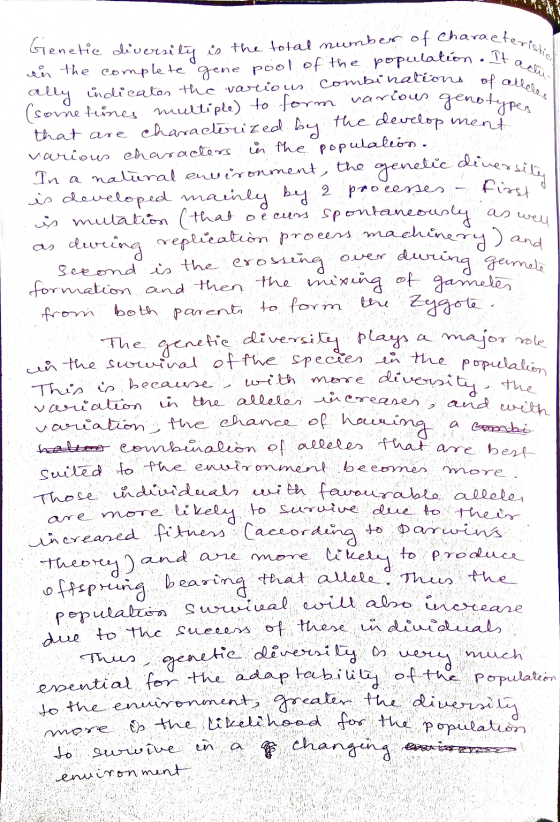
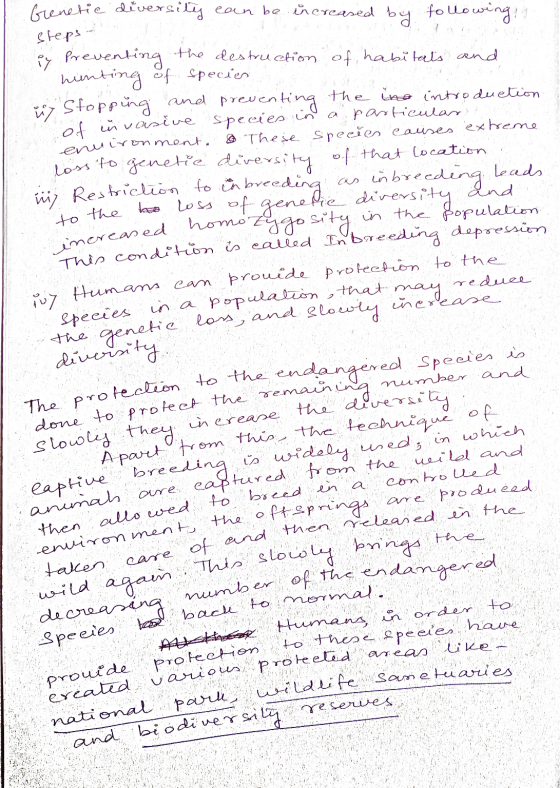
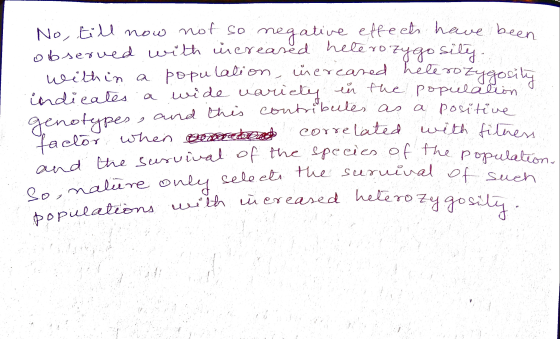
The study and analysis of genetic diversity has helped in understanding the survival concept of the population.So,in order to survive the population must maintain heterozygosity ,which is sometimes lost due to the random loss of alleles due to genetic drift which mainly includes the population Bottleneck and also the Founders effect.
Add Answer to:
Speculate on how the genetic diversity effects survival of the
population, and how genetic diversity could...
QUESTION 4 1 points Save Answer One metric of genetic diversity in a population is heterozygosity,...
 QUESTION 4 1 points Save Answer One metric of genetic diversity in a population is heterozygosity, i.e., the frequency of heterozygotes. For the marker(s) that are not in Hardy-Weinberg equilibrium, does the difference between Ho and He indicate increased or decreased heterozygosity for those markers? Increased heterozygosity Decreased heterozygosity QUESTION 5 2 points Save Answer Select all the mechanisms of evolution that could explain the deviations from H-W expected frequencies for those markers, based on the difference in heterozygosity? Selection...
Q1/ Which NEGATIVE effect may result from population augmentation? a)increased effecive population size b)increased genetic diversity...
Q1/ Which NEGATIVE effect may result from population augmentation? a)increased effecive population size b)increased genetic diversity C)genetic swamping D)reduced chance of bottleneck Q2/All EXCEPT which of the following may result in the loss of genetic diversity? a) loss of habitat b) introduction of a new race into an established population c) directed breeding practices d) population fragmentation Q3/ All EXCEPT which of the following are consequences of reduced gene flow in a population? a) increased genetic diversity b) reduced survival...
A population of timber rattlesnakes in eastern Kentucky is surveyed to estimate genetic diversity and structuring...
A population of timber rattlesnakes in eastern Kentucky is surveyed to estimate genetic diversity and structuring of the species across the landscape. Six populations are tissue sampled and are genetically analyzed; these appear to be metapopulations that are fragmented and separated by surface mining. The following data describe the distribution of genetic diversity within this population. HP = 9%; DPT = 91%. Explain these findings and why they may or may not be important knowing that 3 of these 6...
There are two meiotic events that contribute to genetic diversity in a population (random chromosomes alignment...
There are two meiotic events that contribute to genetic diversity in a population (random chromosomes alignment and crossing over) After meiosis has increased diversity, there is one more place that genetic diversity can increase even further. This place is the events leading to fertilization. Explain what happens during this stage of reproduction that increases the genetic diversity in a population even more than meiosis alone
For each of the following mechanisms (a-h), consider how it will affect genetic diversity (i.e., diversity...
For each of the following mechanisms (a-h), consider how it will affect genetic diversity (i.e., diversity of alleles) within a population and select one of the following three options that best describes this effect: (i) increase/maintain, (ii) eliminate, or (iii) no effect [No written explanation necessary]. a. Positive frequency dependent selection b. Negative frequency dependent selection c. Selection in favor of a dominant phenotype d. Selection in favor of a recessive phenotype e. Selection favoring heterozygotes over homozygotes f. Mutation...
3. You are part of a restoration ecology program that is attempting to reintroduce endangered European...
 3. You are part of a restoration ecology program that is attempting to reintroduce endangered European bison, Bison bonasus, into to suitable habitats in the Eurasia. This species went through an extreme bottleneck after they were almost wiped out during WWI. Maintaining what limited genetic diversity remains is an important priority, especially because diseases spread from cattle represent a major threat. A remote site for reintroduction has been identified in Belarus. Captive-bred bison destined for this site have been genotyped...
17.You are a geneticist studying the population genetics of Monarch butterflies. You are particularly interested in...
17.You are a geneticist studying the population genetics of Monarch butterflies. You are particularly interested in one gene for which the species has two alleles: B and b. Upon examining the alleles present in 100 individuals, you find that the B allele is very common, with an allele frequency of .6. Therefore, you calculate that there are a total of _______ b alleles present in the population. Group of answer choices A) 60 B) 80 C) 100 D) 120 E)...
Which of the following examples of natural selection would assist in maintaining the genetic diversity of...
 Which of the following examples of natural selection would assist in maintaining the genetic diversity of the population? a) Natural selection selects against larger-sized blue jay birds, and against small-sized blue jay birds. b) In alpine flowers, large-sized flowers set more seed above the evergreen tree zone, and small-sized flowers set more seeds below the evergreen tree zone. c) A small population of skunks inhabit a small burrow near McMaster University and skunk inbreeding occurs in high frequencies over several...
How could phylogenetics be useful for humans in medicine? A. if a disease is found in...
How could phylogenetics be useful for humans in medicine? A. if a disease is found in humans, it might also be found in gorillas B. if a medicinal plant has other members in the family, they may have medicinal properties as well C. if a species of bacteria causes disease, then closely related species might cure it D. if an organism is resistant to a disease, it might have other family members resistant as well Proteins that respond to environmental...
1. Population is not used in describing species. Population is a group of organisms of the...
1. Population is not used in describing species. Population is a group of organisms of the same species populating a given area, a group of individuals of the same species that live in the same area and interbreed, producing fertile offspring. Interbreeding, sexual reproduction, natural selection and color are used in describing species. Individuals in an interbreeding population share in a common gene pool. My question is can you tell me how interbreeding, sexual reproduction, natural selection and color are...
 QUESTION 4 1 points Save Answer One metric of genetic diversity in a population is heterozygosity, i.e., the frequency of heterozygotes. For the marker(s) that are not in Hardy-Weinberg equilibrium, does the difference between Ho and He indicate increased or decreased heterozygosity for those markers? Increased heterozygosity Decreased heterozygosity QUESTION 5 2 points Save Answer Select all the mechanisms of evolution that could explain the deviations from H-W expected frequencies for those markers, based on the difference in heterozygosity? Selection...
 3. You are part of a restoration ecology program that is attempting to reintroduce endangered European bison, Bison bonasus, into to suitable habitats in the Eurasia. This species went through an extreme bottleneck after they were almost wiped out during WWI. Maintaining what limited genetic diversity remains is an important priority, especially because diseases spread from cattle represent a major threat. A remote site for reintroduction has been identified in Belarus. Captive-bred bison destined for this site have been genotyped...
 Which of the following examples of natural selection would assist in maintaining the genetic diversity of the population? a) Natural selection selects against larger-sized blue jay birds, and against small-sized blue jay birds. b) In alpine flowers, large-sized flowers set more seed above the evergreen tree zone, and small-sized flowers set more seeds below the evergreen tree zone. c) A small population of skunks inhabit a small burrow near McMaster University and skunk inbreeding occurs in high frequencies over several...
Most questions answered within 3 hours.
-
Where is the error in this code sequence?
String s1 = "Hello";
String s2 = "ello";...
asked 10 months ago -
Financial data for Joel de Paris, Inc., for last year
follow:
Joel de Paris, Inc.
Balance...
asked 10 months ago -
Consider this reaction:
Al2(SO4)3 (aq)+ BaCl3
(aq) Al2Cl6 (aq)- +
3BaSO4(s) . What is the...
asked 10 months ago -
Suppose that Savneet is considering increasing her
recent random sample from 20 car rentals to 40...
asked 10 months ago -
Trucks arrive at an unloading terminal at an average rate of 120
per hour.
Trucks arrive...
asked 10 months ago -
Why are methanol and ethanol completely soluble in water while
octanol is not very little soluble....
asked 10 months ago -
A facilities manager at a university reads in a research report
that the mean amount of...
asked 10 months ago -
When the CuSO4 is rehydrated by adding water to the anhydrous
compound, is this an endothermic...
asked 10 months ago -
A ray of sunlight is passing from diamond into crown glass; the
angle of incidence is...
asked 10 months ago -
A block of mass 0.249 kg is placed on top of a light, vertical
spring of...
asked 10 months ago -
how do the kidneys compensate in the presences of acidosis
a) trigger hyperventilate
b) reserve acid...
asked 10 months ago -
Question 501 pts
The rental rate of capital to the firm increases. Which of the
following...
asked 10 months ago