topic: immunology biology 430 Are there any differences in the genetic strategies used to generate complete...
topic: immunology biology 430
Are there any differences in the genetic strategies used to generate complete V genes in T and BCRs [B-cell receptors]?
Homework Answers
One of the major roles that B cells play in an immune response is the production of antibodies, that specifically recognise and bind to proteins on the invading bacteria or virus particles. The binding of specific antibody to its target can prevent viruses from entering cells or aid phagocytes in identifying and destroying the bacteria or viruses. Given that each B cell can only produce antibody with one specificity, and that there are an enormous variety of organisms that can infect us, the immune system needs to generate vast numbers of B cells that each produce a different antibody.

Figure 1. Schematic diagram of an antibody molecule composed of two heavy chains and two light chains. Both the heavy chain and the light chain comprise a variable and a constant region. The variable regions are responsible for binding of a specific protein called an antigen.
The specificity of a particular antibody, i.e. what the antibody recognises, is determined by the shape of its variable region (Figure 1); a particular antibody will bind to a protein that has a region with a complementary structure to the antibody’s own variable region. Diversity in the specificity of antibodies is initially generated at the earliest stages of B-cell development. While still at the B-cell progenitor stage in the bone marrow, B cells randomly rearrange their variable (V), diversity (D), and joining (J) genes to form the blueprint for the variable regions of their antibodies. Diversity comes from the fact that there are multiple copies of the V, D and J genes that can be joined together in different combinations (Figure 2). In a majority of mammals, each antibody molecule is composed of both a heavy and light chain (Figure 1), which each have their own V and J genes to rearrange (only the heavy chain has D genes). Further diversity is added to the variable region genes by an enzyme called terminal deoxynucleotidyl transferase (TdT) that adds extra nucleotides between the V, D and J regions, changing the structure of the variable regions that will be produced.

Figure 2. Schematic representation of the rearrangement of variable region genes
During the course of an infection, B cells can further alter the specificity of the antibody they produce. When a mature B cell meets an antigen that its B-cell receptor recognises (the B-cell receptor comprises the antibody the cell produces anchored on the cell surface) then the B cell can undergo a process called somatic hypermutation. Here an enzyme called activation-induced cytidine deaminase (AID) makes random mutations in the antibody variable region genes. If the mutations result in an antibody that more strongly binds to their targets then these B cells will survive and may differentiate into antibody-producing plasma cells with the new specificity.
Add Answer to:
topic: immunology biology 430
Are there any differences in the genetic strategies used to
generate complete...
Which of the following strategies are used by some microbes to evade complement” Interfere with complement...
Which of the following strategies are used by some microbes to evade complement” Interfere with complement activation by the classical pathway Produce proteins that bind and inactivate complement proteins Produce proteases that destroy complement proteins Produce proteins that mimic or bind complement regulatory proteins All of the above are correct. With respect to the T cell receptor, TCR: One gene encodes the ɑ subunit, a different gene encodes the ? subunit Four genes are involved encoding both αβ and ϒδ...
Biology Questions help me 1. Germline gene therapy would correct a genetic defect in: Select one:...
Biology Questions help me 1. Germline gene therapy would correct a genetic defect in: Select one: a. an unaffected individual only. b. an unaffected individual and his or her offspring. c. an affected individual and all of his or her descendants. d. the parents of an affected individual. 2. An antigen is: Select one: a. any molecule that can elicit an immune response. b. a protein only. c. a nucleic acid only. d. a protein or nucleic acid. 3. Performing...
B - Immunology Saved Complete the sentences to review the types of vaccines available for immunization...
 B - Immunology Saved Complete the sentences to review the types of vaccines available for immunization today. killed Vaccination is a type of immunity and serves to stimulate a primary and a memory response that primes the immune system for future exposure to a pathogen. artificial, active Categories of vaccines include vaccines, which are very effective as they employ large and complex immunogens. mutate One type, called vaccines, are prepared by cultivating the desired pathogen and then treating with chemicals...
Not sure how to answer these immunology questions! Help! 1) An otherwise healthy person is involved...
Not sure how to answer these immunology questions! Help! 1) An otherwise healthy person is involved in an accident that requires kidney transplantation within a week. As the attending immunologist you are aware of three family members (no identical twins) that are willing to donate a kidney. What would you do to prepare the patient to minimize rejection?1) Detail three tests you would use to determine your ultimate donor tissue. Outline the rational that you would use to choice your...
Could you help with any of these ? and provide an explanation so I'll understand? thank...
 Could you help with any of these ? and provide an explanation
so I'll understand? thank you so much
Circle all that apply 1) A patient has inherited two defective genes for TAP2 (remember the case study from before) Which of the following are true? (circle all that apply): - The patient will have a scarcity of CD4+ T helper cells -MHC class I molecules will not be expressed to any extent on the patient's cells -MHC class II molecules...
Could you help with any of these ? and provide an explanation
so I'll understand? thank you so much
Circle all that apply 1) A patient has inherited two defective genes for TAP2 (remember the case study from before) Which of the following are true? (circle all that apply): - The patient will have a scarcity of CD4+ T helper cells -MHC class I molecules will not be expressed to any extent on the patient's cells -MHC class II molecules...
In last week's written HW you used a voltage to generate motion in a sliding metal...
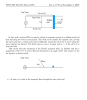 In last week's written HW you used a voltage to generate motion
in a sliding metal rail
that slid along two wires on the ground. This week you'll
consider the opposite case, moving
the rail to generate a voltage and power a lightbulb. Again the
rail is free to move along the
wires without any friction. The fixed wires are now 1 m apart
and at t = 0 the rail is 2 m
from the bulb.
This circuit will...
In last week's written HW you used a voltage to generate motion
in a sliding metal rail
that slid along two wires on the ground. This week you'll
consider the opposite case, moving
the rail to generate a voltage and power a lightbulb. Again the
rail is free to move along the
wires without any friction. The fixed wires are now 1 m apart
and at t = 0 the rail is 2 m
from the bulb.
This circuit will...
1. The type of genetic exchange between bacterial cells that can happen between isolated DNA and...
1. The type of genetic exchange between bacterial cells that can happen between isolated DNA and a live bacterial cell is: a. conjugation b. transduction c. transversion d. transformation 2. An Hfr strain of E. coli with genotype a+b+c+d+e+f+ is mated with an F¯ auxotrophic strain with the genotype a¯b¯c¯d¯e¯f¯. Conjugation is stopped at 10 minute intervals and the genotypes of the resulting conjugants are determined. The following results are obtained: after 10 minutes e+ after 20 minutes a+ e+...
genetic biology 5'-GCATGAGTCTGGTACGCTTTTAAAGC-3' 3-CATGCG-5' IIIII 3. (a) in the sequence above, what enzyme would you need...
 genetic biology
5'-GCATGAGTCTGGTACGCTTTTAAAGC-3' 3-CATGCG-5' IIIII 3. (a) in the sequence above, what enzyme would you need to extend the short stretch of nucleotides shown on the bottom strand? (b) Write the sequence of the newly synthesized fragment and label its S' and 3' end. (c) The covalent bond between these adjacent nucleotides is what type of chemical bond? After using a chemical mutagen to generate mutations in a DNA sequence, scientists noted a mutation from C to T at the...
genetic biology
5'-GCATGAGTCTGGTACGCTTTTAAAGC-3' 3-CATGCG-5' IIIII 3. (a) in the sequence above, what enzyme would you need to extend the short stretch of nucleotides shown on the bottom strand? (b) Write the sequence of the newly synthesized fragment and label its S' and 3' end. (c) The covalent bond between these adjacent nucleotides is what type of chemical bond? After using a chemical mutagen to generate mutations in a DNA sequence, scientists noted a mutation from C to T at the...
ANSWER ALL QUESTIONS FULLY AND CORRECTLY 5-1 T cells recognize antigen when the antigen a. forms...
 ANSWER ALL QUESTIONS FULLY AND CORRECTLY
5-1 T cells recognize antigen when the antigen a. forms a complex with membrane-bound MHC molecules on another host-derived cell b. is internalized by T cells via phagocytosis and subsequently binds to T-cell receptors in the endoplasmic reticulum c. is presented on the surface of a B cell on membrane-bound immunoglobulins d. forms a complex with membrane-bound MHC molecules on the T cell e. bears epitopes derived from proteins, carbohydrates, and lipids. 5-2 a....
ANSWER ALL QUESTIONS FULLY AND CORRECTLY
5-1 T cells recognize antigen when the antigen a. forms a complex with membrane-bound MHC molecules on another host-derived cell b. is internalized by T cells via phagocytosis and subsequently binds to T-cell receptors in the endoplasmic reticulum c. is presented on the surface of a B cell on membrane-bound immunoglobulins d. forms a complex with membrane-bound MHC molecules on the T cell e. bears epitopes derived from proteins, carbohydrates, and lipids. 5-2 a....
The Case Study in Cancer Part I Ann is a 27-year-old nurse working at the local...
The Case Study in Cancer Part I Ann is a 27-year-old nurse working at the local hospital in surgery. She had worked hard to move into the specialty, and she was enjoying her career, friends, and family. She and her partner had been living together for about a year, and she was content. As a nurse, Ann knew the importance of doing breast self-exams, and did them regularly. In the shower one morning, she felt a lump she wasn’t familiar...
 B - Immunology Saved Complete the sentences to review the types of vaccines available for immunization today. killed Vaccination is a type of immunity and serves to stimulate a primary and a memory response that primes the immune system for future exposure to a pathogen. artificial, active Categories of vaccines include vaccines, which are very effective as they employ large and complex immunogens. mutate One type, called vaccines, are prepared by cultivating the desired pathogen and then treating with chemicals...
 Could you help with any of these ? and provide an explanation
so I'll understand? thank you so much
Circle all that apply 1) A patient has inherited two defective genes for TAP2 (remember the case study from before) Which of the following are true? (circle all that apply): - The patient will have a scarcity of CD4+ T helper cells -MHC class I molecules will not be expressed to any extent on the patient's cells -MHC class II molecules...
Could you help with any of these ? and provide an explanation
so I'll understand? thank you so much
Circle all that apply 1) A patient has inherited two defective genes for TAP2 (remember the case study from before) Which of the following are true? (circle all that apply): - The patient will have a scarcity of CD4+ T helper cells -MHC class I molecules will not be expressed to any extent on the patient's cells -MHC class II molecules...
 In last week's written HW you used a voltage to generate motion
in a sliding metal rail
that slid along two wires on the ground. This week you'll
consider the opposite case, moving
the rail to generate a voltage and power a lightbulb. Again the
rail is free to move along the
wires without any friction. The fixed wires are now 1 m apart
and at t = 0 the rail is 2 m
from the bulb.
This circuit will...
In last week's written HW you used a voltage to generate motion
in a sliding metal rail
that slid along two wires on the ground. This week you'll
consider the opposite case, moving
the rail to generate a voltage and power a lightbulb. Again the
rail is free to move along the
wires without any friction. The fixed wires are now 1 m apart
and at t = 0 the rail is 2 m
from the bulb.
This circuit will...
 genetic biology
5'-GCATGAGTCTGGTACGCTTTTAAAGC-3' 3-CATGCG-5' IIIII 3. (a) in the sequence above, what enzyme would you need to extend the short stretch of nucleotides shown on the bottom strand? (b) Write the sequence of the newly synthesized fragment and label its S' and 3' end. (c) The covalent bond between these adjacent nucleotides is what type of chemical bond? After using a chemical mutagen to generate mutations in a DNA sequence, scientists noted a mutation from C to T at the...
genetic biology
5'-GCATGAGTCTGGTACGCTTTTAAAGC-3' 3-CATGCG-5' IIIII 3. (a) in the sequence above, what enzyme would you need to extend the short stretch of nucleotides shown on the bottom strand? (b) Write the sequence of the newly synthesized fragment and label its S' and 3' end. (c) The covalent bond between these adjacent nucleotides is what type of chemical bond? After using a chemical mutagen to generate mutations in a DNA sequence, scientists noted a mutation from C to T at the...
 ANSWER ALL QUESTIONS FULLY AND CORRECTLY
5-1 T cells recognize antigen when the antigen a. forms a complex with membrane-bound MHC molecules on another host-derived cell b. is internalized by T cells via phagocytosis and subsequently binds to T-cell receptors in the endoplasmic reticulum c. is presented on the surface of a B cell on membrane-bound immunoglobulins d. forms a complex with membrane-bound MHC molecules on the T cell e. bears epitopes derived from proteins, carbohydrates, and lipids. 5-2 a....
ANSWER ALL QUESTIONS FULLY AND CORRECTLY
5-1 T cells recognize antigen when the antigen a. forms a complex with membrane-bound MHC molecules on another host-derived cell b. is internalized by T cells via phagocytosis and subsequently binds to T-cell receptors in the endoplasmic reticulum c. is presented on the surface of a B cell on membrane-bound immunoglobulins d. forms a complex with membrane-bound MHC molecules on the T cell e. bears epitopes derived from proteins, carbohydrates, and lipids. 5-2 a....
Most questions answered within 3 hours.
-
Where is the error in this code sequence?
String s1 = "Hello";
String s2 = "ello";...
asked 10 months ago -
Financial data for Joel de Paris, Inc., for last year
follow:
Joel de Paris, Inc.
Balance...
asked 10 months ago -
Consider this reaction:
Al2(SO4)3 (aq)+ BaCl3
(aq) Al2Cl6 (aq)- +
3BaSO4(s) . What is the...
asked 10 months ago -
Suppose that Savneet is considering increasing her
recent random sample from 20 car rentals to 40...
asked 10 months ago -
Trucks arrive at an unloading terminal at an average rate of 120
per hour.
Trucks arrive...
asked 10 months ago -
Why are methanol and ethanol completely soluble in water while
octanol is not very little soluble....
asked 10 months ago -
A facilities manager at a university reads in a research report
that the mean amount of...
asked 10 months ago -
When the CuSO4 is rehydrated by adding water to the anhydrous
compound, is this an endothermic...
asked 10 months ago -
A ray of sunlight is passing from diamond into crown glass; the
angle of incidence is...
asked 10 months ago -
A block of mass 0.249 kg is placed on top of a light, vertical
spring of...
asked 10 months ago -
how do the kidneys compensate in the presences of acidosis
a) trigger hyperventilate
b) reserve acid...
asked 10 months ago -
Question 501 pts
The rental rate of capital to the firm increases. Which of the
following...
asked 10 months ago