Consider the structure and function of each of these four biological macromolecules. How does the structure...
Consider the structure and function of each of these four biological macromolecules. How does the structure of each molecule affect its function? For example, in complex carbohydrates, why would long chains of glucose be more effective for energy storage than single glucose molecules? How do the four levels of protein structure affect the shape of enzymes and why is this important for enzyme function? Explain the "lock and key" model of enzyme function using the terms substrate, active site, and product.
Homework Answers
Macromolecule like carbohydrates are used up by the organisms for energy production to carry basic life processes. Carbohydrates are regarded as the fuel for living organisms. In addition to carbohydrates sometimes, animals uses fats and proteins for energy production but the priority among three macromolecules is the order of carbohydrates > fats > proteins. Means carbohydrates are used first, then fats and In last proteins for energy production. Which macromolecule Produces more energy, depends upon the structure of the compound. Let us see why would long chains of glucose be more effective for energy storage than single glucose molecule. The energy of a compound is stored in its bonds. Each kind of a bond has a different bond energy. Here is the bond energy of different kinds of bond.
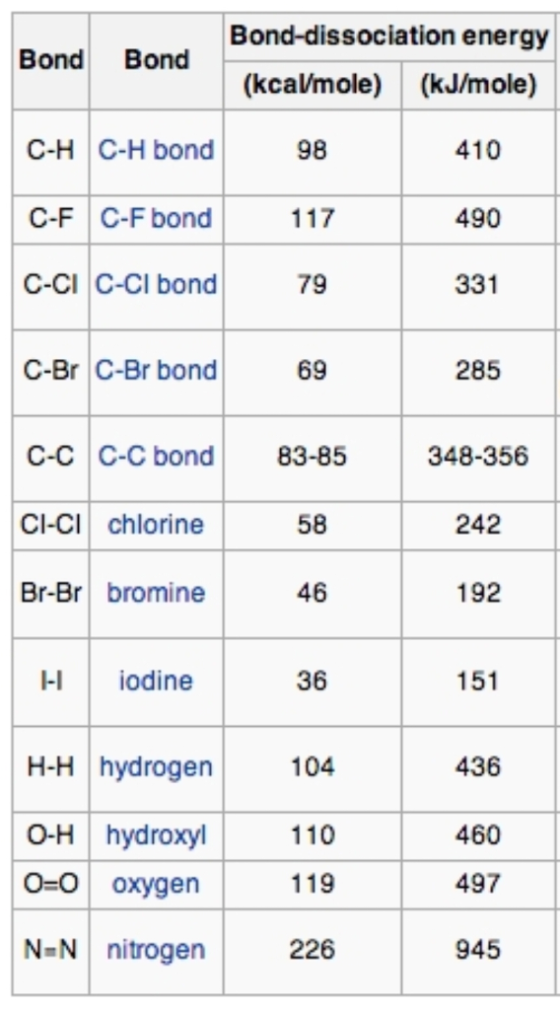
Which compound have more energy depends upon
1) the type of bond that compound have and
2) the number of that particular bonds.
If the molecule or compound has more the number of that particular bonds, will have more stored energy which is produced on oxidation. Same is the case with glucose ( a simple carbohydrate) having 7 C-H bonds, 5 C-C bonds, 5 C-OH bonds and 1C =O bond, but the complex carbohydrates like oligosaccharides or polysaccharides like Starch, Glycogen, Cellulose etc. with long chains of glucose have lots of bond in which more energy is stored as compared to single glucose.
Lock and Key Hypothesis
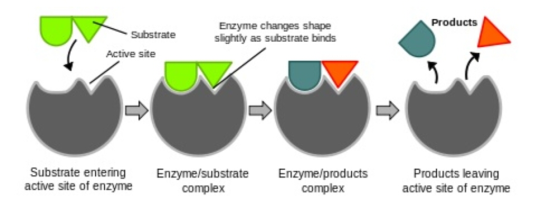
Substrate is an organic compound at which an enzyme binds to carry out a biochemical reaction at extreme higher rate.
active site is a site or portion on the substrate having a special cavity like structure at which an enzyme binds.
product is the desired compound which is formed from enzyme substrate complex after a biochemical reactions.
In order to explain why enzymes have such a high level of specificity, Emil Fischer in 1894 suggested that both a substrate and an enzyme have specific geometric shapes that fit exactly into each other. This idea of both substrates and enzymes having a natural geometric fit has been called the lock and key hypothesis.
The problem with this hypothesis is that it doesn’t explain the stabilization of the enzyme. When an enzyme has a substrate enter into its active site, the enzyme will change its shape slightly to match the substrate. If the enzymes were to be specifically designed to fit a substrate, then there would be no need for it to have to adjust its shape.
In 1958, another scientist named Daniel Koshland suggested a slight modification to the lock and key hypothesis. Koshland’s suggestion was that since enzymes were so flexible, the active site is constantly being reshaped by its interaction with the substrate.
Koshland suggested that substrate doesn’t bind to an active site as if it were specifically the right shape, but that the amino acid side-chains that are a part of the active site are molded into a specific position. This position allows the enzyme to start the catalyzing process. Koshland’s modified suggestion has been called the induced fit theory.
Add Answer to:
Consider the structure and function of each of these four
biological macromolecules. How does the structure...
How does polarity influence the function of molecules and macromolecules within aqueous biological systems? How do...
How does polarity influence the function of molecules and macromolecules within aqueous biological systems? How do viruses differ from cells in structure and function? What are the four levels of protein structure? How are they formed and destroyed?
describe the role of enzymes in the catalysis of biological reactions (include in the discussion substrate,...
describe the role of enzymes in the catalysis of biological reactions (include in the discussion substrate, product, active site, lock and key model, activation energy, enzyme substrate complex, and transition state complex, and steps of enzyme action)?
Compare the structure of the four major biological macromolecules (carbohydrates, lipids, proteins, and nucleic acids) and...
Compare the structure of the four major biological macromolecules (carbohydrates, lipids, proteins, and nucleic acids) and explain how the distinct structure of each type of molecule enables it to carry out its particular function.
All of the following apply to enzyme structure and function EXCEPT: (choose what does not apply...
All of the following apply to enzyme structure and function EXCEPT: (choose what does not apply to the question) A. enzyme active sites function to lower the activation energy of substrate molecules B. enzymes may require coenzymes that change the shape of the active site C. enzymes increase the speed of chemical reactions D. enzymes may have allosteric sites that are used to regulate substrate-active site binding E. enzymes may require cofactors such as Ca++ that improve the binding of...
Label the image to review how various antimicrobial agents alter protein structure and function protein structure...
 Label the image to review how various antimicrobial agents alter protein structure and function protein structure and function Substrate Blocked Active Site Enzyme Complete Denaturation Different Shape Native State
Part A - Overview of enzyme structure and enzymatic reactions Enzymes are large globular proteins. Much...
 Part A - Overview of enzyme structure and enzymatic reactions Enzymes are large globular proteins. Much of their three dimensional shape is the result of interactions between the R (variable) groups of their amino acids. The active site is the portion of the enzyme that will interact with the substrate the molecule that the enzyme acts upon. The nature and arrangement of amino acids in the active site make each enzyme specific to a substrate and to the reaction it...
2. Enzymes are important biological molecules and they act as catalysts for specific chemical reactions. Their...
 2. Enzymes are important biological molecules and they act as catalysts for specific chemical reactions. Their biological function is determined by their 3 dimensional shape and the functional groups present in the active site. (a) What are the main mechanisms by which an enzyme increase the rate of a reaction? (b) What is a cofactor in an enzyme mediated reaction? (c) Give the name of a cofactor (structure if possible) and indicate the type of reaction that it facilitates. 3....
is meant by a "pacemaker" enzyme is an enume that catalyzes the fastest reaction in a...
 is meant by a "pacemaker" enzyme is an enume that catalyzes the fastest reaction in a pathway A It is an nuryme the catalyzes the slowest reaction in a pathway c) It is in en ryme that requires a significant energy source to function D) It is an enzyme that requires a co-factor to function E) It is an enzyme that is covalently modified during the reaction process 24. What is the difference bet between the lock-and-key and the induced-fit...
Please solve Which of the following molecules contains the most chemical potential energy? ADP AMP ATP...
 Please solve
Which of the following molecules contains the most chemical potential energy? ADP AMP ATP Adenosine Why is the shape of enzyme activity as a function of temperature shaped like a shark fin and declines above a certain temperature? substrate molecules slow down as temperature increases DNA cannot form hydrogen bonds at high temperatures the enzyme structure is denatured by heat and cannot bind the substrate. the amino acid sequence of the protein changes with heat. You are hired...
Please solve
Which of the following molecules contains the most chemical potential energy? ADP AMP ATP Adenosine Why is the shape of enzyme activity as a function of temperature shaped like a shark fin and declines above a certain temperature? substrate molecules slow down as temperature increases DNA cannot form hydrogen bonds at high temperatures the enzyme structure is denatured by heat and cannot bind the substrate. the amino acid sequence of the protein changes with heat. You are hired...
ch 14 answer each of these. answer all 3 please HI HCI reactants Reaction intermediates are...
 ch 14 answer each of these.
answer all 3 please
HI HCI reactants Reaction intermediates are species that are formed in one step of a mechanism and consumed in another step. For example, can act as an intermediate in the following reaction: H2(g) + 2Cl(g) + 2HCl(g) + 12(g). You can often express the concentration of in terms of the concentrations of the of the overall reaction to be consistent with the experimentally observed rate law as the overall reaction...
ch 14 answer each of these.
answer all 3 please
HI HCI reactants Reaction intermediates are species that are formed in one step of a mechanism and consumed in another step. For example, can act as an intermediate in the following reaction: H2(g) + 2Cl(g) + 2HCl(g) + 12(g). You can often express the concentration of in terms of the concentrations of the of the overall reaction to be consistent with the experimentally observed rate law as the overall reaction...
 Label the image to review how various antimicrobial agents alter protein structure and function protein structure and function Substrate Blocked Active Site Enzyme Complete Denaturation Different Shape Native State
 Part A - Overview of enzyme structure and enzymatic reactions Enzymes are large globular proteins. Much of their three dimensional shape is the result of interactions between the R (variable) groups of their amino acids. The active site is the portion of the enzyme that will interact with the substrate the molecule that the enzyme acts upon. The nature and arrangement of amino acids in the active site make each enzyme specific to a substrate and to the reaction it...
 2. Enzymes are important biological molecules and they act as catalysts for specific chemical reactions. Their biological function is determined by their 3 dimensional shape and the functional groups present in the active site. (a) What are the main mechanisms by which an enzyme increase the rate of a reaction? (b) What is a cofactor in an enzyme mediated reaction? (c) Give the name of a cofactor (structure if possible) and indicate the type of reaction that it facilitates. 3....
 is meant by a "pacemaker" enzyme is an enume that catalyzes the fastest reaction in a pathway A It is an nuryme the catalyzes the slowest reaction in a pathway c) It is in en ryme that requires a significant energy source to function D) It is an enzyme that requires a co-factor to function E) It is an enzyme that is covalently modified during the reaction process 24. What is the difference bet between the lock-and-key and the induced-fit...
 Please solve
Which of the following molecules contains the most chemical potential energy? ADP AMP ATP Adenosine Why is the shape of enzyme activity as a function of temperature shaped like a shark fin and declines above a certain temperature? substrate molecules slow down as temperature increases DNA cannot form hydrogen bonds at high temperatures the enzyme structure is denatured by heat and cannot bind the substrate. the amino acid sequence of the protein changes with heat. You are hired...
Please solve
Which of the following molecules contains the most chemical potential energy? ADP AMP ATP Adenosine Why is the shape of enzyme activity as a function of temperature shaped like a shark fin and declines above a certain temperature? substrate molecules slow down as temperature increases DNA cannot form hydrogen bonds at high temperatures the enzyme structure is denatured by heat and cannot bind the substrate. the amino acid sequence of the protein changes with heat. You are hired...
 ch 14 answer each of these.
answer all 3 please
HI HCI reactants Reaction intermediates are species that are formed in one step of a mechanism and consumed in another step. For example, can act as an intermediate in the following reaction: H2(g) + 2Cl(g) + 2HCl(g) + 12(g). You can often express the concentration of in terms of the concentrations of the of the overall reaction to be consistent with the experimentally observed rate law as the overall reaction...
ch 14 answer each of these.
answer all 3 please
HI HCI reactants Reaction intermediates are species that are formed in one step of a mechanism and consumed in another step. For example, can act as an intermediate in the following reaction: H2(g) + 2Cl(g) + 2HCl(g) + 12(g). You can often express the concentration of in terms of the concentrations of the of the overall reaction to be consistent with the experimentally observed rate law as the overall reaction...
Most questions answered within 3 hours.
-
Where is the error in this code sequence?
String s1 = "Hello";
String s2 = "ello";...
asked 10 months ago -
Financial data for Joel de Paris, Inc., for last year
follow:
Joel de Paris, Inc.
Balance...
asked 10 months ago -
Consider this reaction:
Al2(SO4)3 (aq)+ BaCl3
(aq) Al2Cl6 (aq)- +
3BaSO4(s) . What is the...
asked 10 months ago -
Suppose that Savneet is considering increasing her
recent random sample from 20 car rentals to 40...
asked 10 months ago -
Trucks arrive at an unloading terminal at an average rate of 120
per hour.
Trucks arrive...
asked 10 months ago -
Why are methanol and ethanol completely soluble in water while
octanol is not very little soluble....
asked 10 months ago -
A facilities manager at a university reads in a research report
that the mean amount of...
asked 10 months ago -
When the CuSO4 is rehydrated by adding water to the anhydrous
compound, is this an endothermic...
asked 10 months ago -
A ray of sunlight is passing from diamond into crown glass; the
angle of incidence is...
asked 10 months ago -
A block of mass 0.249 kg is placed on top of a light, vertical
spring of...
asked 10 months ago -
how do the kidneys compensate in the presences of acidosis
a) trigger hyperventilate
b) reserve acid...
asked 10 months ago -
Question 501 pts
The rental rate of capital to the firm increases. Which of the
following...
asked 10 months ago