Create a phylogenetic tree for: baboons, tamarins, mandrill, proboscis, humans, gorillas, and orangutans
Create a phylogenetic tree for: baboons, tamarins, mandrill, proboscis, humans, gorillas, and orangutans
Homework Answers
Answer-
According to the given question-
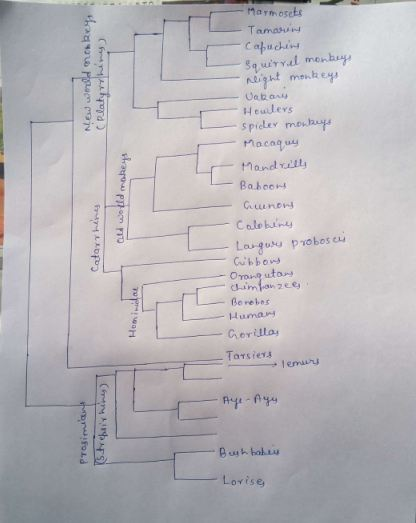
we have to create a Phylogenetic tree for baboons, tamarins, mandrill, proboscis, humans, gorillas, and orangutans-
The above organisms are called primates and are very diverse ,from small size marmosets to very large gorillas and are divided into following 4 branches
- Platyrrhine have flat nosed and are also called New World Monkey
- Catarrhine have down-nosed called Old World primates
- Old World Monkeys
- Great Apes, Humans and Gibbons
- Tarsiers
- Prosimians - Lemurs and Lorises
Add Answer to:
Create a phylogenetic tree for: baboons, tamarins, mandrill,
proboscis, humans, gorillas, and orangutans
Humans have 46 chromosomes while gorillas, orangutans and chimpanzees have 48. Make a simple tree to...
 Humans have 46 chromosomes while gorillas, orangutans and chimpanzees have 48. Make a simple tree to show the relationships among humans, gorillas, chimpanzees and orangutans based only on chromosome number. Identify the outgroup in your diagram. Is 46 chromosomes in humans derived or ancestral?
You are studying the source of new virus that has recently infected humans. You suspect that...
You are studying the source of new virus that has recently infected humans. You suspect that the virus was transferred from other primates (they exhibit a similar infection), specifically chimpanzees, gorillas, or orangutans. You sample blood from several infected humans and sequence some viral genes. You then build a phylogenetic tree with the human sequences and all the known strains from each primate. Draw a hypothetical phylogenetic tree that would suggest that the virus came from gorillas, and this transfer...
Which is the answer ? Which of the following statements is true, based on this phylogenetic...
 Which is the answer ?
Which of the following statements is true, based on this phylogenetic tree: New World monkeys Old World monkeys Gibbons Orangutans Gorillas Chimpanzees -Humans Select one: O New World monkeys evolved from Old World monkeys Humans evolved from chimpanzees O Old World monkeys share a common ancestor with humans O None of these are depicted by this phylogeny O Gibbons represent the sister taxon to Old World monkeys
Which is the answer ?
Which of the following statements is true, based on this phylogenetic tree: New World monkeys Old World monkeys Gibbons Orangutans Gorillas Chimpanzees -Humans Select one: O New World monkeys evolved from Old World monkeys Humans evolved from chimpanzees O Old World monkeys share a common ancestor with humans O None of these are depicted by this phylogeny O Gibbons represent the sister taxon to Old World monkeys
4. Gorillas, chimpanzees, and humans are able to taste PTC, but chimpanzees and humans have also...
 4. Gorillas, chimpanzees, and humans are able to taste PTC, but chimpanzees and humans have also derived the capacity to be a non-taster via convergent evolution. Using the information in the table below, construct a phylogenetic tree that reflects these derived traits. "1" indicates the presence of the trait,"0" indicates the absence of the trait (4 marks). Traits Species PTC Taster Loss of PTC Taste Similar teeth, skull and genitals Gorilla Chimpanzee ree 1 1 1 1 1 1 Human...
Using the sequence below, create a phylogenetic tree using this unknown bacterial species and four related...
Using the sequence below, create a phylogenetic tree using this unknown bacterial species and four related bacteria (there should be 5 branches in total on your tree). You will have to BLAST this sequence, and then create a phylogenetic tree as was described in class. The phylogenetic tree should be included in this assignment as a PDF or screen shot—the tree should not be hand-written. ACGAACGCTGGCGGCGTGCCTAATACATGCAAGTCGAACGCTTCTTTTCTACCGAGTGCTTGCACTCACTTGAAAAGAGGAGTGGCGGACGGGTGAGTAACACGTGGGTAACCTGCCCATCAGAGGGGGATAACACTTGGAAACAGGTGCTAATACCGCATAATAGTCGACACCGCATGGTGTTGATTTGAAAGACGCTTTCGGGTGTCACTGATGGATGGACCCGCGGTGCATTAGCTAGTTGGTGAGGTAACGGCTCACCAAGGCCATGATGCATAGCCGACCTGAGAGGGTGATCGGCCACACTGGGACTGAGACACGGCCCAGACTCCTACGGGAGGCAGCAGTAGGGAATCTTCGGCAATGGACGAAAGTCTGACCGAGCAACGCCGCGTGAGTGAAGAAGGTTTTCGGATCGTAAAACTCTGTTGTTAGAGAAGAACAAGTGGGAGAGTAACTGCTCCCGCCTTGACGGTATCTAACCAGAAAGCCACGGCTAACTACGTGCCAGCAGCCGCGGTAATACGTAGGTGGCAAGCGTTGTCCGGATTTATTGGGCGTAAAGCGAGCGCAGGCGGTTTCTTAAGTCTGATGTGAAAGCCCCCGGCTCAACCGGGGAGGGTCATTGGAAACTGGGAGACTTGAGTGCAGAAGAGGAGAGTGGAATTCCATGTGTAGCGGTGAAATGCGTAGATATATGGAGGAACACCAGTGGCGAAGGCGACTCTCTGGTCTGTAACTGACGCTGAGGCTCGAAAGCGTGGGGAGCAAACAGGATTAGATACCCTGGTAGTCCACGCCGTAAACGATGAGTGCTAAGTGTTGGAGGGTTTCCGCCCTTCAGTGCTGCAGCTAACGCATTAAGCACTCCGCCTGGGGAGTACGACCGCAAGGTTGAAACTCAAAGGAATTGACGGGGGCCCGCACAAGCGGTGGAGCATGTGGTTTAATTCGAAGCAACGCGAAGAACCTTACCAGGTCTTGACATCCTTTGACCACTCTAGAGATAGAGCTTTCCCTTCGGGGACAAAGTGACAGGTGGTGCATGGTTGTCGTCAGCTCGTGTCGTGAGATGTTGGGTTAAGTCCCGCAACGAGCGCAACCCTTATTGTTAGTTGCCATCATTCAGTTGGGCACTCTAGCGAGACTGCCGGTGACAAACCGGAGGAAGGTGGGGATGACGTCAAATCATCATGCCCCTTATGACCTGGGCTACACACGTGCTACAATGGGAAGTACAACGAGTCGCTAGGCCGCGAGGTCATGCAAATCTCTTAAAGCTTCTCTCAGTTCGGATTGTAGGCTGCAACTCGCCTACATGAAGCCGGAATCGCTAGTAATCGCGGATCAGCACGCCGCGGTGAATACGTTCCCGGGCCTTGTACACACCGCCCGTCACACCACGAAAGTTTGTAACACCCGAAGTCGGTGAGGTAACCTTTTGGAGCCAGCCGCCTAAGGTGGGATAGATGATTGGGGTGAAGTCGTAACAAGGTAGCCGTATCGGAAGG
QUESTION 2 Siamang Gibbon Orangutan Gorilla Human Bonobo Chimpanzee Click to view larger image. According to...
 QUESTION 2 Siamang Gibbon Orangutan Gorilla Human Bonobo Chimpanzee Click to view larger image. According to this phylogenetic tree, which statement is correct? There is only one correct answer. O A. Humans and chimpanzees are more closely related to one another than either is related to gorillas. OB. Chimpanzees, bonobos, and gorillas are more closely related to one another than any are to humans. O C. Chimpanzees and bonobos evolved from humans. O D. Humans are more closely related to...
Zoology question: Create a phylogenetic tree that includes the following phylums and classes: Acoelomorpha, Platyhelmithes (class...
Zoology question: Create a phylogenetic tree that includes the following phylums and classes: Acoelomorpha, Platyhelmithes (class Tremetoda, Turbellaria, Monogenea, and Cestoda), Mesozoa (class orthonectida and rhombozoa), Rotifera, Acanthocephala, Entoprocta, Bryozoa, Brachiopoda, Nemertea, Annelida (class Polychaeta, class Clitellata, subclass hirudinea and oligochaeta), Mollusca (class polyplacophora, monoplacophora, gastropoda, bivalvia, scaphopoda, cephalopoda.
Create a phylogenetic tree, for Nycticebus caucang, tell me its 5 closest "relatives". What do these...
Create a phylogenetic tree, for Nycticebus caucang, tell me its 5 closest "relatives". What do these organisms have in common? Do you think it's enough to say they are related? (SLOW - LORIS): Nycticebus caucang KINGDOM: Animalia PHYLUM: Chordata CLASS: mammalia ORDER: Primates FAMILY: Lorisidae GENUS: Nyctisebus SPECIES: caucang
Molecular biology techniques have led to molecular systematics – creating phylogenetic tree hypotheses based on DNA....
Molecular biology techniques have led to molecular systematics – creating phylogenetic tree hypotheses based on DNA. You did this yourself in class, creating a phylogenetic tree that compared some major Phyla of animals. What is the basic concept behind using DNA to create these trees – what assumptions are made? Do you think this is a reasonable way to study evolutionary history of living things? Explain.
7) Please create a phylogenetic tree (cladogram) of these major deuterostome groups of animals. At each...
7) Please create a phylogenetic tree (cladogram) of these major deuterostome groups of animals. At each branch node, indicate the trait (or traits; or presence/absence) that you used to divide the groups. I know space is tight, but please write as legibly as you can! (11 pts; 1 pt each for node description—7 total, 0.5 pts each for group on the end of a branch—4 total): A) Reptilia B) Agnathans (Lampreys & Hagfish) C) Echinodermata D) Amphibia E) Osteichthyes F)...
 Humans have 46 chromosomes while gorillas, orangutans and chimpanzees have 48. Make a simple tree to show the relationships among humans, gorillas, chimpanzees and orangutans based only on chromosome number. Identify the outgroup in your diagram. Is 46 chromosomes in humans derived or ancestral?
 Which is the answer ?
Which of the following statements is true, based on this phylogenetic tree: New World monkeys Old World monkeys Gibbons Orangutans Gorillas Chimpanzees -Humans Select one: O New World monkeys evolved from Old World monkeys Humans evolved from chimpanzees O Old World monkeys share a common ancestor with humans O None of these are depicted by this phylogeny O Gibbons represent the sister taxon to Old World monkeys
Which is the answer ?
Which of the following statements is true, based on this phylogenetic tree: New World monkeys Old World monkeys Gibbons Orangutans Gorillas Chimpanzees -Humans Select one: O New World monkeys evolved from Old World monkeys Humans evolved from chimpanzees O Old World monkeys share a common ancestor with humans O None of these are depicted by this phylogeny O Gibbons represent the sister taxon to Old World monkeys
 4. Gorillas, chimpanzees, and humans are able to taste PTC, but chimpanzees and humans have also derived the capacity to be a non-taster via convergent evolution. Using the information in the table below, construct a phylogenetic tree that reflects these derived traits. "1" indicates the presence of the trait,"0" indicates the absence of the trait (4 marks). Traits Species PTC Taster Loss of PTC Taste Similar teeth, skull and genitals Gorilla Chimpanzee ree 1 1 1 1 1 1 Human...
 QUESTION 2 Siamang Gibbon Orangutan Gorilla Human Bonobo Chimpanzee Click to view larger image. According to this phylogenetic tree, which statement is correct? There is only one correct answer. O A. Humans and chimpanzees are more closely related to one another than either is related to gorillas. OB. Chimpanzees, bonobos, and gorillas are more closely related to one another than any are to humans. O C. Chimpanzees and bonobos evolved from humans. O D. Humans are more closely related to...
Most questions answered within 3 hours.
-
Where is the error in this code sequence?
String s1 = "Hello";
String s2 = "ello";...
asked 11 months ago -
Financial data for Joel de Paris, Inc., for last year
follow:
Joel de Paris, Inc.
Balance...
asked 11 months ago -
Consider this reaction:
Al2(SO4)3 (aq)+ BaCl3
(aq) Al2Cl6 (aq)- +
3BaSO4(s) . What is the...
asked 11 months ago -
Suppose that Savneet is considering increasing her
recent random sample from 20 car rentals to 40...
asked 11 months ago -
Trucks arrive at an unloading terminal at an average rate of 120
per hour.
Trucks arrive...
asked 11 months ago -
Why are methanol and ethanol completely soluble in water while
octanol is not very little soluble....
asked 11 months ago -
A facilities manager at a university reads in a research report
that the mean amount of...
asked 11 months ago -
When the CuSO4 is rehydrated by adding water to the anhydrous
compound, is this an endothermic...
asked 11 months ago -
A ray of sunlight is passing from diamond into crown glass; the
angle of incidence is...
asked 11 months ago -
A block of mass 0.249 kg is placed on top of a light, vertical
spring of...
asked 11 months ago -
how do the kidneys compensate in the presences of acidosis
a) trigger hyperventilate
b) reserve acid...
asked 11 months ago -
Question 501 pts
The rental rate of capital to the firm increases. Which of the
following...
asked 11 months ago