Calculate the work (in kJ) when substance initially at 99 kPa, 16 m3 is expanded against...
Calculate the work (in kJ) when substance initially at 99 kPa, 16 m3 is expanded against a linear spring to 208 kPa, 70 m3.
Homework Answers
For linear spring;

In other words, pressure is proportional to the volume.
Average pressure during the process is given as;
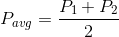
Hence, work done is given as;




...(Answer)
To calculate the work done when a substance initially at 99 kPa and 16 m³ is expanded against a linear spring to 208 kPa and 70 m³, we can follow these steps:
Given:
Initial pressure,
Initial volume,
Final pressure,
Final volume,
Assumption:
The pressure-volume relationship is linear due to the linear spring, meaning pressure varies linearly with volume.
Calculation:
Determine the linear relationship between pressure and volume:
Since the relationship is linear, we can express pressure as:
where is the slope and is the intercept.
Using the initial and final conditions:
Subtract Equation 1 from Equation 2 to solve for :
Substitute back into Equation 1 to find :
Therefore, the pressure-volume relationship is:
Calculate the work done:
The work done during expansion is the area under the - curve, which can be calculated as:
Substitute the expression for :
Evaluate the integral:
Calculate the definite integral:
Since :
Add Answer to:
Calculate the work (in kJ) when substance initially at 99 kPa,
16 m3 is expanded against...
Air that initially occupies 0.21 m3 at a gauge pressure of 120 kPa is expanded isothermally...
Air that initially occupies 0.21 m3 at a gauge pressure of 120 kPa is expanded isothermally to a pressure of 101.3 kPa and then cooled at constant pressure until it reaches its initial volume. Compute the work done by the air. (Gauge pressure is the difference between the actual pressure and atmospheric pressure.)
Air that initially occupies 0.144 m3 at a gauge pressure of 211.0 kPa is expanded isothermally...
Air that initially occupies 0.144 m3 at a gauge pressure of 211.0 kPa is expanded isothermally to a pressure of 101.3 kPa and then cooled at constant pressure until it reaches its initial volume. Compute the work done by the air. (Gauge pressure is the difference between the actual pressure and atmospheric pressure.)
7 Air that initially occupies 0.14 m3 at a gauge pressure of 103.0 kPa is expanded...
 7 Air that initially occupies 0.14 m3 at a gauge pressure of 103.0 kPa is expanded isothermally to a pressure of 101.3 kPa and then cooled at constant pressure untl t reaches is intial volume. Compute the work done by the air.(Gauge pressure is the difference between the actual pressure and atmospheric pressure)
Calculate the enthalpy change of air, in kJ/kg, if the state changed from 99 kPa and...
Calculate the enthalpy change of air, in kJ/kg, if the state changed from 99 kPa and 35oC to 801 kPa and 419 oC using the equation of state P(v - a) = RT where a = 0.0098 m3/kg, and compare the result to the value obtained by using the ideal gas equation of state. (5 marks
A piston-cylinder device initially contains steam at 200 kPa, 250°C, and 0.4 m3. At this state,...
A piston-cylinder device initially contains steam at 200 kPa, 250°C, and 0.4 m3. At this state, a linear spring is touching the piston, but exerts no force on it. Heat is now slowly transferred to the steam, causing the pressure and the volume to rise to 300 kPa and 0.7 m3, respectively. Show the process on a P-v diagram with respect to saturation lines and determine the following: a. The final temperature b. The work done by the steam c....
A piston-cylinder device initially contains 0.07 m3 of nitrogen gas at 130 kPa and 120 degrees...
A piston-cylinder device initially contains 0.07 m3 of nitrogen gas at 130 kPa and 120 degrees celcius. The nitrogen is now expanded polytropically to a state of 100 kPa and 100 degrees celcius. Determine the boundary work done during this process. Step by step solutions with basic explanations
A piston-cylinder arrangement contains Nitrogen initially at 200 kPa, 107 C and 0.30 m3. The piston...
 A piston-cylinder arrangement contains Nitrogen initially at 200 kPa, 107 C and 0.30 m3. The piston moves until the pressure increases to 500 kPa. The pressure-volume relationship during the process is described by the equation: P= -2000 V + 800 where P is in kPa and V in m3 (a) Determine the mass of Nitrogen in kilograms (b) Determine the work done (boundary work) “on” or “by” the Nitrogen in kJ (state which). (c) Determine the final temperature.
A piston-cylinder device contains 1.15 kg of air initially at 2441 kPa and 379 oC. The...
 A piston-cylinder device contains 1.15 kg of air initially at 2441 kPa and 379 oC. The air is first expanded isothermally to 470 kPa, then compressed polytropically with a polytropic exponent of 1.7 to the initial pressure, and finally compressed at the constant pressure to the initial state. Determine the net work of the cycle Net work kJ A pistoo-cylinder deuice contains 0.45 kg ofair ity at 2°us kPa and 318 c. The air is first expanded iiethermally to 465kfe,...
The expression 1W2 = (P1+P2)(V2-V1)/2 is used to calculate the work for: A process where the...
 The expression 1W2 =
(P1+P2)(V2-V1)/2 is
used to calculate the work for:
A process where the substance pushes against a linear spring
A substance undergoing a constant pressure process
A substance undergoing a polytropic process
A substance undergoing an isentropic process.
The expression 1 W2 = (P1+P2) (V2-V1)/2 is used to calculate the work for: A process where the substance pushes against a linear spring A substance undergoing a constant pressure process A substance undergoing a polytropic process A substance...
The expression 1W2 =
(P1+P2)(V2-V1)/2 is
used to calculate the work for:
A process where the substance pushes against a linear spring
A substance undergoing a constant pressure process
A substance undergoing a polytropic process
A substance undergoing an isentropic process.
The expression 1 W2 = (P1+P2) (V2-V1)/2 is used to calculate the work for: A process where the substance pushes against a linear spring A substance undergoing a constant pressure process A substance undergoing a polytropic process A substance...
2-6 (2o pts.) A rigid 1-m3 tank receives 500 kJ of heat and paddle work delivered...
 2-6 (2o pts.) A rigid 1-m3 tank receives 500 kJ of heat and paddle work delivered for 1 h with a shaft torque of 1 N-m and a speed of 300 rpm. The tank contains steam initially at V 1 m 300 kPa and 90% quality. Determine the final internal 0-500 k eneray of the steam Steam 190% 1-300 kPa
 7 Air that initially occupies 0.14 m3 at a gauge pressure of 103.0 kPa is expanded isothermally to a pressure of 101.3 kPa and then cooled at constant pressure untl t reaches is intial volume. Compute the work done by the air.(Gauge pressure is the difference between the actual pressure and atmospheric pressure)
 A piston-cylinder arrangement contains Nitrogen initially at 200 kPa, 107 C and 0.30 m3. The piston moves until the pressure increases to 500 kPa. The pressure-volume relationship during the process is described by the equation: P= -2000 V + 800 where P is in kPa and V in m3 (a) Determine the mass of Nitrogen in kilograms (b) Determine the work done (boundary work) “on” or “by” the Nitrogen in kJ (state which). (c) Determine the final temperature.
 A piston-cylinder device contains 1.15 kg of air initially at 2441 kPa and 379 oC. The air is first expanded isothermally to 470 kPa, then compressed polytropically with a polytropic exponent of 1.7 to the initial pressure, and finally compressed at the constant pressure to the initial state. Determine the net work of the cycle Net work kJ A pistoo-cylinder deuice contains 0.45 kg ofair ity at 2°us kPa and 318 c. The air is first expanded iiethermally to 465kfe,...
 The expression 1W2 =
(P1+P2)(V2-V1)/2 is
used to calculate the work for:
A process where the substance pushes against a linear spring
A substance undergoing a constant pressure process
A substance undergoing a polytropic process
A substance undergoing an isentropic process.
The expression 1 W2 = (P1+P2) (V2-V1)/2 is used to calculate the work for: A process where the substance pushes against a linear spring A substance undergoing a constant pressure process A substance undergoing a polytropic process A substance...
The expression 1W2 =
(P1+P2)(V2-V1)/2 is
used to calculate the work for:
A process where the substance pushes against a linear spring
A substance undergoing a constant pressure process
A substance undergoing a polytropic process
A substance undergoing an isentropic process.
The expression 1 W2 = (P1+P2) (V2-V1)/2 is used to calculate the work for: A process where the substance pushes against a linear spring A substance undergoing a constant pressure process A substance undergoing a polytropic process A substance...
 2-6 (2o pts.) A rigid 1-m3 tank receives 500 kJ of heat and paddle work delivered for 1 h with a shaft torque of 1 N-m and a speed of 300 rpm. The tank contains steam initially at V 1 m 300 kPa and 90% quality. Determine the final internal 0-500 k eneray of the steam Steam 190% 1-300 kPa
Most questions answered within 3 hours.
-
Where is the error in this code sequence?
String s1 = "Hello";
String s2 = "ello";...
asked 11 months ago -
Financial data for Joel de Paris, Inc., for last year
follow:
Joel de Paris, Inc.
Balance...
asked 11 months ago -
Consider this reaction:
Al2(SO4)3 (aq)+ BaCl3
(aq) Al2Cl6 (aq)- +
3BaSO4(s) . What is the...
asked 11 months ago -
Suppose that Savneet is considering increasing her
recent random sample from 20 car rentals to 40...
asked 11 months ago -
Trucks arrive at an unloading terminal at an average rate of 120
per hour.
Trucks arrive...
asked 11 months ago -
Why are methanol and ethanol completely soluble in water while
octanol is not very little soluble....
asked 11 months ago -
A facilities manager at a university reads in a research report
that the mean amount of...
asked 11 months ago -
When the CuSO4 is rehydrated by adding water to the anhydrous
compound, is this an endothermic...
asked 11 months ago -
A ray of sunlight is passing from diamond into crown glass; the
angle of incidence is...
asked 11 months ago -
A block of mass 0.249 kg is placed on top of a light, vertical
spring of...
asked 11 months ago -
how do the kidneys compensate in the presences of acidosis
a) trigger hyperventilate
b) reserve acid...
asked 11 months ago -
Question 501 pts
The rental rate of capital to the firm increases. Which of the
following...
asked 11 months ago