The electron transport chain may use which of the following as a non-protein carrier. flavoproteins metal-containing...
The electron transport chain may use which of the following as a non-protein carrier.
|
flavoproteins |
|
metal-containing proteins |
|
ribozymes |
|
cytochromes |
|
ubiquinones |
Homework Answers
Flavoproteins, metal-containing proteins and cytochromes are protiens molecules participate in electron transport chain. And ribozymes do not participate in electron transport chain.
Only ubiquinones (lipophilic metabolite) as a non-protein carrier participate in electron transport chain. Ubiquinones participate in electron transport chain in plasma membrane of Prokaryotes, and in mitochondrial membrane of Eukaryotes. It works through diffusion in hydrophobic region of the membrane.
Add Answer to:
The electron transport chain may use which of the
following as a non-protein carrier.
flavoproteins
metal-containing...
The metal that acts as an electron carrier in the cytochromes in the electron transport chain...
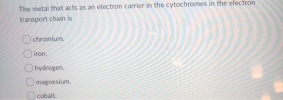 The metal that acts as an electron carrier in the cytochromes in the electron transport chain is Ochromium. O iron. hydrogen. O magnesium O cobalt.
Which electron carrier brings electrons to the electron transport chain via complex II? Which electron carrier...
 Which electron carrier brings
electrons to the electron transport chain via complex II?
Which electron carrier brings electrons to the electron transport chain via Complex II? FADH_2 FAD NADH NAD^+ Which electron carrier brings electrons to the electron transport chain via Complex I? FADH_2 FAD NADH NAD^+ As the electron transport chain proceeds, electrons H^+ ions water CO_2 molecules are pumped into the intermembrane space cytoplasm matrix nucleus
Which electron carrier brings
electrons to the electron transport chain via complex II?
Which electron carrier brings electrons to the electron transport chain via Complex II? FADH_2 FAD NADH NAD^+ Which electron carrier brings electrons to the electron transport chain via Complex I? FADH_2 FAD NADH NAD^+ As the electron transport chain proceeds, electrons H^+ ions water CO_2 molecules are pumped into the intermembrane space cytoplasm matrix nucleus
Which of the following species accept electrons within the mitochondrial electron transport chain? Choose any/all answers...
Which of the following species accept electrons within the mitochondrial electron transport chain? Choose any/all answers that apply. A. NADH B. FMN-containing flavoproteins C. ubiquinone D. iron/sulfur centers E. molecular oxygen
This question relates to complex III of the electron transport chain Identify the electron carrier that...
 This question relates to complex III of the electron transport chain Identify the electron carrier that directly donates electrons to complex III and the electron carrier that ultimately receives electrons from complex III 1^st (donating) carrier: _________ 2^nd (receiving) carrier: _______ How much energy is released by transferring one pair of electrons from the donating electron carrier to the receiving electron carrier? How many protons are transferred out of the intermembrane space as a transferring one pair of electrons from...
9. In the electron transport chain picture above, how do electrons move from protein complex I to protein c...
 9. In the electron transport chain picture above, how do electrons move from protein complex I to protein complex II? 1. I need you to remember that "Q" is ubiquinone which gets reduced at proteins l & I, and oxidized at protein III. "Reduced" means gains electrons, "oxidized" means loses electrons. 2. I need you to remember how "Q" moves from protein I to protein Do you remember? Don't overthink it, Preeda. As far as scientists know right now, the...
In Aerobic Respiration, which of the following is(are) required for ATP production in the electron transport...
In Aerobic Respiration, which of the following is(are) required for ATP production in the electron transport chain? A: A Proton Gradient B: Oxygen C: The oxidation of the electron carrier molecules D: Movement of electrons through proteins E: All of the answer choices are correct.
Non-protein electron carrier found in the hydrophobic interior of the cell membrane. There may be one...
Non-protein electron carrier found in the hydrophobic interior of the cell membrane. There may be one or more correct answers. Cytochrome FMN (also known as Complex 1) Quinol Glyoxylate Cycle FAD Citric Acid Cycle Quinone NADH
The electron transport chain consists of protein complexes embedded in the inner mitochondrial membrane, where it...
 The electron transport chain consists of protein complexes embedded in the inner mitochondrial membrane, where it generat a proton gradient by a series of oxidation-reduction, or redox, reactions. Although all of the stages of cellular respiration (glycolysis, the citric acid cycle, and the electron transport chain) are necessary for life, the electron transport chain is sometimes called the most important stage. First complete the sentence, then answer the question. The electron transport chain uses the transfer of protons between protein...
What are the names of the four complexes in the electron transport chain? What molecules/electron carriers...
 What are the names of the four complexes in the electron transport chain? What molecules/electron carriers donate electrons to the complexes? What molecules carry the electrons between the complexes (e.g. from complex II to III)? The following are electrons carriers in the complexes: cytochromes a, a3, b, and c1, FAD, FMN. Assign them to the right complexes.
Protein- Carbohydrates Lipids, # 1. # 2 Electron Transport Chain # 3 5
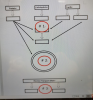 Protein- Carbohydrates Lipids, # 1. # 2 Electron Transport Chain # 3 5
 The metal that acts as an electron carrier in the cytochromes in the electron transport chain is Ochromium. O iron. hydrogen. O magnesium O cobalt.
 Which electron carrier brings
electrons to the electron transport chain via complex II?
Which electron carrier brings electrons to the electron transport chain via Complex II? FADH_2 FAD NADH NAD^+ Which electron carrier brings electrons to the electron transport chain via Complex I? FADH_2 FAD NADH NAD^+ As the electron transport chain proceeds, electrons H^+ ions water CO_2 molecules are pumped into the intermembrane space cytoplasm matrix nucleus
Which electron carrier brings
electrons to the electron transport chain via complex II?
Which electron carrier brings electrons to the electron transport chain via Complex II? FADH_2 FAD NADH NAD^+ Which electron carrier brings electrons to the electron transport chain via Complex I? FADH_2 FAD NADH NAD^+ As the electron transport chain proceeds, electrons H^+ ions water CO_2 molecules are pumped into the intermembrane space cytoplasm matrix nucleus
 This question relates to complex III of the electron transport chain Identify the electron carrier that directly donates electrons to complex III and the electron carrier that ultimately receives electrons from complex III 1^st (donating) carrier: _________ 2^nd (receiving) carrier: _______ How much energy is released by transferring one pair of electrons from the donating electron carrier to the receiving electron carrier? How many protons are transferred out of the intermembrane space as a transferring one pair of electrons from...
 9. In the electron transport chain picture above, how do electrons move from protein complex I to protein complex II? 1. I need you to remember that "Q" is ubiquinone which gets reduced at proteins l & I, and oxidized at protein III. "Reduced" means gains electrons, "oxidized" means loses electrons. 2. I need you to remember how "Q" moves from protein I to protein Do you remember? Don't overthink it, Preeda. As far as scientists know right now, the...
 The electron transport chain consists of protein complexes embedded in the inner mitochondrial membrane, where it generat a proton gradient by a series of oxidation-reduction, or redox, reactions. Although all of the stages of cellular respiration (glycolysis, the citric acid cycle, and the electron transport chain) are necessary for life, the electron transport chain is sometimes called the most important stage. First complete the sentence, then answer the question. The electron transport chain uses the transfer of protons between protein...
 What are the names of the four complexes in the electron transport chain? What molecules/electron carriers donate electrons to the complexes? What molecules carry the electrons between the complexes (e.g. from complex II to III)? The following are electrons carriers in the complexes: cytochromes a, a3, b, and c1, FAD, FMN. Assign them to the right complexes.
 Protein- Carbohydrates Lipids, # 1. # 2 Electron Transport Chain # 3 5
Most questions answered within 3 hours.
-
Where is the error in this code sequence?
String s1 = "Hello";
String s2 = "ello";...
asked 11 months ago -
Financial data for Joel de Paris, Inc., for last year
follow:
Joel de Paris, Inc.
Balance...
asked 11 months ago -
Consider this reaction:
Al2(SO4)3 (aq)+ BaCl3
(aq) Al2Cl6 (aq)- +
3BaSO4(s) . What is the...
asked 11 months ago -
Suppose that Savneet is considering increasing her
recent random sample from 20 car rentals to 40...
asked 11 months ago -
Trucks arrive at an unloading terminal at an average rate of 120
per hour.
Trucks arrive...
asked 11 months ago -
Why are methanol and ethanol completely soluble in water while
octanol is not very little soluble....
asked 11 months ago -
A facilities manager at a university reads in a research report
that the mean amount of...
asked 11 months ago -
When the CuSO4 is rehydrated by adding water to the anhydrous
compound, is this an endothermic...
asked 11 months ago -
A ray of sunlight is passing from diamond into crown glass; the
angle of incidence is...
asked 11 months ago -
A block of mass 0.249 kg is placed on top of a light, vertical
spring of...
asked 11 months ago -
how do the kidneys compensate in the presences of acidosis
a) trigger hyperventilate
b) reserve acid...
asked 11 months ago -
Question 501 pts
The rental rate of capital to the firm increases. Which of the
following...
asked 11 months ago