give examples of catalysts used in each of the following refinery conversion processes. (i). visbreaking (ii)....
give examples of catalysts used in each of the following refinery conversion processes.
(i). visbreaking
(ii). flexi coking
(iii). delayed coking
(iv).isomerization.
(v).alkylation
(vi).catalytic cracking
(vii) hydrotreating.
(viii) hydrocracking
(ix).catalytic reforming
Homework Answers

Add Answer to:
give examples of catalysts used in each of the following
refinery conversion processes.
(i). visbreaking
(ii)....
Consider the reaction, which is exothermic as written, 2H2(g) + X2(g) =2H2X(g). Which of the following...
 Consider the reaction, which is exothermic as written, 2H2(g) + X2(g) =2H2X(g). Which of the following changes would result in the production of more H2X(g)? I. adding H2(g) II. removing H2(g) III. reducing the volume of the container IV. removing X2(g) V. increasing the temperature VI. increasing the volume of the container VII. adding X2(8) VIII. reducing the temperature IX adding a suitable catalyst a) 1, II, VI, VIII Ob) I, III, VII, VIII OC) 1, III, VII, VIII, IX...
please help 3) Explain why each of the following manifestations occurs in end-stage renal failure: i....
 please help
3) Explain why each of the following manifestations occurs in end-stage renal failure: i. metabolic acidosis: ii. hyperkalemia: iii. hypocalcemia: iv. increased BUN and serum creatinine: v. anemia: NOT COP vi. delayed clotting: vii. edema: viii. increased blood pressure: ix. cardiac dysrhythmias X. congestive heart failure: xi. pulmonary edema: xii. lethargy, confusion: xiii. muscle weakness: xiv. bone pain: XV. amenorrhea:
please help
3) Explain why each of the following manifestations occurs in end-stage renal failure: i. metabolic acidosis: ii. hyperkalemia: iii. hypocalcemia: iv. increased BUN and serum creatinine: v. anemia: NOT COP vi. delayed clotting: vii. edema: viii. increased blood pressure: ix. cardiac dysrhythmias X. congestive heart failure: xi. pulmonary edema: xii. lethargy, confusion: xiii. muscle weakness: xiv. bone pain: XV. amenorrhea:
why (b)? explain in detail of the thought process of how the answer came to be....
 why (b)? explain in detail of the thought process of
how the answer came to be. point out how to use the periodic table
on this one if it can be used.
I am just super confused.
. Refer to Ch. 18 Values. Which response contains all the salts whose aqueous solutions are acidic, and no other salts? I. IV. NH4NO3 II. NaCN III. КСІ NH Br Lici VI. CaCl2 VII. CH,NHẠC VIII. KNO2 IX. NHACH3COO a. b. c. d....
why (b)? explain in detail of the thought process of
how the answer came to be. point out how to use the periodic table
on this one if it can be used.
I am just super confused.
. Refer to Ch. 18 Values. Which response contains all the salts whose aqueous solutions are acidic, and no other salts? I. IV. NH4NO3 II. NaCN III. КСІ NH Br Lici VI. CaCl2 VII. CH,NHẠC VIII. KNO2 IX. NHACH3COO a. b. c. d....
(Matching) Complete the following reaction by selecting the most appropriate reagent or reagents for each missing...
 (Matching) Complete the following reaction by selecting the most appropriate reagent or reagents for each missing step. 1.227 2. CH,Br 3.222 OH EIO 4.272 5.772 NaH H30* heat soch III NaBH, ETOH ETOH NAOH THE CH,CH,Br V VII VIII IX х CH,Be Br Br CI XI XII XIII XIV XV XI XII XII XIV 1st Step 3rd Step Choose ) V VIII XII X IV II IX XV XIII VI XIV XI III VII 4th Step - 5th Step <...
Consider the following system at equilibrium. N2(g) + 3 H2 (g) 2 NH3(g) + 92.24 kJ...
 Consider the following system at equilibrium. N2(g) + 3 H2 (g) 2 NH3(g) + 92.24 kJ <--> Which response includes all of the following that will shift the equilibriu to the right, and no others? I. increasing the temperature III. increasing the pressure II. decreasing the temperature IV. decreasing the pressure VI. adding some NH3 V. removing some NH3 VII. removing some N2 VIII. adding some N2 a) I, IV, VI, and VII c) I, VI, and VII e) II,...
1. (a) Give the systematic IUPAC names for each of the following complexes/ions (1) (NH4) [NiCl4]...
 1. (a) Give the systematic IUPAC names for each of the following complexes/ions (1) (NH4) [NiCl4] (ii) [Cr(H204(NH3)2]2+ (iii) [Ru(en)(OH)2]* (iv) Nas[Co(ONO)5] (v) [Rh(ONO)(OX)2]* (vi) [FeBrz(en)2]* (vii) [Ag(y)][AgCl4] (viii) K[Pt(ONO)3(NO2)3] (ix) [Co(SO4)(NH3)s]* (x) Naz[PdCl4]
Order of Growth Rate Order the following functions by asymptotic growth: (i) fi(n) 3" (ii) f2(n)...
 Order of Growth Rate Order the following functions by asymptotic growth: (i) fi(n) 3" (ii) f2(n) ni (iii) fa(n) 12 (iv) fa(n) 2log2 n (v) fs(n) Vn (vi) f6(n) 2" (vii) fr(n) log2 n (viii) fs(n) 2V (ix) fo(n) n3
Draw the structure of the following amino acids, at pH 9 i) F ii) P iii)...
Draw the structure of the following amino acids, at pH 9 i) F ii) P iii) H iv) E v) C vi) G vii) W viii) L
(a) Draw and label with required reagents, the reactions of conversion of an alkene into: i....
 (a) Draw and label with required reagents, the reactions of conversion of an alkene into: i. Alcohol ii. Aldehyde iii. Ketone iv. Carboxylic acid v. Epoxide vi. Gem diol vii. Alkyl halide viii. Alkyl dihalide Where appropriate, show the correct stereochemistry of the final products (b) Draw and label with appropriate reagents the carboxylate reaction series
describing the world i-viii A. Describing the World i. GNP or GDP ii. GNP per capita...
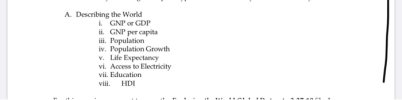 describing the world i-viii
A. Describing the World i. GNP or GDP ii. GNP per capita iii. Population iv. Population Growth v. Life Expectancy vi. Access to Electricity vii. Education viii. HDI
describing the world i-viii
A. Describing the World i. GNP or GDP ii. GNP per capita iii. Population iv. Population Growth v. Life Expectancy vi. Access to Electricity vii. Education viii. HDI
 Consider the reaction, which is exothermic as written, 2H2(g) + X2(g) =2H2X(g). Which of the following changes would result in the production of more H2X(g)? I. adding H2(g) II. removing H2(g) III. reducing the volume of the container IV. removing X2(g) V. increasing the temperature VI. increasing the volume of the container VII. adding X2(8) VIII. reducing the temperature IX adding a suitable catalyst a) 1, II, VI, VIII Ob) I, III, VII, VIII OC) 1, III, VII, VIII, IX...
 please help
3) Explain why each of the following manifestations occurs in end-stage renal failure: i. metabolic acidosis: ii. hyperkalemia: iii. hypocalcemia: iv. increased BUN and serum creatinine: v. anemia: NOT COP vi. delayed clotting: vii. edema: viii. increased blood pressure: ix. cardiac dysrhythmias X. congestive heart failure: xi. pulmonary edema: xii. lethargy, confusion: xiii. muscle weakness: xiv. bone pain: XV. amenorrhea:
please help
3) Explain why each of the following manifestations occurs in end-stage renal failure: i. metabolic acidosis: ii. hyperkalemia: iii. hypocalcemia: iv. increased BUN and serum creatinine: v. anemia: NOT COP vi. delayed clotting: vii. edema: viii. increased blood pressure: ix. cardiac dysrhythmias X. congestive heart failure: xi. pulmonary edema: xii. lethargy, confusion: xiii. muscle weakness: xiv. bone pain: XV. amenorrhea:
 why (b)? explain in detail of the thought process of
how the answer came to be. point out how to use the periodic table
on this one if it can be used.
I am just super confused.
. Refer to Ch. 18 Values. Which response contains all the salts whose aqueous solutions are acidic, and no other salts? I. IV. NH4NO3 II. NaCN III. КСІ NH Br Lici VI. CaCl2 VII. CH,NHẠC VIII. KNO2 IX. NHACH3COO a. b. c. d....
why (b)? explain in detail of the thought process of
how the answer came to be. point out how to use the periodic table
on this one if it can be used.
I am just super confused.
. Refer to Ch. 18 Values. Which response contains all the salts whose aqueous solutions are acidic, and no other salts? I. IV. NH4NO3 II. NaCN III. КСІ NH Br Lici VI. CaCl2 VII. CH,NHẠC VIII. KNO2 IX. NHACH3COO a. b. c. d....
 (Matching) Complete the following reaction by selecting the most appropriate reagent or reagents for each missing step. 1.227 2. CH,Br 3.222 OH EIO 4.272 5.772 NaH H30* heat soch III NaBH, ETOH ETOH NAOH THE CH,CH,Br V VII VIII IX х CH,Be Br Br CI XI XII XIII XIV XV XI XII XII XIV 1st Step 3rd Step Choose ) V VIII XII X IV II IX XV XIII VI XIV XI III VII 4th Step - 5th Step <...
 Consider the following system at equilibrium. N2(g) + 3 H2 (g) 2 NH3(g) + 92.24 kJ <--> Which response includes all of the following that will shift the equilibriu to the right, and no others? I. increasing the temperature III. increasing the pressure II. decreasing the temperature IV. decreasing the pressure VI. adding some NH3 V. removing some NH3 VII. removing some N2 VIII. adding some N2 a) I, IV, VI, and VII c) I, VI, and VII e) II,...
 1. (a) Give the systematic IUPAC names for each of the following complexes/ions (1) (NH4) [NiCl4] (ii) [Cr(H204(NH3)2]2+ (iii) [Ru(en)(OH)2]* (iv) Nas[Co(ONO)5] (v) [Rh(ONO)(OX)2]* (vi) [FeBrz(en)2]* (vii) [Ag(y)][AgCl4] (viii) K[Pt(ONO)3(NO2)3] (ix) [Co(SO4)(NH3)s]* (x) Naz[PdCl4]
 Order of Growth Rate Order the following functions by asymptotic growth: (i) fi(n) 3" (ii) f2(n) ni (iii) fa(n) 12 (iv) fa(n) 2log2 n (v) fs(n) Vn (vi) f6(n) 2" (vii) fr(n) log2 n (viii) fs(n) 2V (ix) fo(n) n3
 (a) Draw and label with required reagents, the reactions of conversion of an alkene into: i. Alcohol ii. Aldehyde iii. Ketone iv. Carboxylic acid v. Epoxide vi. Gem diol vii. Alkyl halide viii. Alkyl dihalide Where appropriate, show the correct stereochemistry of the final products (b) Draw and label with appropriate reagents the carboxylate reaction series
 describing the world i-viii
A. Describing the World i. GNP or GDP ii. GNP per capita iii. Population iv. Population Growth v. Life Expectancy vi. Access to Electricity vii. Education viii. HDI
describing the world i-viii
A. Describing the World i. GNP or GDP ii. GNP per capita iii. Population iv. Population Growth v. Life Expectancy vi. Access to Electricity vii. Education viii. HDI
Most questions answered within 3 hours.
-
Where is the error in this code sequence?
String s1 = "Hello";
String s2 = "ello";...
asked 11 months ago -
Financial data for Joel de Paris, Inc., for last year
follow:
Joel de Paris, Inc.
Balance...
asked 11 months ago -
Consider this reaction:
Al2(SO4)3 (aq)+ BaCl3
(aq) Al2Cl6 (aq)- +
3BaSO4(s) . What is the...
asked 11 months ago -
Suppose that Savneet is considering increasing her
recent random sample from 20 car rentals to 40...
asked 11 months ago -
Trucks arrive at an unloading terminal at an average rate of 120
per hour.
Trucks arrive...
asked 11 months ago -
Why are methanol and ethanol completely soluble in water while
octanol is not very little soluble....
asked 11 months ago -
A facilities manager at a university reads in a research report
that the mean amount of...
asked 11 months ago -
When the CuSO4 is rehydrated by adding water to the anhydrous
compound, is this an endothermic...
asked 11 months ago -
A ray of sunlight is passing from diamond into crown glass; the
angle of incidence is...
asked 11 months ago -
A block of mass 0.249 kg is placed on top of a light, vertical
spring of...
asked 11 months ago -
how do the kidneys compensate in the presences of acidosis
a) trigger hyperventilate
b) reserve acid...
asked 11 months ago -
Question 501 pts
The rental rate of capital to the firm increases. Which of the
following...
asked 11 months ago