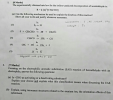
The decomposition of hydrogen peroxide, H 2 O 2 , may be catalyzed with the iodine...
The decomposition of hydrogen peroxide, H 2 O 2 , may be
catalyzed with the iodine ion.
Chemists propose this reaction occurs according to the following
mechanism.
Step 1 H 2 O 2 + I - > H 2 O + OI - slow
Step 2 H 2 O 2 + OI - > H 2 O + O 2 + I - fast
(a) Show that these steps are consistent with the overall
stoichiometry of the reaction.
(b) How does this mechanism account for the fact that the iodine
ion is a catalyst?
(c) What effect would decreasing the concentration of hydrogen
peroxide have on the
overall rate? Explain?
Homework Answers


Add Answer to:
The decomposition of hydrogen peroxide, H 2 O 2 , may be
catalyzed with the iodine...
6. The decomposition of ozone in the upper atmosphere is catalyzed by NO. The overall reaction...
 6. The decomposition of ozone in the upper atmosphere is catalyzed by NO. The overall reaction and rate law are: O:(g) + O(g) →202(g): rate = k[O][NOJ Write a possible mechanism that is consistent with rate law and identify an intermediate in the reaction. 7. A possible mechanism for the iodide ion catalyzed decomposition of hydrogen peroxide in aqueous solution is: H2O2(aq) + I'(aq) → H2O(l) + Of(aq) ---...-slow H2O2(aq) + Or(aq) → H2O(0) + O2(g) + I'(aq) -----fast What...
5. Iodide is oxidized by hydrogen peroxide according to the following mechanism: H 2 O 2...
5. Iodide is oxidized by hydrogen peroxide according to the following mechanism: H 2 O 2 + I- → H 2 O + OI- (slow) H+ + OI- → HOI (fast) HOI + H+ + I- → I2 + H2O (fast) (a) What is the overall reaction? (b) What is the molecularity of each step? (c) Write the rate equation for the rate-determining step. (d) What are the intermediates in this reaction? (If none, write “none.”)
6 The decomposition of ozone in the upper atmosphere is catalyzed by NO. The overall reaction...
 6 The decomposition of ozone in the upper atmosphere is catalyzed by NO. The overall reaction and rate law are: rate k[O][NO] Os(g)+O(g)+20;(g); Write a possible mechanism that is consistent with rate law and identify an intermediate in the reaction. 7. A possible mechanism for the iodide ion catalyzed decomposition of hydrogen peroxide in aqueous solution is: -slow H2O:(aq) +I(aq)H;O(1) + 0I°(aq) -fast H20:(aq) +Or(aq)H:O()) +02(g)+l'(aq) What is: iv) the catalyst? iv) the intermediate ii) the rate law i) the...
please 6. The decomposition of ozone in the upper atmosphere is catalyzed by NO. The overall...
 please
6. The decomposition of ozone in the upper atmosphere is catalyzed by NO. The overall reaction and rate law are: O(g) + O(g) 20(8): rate-k[O][NO] Write a possible mechanism that is consistent with rate law and identify an intermediate in the reaction. 7. A possible mechanism for the iodide ion catalyzed decomposition of hydrogen peroxide in aqueous solution is: H:Os(aq) + (aq) → H2O(1) Ol(aq) --- -slow H2O2(aq) + Ol'(aq) → H2O(1) + O2(g) + l'(aq) ------fast What is:...
please
6. The decomposition of ozone in the upper atmosphere is catalyzed by NO. The overall reaction and rate law are: O(g) + O(g) 20(8): rate-k[O][NO] Write a possible mechanism that is consistent with rate law and identify an intermediate in the reaction. 7. A possible mechanism for the iodide ion catalyzed decomposition of hydrogen peroxide in aqueous solution is: H:Os(aq) + (aq) → H2O(1) Ol(aq) --- -slow H2O2(aq) + Ol'(aq) → H2O(1) + O2(g) + l'(aq) ------fast What is:...
1. The mechanism for hydrogen peroxide decomposition is thought to occur in two step: step 1:...
1. The mechanism for hydrogen peroxide decomposition is thought to occur in two step: step 1: H2O2+ I ------> IO + H2O step 2: IO + H2O2 --------> I + H2O + O2 a. describe each step in the mechanism as unimolecular ,bimolecular or termolecular ? b. which species in the mechanism acts as an intermediate.? c. which species in the mechanism acts as catalyst.? d. what is the net reaction?
The following mechanism, proposed for the decomposition of hydrogen peroxide is composed of 2 elementary steps:...
 The following mechanism, proposed for the decomposition of hydrogen peroxide is composed of 2 elementary steps: H2O2(aq) + I'(aq) > H2O(l) + 10 (aq) 10 (aq) + H2O2(aq) -> H2O(l) + O2(g) + I'(aq) The rate law predicted by the mechanism is slow fast a) rate = k [H2O2) b) rate =k [H202][I] c) rate =k [H2O2][10] d) rate = k [H202) [1]
4. Now consider the catalase catalyzed decomposition of hydrogen peroxide to water. The much needed catalyst....
 4. Now consider the catalase catalyzed decomposition of hydrogen peroxide to water. The much needed catalyst. 2H202 + catalase → 2H2O + O2 + catalase a. [3] Assume the following mechanism: H2O2 + catalase = {H202-catalase} HIS 54 Inhibitor ASN 127 H2O2 + {H202-catalase} → catalase + 2H20 + O2 Oxygen When the pre-equilibrium approximation is used, the rate-law is: 41 dt Kegk2[H202]?[E]. The steady-state approximation gives a more general rate law. Derive the rate law using the SS approximation....
Help?? Consider the following reaction: H_2(g) hydrogen + 2ICI(g) iodine chloride righarrow HCI(g) hydrogen chloride +...
 Help??
Consider the following reaction: H_2(g) hydrogen + 2ICI(g) iodine chloride righarrow HCI(g) hydrogen chloride + 1_2(g) iodine The rate law for this reaction has been determined experimentally, and it is first order in both hydrogen gas and iodine chloride gas (second order overall). Propose a mechanism with a minimum of two steps which is consistent with the observed rate law, and indicate which of the steps is likety to be the rate-determining step in the mechanism.
Help??
Consider the following reaction: H_2(g) hydrogen + 2ICI(g) iodine chloride righarrow HCI(g) hydrogen chloride + 1_2(g) iodine The rate law for this reaction has been determined experimentally, and it is first order in both hydrogen gas and iodine chloride gas (second order overall). Propose a mechanism with a minimum of two steps which is consistent with the observed rate law, and indicate which of the steps is likety to be the rate-determining step in the mechanism.
The decomposition of hydrogen peroxide (H2O2(aq)) is proposed to follow a reaction mechanism of Step 1:...
 The decomposition of hydrogen peroxide (H2O2(aq)) is proposed to follow a reaction mechanism of Step 1: H2O2(aq) + Br(aq)-H2O(l) + BrO (aq) Step 2: Bro (aq) + H2O2(aq),H2O(l) + O2(g) + Br(aq) What is the catalyst, and what is the effect of having a catalyst present? Periodic Table and Datasheet Br is the catalyst, and the reaction follows a faster pathway with Br than without BrO is the catalyst, and the reaction follows a faster pathway with Bro-than without Bro...
1. [8 Marks The experimentally obtained rate law for the iodine-catalyzed decomposition of acetaldehyde is: R...
 1. [8 Marks The experimentally obtained rate law for the iodine-catalyzed decomposition of acetaldehyde is: R =k[2] [CH CHO (a) Can the following mechanism be used to explain the kinetics of this reaction? Show all your work and justify whenever necessary. Intermediates: I HI, CHOCO, CHE ki 121 Catalyst : Is 1 + CHỊCHO + H + CHICO CH,CO CH3 + CO CH + HÍ - CHI + 1 ki 21 + 1 CHu + co CH₂ CHO 2. [7...
 6. The decomposition of ozone in the upper atmosphere is catalyzed by NO. The overall reaction and rate law are: O:(g) + O(g) →202(g): rate = k[O][NOJ Write a possible mechanism that is consistent with rate law and identify an intermediate in the reaction. 7. A possible mechanism for the iodide ion catalyzed decomposition of hydrogen peroxide in aqueous solution is: H2O2(aq) + I'(aq) → H2O(l) + Of(aq) ---...-slow H2O2(aq) + Or(aq) → H2O(0) + O2(g) + I'(aq) -----fast What...
 6 The decomposition of ozone in the upper atmosphere is catalyzed by NO. The overall reaction and rate law are: rate k[O][NO] Os(g)+O(g)+20;(g); Write a possible mechanism that is consistent with rate law and identify an intermediate in the reaction. 7. A possible mechanism for the iodide ion catalyzed decomposition of hydrogen peroxide in aqueous solution is: -slow H2O:(aq) +I(aq)H;O(1) + 0I°(aq) -fast H20:(aq) +Or(aq)H:O()) +02(g)+l'(aq) What is: iv) the catalyst? iv) the intermediate ii) the rate law i) the...
 please
6. The decomposition of ozone in the upper atmosphere is catalyzed by NO. The overall reaction and rate law are: O(g) + O(g) 20(8): rate-k[O][NO] Write a possible mechanism that is consistent with rate law and identify an intermediate in the reaction. 7. A possible mechanism for the iodide ion catalyzed decomposition of hydrogen peroxide in aqueous solution is: H:Os(aq) + (aq) → H2O(1) Ol(aq) --- -slow H2O2(aq) + Ol'(aq) → H2O(1) + O2(g) + l'(aq) ------fast What is:...
please
6. The decomposition of ozone in the upper atmosphere is catalyzed by NO. The overall reaction and rate law are: O(g) + O(g) 20(8): rate-k[O][NO] Write a possible mechanism that is consistent with rate law and identify an intermediate in the reaction. 7. A possible mechanism for the iodide ion catalyzed decomposition of hydrogen peroxide in aqueous solution is: H:Os(aq) + (aq) → H2O(1) Ol(aq) --- -slow H2O2(aq) + Ol'(aq) → H2O(1) + O2(g) + l'(aq) ------fast What is:...
 The following mechanism, proposed for the decomposition of hydrogen peroxide is composed of 2 elementary steps: H2O2(aq) + I'(aq) > H2O(l) + 10 (aq) 10 (aq) + H2O2(aq) -> H2O(l) + O2(g) + I'(aq) The rate law predicted by the mechanism is slow fast a) rate = k [H2O2) b) rate =k [H202][I] c) rate =k [H2O2][10] d) rate = k [H202) [1]
 4. Now consider the catalase catalyzed decomposition of hydrogen peroxide to water. The much needed catalyst. 2H202 + catalase → 2H2O + O2 + catalase a. [3] Assume the following mechanism: H2O2 + catalase = {H202-catalase} HIS 54 Inhibitor ASN 127 H2O2 + {H202-catalase} → catalase + 2H20 + O2 Oxygen When the pre-equilibrium approximation is used, the rate-law is: 41 dt Kegk2[H202]?[E]. The steady-state approximation gives a more general rate law. Derive the rate law using the SS approximation....
 Help??
Consider the following reaction: H_2(g) hydrogen + 2ICI(g) iodine chloride righarrow HCI(g) hydrogen chloride + 1_2(g) iodine The rate law for this reaction has been determined experimentally, and it is first order in both hydrogen gas and iodine chloride gas (second order overall). Propose a mechanism with a minimum of two steps which is consistent with the observed rate law, and indicate which of the steps is likety to be the rate-determining step in the mechanism.
Help??
Consider the following reaction: H_2(g) hydrogen + 2ICI(g) iodine chloride righarrow HCI(g) hydrogen chloride + 1_2(g) iodine The rate law for this reaction has been determined experimentally, and it is first order in both hydrogen gas and iodine chloride gas (second order overall). Propose a mechanism with a minimum of two steps which is consistent with the observed rate law, and indicate which of the steps is likety to be the rate-determining step in the mechanism.
 The decomposition of hydrogen peroxide (H2O2(aq)) is proposed to follow a reaction mechanism of Step 1: H2O2(aq) + Br(aq)-H2O(l) + BrO (aq) Step 2: Bro (aq) + H2O2(aq),H2O(l) + O2(g) + Br(aq) What is the catalyst, and what is the effect of having a catalyst present? Periodic Table and Datasheet Br is the catalyst, and the reaction follows a faster pathway with Br than without BrO is the catalyst, and the reaction follows a faster pathway with Bro-than without Bro...
 1. [8 Marks The experimentally obtained rate law for the iodine-catalyzed decomposition of acetaldehyde is: R =k[2] [CH CHO (a) Can the following mechanism be used to explain the kinetics of this reaction? Show all your work and justify whenever necessary. Intermediates: I HI, CHOCO, CHE ki 121 Catalyst : Is 1 + CHỊCHO + H + CHICO CH,CO CH3 + CO CH + HÍ - CHI + 1 ki 21 + 1 CHu + co CH₂ CHO 2. [7...
Most questions answered within 3 hours.
-
Where is the error in this code sequence?
String s1 = "Hello";
String s2 = "ello";...
asked 11 months ago -
Financial data for Joel de Paris, Inc., for last year
follow:
Joel de Paris, Inc.
Balance...
asked 11 months ago -
Consider this reaction:
Al2(SO4)3 (aq)+ BaCl3
(aq) Al2Cl6 (aq)- +
3BaSO4(s) . What is the...
asked 11 months ago -
Suppose that Savneet is considering increasing her
recent random sample from 20 car rentals to 40...
asked 11 months ago -
Trucks arrive at an unloading terminal at an average rate of 120
per hour.
Trucks arrive...
asked 11 months ago -
Why are methanol and ethanol completely soluble in water while
octanol is not very little soluble....
asked 11 months ago -
A facilities manager at a university reads in a research report
that the mean amount of...
asked 11 months ago -
When the CuSO4 is rehydrated by adding water to the anhydrous
compound, is this an endothermic...
asked 11 months ago -
A ray of sunlight is passing from diamond into crown glass; the
angle of incidence is...
asked 11 months ago -
A block of mass 0.249 kg is placed on top of a light, vertical
spring of...
asked 11 months ago -
how do the kidneys compensate in the presences of acidosis
a) trigger hyperventilate
b) reserve acid...
asked 11 months ago -
Question 501 pts
The rental rate of capital to the firm increases. Which of the
following...
asked 11 months ago