For the Diels-Alder reaction I need to know what each of these components are please help:...
For the Diels-Alder reaction I need to know what each of these components are please help: for example I need to know if the substrate is primary tertiary, etc. If the nucleophile/base is strong or weak? if the solvent is polar aprotic, ect? if the temp is low high or in between and if the leaving group is good, bad ect? and what type of reaction is this? I think it is E2 but not sure.
I don't understand how to come up with these answers so explanation would be great this is all apart of one problem.
Substrate:
Nucleophile/base
Solvent:
Temp:
Leaving Group
Reaction type:
Homework Answers
Hey
I will tell you everything you need to know about diels alder reaction
Substrate-Diene and dienophile
Nucleophile-NO
Base-NO
Solvent-NO specific solvent
Temp-High
Leaving group -NO
Reaction type-cycloaddition
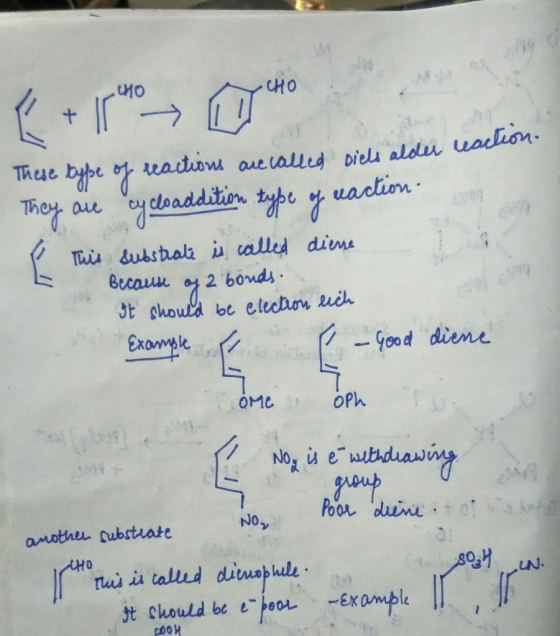
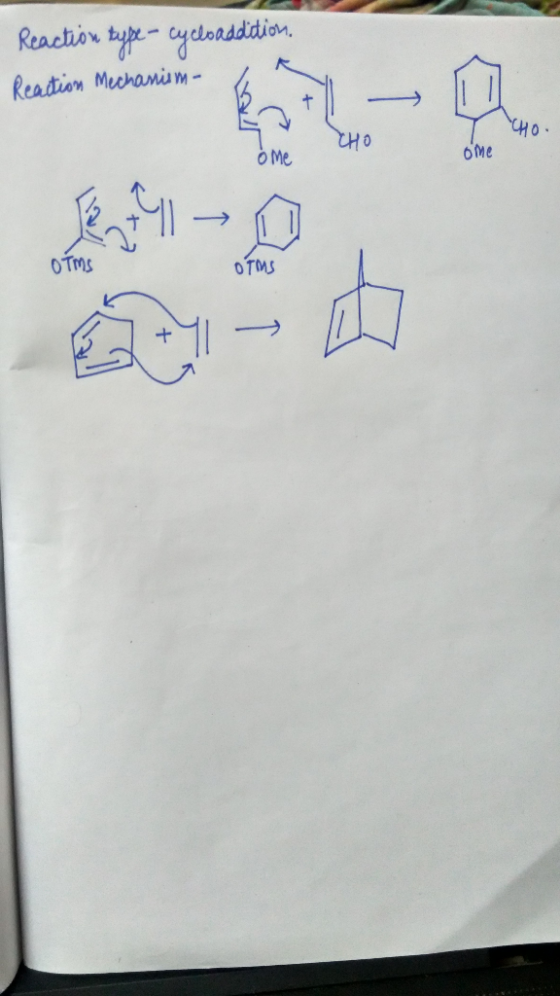
hope it helped
Thanks!!
Add Answer to:
For the Diels-Alder reaction I need to know what each of these
components are please help:...
Compare and contrast SN1, SN2, E1 and E2 reactions. What are some obvious similarities and differences...
Compare and contrast SN1, SN2, E1 and E2 reactions. What are some obvious similarities and differences between each reaction pathway? What are the requirements for each reaction to work? Discuss why SN2 is in direct competition with E2 while SN1 is in direct competition with the E1 reaction pathway. What is the rate expression for each? Which reactions are concerted? Which reactions are step-wise? Which reactions are stereospecific and what is the stereospecificity of each that are? How do the...
This is a multiple question discussion. Can someone please help and provide insight with definitions and...
This is a multiple question discussion. Can someone please help and provide insight with definitions and examples? Compare and contrast SN1, SN2, E1 and E2 reactions. What are some obvious similarities and differences between each reaction pathway? What are the requirements for each reaction to work? Discuss why SN2 is in direct competition with E2 while SN1 is in direct competition with the E1 reaction pathway. What is the rate expression for each? Which reactions are concerted? Which reactions are...
For the nucleophilic-substitution part (The second part. First part is the Diels-Alder Reaction) indicate which is...
 For the nucleophilic-substitution
part (The second part. First part is the Diels-Alder Reaction)
indicate which is the nucleophile (by putting a circle around it)
and which is the electrophilic part (by putting a square around it)
and which part is a leaving group (by putting oval shape around
it.)
Diels-Alder Reaction + Intramolecular Nucleophilic Acyl Substitution : A Huge Increase in Molecular Complexity in One Reaction Flask no heat $$$=(3- no solvent H * (and enantiomer) CO2H
For the nucleophilic-substitution
part (The second part. First part is the Diels-Alder Reaction)
indicate which is the nucleophile (by putting a circle around it)
and which is the electrophilic part (by putting a square around it)
and which part is a leaving group (by putting oval shape around
it.)
Diels-Alder Reaction + Intramolecular Nucleophilic Acyl Substitution : A Huge Increase in Molecular Complexity in One Reaction Flask no heat $$$=(3- no solvent H * (and enantiomer) CO2H
3. a. List the and state if( ) (10 pts ca.) i. Nucleophile (strong/weak), Basicity (strong/weak)...
 3. a. List the and state if( ) (10 pts ca.) i. Nucleophile (strong/weak), Basicity (strong/weak) ii. Substrate (1°/2°/3°) iii. Leaving group (good/poor) iv. Solvent (protic/aprotic) b. Label the mechanism for the reaction (S1/S2/E1/E2) c. Draw the mechanism for the reactions and predict the major product(s). Use proper stereochemistry where necessary d. State which is the rate determining step (RDS) e. Give a rate law for each reaction. Ex: Rate=K[ A B NaSCH CH2CN OH HI MeOH
+ Fit to page Page view 1. (10 pts) For the following reactions: a. Label the...
 + Fit to page Page view 1. (10 pts) For the following reactions: a. Label the Nucleophile (Nu) and whether it is strong or weak b. Label the Electrophile (E) and whether it is primary, secondary, or tertiary and circle the leaving group c. Label the Solvent and whether it is polar protic or polar aprotic d. Categorize each as preferring SN1, Preferring SN2, or could do either e Draw the product of the reaction, based upon your categorization, remember...
5. REACTIONS (30PTS, 6PT EA): For the following reactions indicate what substituted alkyl halide sol are...
 5. REACTIONS (30PTS, 6PT EA): For the following reactions indicate what substituted alkyl halide sol are provided and choose indicated reaction conditions, 2) then provide the major product or indicate dicate what substituted alkyl halide, solvent, and nucleopa cmajor product or indicate NO REACTION Closed Inuci NaOEt alkoi halide: 1.1.3 Salt Polar Proti Polar Agrote Noclegile strong wak Br EtOH Of Shade one — SI E2 S 2 EI Circle one cach alky balide 1º, 2º, 3º Solvent Polar Prote/Polar...
HWS 5: Due 10/30/2019 15 points total SN1, SN2, Elimination pt 1 1. (10 pts) For...
 HWS 5: Due 10/30/2019 15 points total SN1, SN2, Elimination pt 1 1. (10 pts) For the following reactions: a. Label the Nucleophile (Nu) and whether it is strong or weak b. Label the Electrophile (E) and whether it is primary, secondary, or tertiary and circle the leaving group C. Label the Solvent and whether it is polar protic or polar aprotic d. Categorize each as preferring SN1, Preferring SN2, or could do either e. Draw the product of the...
What part of this question did I get wrong? Thank you so much!! The reaction shown...
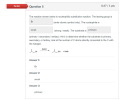 What part of this question did I get wrong? Thank you so
much!!
The reaction shown below is nucleophilic substitution reaction. The leaving group is Br (enter atomic symbol only). The nucleophile is weak (strong/weak). The substrate is primary (primary secondary/tertiary). Answer 1: Br Answer 2: weak Answer 3: primary
What part of this question did I get wrong? Thank you so
much!!
The reaction shown below is nucleophilic substitution reaction. The leaving group is Br (enter atomic symbol only). The nucleophile is weak (strong/weak). The substrate is primary (primary secondary/tertiary). Answer 1: Br Answer 2: weak Answer 3: primary
I need help with 1-4 please Question 1: Find a table that compares the relative reaction...
 I need help with 1-4 please
Question 1: Find a table that compares the relative reaction rates (Su2) for alkyi fluorides, chlorides, bromides and iodides (Section 9.2 in the textbook). Which halide is the best leaving group? How much faster is it than the slowest halide leaving group? Question 2: The nature of the solvent plays a big role in determining the type of substitution or elimination mechanism that takes place (SH1, SN2, E1 or E2). Draw structures for 2...
I need help with 1-4 please
Question 1: Find a table that compares the relative reaction rates (Su2) for alkyi fluorides, chlorides, bromides and iodides (Section 9.2 in the textbook). Which halide is the best leaving group? How much faster is it than the slowest halide leaving group? Question 2: The nature of the solvent plays a big role in determining the type of substitution or elimination mechanism that takes place (SH1, SN2, E1 or E2). Draw structures for 2...
2. Predict the product(s) of each of the reaction conditions below. Specify the substrate type (primary,...
 2. Predict the product(s) of each of the reaction conditions
below. Specify the substrate type (primary, secondary, or tertiary
alkyl halide), nucleophile (strong or poor), and the solvent type
(protic or aptrotic). Specify the type of reaction mechanism (SN1
or SN2), show the curved arrow mechanism and draw the products as
3D structures to illustrate stereochemistry.
Predict the product(s) of each of the reaction conditions below. Specify the substrate type (1º, 2º, or 3 alkyl halide). mucleophile (strong or poor),...
2. Predict the product(s) of each of the reaction conditions
below. Specify the substrate type (primary, secondary, or tertiary
alkyl halide), nucleophile (strong or poor), and the solvent type
(protic or aptrotic). Specify the type of reaction mechanism (SN1
or SN2), show the curved arrow mechanism and draw the products as
3D structures to illustrate stereochemistry.
Predict the product(s) of each of the reaction conditions below. Specify the substrate type (1º, 2º, or 3 alkyl halide). mucleophile (strong or poor),...
 For the nucleophilic-substitution
part (The second part. First part is the Diels-Alder Reaction)
indicate which is the nucleophile (by putting a circle around it)
and which is the electrophilic part (by putting a square around it)
and which part is a leaving group (by putting oval shape around
it.)
Diels-Alder Reaction + Intramolecular Nucleophilic Acyl Substitution : A Huge Increase in Molecular Complexity in One Reaction Flask no heat $$$=(3- no solvent H * (and enantiomer) CO2H
For the nucleophilic-substitution
part (The second part. First part is the Diels-Alder Reaction)
indicate which is the nucleophile (by putting a circle around it)
and which is the electrophilic part (by putting a square around it)
and which part is a leaving group (by putting oval shape around
it.)
Diels-Alder Reaction + Intramolecular Nucleophilic Acyl Substitution : A Huge Increase in Molecular Complexity in One Reaction Flask no heat $$$=(3- no solvent H * (and enantiomer) CO2H
 3. a. List the and state if( ) (10 pts ca.) i. Nucleophile (strong/weak), Basicity (strong/weak) ii. Substrate (1°/2°/3°) iii. Leaving group (good/poor) iv. Solvent (protic/aprotic) b. Label the mechanism for the reaction (S1/S2/E1/E2) c. Draw the mechanism for the reactions and predict the major product(s). Use proper stereochemistry where necessary d. State which is the rate determining step (RDS) e. Give a rate law for each reaction. Ex: Rate=K[ A B NaSCH CH2CN OH HI MeOH
 + Fit to page Page view 1. (10 pts) For the following reactions: a. Label the Nucleophile (Nu) and whether it is strong or weak b. Label the Electrophile (E) and whether it is primary, secondary, or tertiary and circle the leaving group c. Label the Solvent and whether it is polar protic or polar aprotic d. Categorize each as preferring SN1, Preferring SN2, or could do either e Draw the product of the reaction, based upon your categorization, remember...
 5. REACTIONS (30PTS, 6PT EA): For the following reactions indicate what substituted alkyl halide sol are provided and choose indicated reaction conditions, 2) then provide the major product or indicate dicate what substituted alkyl halide, solvent, and nucleopa cmajor product or indicate NO REACTION Closed Inuci NaOEt alkoi halide: 1.1.3 Salt Polar Proti Polar Agrote Noclegile strong wak Br EtOH Of Shade one — SI E2 S 2 EI Circle one cach alky balide 1º, 2º, 3º Solvent Polar Prote/Polar...
 HWS 5: Due 10/30/2019 15 points total SN1, SN2, Elimination pt 1 1. (10 pts) For the following reactions: a. Label the Nucleophile (Nu) and whether it is strong or weak b. Label the Electrophile (E) and whether it is primary, secondary, or tertiary and circle the leaving group C. Label the Solvent and whether it is polar protic or polar aprotic d. Categorize each as preferring SN1, Preferring SN2, or could do either e. Draw the product of the...
 What part of this question did I get wrong? Thank you so
much!!
The reaction shown below is nucleophilic substitution reaction. The leaving group is Br (enter atomic symbol only). The nucleophile is weak (strong/weak). The substrate is primary (primary secondary/tertiary). Answer 1: Br Answer 2: weak Answer 3: primary
What part of this question did I get wrong? Thank you so
much!!
The reaction shown below is nucleophilic substitution reaction. The leaving group is Br (enter atomic symbol only). The nucleophile is weak (strong/weak). The substrate is primary (primary secondary/tertiary). Answer 1: Br Answer 2: weak Answer 3: primary
 I need help with 1-4 please
Question 1: Find a table that compares the relative reaction rates (Su2) for alkyi fluorides, chlorides, bromides and iodides (Section 9.2 in the textbook). Which halide is the best leaving group? How much faster is it than the slowest halide leaving group? Question 2: The nature of the solvent plays a big role in determining the type of substitution or elimination mechanism that takes place (SH1, SN2, E1 or E2). Draw structures for 2...
I need help with 1-4 please
Question 1: Find a table that compares the relative reaction rates (Su2) for alkyi fluorides, chlorides, bromides and iodides (Section 9.2 in the textbook). Which halide is the best leaving group? How much faster is it than the slowest halide leaving group? Question 2: The nature of the solvent plays a big role in determining the type of substitution or elimination mechanism that takes place (SH1, SN2, E1 or E2). Draw structures for 2...
 2. Predict the product(s) of each of the reaction conditions
below. Specify the substrate type (primary, secondary, or tertiary
alkyl halide), nucleophile (strong or poor), and the solvent type
(protic or aptrotic). Specify the type of reaction mechanism (SN1
or SN2), show the curved arrow mechanism and draw the products as
3D structures to illustrate stereochemistry.
Predict the product(s) of each of the reaction conditions below. Specify the substrate type (1º, 2º, or 3 alkyl halide). mucleophile (strong or poor),...
2. Predict the product(s) of each of the reaction conditions
below. Specify the substrate type (primary, secondary, or tertiary
alkyl halide), nucleophile (strong or poor), and the solvent type
(protic or aptrotic). Specify the type of reaction mechanism (SN1
or SN2), show the curved arrow mechanism and draw the products as
3D structures to illustrate stereochemistry.
Predict the product(s) of each of the reaction conditions below. Specify the substrate type (1º, 2º, or 3 alkyl halide). mucleophile (strong or poor),...
Most questions answered within 3 hours.
-
Where is the error in this code sequence?
String s1 = "Hello";
String s2 = "ello";...
asked 11 months ago -
Financial data for Joel de Paris, Inc., for last year
follow:
Joel de Paris, Inc.
Balance...
asked 11 months ago -
Consider this reaction:
Al2(SO4)3 (aq)+ BaCl3
(aq) Al2Cl6 (aq)- +
3BaSO4(s) . What is the...
asked 11 months ago -
Suppose that Savneet is considering increasing her
recent random sample from 20 car rentals to 40...
asked 11 months ago -
Trucks arrive at an unloading terminal at an average rate of 120
per hour.
Trucks arrive...
asked 11 months ago -
Why are methanol and ethanol completely soluble in water while
octanol is not very little soluble....
asked 11 months ago -
A facilities manager at a university reads in a research report
that the mean amount of...
asked 11 months ago -
When the CuSO4 is rehydrated by adding water to the anhydrous
compound, is this an endothermic...
asked 11 months ago -
A ray of sunlight is passing from diamond into crown glass; the
angle of incidence is...
asked 11 months ago -
A block of mass 0.249 kg is placed on top of a light, vertical
spring of...
asked 11 months ago -
how do the kidneys compensate in the presences of acidosis
a) trigger hyperventilate
b) reserve acid...
asked 11 months ago -
Question 501 pts
The rental rate of capital to the firm increases. Which of the
following...
asked 11 months ago