list in steps along with a picture the mechanism of penicillin acylase
Homework Answers
 6 - APA is a beta lactam
compound.
6 - APA is a beta lactam
compound.
Oxidation of phenyl acetic acid precursor to o - hydroxy phenyl acetic acid.
The penicillin is converted into 6 - APA by the reaction of removing the side chain linked to amino group in position 6. It is achieved through enzymatic processes using enzymes like penicillin acylase. The function of this enzyme is to recognise a side chain and break the peptide linkage joining it to the 6 - APA nucleus.
The reaction takes place in aqueous solution with alkaline pH j6 APK is extracted by adjusting the pH to the isoelectric point This is followed by additional aqueous phase extraction so it may be recycled as a precursor in the fermentation.
Add Answer to:
list in steps along with a picture the mechanism of penicillin
acylase
The question is at the bottom of the picture. Please provide full steps on the “along...
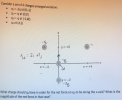 The question is at the bottom of the picture. Please provide
full steps on the “along the x-axis” part.
Consider a set of 4 charges arranged as below q1 -2q at (0,-2) 2q at (0,0) 3q at (-2,2) q4 at (4,2) Ti 32 1 42 C2 +4 What charge should q4 have in order for the net force on q2 to be along the x-axis? What is the magnitude of the net force in that case?
The question is at the bottom of the picture. Please provide
full steps on the “along the x-axis” part.
Consider a set of 4 charges arranged as below q1 -2q at (0,-2) 2q at (0,0) 3q at (-2,2) q4 at (4,2) Ti 32 1 42 C2 +4 What charge should q4 have in order for the net force on q2 to be along the x-axis? What is the magnitude of the net force in that case?
Please list all 6 steps of this mechanism Draw step 1 of the mechanism. O i...
 Please list all 6 steps of this mechanism
Draw step 1 of the mechanism. O i Edit H3C. CH3 + H-OH2
Please list all 6 steps of this mechanism
Draw step 1 of the mechanism. O i Edit H3C. CH3 + H-OH2
Explain in detail the mechanism of action for penicillin. The Antimicrobials and their Mechanisms table provided...
 Explain in detail the mechanism of action for penicillin. The Antimicrobials and their Mechanisms table provided to you says that the mechanism of action for penicillin is "block cross linking." Elaborate on the table description. What is cross linked? What is being blocked? What force actually kills an affected bacterial cell? HTML Editor D
List the steps along with instructions on how to perform a goodness of fit test. *...
List the steps along with instructions on how to perform a goodness of fit test. * Please explain step by step *
Complete answers with mechanism and products, with picture details. Determine, based on the identity of the...
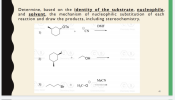 Complete answers with mechanism and products, with
picture details.
Determine, based on the identity of the substrate, nucleophile and solvent, the mechanism of nucleophilic substitution of each reaction and draw the products, including stereochemistry. DMF OTs Y Steps nistry Steps Chemistry Steps 1) Chemistry t OHmby Ste 2) Chemistry Steps MECN н.с-о — 3) + Br istry Steps Chemistry Steps Chemistry Steps Chemistry Steps
Complete answers with mechanism and products, with
picture details.
Determine, based on the identity of the substrate, nucleophile and solvent, the mechanism of nucleophilic substitution of each reaction and draw the products, including stereochemistry. DMF OTs Y Steps nistry Steps Chemistry Steps 1) Chemistry t OHmby Ste 2) Chemistry Steps MECN н.с-о — 3) + Br istry Steps Chemistry Steps Chemistry Steps Chemistry Steps
Show the products based on the curved arrow mechanism shown (It's question #2 in the picture,...
 Show the products based on the curved arrow mechanism
shown
(It's question #2 in the picture, but if you wanted to
answer #3/4 too that'd be awesome!)
show mechanism ows 2. Show the products based on the curved arrow mechanism shown. V + OH осна 3. Write a complete SN1 mechanism for the following reaction. Br +CH,OH CH₃CH L "CH₂ 4. Write a complete SN2 mechanism for the following. Show the transition state as well. Also list a good solvent...
Show the products based on the curved arrow mechanism
shown
(It's question #2 in the picture, but if you wanted to
answer #3/4 too that'd be awesome!)
show mechanism ows 2. Show the products based on the curved arrow mechanism shown. V + OH осна 3. Write a complete SN1 mechanism for the following reaction. Br +CH,OH CH₃CH L "CH₂ 4. Write a complete SN2 mechanism for the following. Show the transition state as well. Also list a good solvent...
I need help with this question with steps and picture please A box is sliding up...
 I need help with this question with steps and picture
please
A box is sliding up an incline that makes an angle of 31.5 with respect to the horizontal. The coefficient of kinetic friction between the box and the surface of the incline is 0.137. The initial speed of the box at the bottom of the inclkine is 3.42 m/s. How far does the box travel along the incline before coming to rest?
I need help with this question with steps and picture
please
A box is sliding up an incline that makes an angle of 31.5 with respect to the horizontal. The coefficient of kinetic friction between the box and the surface of the incline is 0.137. The initial speed of the box at the bottom of the inclkine is 3.42 m/s. How far does the box travel along the incline before coming to rest?
Which two antimicrobial drugs inhibit sequential steps in the synthesis of folic acid? penicillin and sulfamethoxazole...
Which two antimicrobial drugs inhibit sequential steps in the synthesis of folic acid? penicillin and sulfamethoxazole sulfamethoxazole and trimethoprim penicillin and gentamicin erythromycin and penicillin trimethoprim and synercid True/False: Viral infections are generally easier to treat than bacterial infections because viruses do not have a cellular structure. True False 1. Superinfection is most likely to result from a narrow spectrum antibiotic an extremely invasive, pathogenic organism that is antibiotic resistant the same organism re-infecting a patient after discontinuing antibiotic therapy...
Can someone show me the mechanism of how the compound in the first picture formed the...
 Can someone show me the mechanism of how the compound in the
first picture formed the enol intermediate in the second picture
leading to the final product shown in the second picture as
well?
COOH (6) v cooH НО (b) -COOH НО
Can someone show me the mechanism of how the compound in the
first picture formed the enol intermediate in the second picture
leading to the final product shown in the second picture as
well?
COOH (6) v cooH НО (b) -COOH НО
The top picture shows 6-chloro-4-ethylhex-2-enoic acid. The bottom picture shows the incorrect mechanism w a. What...
 The top picture shows 6-chloro-4-ethylhex-2-enoic acid. The
bottom picture shows the incorrect mechanism w
a. What are the the all of the mistakes in the incorrect
mechanism. Keep in mind that there will be more than one mistake in
the given mechanism and that the product given is not necessarily
the correct product of the reaction of your molecule with the given
reagent. For each mistake, give a detailed, scientific explanation
of why it is incorrect.
b. draw a correct...
The top picture shows 6-chloro-4-ethylhex-2-enoic acid. The
bottom picture shows the incorrect mechanism w
a. What are the the all of the mistakes in the incorrect
mechanism. Keep in mind that there will be more than one mistake in
the given mechanism and that the product given is not necessarily
the correct product of the reaction of your molecule with the given
reagent. For each mistake, give a detailed, scientific explanation
of why it is incorrect.
b. draw a correct...
 The question is at the bottom of the picture. Please provide
full steps on the “along the x-axis” part.
Consider a set of 4 charges arranged as below q1 -2q at (0,-2) 2q at (0,0) 3q at (-2,2) q4 at (4,2) Ti 32 1 42 C2 +4 What charge should q4 have in order for the net force on q2 to be along the x-axis? What is the magnitude of the net force in that case?
The question is at the bottom of the picture. Please provide
full steps on the “along the x-axis” part.
Consider a set of 4 charges arranged as below q1 -2q at (0,-2) 2q at (0,0) 3q at (-2,2) q4 at (4,2) Ti 32 1 42 C2 +4 What charge should q4 have in order for the net force on q2 to be along the x-axis? What is the magnitude of the net force in that case?
 Please list all 6 steps of this mechanism
Draw step 1 of the mechanism. O i Edit H3C. CH3 + H-OH2
Please list all 6 steps of this mechanism
Draw step 1 of the mechanism. O i Edit H3C. CH3 + H-OH2
 Explain in detail the mechanism of action for penicillin. The Antimicrobials and their Mechanisms table provided to you says that the mechanism of action for penicillin is "block cross linking." Elaborate on the table description. What is cross linked? What is being blocked? What force actually kills an affected bacterial cell? HTML Editor D
 Complete answers with mechanism and products, with
picture details.
Determine, based on the identity of the substrate, nucleophile and solvent, the mechanism of nucleophilic substitution of each reaction and draw the products, including stereochemistry. DMF OTs Y Steps nistry Steps Chemistry Steps 1) Chemistry t OHmby Ste 2) Chemistry Steps MECN н.с-о — 3) + Br istry Steps Chemistry Steps Chemistry Steps Chemistry Steps
Complete answers with mechanism and products, with
picture details.
Determine, based on the identity of the substrate, nucleophile and solvent, the mechanism of nucleophilic substitution of each reaction and draw the products, including stereochemistry. DMF OTs Y Steps nistry Steps Chemistry Steps 1) Chemistry t OHmby Ste 2) Chemistry Steps MECN н.с-о — 3) + Br istry Steps Chemistry Steps Chemistry Steps Chemistry Steps
 Show the products based on the curved arrow mechanism
shown
(It's question #2 in the picture, but if you wanted to
answer #3/4 too that'd be awesome!)
show mechanism ows 2. Show the products based on the curved arrow mechanism shown. V + OH осна 3. Write a complete SN1 mechanism for the following reaction. Br +CH,OH CH₃CH L "CH₂ 4. Write a complete SN2 mechanism for the following. Show the transition state as well. Also list a good solvent...
Show the products based on the curved arrow mechanism
shown
(It's question #2 in the picture, but if you wanted to
answer #3/4 too that'd be awesome!)
show mechanism ows 2. Show the products based on the curved arrow mechanism shown. V + OH осна 3. Write a complete SN1 mechanism for the following reaction. Br +CH,OH CH₃CH L "CH₂ 4. Write a complete SN2 mechanism for the following. Show the transition state as well. Also list a good solvent...
 I need help with this question with steps and picture
please
A box is sliding up an incline that makes an angle of 31.5 with respect to the horizontal. The coefficient of kinetic friction between the box and the surface of the incline is 0.137. The initial speed of the box at the bottom of the inclkine is 3.42 m/s. How far does the box travel along the incline before coming to rest?
I need help with this question with steps and picture
please
A box is sliding up an incline that makes an angle of 31.5 with respect to the horizontal. The coefficient of kinetic friction between the box and the surface of the incline is 0.137. The initial speed of the box at the bottom of the inclkine is 3.42 m/s. How far does the box travel along the incline before coming to rest?
 Can someone show me the mechanism of how the compound in the
first picture formed the enol intermediate in the second picture
leading to the final product shown in the second picture as
well?
COOH (6) v cooH НО (b) -COOH НО
Can someone show me the mechanism of how the compound in the
first picture formed the enol intermediate in the second picture
leading to the final product shown in the second picture as
well?
COOH (6) v cooH НО (b) -COOH НО
 The top picture shows 6-chloro-4-ethylhex-2-enoic acid. The
bottom picture shows the incorrect mechanism w
a. What are the the all of the mistakes in the incorrect
mechanism. Keep in mind that there will be more than one mistake in
the given mechanism and that the product given is not necessarily
the correct product of the reaction of your molecule with the given
reagent. For each mistake, give a detailed, scientific explanation
of why it is incorrect.
b. draw a correct...
The top picture shows 6-chloro-4-ethylhex-2-enoic acid. The
bottom picture shows the incorrect mechanism w
a. What are the the all of the mistakes in the incorrect
mechanism. Keep in mind that there will be more than one mistake in
the given mechanism and that the product given is not necessarily
the correct product of the reaction of your molecule with the given
reagent. For each mistake, give a detailed, scientific explanation
of why it is incorrect.
b. draw a correct...
Most questions answered within 3 hours.
-
Where is the error in this code sequence?
String s1 = "Hello";
String s2 = "ello";...
asked 10 months ago -
Financial data for Joel de Paris, Inc., for last year
follow:
Joel de Paris, Inc.
Balance...
asked 10 months ago -
Consider this reaction:
Al2(SO4)3 (aq)+ BaCl3
(aq) Al2Cl6 (aq)- +
3BaSO4(s) . What is the...
asked 10 months ago -
Suppose that Savneet is considering increasing her
recent random sample from 20 car rentals to 40...
asked 10 months ago -
Trucks arrive at an unloading terminal at an average rate of 120
per hour.
Trucks arrive...
asked 10 months ago -
Why are methanol and ethanol completely soluble in water while
octanol is not very little soluble....
asked 10 months ago -
A facilities manager at a university reads in a research report
that the mean amount of...
asked 10 months ago -
When the CuSO4 is rehydrated by adding water to the anhydrous
compound, is this an endothermic...
asked 10 months ago -
A ray of sunlight is passing from diamond into crown glass; the
angle of incidence is...
asked 10 months ago -
A block of mass 0.249 kg is placed on top of a light, vertical
spring of...
asked 10 months ago -
how do the kidneys compensate in the presences of acidosis
a) trigger hyperventilate
b) reserve acid...
asked 10 months ago -
Question 501 pts
The rental rate of capital to the firm increases. Which of the
following...
asked 10 months ago