Variation inthe EPAS1 gene has conoferred an advantage to Tibetans living in high altitude. This genevariant...
Variation inthe EPAS1 gene has conoferred an advantage to Tibetans living in high altitude. This genevariant was most likely ti acquired by human by interbreeding with '
1.Neanderthals
2.australopithicus
3.Denisovans
Homework Answers
Variation inthe EPAS1 gene has conoferred an advantage to Tibetans living in high altitude. This genevariant was most likely ti acquired by human by interbreeding with Denisovans.
In a research on genome project it was found that the genetic fingerprint of denisovans and tibetan segments matches closely. A compariso of full EPAS1 gene between populations of these two shows the evidence that it was inherited from the denisovans.
Add Answer to:
Variation inthe EPAS1 gene has conoferred an advantage to
Tibetans living in high altitude. This genevariant...
4:03 Homework #2.docx High Altitude Simulation Test (From the article "Problems of air travel for patients with lun...
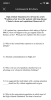 4:03 Homework #2.docx High Altitude Simulation Test (From the article "Problems of air travel for patients with lung disease: Clinical criteria and regulations) Homework #2 1) If a patient has a pneumothorax while taking a flight at 8000 ft, what will happen to the gas trapped inside the thoracic cavity? What gas law explains why this occurs? 2) What is the normal body response to an increase in altitude? 3) Absolute contraindications to flight are? 4) Why is the use...
A woman in a high risk population has the gene for sickle-cell is 1/10. If the...
A woman in a high risk population has the gene for sickle-cell is 1/10. If the woman has the gene each of her children has the probability 1/2 of having the disease, if she does not the probability is zero. If the woman has 3 sons without sickle-cell what is the probability that she carries the sickle-cell gene?
Under the Hecksher-Ohlin theory of comparative advantage, China has a comparative advantage in textile production because:...
Under the Hecksher-Ohlin theory of comparative advantage, China has a comparative advantage in textile production because: 1. the U.S. is unwilling to apply trade sanctions in reprisal for China's human rights abuses 2. it cannot manufacture high tech products 3. it has superior textile production technology 4. textiles are labor-intensive products and China is labor-abundant 5. China is capable of producing higher quality textiles than other countries
2) A location on a specific chromosome that has appreciable variation in a population is called...
2) A location on a specific chromosome that has appreciable variation in a population is called __________________________. Select one: A) a chromosomal arm. B) an inherited disease. C) a DNA polymorphism. D) phenotypic variation. E) a homologue. 3) In the DNA barcoding of animals, a portion of the cytochrome oxidase 1 gene (cox-1) is used. Why? Select one: A) The gene sequence varies little among members of a species, but varies more among different species. B) The cox-1 gene encodes...
Anthropology 111 - Human Biological Evolution Lab (Modern Human Variation) 1. In what populations do we...
Anthropology 111 - Human Biological Evolution Lab (Modern Human Variation) 1. In what populations do we see the high frequencies (above 80%) of the allele associated with lighter pigmentation? Japanese Indonesian Italian Chinese Mongolian India African German Bangladesh Turkish French 2. Why might some light-skinned populations, such as the Japanese, be missing F374 allele? a. There have been multiple, different mutations that have produced light skin in different populations b. This allele does not cause depigmentation c. Some populations, such...
Please answer 1-5. Previous research shows that some human populations living at extremely high altitudes have...
Please answer 1-5. Previous research shows that some human populations living at extremely high altitudes have larger lungs. Research has also shown that at high elevations the oxygen concentrations are lower, and people in these areas are at risk of not getting enough oxygen. 1.Generate a hypothesis about why people in high altitudes have larger lungs. 2. Describe the type or types of data you would ideally collect to test this hypothesis. 3. Describe what hypothetical data might support the...
1. For an atmosphere in hydrostatic equilibrium the variation of particle number density (# of pa...
1. For an atmosphere in hydrostatic equilibrium the variation of particle number density (# of particles per unit volume) of each species as a function of altitude (z) is found by equating gravitational and pressure forces. The resulting expression is: N(z) = No * e^(-(z - zo)/H) where N0 is a constant for each species, and z0 is an arbitrary reference altitude. The parameter H is called the scale height, which is equal to KT/mg. In the scale height expression...
Genetics Worksheet Week 3: Gene Regulation and Epigenetics 1. Duchenne muscular dystrophy is caused by a mutation in a gene that is 2.5 million nucleotides in length and encodes a protein called dyst...
 Genetics Worksheet Week 3: Gene Regulation and Epigenetics 1. Duchenne muscular dystrophy is caused by a mutation in a gene that is 2.5 million nucleotides in length and encodes a protein called dystrophin. The dystrophin protein itself is 3684 amino acids in length. Calculate below the approximate size of the mRNA that encodes dystrophin. Approximately what percentage of the gene that encodes dystrophin is intron sequence? The human genome encodes a much greater variety and number of proteins than the...
Pseudomonas has a plasmid containing the mer operon, which includes a gene for mercuric reductase. The...
Pseudomonas has a plasmid containing the mer operon, which includes a gene for mercuric reductase. The enzyme catalyzes the reduction of the mercuric ion Hg2+ to the uncharged form of mercury, Hg0 Hg2+ is quite toxic to cells, Hg0is not. 1. What condition would induce this operon to be transcribed and the transcript to be translated into the proteins including mercuric reductase? 2. The protein encoded by the mer operon binds to Hg2+ outside the cell and brings it into...
1.If a business has an internalization advantage, it is more likely to A.engage in contract manufacturing...
1.If a business has an internalization advantage, it is more likely to A.engage in contract manufacturing B.own a resource that gives it a competitive advantage over its rivals C.face the liability of foreignness D.use FDI as a market-entry strategy 2.A manufacturer of hard drives sells its product to an American computer maker, which then exports the finished laptops. The hard-drive manufacturer has engaged in A. business process outsourcing B.indirect exporting C. intracorporate transfer D. direct exporting 3. Jim is an...
 4:03 Homework #2.docx High Altitude Simulation Test (From the article "Problems of air travel for patients with lung disease: Clinical criteria and regulations) Homework #2 1) If a patient has a pneumothorax while taking a flight at 8000 ft, what will happen to the gas trapped inside the thoracic cavity? What gas law explains why this occurs? 2) What is the normal body response to an increase in altitude? 3) Absolute contraindications to flight are? 4) Why is the use...
 Genetics Worksheet Week 3: Gene Regulation and Epigenetics 1. Duchenne muscular dystrophy is caused by a mutation in a gene that is 2.5 million nucleotides in length and encodes a protein called dystrophin. The dystrophin protein itself is 3684 amino acids in length. Calculate below the approximate size of the mRNA that encodes dystrophin. Approximately what percentage of the gene that encodes dystrophin is intron sequence? The human genome encodes a much greater variety and number of proteins than the...
Most questions answered within 3 hours.
-
Where is the error in this code sequence?
String s1 = "Hello";
String s2 = "ello";...
asked 10 months ago -
Financial data for Joel de Paris, Inc., for last year
follow:
Joel de Paris, Inc.
Balance...
asked 10 months ago -
Consider this reaction:
Al2(SO4)3 (aq)+ BaCl3
(aq) Al2Cl6 (aq)- +
3BaSO4(s) . What is the...
asked 10 months ago -
Suppose that Savneet is considering increasing her
recent random sample from 20 car rentals to 40...
asked 10 months ago -
Trucks arrive at an unloading terminal at an average rate of 120
per hour.
Trucks arrive...
asked 10 months ago -
Why are methanol and ethanol completely soluble in water while
octanol is not very little soluble....
asked 10 months ago -
A facilities manager at a university reads in a research report
that the mean amount of...
asked 10 months ago -
When the CuSO4 is rehydrated by adding water to the anhydrous
compound, is this an endothermic...
asked 10 months ago -
A ray of sunlight is passing from diamond into crown glass; the
angle of incidence is...
asked 10 months ago -
A block of mass 0.249 kg is placed on top of a light, vertical
spring of...
asked 10 months ago -
how do the kidneys compensate in the presences of acidosis
a) trigger hyperventilate
b) reserve acid...
asked 10 months ago -
Question 501 pts
The rental rate of capital to the firm increases. Which of the
following...
asked 10 months ago