During a laboratory experiment, you discover that an enzyme-catalyzed reaction has a ΔG = -6 kcal/mole...
During a laboratory experiment, you discover that an enzyme-catalyzed reaction has a ΔG = -6 kcal/mole when the enzyme concentration is 1 microgram/ml. If we decrease the amount of enzyme to 0.5 micrograms/ml what will the ΔG be?
a.-3 kcal/mole
b. +3 kcal/mole
c. -6 kcal/mole
d. -12 kcal/mole
e. It is not possible to calculate the answer with the information given.
Homework Answers
Option e is correct
Taking into consideration Gibbs equation
ΔG=−RTlnK.
R (Universal Gas Constant) = 8.314 J Mol-1 K-1
T = Temperature Unknown ( Assuming it at 298)
K = Initial Concentration = 1 (ln(1) = 0)
Substituring the values we get 0.
Add Answer to:
During a laboratory experiment, you discover that an
enzyme-catalyzed reaction has a ΔG = -6 kcal/mole...
Suppose that the following data are obtained for an enzyme-catalyzed reaction: [S] (mM) V (mmol ml-1min-1)...
Suppose that the following data are obtained for an enzyme-catalyzed reaction: [S] (mM) V (mmol ml-1min-1) 0.1 3.33 0.2 5.00 0.5 7.14 0.8 8.0 1.0 8.33 2.0 9.09 a.) From a double-reciprocal plot of the data, determine Km and Vmax. b.) Assuming that the enzyme present in the system had a concentration of 10-6 M, calculate its turnover number.
Experiment 6: Factors affecting enzyme catalyzed reactions Data Page Name: 1. STANDARD CURVE Table 1: Standard...
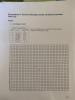 Experiment 6: Factors affecting enzyme catalyzed reactions Data Page Name: 1. STANDARD CURVE Table 1: Standard Curve Use your standard curve to calculate molar absorptivity Tube# Abs. mg/ml PNP coefficient of PNP? Show work. 1 0 2 0 :183 0.063 3 0.264 0.125 4 0.530 0.25 5 0.95 0.5 Pape 57
3.33 3. Suppose that the following data are obtained for an enzyme-catalyzed reaction: [S(mm) V (mmol...
 3.33 3. Suppose that the following data are obtained for an enzyme-catalyzed reaction: [S(mm) V (mmol ml-Imin-1) 0.1 0.2 5.00 7.14 8.0 1.0 8.33 9.09 (a) From a double-reciprocal plot of the data, determine Km and Vmax. (b) Assuming that the enzyme present in the system had a concentration of 10-6 M, calculate its turnover number 0.8 2.0
enzyme has a molar mass of 30 kilodatons. From this information, calculate Keat for this enzyme-catalyzed...
 enzyme has a molar mass of 30 kilodatons. From this information, calculate Keat for this enzyme-catalyzed reaction both with and without inhibitor. Also explain from the data given on the graph which type of enzyme inhibition any is curring Series 1 - no inhibitor. Series 2 inhibitor present • Seriesi Series2 Linear (Series1) Linear (Series2) Chapter 8. Enzyme Regulation and Inhibition 1. Competitive inhibitors are always of which type? a) allosteric b) irreversible c) reversible d) suicide 2. DIFP is:...
6-5. During the combustion of 10.0 g of octane, CH18, 479.0 kcal is released? Write a...
 6-5. During the combustion of 10.0 g of octane, CH18, 479.0 kcal is released? Write a balanced equation for the combustion reaction What is the sign of AH for this reaction? How much energy is released by the combustion of 1.00 mol of C8H18 How many grams and how many moles of octane must be burned to release 450.0 kcal? How many kilocalories are released by the combustion of 17.0 g of C.Htc? 6-6 If I burn 0.315 moles of...
Which one change would be most likely to decrease the deltaG of an enzyme-catalyzed reaction, according...
 Which one change would be most likely to decrease the deltaG of an enzyme-catalyzed reaction, according to our coverage? Use a version of the enzyme with a lower Kcat. Use a version of the enzyme with a lower Km. Find a way to remove product of the reaction (eg, by consuming that product in another reaction) Add a noncompetitive inhibitor. Double the enzyme concentration QUESTION 14 Think about an 800-amino acid polypeptide. In the middle (let's say amino acids 401-402)...
1. A chemical reaction "A" has a DG of -10 kcal/mole. Calculate the key for the...
 1. A chemical reaction "A" has a DG of -10 kcal/mole. Calculate the key for the reaction A. Show the equation that you have used and all the calculations to get full credit. (2 pts). 2. State two common features among most of the activate carriers that you have studied in class. (2 points) 3. Study the sequence of the peptide given below and answer the following questions based on the peptide sequence given below. AGLRHTICHMKDCFY (10 points) A. Name...
1) A decrease in entropy is associated with which type of reaction? A) dehydration B) catabolic...
 1) A decrease in entropy is associated with which type of reaction? A) dehydration B) catabolic C) depolymerization D) hydrolysis 2) Which of the following statements is an important consequence of the first law of thermodynamics for a living organism? A) The energy content of an organism is constant. B) An organism ultimately must obtain all of the necessary energy for life from its environment. C) The entropy of an organism decreases with time as the organism grows in complexity....
Experiment # Starting Substrate Concentration Actual Substrate Concentration Substrate Added (ml) Buffer Added (ml) 1.5 mm...
 Experiment # Starting Substrate Concentration Actual Substrate Concentration Substrate Added (ml) Buffer Added (ml) 1.5 mm 1.5 1.0 mm Nm 1.0 0.5 mm 0.50 0.250 mm 0.250 0.125 mm 0.120 1.38 0.060 MM 0.060 1.44 0.030 mm 0.030 1.47 0.015 mm 0.015 1.485 *Actual substrate concentration is calculated by taking the starting substrate concentration into the final volume of each reaction after enzyme has been added. Note that the total volume for each reaction prior to the addition of enzyme...
What is the objective of this experiment? The reaction solvent for this experiment is xylene. What...
 What is the objective of this experiment?
The reaction solvent for this experiment is xylene. What
property of this solvent makes it a better choice than toluene or
benzene?
Draw the orbitals involved in the 4+2 electrocyclization for
this reaction. Draw the structures of the reactants as best you
can. It may be appropriate to abbreviate the structure of
anthracene.
IR is not provided for this reaction product. Why is IR not
useful for monitoring the reaction or characterizing the...
What is the objective of this experiment?
The reaction solvent for this experiment is xylene. What
property of this solvent makes it a better choice than toluene or
benzene?
Draw the orbitals involved in the 4+2 electrocyclization for
this reaction. Draw the structures of the reactants as best you
can. It may be appropriate to abbreviate the structure of
anthracene.
IR is not provided for this reaction product. Why is IR not
useful for monitoring the reaction or characterizing the...
 Experiment 6: Factors affecting enzyme catalyzed reactions Data Page Name: 1. STANDARD CURVE Table 1: Standard Curve Use your standard curve to calculate molar absorptivity Tube# Abs. mg/ml PNP coefficient of PNP? Show work. 1 0 2 0 :183 0.063 3 0.264 0.125 4 0.530 0.25 5 0.95 0.5 Pape 57
 3.33 3. Suppose that the following data are obtained for an enzyme-catalyzed reaction: [S(mm) V (mmol ml-Imin-1) 0.1 0.2 5.00 7.14 8.0 1.0 8.33 9.09 (a) From a double-reciprocal plot of the data, determine Km and Vmax. (b) Assuming that the enzyme present in the system had a concentration of 10-6 M, calculate its turnover number 0.8 2.0
 enzyme has a molar mass of 30 kilodatons. From this information, calculate Keat for this enzyme-catalyzed reaction both with and without inhibitor. Also explain from the data given on the graph which type of enzyme inhibition any is curring Series 1 - no inhibitor. Series 2 inhibitor present • Seriesi Series2 Linear (Series1) Linear (Series2) Chapter 8. Enzyme Regulation and Inhibition 1. Competitive inhibitors are always of which type? a) allosteric b) irreversible c) reversible d) suicide 2. DIFP is:...
 6-5. During the combustion of 10.0 g of octane, CH18, 479.0 kcal is released? Write a balanced equation for the combustion reaction What is the sign of AH for this reaction? How much energy is released by the combustion of 1.00 mol of C8H18 How many grams and how many moles of octane must be burned to release 450.0 kcal? How many kilocalories are released by the combustion of 17.0 g of C.Htc? 6-6 If I burn 0.315 moles of...
 Which one change would be most likely to decrease the deltaG of an enzyme-catalyzed reaction, according to our coverage? Use a version of the enzyme with a lower Kcat. Use a version of the enzyme with a lower Km. Find a way to remove product of the reaction (eg, by consuming that product in another reaction) Add a noncompetitive inhibitor. Double the enzyme concentration QUESTION 14 Think about an 800-amino acid polypeptide. In the middle (let's say amino acids 401-402)...
 1. A chemical reaction "A" has a DG of -10 kcal/mole. Calculate the key for the reaction A. Show the equation that you have used and all the calculations to get full credit. (2 pts). 2. State two common features among most of the activate carriers that you have studied in class. (2 points) 3. Study the sequence of the peptide given below and answer the following questions based on the peptide sequence given below. AGLRHTICHMKDCFY (10 points) A. Name...
 1) A decrease in entropy is associated with which type of reaction? A) dehydration B) catabolic C) depolymerization D) hydrolysis 2) Which of the following statements is an important consequence of the first law of thermodynamics for a living organism? A) The energy content of an organism is constant. B) An organism ultimately must obtain all of the necessary energy for life from its environment. C) The entropy of an organism decreases with time as the organism grows in complexity....
 Experiment # Starting Substrate Concentration Actual Substrate Concentration Substrate Added (ml) Buffer Added (ml) 1.5 mm 1.5 1.0 mm Nm 1.0 0.5 mm 0.50 0.250 mm 0.250 0.125 mm 0.120 1.38 0.060 MM 0.060 1.44 0.030 mm 0.030 1.47 0.015 mm 0.015 1.485 *Actual substrate concentration is calculated by taking the starting substrate concentration into the final volume of each reaction after enzyme has been added. Note that the total volume for each reaction prior to the addition of enzyme...
 What is the objective of this experiment?
The reaction solvent for this experiment is xylene. What
property of this solvent makes it a better choice than toluene or
benzene?
Draw the orbitals involved in the 4+2 electrocyclization for
this reaction. Draw the structures of the reactants as best you
can. It may be appropriate to abbreviate the structure of
anthracene.
IR is not provided for this reaction product. Why is IR not
useful for monitoring the reaction or characterizing the...
What is the objective of this experiment?
The reaction solvent for this experiment is xylene. What
property of this solvent makes it a better choice than toluene or
benzene?
Draw the orbitals involved in the 4+2 electrocyclization for
this reaction. Draw the structures of the reactants as best you
can. It may be appropriate to abbreviate the structure of
anthracene.
IR is not provided for this reaction product. Why is IR not
useful for monitoring the reaction or characterizing the...
Most questions answered within 3 hours.
-
Where is the error in this code sequence?
String s1 = "Hello";
String s2 = "ello";...
asked 10 months ago -
Financial data for Joel de Paris, Inc., for last year
follow:
Joel de Paris, Inc.
Balance...
asked 10 months ago -
Consider this reaction:
Al2(SO4)3 (aq)+ BaCl3
(aq) Al2Cl6 (aq)- +
3BaSO4(s) . What is the...
asked 10 months ago -
Suppose that Savneet is considering increasing her
recent random sample from 20 car rentals to 40...
asked 10 months ago -
Trucks arrive at an unloading terminal at an average rate of 120
per hour.
Trucks arrive...
asked 10 months ago -
Why are methanol and ethanol completely soluble in water while
octanol is not very little soluble....
asked 10 months ago -
A facilities manager at a university reads in a research report
that the mean amount of...
asked 10 months ago -
When the CuSO4 is rehydrated by adding water to the anhydrous
compound, is this an endothermic...
asked 10 months ago -
A ray of sunlight is passing from diamond into crown glass; the
angle of incidence is...
asked 10 months ago -
A block of mass 0.249 kg is placed on top of a light, vertical
spring of...
asked 10 months ago -
how do the kidneys compensate in the presences of acidosis
a) trigger hyperventilate
b) reserve acid...
asked 10 months ago -
Question 501 pts
The rental rate of capital to the firm increases. Which of the
following...
asked 10 months ago