1) Predict how different molecules and modifications to the plasma membrane influence permeability. 2) Provide examples...
1) Predict how different molecules and modifications to the plasma membrane influence permeability.
2) Provide examples illustrating the various ways substances move across the plasma membranes.
Homework Answers
Ans 1
A plasma membrane is made up of 3 molecules :-
a. phospholipids
b. cholesterol and
c. proteins
Factors that predict the permeability of of plasma membrane are as follows:
a. temperature effects how phospholipids move example when the temperature is low phospholipids are found close to each other and when the temperature is high the phospholipids are found at a distance from each other.
b. The cholesterol present in the lipids bilayer ensure that the phospholipids do not move too far away from each other thereby allowing unwanted substances to move inside.
They also ensure that the phospholipids are not placed too tightly thereby restricting the movement of essential molecules like gases through the membrane.
c. The phospholipid tails are made up of fatty acids. Saturated fatty acids are made of single bonds forming a straight chain whereas unsaturated fatty acids are made of double bonds between the carbon atoms. As a result of double bonds kinks are created in the chains. These kinks increase the space in between thereby allowing small molecules such as CO2 and O2 to go across the membrane quickly and effectively.
Answer 2.
Examples illustrating ways in which substances move across the cell membrane:
a. Small nonpolar (hydrophobic) molecules
example carbon dioxide and oxygen squeeze through the phospholipid bilayer to pass through it.
b. Small polar (hydrophilic) molecules example water.
The water molecules pass through the lipids bilayer not with as much ease but they do that without the help of proteins. This is a slow process.
c. Large non polar or hydrophobic molecules
Example carbon rings which can pass through the plasma membrane but the process is quite slow.
d. Large polar (hydrophilic) molecules example glucose/simple sugar and ions.
The size and charge of the large polar molecules and the charge of an iron together make it very difficult for them to pass through the the hydrophobic region of the lipid bilayer without the help of a protein.
Add Answer to:
1) Predict how different molecules and modifications to
the plasma membrane influence permeability.
2) Provide examples...
Diagram and describe the structure of the plasma membranes of animal cells. How is membrane structure...
Diagram and describe the structure of the plasma membranes of animal cells. How is membrane structure related to permeability? Explain the various ways that different substances cross cell membranes. Give an example of something that crosses membranes each way, and explain why this substance must cross membranes by that particular route, and not some other way. [Hint: Your answer should include all the things that are attached to the membrane, the interactions that hold membranes together, what controls membrane fluidity,...
Figure 1 represents a plasma membrane and molecules present on either side. Figure 1. A...
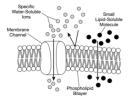 Figure 1 represents a plasma membrane and molecules present on either side.
Figure 1. A model of a plasma membrane demonstrating selective permeability
(a) Describe the biological need for cells to be surrounded by a membrane that is selectively permeable for different materials.
(b) Explain how the model shows selective permeability of the membrane to specific ions.
(c) Describe the characteristics of the phospholipid bilayer that permit small hydrophobic lipid molecules to pass directly across the membrane.
(d)...
Figure 1 represents a plasma membrane and molecules present on either side.
Figure 1. A model of a plasma membrane demonstrating selective permeability
(a) Describe the biological need for cells to be surrounded by a membrane that is selectively permeable for different materials.
(b) Explain how the model shows selective permeability of the membrane to specific ions.
(c) Describe the characteristics of the phospholipid bilayer that permit small hydrophobic lipid molecules to pass directly across the membrane.
(d)...
dll State University Diffusion-Quiz yler: Attempt 1 The unique characteristic of the plasma (cell) membrane is...
 dll State University Diffusion-Quiz yler: Attempt 1 The unique characteristic of the plasma (cell) membrane is that it provides mechanical strength semipermeability or differential permeability meaning that it regulates passage of molecules into and out of the cel O responsible for the synthesis of ATP that charged molecules and ions readily move from inside the cell to outside the cell across it. Save Information
3 2 Rate of molecule transport 1 Molecule concentration difference across plasma membrane humans, fructose, a...
 3 2 Rate of molecule transport 1 Molecule concentration difference across plasma membrane humans, fructose, a disaccharide, is taken up from the intestine by facilitated transport. Respond to the following questions Adressing the transport of fructose molecules as shown in the diagram, above. the number of transport proteins is the same for the membranes with Rates 1, 2, and 3, which arrow corresponds to eatest concentration difference of fructose across the cell membrane? (Click to select) the fructose concentration difference...
Explain how cholesterol within the plasma membranes of animals affects membrane fluidity at different temperatures.
Explain how cholesterol within the plasma membranes of animals affects membrane fluidity at different temperatures.
A&P Flix Activity: Membrane Transport Substances can move across the plasma membrane in two different ways-actively...
 A&P Flix Activity: Membrane Transport Substances can move across the plasma membrane in two different ways-actively or passively. This activity will help you determine whether transport mech! Sort the following types of membrane transport mechanisms into active or passive processes. View Available Hint(s) Reset Help Endocytonio Dumoals Secondary active transport Exocvent Facilitated dimson Simple damunten Primary active transport Active Process Passive Process Submit Type here to search API Spr google.com 1 Chapter 1 - 3 Flix Activity: Membrane Transport High...
1. List the major functions of cell membranes. 2. State 3 characteristics of molecules that affect...
1. List the major functions of cell membranes. 2. State 3 characteristics of molecules that affect their ability to move through cell membranes. 3. State 3 characteristics of membranes that determine their permeability. 4. Describe the structure, arrangement and functions of membrane lipids, membrane proteins and membrane carbohydrates.
What are the three major components of plasma membranes and their functions? How is osmosis a...
 What are the three major components of plasma membranes and their functions? How is osmosis a type of diffusion? In what ways is the plasma membrane selectively permeable? What happens to plant and animal cells placed in hypotonic, Isotonic, and hypertonic solutions? How are passive and active transport different? How do membrane transport proteins function? What molecule is the "energy currency of cells? What does this mean? How do enzymes speed up chemical reactions? What factors influence the activity of...
How do we identify a predict-predict conflict? Explain and provide illustrating examples
How do we identify a predict-predict conflict? Explain and provide illustrating examples
1. How can the operation of the plasma membrane H+-ATPase affect (a) the diffusion of K+...
1. How can the operation of the plasma membrane H+-ATPase affect (a) the diffusion of K+ through membrane channels, and (b) the accumulation of sugars from the apoplast into the cell? 2. There is current concern that the level of CO2 is increasing in the biosphere due to the burning of fossil fuels. If the level of atmospheric CO2 were to double, how would photosynthetic rates of C3 plants be affected? 3. Nuclear encoded chloroplast proteins are synthesized in the...
 Figure 1 represents a plasma membrane and molecules present on either side.
Figure 1. A model of a plasma membrane demonstrating selective permeability
(a) Describe the biological need for cells to be surrounded by a membrane that is selectively permeable for different materials.
(b) Explain how the model shows selective permeability of the membrane to specific ions.
(c) Describe the characteristics of the phospholipid bilayer that permit small hydrophobic lipid molecules to pass directly across the membrane.
(d)...
Figure 1 represents a plasma membrane and molecules present on either side.
Figure 1. A model of a plasma membrane demonstrating selective permeability
(a) Describe the biological need for cells to be surrounded by a membrane that is selectively permeable for different materials.
(b) Explain how the model shows selective permeability of the membrane to specific ions.
(c) Describe the characteristics of the phospholipid bilayer that permit small hydrophobic lipid molecules to pass directly across the membrane.
(d)...
 dll State University Diffusion-Quiz yler: Attempt 1 The unique characteristic of the plasma (cell) membrane is that it provides mechanical strength semipermeability or differential permeability meaning that it regulates passage of molecules into and out of the cel O responsible for the synthesis of ATP that charged molecules and ions readily move from inside the cell to outside the cell across it. Save Information
 3 2 Rate of molecule transport 1 Molecule concentration difference across plasma membrane humans, fructose, a disaccharide, is taken up from the intestine by facilitated transport. Respond to the following questions Adressing the transport of fructose molecules as shown in the diagram, above. the number of transport proteins is the same for the membranes with Rates 1, 2, and 3, which arrow corresponds to eatest concentration difference of fructose across the cell membrane? (Click to select) the fructose concentration difference...
 A&P Flix Activity: Membrane Transport Substances can move across the plasma membrane in two different ways-actively or passively. This activity will help you determine whether transport mech! Sort the following types of membrane transport mechanisms into active or passive processes. View Available Hint(s) Reset Help Endocytonio Dumoals Secondary active transport Exocvent Facilitated dimson Simple damunten Primary active transport Active Process Passive Process Submit Type here to search API Spr google.com 1 Chapter 1 - 3 Flix Activity: Membrane Transport High...
 What are the three major components of plasma membranes and their functions? How is osmosis a type of diffusion? In what ways is the plasma membrane selectively permeable? What happens to plant and animal cells placed in hypotonic, Isotonic, and hypertonic solutions? How are passive and active transport different? How do membrane transport proteins function? What molecule is the "energy currency of cells? What does this mean? How do enzymes speed up chemical reactions? What factors influence the activity of...
Most questions answered within 3 hours.
-
Where is the error in this code sequence?
String s1 = "Hello";
String s2 = "ello";...
asked 10 months ago -
Financial data for Joel de Paris, Inc., for last year
follow:
Joel de Paris, Inc.
Balance...
asked 10 months ago -
Consider this reaction:
Al2(SO4)3 (aq)+ BaCl3
(aq) Al2Cl6 (aq)- +
3BaSO4(s) . What is the...
asked 10 months ago -
Suppose that Savneet is considering increasing her
recent random sample from 20 car rentals to 40...
asked 10 months ago -
Trucks arrive at an unloading terminal at an average rate of 120
per hour.
Trucks arrive...
asked 10 months ago -
Why are methanol and ethanol completely soluble in water while
octanol is not very little soluble....
asked 10 months ago -
A facilities manager at a university reads in a research report
that the mean amount of...
asked 10 months ago -
When the CuSO4 is rehydrated by adding water to the anhydrous
compound, is this an endothermic...
asked 10 months ago -
A ray of sunlight is passing from diamond into crown glass; the
angle of incidence is...
asked 10 months ago -
A block of mass 0.249 kg is placed on top of a light, vertical
spring of...
asked 10 months ago -
how do the kidneys compensate in the presences of acidosis
a) trigger hyperventilate
b) reserve acid...
asked 10 months ago -
Question 501 pts
The rental rate of capital to the firm increases. Which of the
following...
asked 10 months ago