List the planes in which each of the following wrist, hand, and finger joint movements occurs....
Homework Answers
The movements of the hand are usually described in anatomical terms. These include:
Flexion – A bending movement that decreases the angle between two parts.
Eg- You flex your fingers when you clench your fist.
Extension – A straightening movement that increases the angle between two parts.
Eg- Stretching out your fingers. Flexion and extension are opposites of one another.
Abduction – A motion that pulls a structure away from the middle finger.
Eg- Spreading out your fingers.
Adduction – A motion that brings a structure toward the middle finger.
Eg- Closing the fingers together.
The skeleton of the hand can be divided up into three sections: the carpus, metacarpus and the phalanges.
Wrist-
The “true wrist” can be found on the proximal part of the hand and consists of eight small bones, called as carpals, which are linked together by ligaments.
The carpal bones of the wrist glide against each other, making the carpus quite flexible as a whole.
The bones lie in two irregular rows, with four bones in each row. The bones in one row are called the scaphoid, lunate, triquetral and pisiform. The scaphoid and lunate come into contact with the radius,forming the wrist joint.
The trapezium, trapezoid, capitates and hamate are the bones making up the other row.
Fingers-
The digits of the upper limb, the fingers, are numbered from 1 to 5 beginning with the thumb.The phalanges refer to the miniature long bones within the fingers.Except for the thumb, each finger has three phalanges – the distal (the bone on the tip of the finger), middle and proximal (the bone at the base of the finger) phalanx. The thumb has no middle phalanx, giving a total of 14 phalanges in each hand.
Three basic reference planes are used in anatomy: They are Listed below
A sagittal plane, also known as the longitudinal plane, is perpendicular to the ground and divides the body into left and right. The midsagittal or median plane is in the midline i.e. it would pass through the midline structures
e.g. navel or spine, and all other sagittal planes are parallel to it. Median can also refer to the midsagittal plane of other structures, such as a digit.
A coronal or frontal plane is perpendicular to the ground and divides the body into dorsal and ventral portions.
A transverse plane, also known as an axial plane or cross-section, divides the body into cranial (head) and caudal (tail) portions.
It is parallel to the ground, which (in humans) separates the superior from the inferior, or put another way, the head from the feet.
When describing anatomical motion, these planes describe the axis along which an action is performed. So by moving through the transverse plane, movement travels from head to toe.
example- if a person jumped directly up and then down, their body would be moving through the transverse plane in the coronal and sagital planes.
Axis-
An axis is a straight line around which an object rotates. Movement at the joint take place in a plane about an axis. There are three axis of rotation.
1.Sagital axis - passes horizontally from posterior to anterior and is formed by the intersection of the sagital and transverse planes.
2.Frontal axis - passes horizontally from left to right and is formed by the intersection of the frontal and transverse planes.
3.Vertical axis - passes vertically from inferior to superior
and is formed by the intersection of the sagital and frontal
planes.
Add Answer to:
List the planes in which each of the following wrist, hand, and
finger joint movements occurs....
QUESTION 1 Dip Exercise List the movements that occur in each joint as the subject moves...
 QUESTION 1
Dip Exercise
List the movements that occur in each joint as the subject moves
the body up and down in performing dips.
Choose your movement from the following list (movements may be
used multiple times):
Flexion
Extension
Abduction
Adduction
Internal rotation
External rotation
Horizontal abduction
Horizontal adduction
Diagonal abduction
Diagonal adduction
Elevation
Depression
Upward rotation
Downward rotation
For each joint movement, list the agonist muscle primarily
responsible, and indicate whether it is contracting concentrically
or eccentrically with a...
QUESTION 1
Dip Exercise
List the movements that occur in each joint as the subject moves
the body up and down in performing dips.
Choose your movement from the following list (movements may be
used multiple times):
Flexion
Extension
Abduction
Adduction
Internal rotation
External rotation
Horizontal abduction
Horizontal adduction
Diagonal abduction
Diagonal adduction
Elevation
Depression
Upward rotation
Downward rotation
For each joint movement, list the agonist muscle primarily
responsible, and indicate whether it is contracting concentrically
or eccentrically with a...
these are the insturctuons for the pictures below COM Kreasion Plane: Sajgital AOR: Frontal Joint: w...
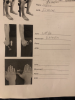 these are the insturctuons for the pictures below
COM Kreasion Plane: Sajgital AOR: Frontal Joint: w it Movement: Extension Plane: AOR: Joint: Movement: Plane: AOR: 4. Analyze the exercises performed in each of the picture below. Identify the joint, movement, plane of motion, and axis of rotation (AOR) as it appears in the picture. (6 points) Joint: wrist extend to Movement: - tekiza Extension Plane: Sangital AOR: Frontal
these are the insturctuons for the pictures below
COM Kreasion Plane: Sajgital AOR: Frontal Joint: w it Movement: Extension Plane: AOR: Joint: Movement: Plane: AOR: 4. Analyze the exercises performed in each of the picture below. Identify the joint, movement, plane of motion, and axis of rotation (AOR) as it appears in the picture. (6 points) Joint: wrist extend to Movement: - tekiza Extension Plane: Sangital AOR: Frontal
The following statement or incomplete sentence may have one or more correct answers. Choose the most...
 The following statement or incomplete sentence may have one or more correct answers. Choose the most correct combination of answers to answer the question. Consider the principle: "Simple movements of the body or its parts take place in directions parallel to the body's planes of reference." Choose which of the statement(s) below correctly apply that principle. W. Flexion at the knee joint is a movement that occurs parallel to the sagittal plane. X. Extension at the shoulder joint is caused...
Which of the following is a hinge joint? Wrist Jaw Shoulder Thumb
Which of the following is a hinge joint? Wrist Jaw Shoulder Thumb
Exercise 10.4: Classification of Synovial Joints 9. Match the description of the synovial joint listed in...
 Exercise 10.4: Classification of Synovial Joints 9. Match the description of the synovial joint listed in column with the corresponding classification listed in column B. Colume A Calum 1. biaxial oval convex and concave a bal-and-socket 2. multiaxial head it into a socket to condylar 3. multiaxiatresembles the shape of a saddle c. hinge 4 uniaxial convex and concave surfaces d. pivot 5. uniaxial: round surface in ring e plane 6. uniaxial, two flat surfaces 1 saddle 10. Which of...
ul the shoulder joint be pre U Lause unequal development? What movements are inve 8. 9....
 ul the shoulder joint be pre U Lause unequal development? What movements are inve 8. 9. nsport to produce unequal development? Shoulder girdle movements is equal to movements Wherever the scapula goes, the follows 10. Shoulder girdle movement is not dependent on the shoulder joint and its muscles 11. List the 5 muscles involved in shoulder girdle movements. 12. Which nerves primarily innervate the shoulder girdle muscles? 13. List 2 instability problems associated with the shoulder joint. it is. 14....
Go through some of your body's joints and determine which of the following pairs of movements...
 Go through some of your body's joints and determine which of the
following pairs of movements are relevant/possible at each. (Be
sure you can demonstrate each of the following movements at an
appropriate joint.)
Elevation and Depression Lateral Flexion Flexion and Extension Hyperextension Abduction and Adduction Protraction and Retraction Medial and Lateral Rotation Circumduction Supination and Pronation Radial and ulnar Deviation Dorsiflexion and Plantar Flexion Inversion and Eversion Opposition
Go through some of your body's joints and determine which of the
following pairs of movements are relevant/possible at each. (Be
sure you can demonstrate each of the following movements at an
appropriate joint.)
Elevation and Depression Lateral Flexion Flexion and Extension Hyperextension Abduction and Adduction Protraction and Retraction Medial and Lateral Rotation Circumduction Supination and Pronation Radial and ulnar Deviation Dorsiflexion and Plantar Flexion Inversion and Eversion Opposition
Consider the movement of throwing a frisbee. Consider the following joints during each of these movements:...
Consider the movement of throwing a frisbee. Consider the following joints during each of these movements: the shoulders, elbows, wrists, intervertebral joints, hip joints, knees, and ankles. Describe the movement of these joints that take place during the action of throwing a frisbee. For example you can record "abduction or flexion" next to the "shoulder" column depending on the movement if there is a joint that can be described that is not listed, include it in the other section and...
Visceral pericardium When considering the blood supply to issues, which of a, b, c, d ore...
 Visceral pericardium When considering the blood supply to issues, which of a, b, c, d ore show the correct order of the issues from those that are best supplied with blood to those that are vascular? Select one: O a. covers the heart b. lines the wall of the thoracic cavity c. lines the fibrous pericardium d. covers the stomach Select one: a. bone, skeletal muscle, dense connective tissue, epithelial tissue b. cartilage, muscle, epithelial tissue, dense connective tissue c...
ARTICULATIONS "Handout" II. D. Types of synovial joints TYPE DESCRIPTION OF BONY SURFACES AXES OF MOTION...
 ARTICULATIONS "Handout" II. D. Types of synovial joints TYPE DESCRIPTION OF BONY SURFACES AXES OF MOTION 2 EXAMPLES opposing flat surfaces spool in half-moon pointed or rounded surface of one bone fits into bone/ligament ring of another oval surface of one bone fits into complementary depression of another saddle on back of horse ball-shaped end of one bone fits into cup-shaped end of another IV. Movements at synovial joints Complete the following chart, defining each movement and naming a joint...
 QUESTION 1
Dip Exercise
List the movements that occur in each joint as the subject moves
the body up and down in performing dips.
Choose your movement from the following list (movements may be
used multiple times):
Flexion
Extension
Abduction
Adduction
Internal rotation
External rotation
Horizontal abduction
Horizontal adduction
Diagonal abduction
Diagonal adduction
Elevation
Depression
Upward rotation
Downward rotation
For each joint movement, list the agonist muscle primarily
responsible, and indicate whether it is contracting concentrically
or eccentrically with a...
QUESTION 1
Dip Exercise
List the movements that occur in each joint as the subject moves
the body up and down in performing dips.
Choose your movement from the following list (movements may be
used multiple times):
Flexion
Extension
Abduction
Adduction
Internal rotation
External rotation
Horizontal abduction
Horizontal adduction
Diagonal abduction
Diagonal adduction
Elevation
Depression
Upward rotation
Downward rotation
For each joint movement, list the agonist muscle primarily
responsible, and indicate whether it is contracting concentrically
or eccentrically with a...
 these are the insturctuons for the pictures below
COM Kreasion Plane: Sajgital AOR: Frontal Joint: w it Movement: Extension Plane: AOR: Joint: Movement: Plane: AOR: 4. Analyze the exercises performed in each of the picture below. Identify the joint, movement, plane of motion, and axis of rotation (AOR) as it appears in the picture. (6 points) Joint: wrist extend to Movement: - tekiza Extension Plane: Sangital AOR: Frontal
these are the insturctuons for the pictures below
COM Kreasion Plane: Sajgital AOR: Frontal Joint: w it Movement: Extension Plane: AOR: Joint: Movement: Plane: AOR: 4. Analyze the exercises performed in each of the picture below. Identify the joint, movement, plane of motion, and axis of rotation (AOR) as it appears in the picture. (6 points) Joint: wrist extend to Movement: - tekiza Extension Plane: Sangital AOR: Frontal
 The following statement or incomplete sentence may have one or more correct answers. Choose the most correct combination of answers to answer the question. Consider the principle: "Simple movements of the body or its parts take place in directions parallel to the body's planes of reference." Choose which of the statement(s) below correctly apply that principle. W. Flexion at the knee joint is a movement that occurs parallel to the sagittal plane. X. Extension at the shoulder joint is caused...
 Exercise 10.4: Classification of Synovial Joints 9. Match the description of the synovial joint listed in column with the corresponding classification listed in column B. Colume A Calum 1. biaxial oval convex and concave a bal-and-socket 2. multiaxial head it into a socket to condylar 3. multiaxiatresembles the shape of a saddle c. hinge 4 uniaxial convex and concave surfaces d. pivot 5. uniaxial: round surface in ring e plane 6. uniaxial, two flat surfaces 1 saddle 10. Which of...
 ul the shoulder joint be pre U Lause unequal development? What movements are inve 8. 9. nsport to produce unequal development? Shoulder girdle movements is equal to movements Wherever the scapula goes, the follows 10. Shoulder girdle movement is not dependent on the shoulder joint and its muscles 11. List the 5 muscles involved in shoulder girdle movements. 12. Which nerves primarily innervate the shoulder girdle muscles? 13. List 2 instability problems associated with the shoulder joint. it is. 14....
 Go through some of your body's joints and determine which of the
following pairs of movements are relevant/possible at each. (Be
sure you can demonstrate each of the following movements at an
appropriate joint.)
Elevation and Depression Lateral Flexion Flexion and Extension Hyperextension Abduction and Adduction Protraction and Retraction Medial and Lateral Rotation Circumduction Supination and Pronation Radial and ulnar Deviation Dorsiflexion and Plantar Flexion Inversion and Eversion Opposition
Go through some of your body's joints and determine which of the
following pairs of movements are relevant/possible at each. (Be
sure you can demonstrate each of the following movements at an
appropriate joint.)
Elevation and Depression Lateral Flexion Flexion and Extension Hyperextension Abduction and Adduction Protraction and Retraction Medial and Lateral Rotation Circumduction Supination and Pronation Radial and ulnar Deviation Dorsiflexion and Plantar Flexion Inversion and Eversion Opposition
 Visceral pericardium When considering the blood supply to issues, which of a, b, c, d ore show the correct order of the issues from those that are best supplied with blood to those that are vascular? Select one: O a. covers the heart b. lines the wall of the thoracic cavity c. lines the fibrous pericardium d. covers the stomach Select one: a. bone, skeletal muscle, dense connective tissue, epithelial tissue b. cartilage, muscle, epithelial tissue, dense connective tissue c...
 ARTICULATIONS "Handout" II. D. Types of synovial joints TYPE DESCRIPTION OF BONY SURFACES AXES OF MOTION 2 EXAMPLES opposing flat surfaces spool in half-moon pointed or rounded surface of one bone fits into bone/ligament ring of another oval surface of one bone fits into complementary depression of another saddle on back of horse ball-shaped end of one bone fits into cup-shaped end of another IV. Movements at synovial joints Complete the following chart, defining each movement and naming a joint...
Most questions answered within 3 hours.
-
Where is the error in this code sequence?
String s1 = "Hello";
String s2 = "ello";...
asked 11 months ago -
Financial data for Joel de Paris, Inc., for last year
follow:
Joel de Paris, Inc.
Balance...
asked 11 months ago -
Consider this reaction:
Al2(SO4)3 (aq)+ BaCl3
(aq) Al2Cl6 (aq)- +
3BaSO4(s) . What is the...
asked 11 months ago -
Suppose that Savneet is considering increasing her
recent random sample from 20 car rentals to 40...
asked 11 months ago -
Trucks arrive at an unloading terminal at an average rate of 120
per hour.
Trucks arrive...
asked 11 months ago -
Why are methanol and ethanol completely soluble in water while
octanol is not very little soluble....
asked 11 months ago -
A facilities manager at a university reads in a research report
that the mean amount of...
asked 11 months ago -
When the CuSO4 is rehydrated by adding water to the anhydrous
compound, is this an endothermic...
asked 11 months ago -
A ray of sunlight is passing from diamond into crown glass; the
angle of incidence is...
asked 11 months ago -
A block of mass 0.249 kg is placed on top of a light, vertical
spring of...
asked 11 months ago -
how do the kidneys compensate in the presences of acidosis
a) trigger hyperventilate
b) reserve acid...
asked 11 months ago -
Question 501 pts
The rental rate of capital to the firm increases. Which of the
following...
asked 11 months ago