Which of the following properties can you predict based on the amino acid sequence of a...
Which of the following properties can you predict based on the amino acid sequence of a transmembrane protein?
A. How many times the protein crosses the membrane
B.Where in the protein sequence the transmembrane domain is located
C.Which side of the membrane (cytosolic vs extracellular) the N terminus is located
D. A & B
Homework Answers
Answer : option B and C ( mainly option B is most appropriate)
Protein crosses the membrane multiple time so option A and D are wrong.
It determine where in the protein sequence the Transmembrane Domain is located by SDS PAGE method.
Usually N terminal is located at extracellular side ( not always) it also determined by N terminal analysis by Adman degradation
Add Answer to:
Which of the following properties can you predict based on the
amino acid sequence of a...
Hydropathy analysis of a membrane protein's amino acid sequence predicts the protein's transmembrane segments and orientation...
Hydropathy analysis of a membrane protein's amino acid sequence predicts the protein's transmembrane segments and orientation in the membrane. It is necessary to confirm those predictions with experimental analysis. One experimental approach for plasma membrane proteins is to use the protease trypsin to digest extracellular domains of these proteins. (Trypsin is hydrophilic and cannot cross the plasma membrane to enter the cell.) When added to cells, trypsin digests the hydrophilic portions of plasma membrane proteins exposed outside the cell into...
The following is a portion of the amino acid sequence of human GLUT1 purified from red...
The following is a portion of the amino acid sequence of human GLUT1 purified from red blood cells. Glucose is also shown for your convenience. 147 151 161 171 181 vspt alrgalgtlh qlgivvqili aqvfgldsim gnkd A. An internal 23 amino acid region of the sequence above is the 5th transmembrane domain of GLUT1. The beginning of the sequence is an intracellular loop. The end of the sequence is an extracellular loop. Indicate where these regions might be in the sequence. Explain how you derived at your hypothesis....
Please answer as many as you can. Will rate!! Across 4. Type of protein that spans...
 Please answer as many as you can. Will
rate!!
Across
4. Type of protein that spans the entire
membrane
5. One of the amino acid residues used to form
O-linked glycoproteins.
7. Newly synthesized phospholipids are
inserted into the _____ side of the smooth ER membrane.
8. Type of bond used to link membrane proteins
to a membrane lipid
10. One of the sugars that can be added to
phosphatidylinositol to make glycosylphosphatidylinosiol
12. Enzyme that joins fatty acids and...
Please answer as many as you can. Will
rate!!
Across
4. Type of protein that spans the entire
membrane
5. One of the amino acid residues used to form
O-linked glycoproteins.
7. Newly synthesized phospholipids are
inserted into the _____ side of the smooth ER membrane.
8. Type of bond used to link membrane proteins
to a membrane lipid
10. One of the sugars that can be added to
phosphatidylinositol to make glycosylphosphatidylinosiol
12. Enzyme that joins fatty acids and...
For her research project, Anneka found this great website to predict the transmembrane domains of secretory...
 For her research project, Anneka found this great website to predict the transmembrane domains of secretory proteins. An algorithm allows estimating the hydrophobicity of amino acid stretches in the sequence of secretory proteins. Hydrophobic stretches are plotted with positive values on the Y-axis. On the X-axis, Anneka can see the protein sequence expressed as amino acid number, with N-terminus at the intersection with the Y-axis. Example of prediction of TMD domains (a) Human growth hormone receptor (type 1) Nw Signal...
which of the following is not a way in which amino acid structure in sequence might...
which of the following is not a way in which amino acid structure in sequence might affect the properties of a protein a) Amino acid side chains form peptide bonds with each other causing the molecule to twist into a secondary structure b) Amino side chains interact with each other causing polypeptides to bend into a tertiary structure c) Hydrogen bonding between every fourth amino acid results in the formation of a coil called an a helix d) Hydrogen bonding...
5. Integral glycoprotein sequence, 195mer (Note: amino acid sequence is broken into segments containing 10 amino...
 5. Integral glycoprotein sequence, 195mer (Note: amino acid sequence is broken into segments containing 10 amino acids, for ease in counting) EQRHNSD [BFP] GGN (10) TKERYFLLVI (20) TLIFSFTILV (30) VAVLILLSYG (40) MHSDQMGDYF (50) FFIIILLLTS (60) VVVTYILGFF (70) SYKHMYRNEE (80) QAASTDD [GFP] FGH (90) GNHGVSRNRW (100) PHKTSYFFFI (110) LVVVASFILF (120) FSFIFISSGG (130) VYTREFGDKG (140) SSADRPELIH (150) TREKHNWSLI (160) FFSFFVAVVS (170) ILLLFWSILI (180) LSYTSEKPLG (190) FKEEQ Experimental comments: A. Exposing the native membrane to an a-N-amippno fluorescent labeling agent, demonstrated NO retention...
pls try expaling this concept in as much detail as possible . this is all the informetion i eqs given to anserw the question myself Hydropathy plots are a measure of the hydrophobicity of a pr...
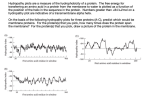 pls
try expaling this concept in as much detail as possible .
this is all the informetion i eqs given to anserw the question
myself
Hydropathy plots are a measure of the hydrophobicity of a protein. The free energy for transferring an amino acid in a protein from the membrane to water is plotted as a function of the position of the helix in the sequence in the protein. Numbers greeter than +84 kJ/mol on a hydropathy plot are indicative...
pls
try expaling this concept in as much detail as possible .
this is all the informetion i eqs given to anserw the question
myself
Hydropathy plots are a measure of the hydrophobicity of a protein. The free energy for transferring an amino acid in a protein from the membrane to water is plotted as a function of the position of the helix in the sequence in the protein. Numbers greeter than +84 kJ/mol on a hydropathy plot are indicative...
Amino Acid Examples The following amino acid is lysine. Which of the following best describes the properties its si...
 Amino Acid Examples The following amino acid is lysine. Which of the following best describes the properties its side chain has as part of a protein? NH2 A) Acidic B) Basic C) Hydrophobic D) Hydrophilic E) Special role ОН H2N
A chain GIVEQCCASVCSLYQLENYCN B chain FVNQHLCGSHLVEALYLVCGERGFFYTPKA Shown above is the amino acid sequence of the hormone...
 A chain GIVEQCCASVCSLYQLENYCN B chain FVNQHLCGSHLVEALYLVCGERGFFYTPKA Shown above is the amino acid sequence of the hormone insulin. This structure was determined by Frederick Sanger and his coworkers. Most of this work is described in a series of articles published in the Biochemical Journal from 1945 to 1955. When Sanger and colleagues began their work in 1945, it was known that insulin was a small protein consisting of two or four polypeptide chains linked by disulfide bonds. Sanger and his coworkers...
1&2 pls 1 of 1 Page 1 1. Consider the following domain diagram of a hypothetical...
 1&2 pls
1 of 1 Page 1 1. Consider the following domain diagram of a hypothetical integral membrane protein (black segments regions of nonpolar amino acids). Describe the orientation of this protein in the ER membrane. Where would you expect for find the N and termini? How many transmembrane segments would you predict? + N 2. Consider the partial amino acid sequence of the hypothetical protein shown below. In which cellular compartment would you expect to find the functional protein?...
1&2 pls
1 of 1 Page 1 1. Consider the following domain diagram of a hypothetical integral membrane protein (black segments regions of nonpolar amino acids). Describe the orientation of this protein in the ER membrane. Where would you expect for find the N and termini? How many transmembrane segments would you predict? + N 2. Consider the partial amino acid sequence of the hypothetical protein shown below. In which cellular compartment would you expect to find the functional protein?...
 Please answer as many as you can. Will
rate!!
Across
4. Type of protein that spans the entire
membrane
5. One of the amino acid residues used to form
O-linked glycoproteins.
7. Newly synthesized phospholipids are
inserted into the _____ side of the smooth ER membrane.
8. Type of bond used to link membrane proteins
to a membrane lipid
10. One of the sugars that can be added to
phosphatidylinositol to make glycosylphosphatidylinosiol
12. Enzyme that joins fatty acids and...
Please answer as many as you can. Will
rate!!
Across
4. Type of protein that spans the entire
membrane
5. One of the amino acid residues used to form
O-linked glycoproteins.
7. Newly synthesized phospholipids are
inserted into the _____ side of the smooth ER membrane.
8. Type of bond used to link membrane proteins
to a membrane lipid
10. One of the sugars that can be added to
phosphatidylinositol to make glycosylphosphatidylinosiol
12. Enzyme that joins fatty acids and...
 For her research project, Anneka found this great website to predict the transmembrane domains of secretory proteins. An algorithm allows estimating the hydrophobicity of amino acid stretches in the sequence of secretory proteins. Hydrophobic stretches are plotted with positive values on the Y-axis. On the X-axis, Anneka can see the protein sequence expressed as amino acid number, with N-terminus at the intersection with the Y-axis. Example of prediction of TMD domains (a) Human growth hormone receptor (type 1) Nw Signal...
 5. Integral glycoprotein sequence, 195mer (Note: amino acid sequence is broken into segments containing 10 amino acids, for ease in counting) EQRHNSD [BFP] GGN (10) TKERYFLLVI (20) TLIFSFTILV (30) VAVLILLSYG (40) MHSDQMGDYF (50) FFIIILLLTS (60) VVVTYILGFF (70) SYKHMYRNEE (80) QAASTDD [GFP] FGH (90) GNHGVSRNRW (100) PHKTSYFFFI (110) LVVVASFILF (120) FSFIFISSGG (130) VYTREFGDKG (140) SSADRPELIH (150) TREKHNWSLI (160) FFSFFVAVVS (170) ILLLFWSILI (180) LSYTSEKPLG (190) FKEEQ Experimental comments: A. Exposing the native membrane to an a-N-amippno fluorescent labeling agent, demonstrated NO retention...
 pls
try expaling this concept in as much detail as possible .
this is all the informetion i eqs given to anserw the question
myself
Hydropathy plots are a measure of the hydrophobicity of a protein. The free energy for transferring an amino acid in a protein from the membrane to water is plotted as a function of the position of the helix in the sequence in the protein. Numbers greeter than +84 kJ/mol on a hydropathy plot are indicative...
pls
try expaling this concept in as much detail as possible .
this is all the informetion i eqs given to anserw the question
myself
Hydropathy plots are a measure of the hydrophobicity of a protein. The free energy for transferring an amino acid in a protein from the membrane to water is plotted as a function of the position of the helix in the sequence in the protein. Numbers greeter than +84 kJ/mol on a hydropathy plot are indicative...
 Amino Acid Examples The following amino acid is lysine. Which of the following best describes the properties its side chain has as part of a protein? NH2 A) Acidic B) Basic C) Hydrophobic D) Hydrophilic E) Special role ОН H2N
 A chain GIVEQCCASVCSLYQLENYCN B chain FVNQHLCGSHLVEALYLVCGERGFFYTPKA Shown above is the amino acid sequence of the hormone insulin. This structure was determined by Frederick Sanger and his coworkers. Most of this work is described in a series of articles published in the Biochemical Journal from 1945 to 1955. When Sanger and colleagues began their work in 1945, it was known that insulin was a small protein consisting of two or four polypeptide chains linked by disulfide bonds. Sanger and his coworkers...
 1&2 pls
1 of 1 Page 1 1. Consider the following domain diagram of a hypothetical integral membrane protein (black segments regions of nonpolar amino acids). Describe the orientation of this protein in the ER membrane. Where would you expect for find the N and termini? How many transmembrane segments would you predict? + N 2. Consider the partial amino acid sequence of the hypothetical protein shown below. In which cellular compartment would you expect to find the functional protein?...
1&2 pls
1 of 1 Page 1 1. Consider the following domain diagram of a hypothetical integral membrane protein (black segments regions of nonpolar amino acids). Describe the orientation of this protein in the ER membrane. Where would you expect for find the N and termini? How many transmembrane segments would you predict? + N 2. Consider the partial amino acid sequence of the hypothetical protein shown below. In which cellular compartment would you expect to find the functional protein?...
Most questions answered within 3 hours.
-
Where is the error in this code sequence?
String s1 = "Hello";
String s2 = "ello";...
asked 11 months ago -
Financial data for Joel de Paris, Inc., for last year
follow:
Joel de Paris, Inc.
Balance...
asked 11 months ago -
Consider this reaction:
Al2(SO4)3 (aq)+ BaCl3
(aq) Al2Cl6 (aq)- +
3BaSO4(s) . What is the...
asked 11 months ago -
Suppose that Savneet is considering increasing her
recent random sample from 20 car rentals to 40...
asked 11 months ago -
Trucks arrive at an unloading terminal at an average rate of 120
per hour.
Trucks arrive...
asked 11 months ago -
Why are methanol and ethanol completely soluble in water while
octanol is not very little soluble....
asked 11 months ago -
A facilities manager at a university reads in a research report
that the mean amount of...
asked 11 months ago -
When the CuSO4 is rehydrated by adding water to the anhydrous
compound, is this an endothermic...
asked 11 months ago -
A ray of sunlight is passing from diamond into crown glass; the
angle of incidence is...
asked 11 months ago -
A block of mass 0.249 kg is placed on top of a light, vertical
spring of...
asked 11 months ago -
how do the kidneys compensate in the presences of acidosis
a) trigger hyperventilate
b) reserve acid...
asked 11 months ago -
Question 501 pts
The rental rate of capital to the firm increases. Which of the
following...
asked 11 months ago