
Homework Answers
Dear Student,
Please find the below answers:-
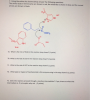
- Histidyl tRNA synthetase uses the Arg259 as the positive charged substitute for the Histidine activation.
- Prior to the mechanism shown here, induced fit mechanism occurs by two important conformational changes. First part consist of the conformational change occurs at the Histidine-1 loop with the help of Arg259, in which Tyr-264 residues construct the histidine side-chain binding pocket. Catalytic Arg-259 forms hydrogen bonds to Tyr-264, Glu-131 and the histidine carboxyl group, allowing for the correct positioning of the complex structure. Second, histidine binding induces conformational change at the “ordering loop”, by which residues 57 to 62 undergo the disordered/ordered transition of the ordering loop. Two hydrogen bonds hold the closed structure of the histidine binding loop and ordering loop.
- The positively charged Arg259 would donate the positive charge to activate the histidine.
- The role of Gln127 in second step of this mechanism is to provide hydrogen bonding with the histidine.
- The product of this mechanism is the addition of one another amino acid in peptide chain during protein synthesis.
- This enzyme belongs to transferease class of enzymes.
Add Answer to:
The second part of the mechanism for histidyl-tRNA-synthetase is shown below. Active site residues are in...
7. Using the active site shown below answer the following questions: The amino acids in the...
 7. Using the active site shown below answer the following questions: The amino acids in the enzyme are shown in red, the substrate is shown in blue and the curved arrows are shown in black. H₂C NH OCH3 NH W44 7a. What is the role of W44 in this reaction step shown? (1 point) 7b. What is the role of D19 in the reaction step shown? (2 points) 7c. What is the role of H57 in the reaction step shown?...
Shown is the active site if carboxypeptidase. Carboxypeptidase is a protease that works to hydrolyze the first peptide bond of a polypeptide, cleaving away the N-terminal residue from the rest of the...
 Shown is the active site if carboxypeptidase. Carboxypeptidase
is a protease that works to hydrolyze the first peptide bond of a
polypeptide, cleaving away the N-terminal residue from the rest of
the chain. A substrate is shown in the diagram. The orange square
shiwn indicates the bond that will be hydrolyzed.
a) put a square around the atom that will act as a nucleophile
in the first step of the mechanism.
b) put a triangle around the atom that will...
Shown is the active site if carboxypeptidase. Carboxypeptidase
is a protease that works to hydrolyze the first peptide bond of a
polypeptide, cleaving away the N-terminal residue from the rest of
the chain. A substrate is shown in the diagram. The orange square
shiwn indicates the bond that will be hydrolyzed.
a) put a square around the atom that will act as a nucleophile
in the first step of the mechanism.
b) put a triangle around the atom that will...
5. Based on your understanding of the mechanism of proteases A. the figure below shows a part of the active sit...
 5. Based on your understanding of the mechanism of proteases A. the figure below shows a part of the active site of the enzyme chymotrypsin. what are the identities of amino acids x and Y and what is this particular type of spatial arrangement of amino acids called? Alkoxide on X ? B. from the strucutres shown below, identify the two that represent the first and the second tetrahedral intermediates in the chymotrypsin catalyzed reaction. what type of attack and...
2) (14 pts) Shown on the next page is a schematic drawing of the mechanism for...
 2) (14 pts) Shown on the next page is a schematic drawing of the mechanism for an RNase. Residues that are important for catalysis are also shown schematically. (a) Refer to the scheme and describe the roles of His 12, Lys 41, and His 119 in the catalytic mechanism. List all of the following that apply: general acid/base catalysis (GABC), covalent catalysis, electrostatic stabilization of transition state. For a GABC, indicate in which step(s) of the mechanism the residue acts...
Please fill in the blanks! Shown below is a proposed mechanism for the cleavage of sialic...
 Please fill in the blanks!
Shown below is a proposed mechanism for the cleavage of sialic acid by the viral enzyme neuraminidase. The kcat for the wild-type enzyme at pH 6.15,37 °C is 26.8s- Y409) Y409) (D149) (D149) онон ﹀R374-1st Step -ROH R' C-N R374 (E117) (E117) +H2O ↓ 2nd Step Y409) Y409) (D149) 8 ,0149 D149) OH OH H2N R374 (E117) (E117) Part A Describe the roles of the following amino acids in the catalytic mechanism: Glul17, Tyr409, and...
Please fill in the blanks!
Shown below is a proposed mechanism for the cleavage of sialic acid by the viral enzyme neuraminidase. The kcat for the wild-type enzyme at pH 6.15,37 °C is 26.8s- Y409) Y409) (D149) (D149) онон ﹀R374-1st Step -ROH R' C-N R374 (E117) (E117) +H2O ↓ 2nd Step Y409) Y409) (D149) 8 ,0149 D149) OH OH H2N R374 (E117) (E117) Part A Describe the roles of the following amino acids in the catalytic mechanism: Glul17, Tyr409, and...
Based on the document below, 1. Describe the hypothesis Chaudhuri et al ids attempting to evaluate;...
 Based on the document below,
1. Describe the hypothesis Chaudhuri et al ids attempting to
evaluate; in other words, what is the goal of this paper? Why is he
writing it?
2. Does the data presented in the paper support the hypothesis
stated in the introduction? Explain.
3.According to Chaudhuri, what is the potential role of thew
alkaline phosphatase in the cleanup of industrial waste.
CHAUDHURI et al: KINETIC BEHAVIOUR OF CALF INTESTINAL ALP WITH PNPP 8.5, 9, 9.5, 10,...
Based on the document below,
1. Describe the hypothesis Chaudhuri et al ids attempting to
evaluate; in other words, what is the goal of this paper? Why is he
writing it?
2. Does the data presented in the paper support the hypothesis
stated in the introduction? Explain.
3.According to Chaudhuri, what is the potential role of thew
alkaline phosphatase in the cleanup of industrial waste.
CHAUDHURI et al: KINETIC BEHAVIOUR OF CALF INTESTINAL ALP WITH PNPP 8.5, 9, 9.5, 10,...
1. According to the paper, what does lactate dehydrogenase (LDH) do and what does it allow...
 1. According to the paper, what does lactate dehydrogenase
(LDH) do and what does it allow to happen within the myofiber? (5
points)
2. According to the paper, what is the major disadvantage of
relying on glycolysis during high-intensity exercise? (5
points)
3. Using Figure 1 in the paper, briefly describe the different
sources of ATP production at 50% versus 90% AND explain whether you
believe this depiction of ATP production applies to a Type IIX
myofiber in a human....
1. According to the paper, what does lactate dehydrogenase
(LDH) do and what does it allow to happen within the myofiber? (5
points)
2. According to the paper, what is the major disadvantage of
relying on glycolysis during high-intensity exercise? (5
points)
3. Using Figure 1 in the paper, briefly describe the different
sources of ATP production at 50% versus 90% AND explain whether you
believe this depiction of ATP production applies to a Type IIX
myofiber in a human....
 7. Using the active site shown below answer the following questions: The amino acids in the enzyme are shown in red, the substrate is shown in blue and the curved arrows are shown in black. H₂C NH OCH3 NH W44 7a. What is the role of W44 in this reaction step shown? (1 point) 7b. What is the role of D19 in the reaction step shown? (2 points) 7c. What is the role of H57 in the reaction step shown?...
 Shown is the active site if carboxypeptidase. Carboxypeptidase
is a protease that works to hydrolyze the first peptide bond of a
polypeptide, cleaving away the N-terminal residue from the rest of
the chain. A substrate is shown in the diagram. The orange square
shiwn indicates the bond that will be hydrolyzed.
a) put a square around the atom that will act as a nucleophile
in the first step of the mechanism.
b) put a triangle around the atom that will...
Shown is the active site if carboxypeptidase. Carboxypeptidase
is a protease that works to hydrolyze the first peptide bond of a
polypeptide, cleaving away the N-terminal residue from the rest of
the chain. A substrate is shown in the diagram. The orange square
shiwn indicates the bond that will be hydrolyzed.
a) put a square around the atom that will act as a nucleophile
in the first step of the mechanism.
b) put a triangle around the atom that will...
 5. Based on your understanding of the mechanism of proteases A. the figure below shows a part of the active site of the enzyme chymotrypsin. what are the identities of amino acids x and Y and what is this particular type of spatial arrangement of amino acids called? Alkoxide on X ? B. from the strucutres shown below, identify the two that represent the first and the second tetrahedral intermediates in the chymotrypsin catalyzed reaction. what type of attack and...
 2) (14 pts) Shown on the next page is a schematic drawing of the mechanism for an RNase. Residues that are important for catalysis are also shown schematically. (a) Refer to the scheme and describe the roles of His 12, Lys 41, and His 119 in the catalytic mechanism. List all of the following that apply: general acid/base catalysis (GABC), covalent catalysis, electrostatic stabilization of transition state. For a GABC, indicate in which step(s) of the mechanism the residue acts...
 Please fill in the blanks!
Shown below is a proposed mechanism for the cleavage of sialic acid by the viral enzyme neuraminidase. The kcat for the wild-type enzyme at pH 6.15,37 °C is 26.8s- Y409) Y409) (D149) (D149) онон ﹀R374-1st Step -ROH R' C-N R374 (E117) (E117) +H2O ↓ 2nd Step Y409) Y409) (D149) 8 ,0149 D149) OH OH H2N R374 (E117) (E117) Part A Describe the roles of the following amino acids in the catalytic mechanism: Glul17, Tyr409, and...
Please fill in the blanks!
Shown below is a proposed mechanism for the cleavage of sialic acid by the viral enzyme neuraminidase. The kcat for the wild-type enzyme at pH 6.15,37 °C is 26.8s- Y409) Y409) (D149) (D149) онон ﹀R374-1st Step -ROH R' C-N R374 (E117) (E117) +H2O ↓ 2nd Step Y409) Y409) (D149) 8 ,0149 D149) OH OH H2N R374 (E117) (E117) Part A Describe the roles of the following amino acids in the catalytic mechanism: Glul17, Tyr409, and...
 Based on the document below,
1. Describe the hypothesis Chaudhuri et al ids attempting to
evaluate; in other words, what is the goal of this paper? Why is he
writing it?
2. Does the data presented in the paper support the hypothesis
stated in the introduction? Explain.
3.According to Chaudhuri, what is the potential role of thew
alkaline phosphatase in the cleanup of industrial waste.
CHAUDHURI et al: KINETIC BEHAVIOUR OF CALF INTESTINAL ALP WITH PNPP 8.5, 9, 9.5, 10,...
Based on the document below,
1. Describe the hypothesis Chaudhuri et al ids attempting to
evaluate; in other words, what is the goal of this paper? Why is he
writing it?
2. Does the data presented in the paper support the hypothesis
stated in the introduction? Explain.
3.According to Chaudhuri, what is the potential role of thew
alkaline phosphatase in the cleanup of industrial waste.
CHAUDHURI et al: KINETIC BEHAVIOUR OF CALF INTESTINAL ALP WITH PNPP 8.5, 9, 9.5, 10,...
 1. According to the paper, what does lactate dehydrogenase
(LDH) do and what does it allow to happen within the myofiber? (5
points)
2. According to the paper, what is the major disadvantage of
relying on glycolysis during high-intensity exercise? (5
points)
3. Using Figure 1 in the paper, briefly describe the different
sources of ATP production at 50% versus 90% AND explain whether you
believe this depiction of ATP production applies to a Type IIX
myofiber in a human....
1. According to the paper, what does lactate dehydrogenase
(LDH) do and what does it allow to happen within the myofiber? (5
points)
2. According to the paper, what is the major disadvantage of
relying on glycolysis during high-intensity exercise? (5
points)
3. Using Figure 1 in the paper, briefly describe the different
sources of ATP production at 50% versus 90% AND explain whether you
believe this depiction of ATP production applies to a Type IIX
myofiber in a human....
Most questions answered within 3 hours.
-
Where is the error in this code sequence?
String s1 = "Hello";
String s2 = "ello";...
asked 11 months ago -
Financial data for Joel de Paris, Inc., for last year
follow:
Joel de Paris, Inc.
Balance...
asked 11 months ago -
Consider this reaction:
Al2(SO4)3 (aq)+ BaCl3
(aq) Al2Cl6 (aq)- +
3BaSO4(s) . What is the...
asked 11 months ago -
Suppose that Savneet is considering increasing her
recent random sample from 20 car rentals to 40...
asked 11 months ago -
Trucks arrive at an unloading terminal at an average rate of 120
per hour.
Trucks arrive...
asked 11 months ago -
Why are methanol and ethanol completely soluble in water while
octanol is not very little soluble....
asked 11 months ago -
A facilities manager at a university reads in a research report
that the mean amount of...
asked 11 months ago -
When the CuSO4 is rehydrated by adding water to the anhydrous
compound, is this an endothermic...
asked 11 months ago -
A ray of sunlight is passing from diamond into crown glass; the
angle of incidence is...
asked 11 months ago -
A block of mass 0.249 kg is placed on top of a light, vertical
spring of...
asked 11 months ago -
how do the kidneys compensate in the presences of acidosis
a) trigger hyperventilate
b) reserve acid...
asked 11 months ago -
Question 501 pts
The rental rate of capital to the firm increases. Which of the
following...
asked 11 months ago